Morning carnage

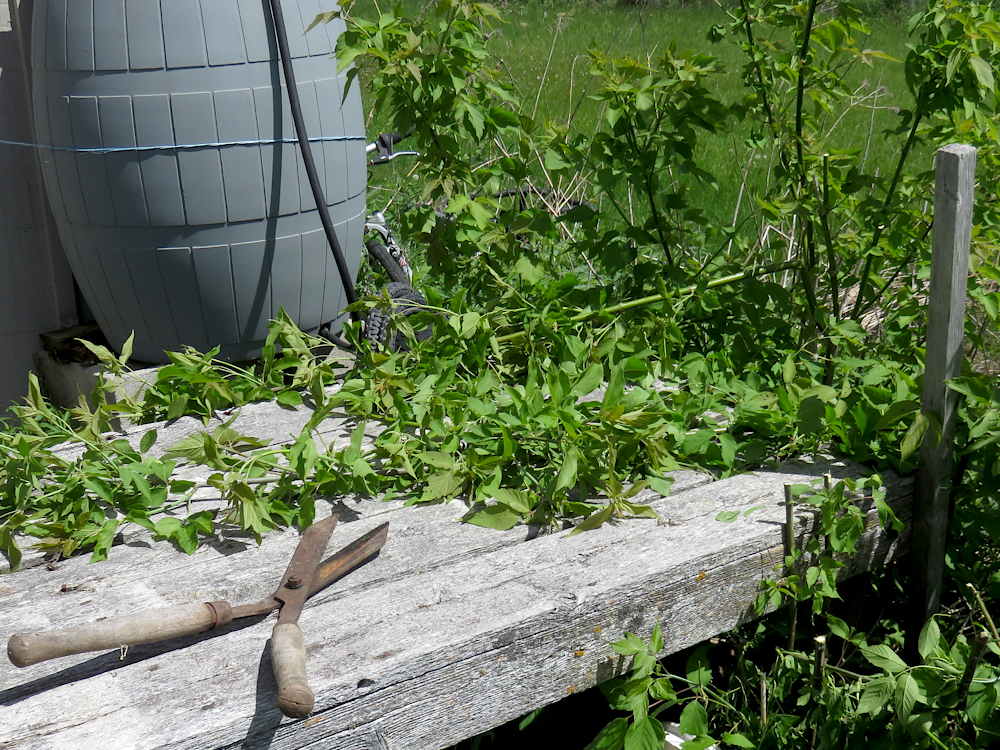
Weed tree, trash tree, table-eating tree, time to step back! Cutting back the invading box elder from the work table, using probably antique garden shears, the best tool at hand, seems kind of brutal, but this is tiny farming. The whole idea is to guide some space, some land, to your liking. It is kind of militaristic in nature, there’s no getting away from that! Take over, suppress what you don’t want, install what you do, and hunker down to maintain position. I’m kidding, of course, actually thinking about farming and gardening in those start terms is not helpful or enjoyable, IMHO, you layer on your framing and do what you have to do.

The garden shears only work well on the pencil-thick still-green upper stems, but that’ll do for now. Loppers—lopping shears, with long leveraging handles—would be perfect here, the tool for the job, though at the base this tree is probably a little past even them. So then, a pruning saw. I have neither, so a real saw, a sharp knife, and some bending and twisting may be involved for a proper cutback. Or, much as I don’t want to invest in a box elder battle, I’ll get ahold of a pruning saw. I wonder how much the roots can expand, year after year, without any leaves to feed them…
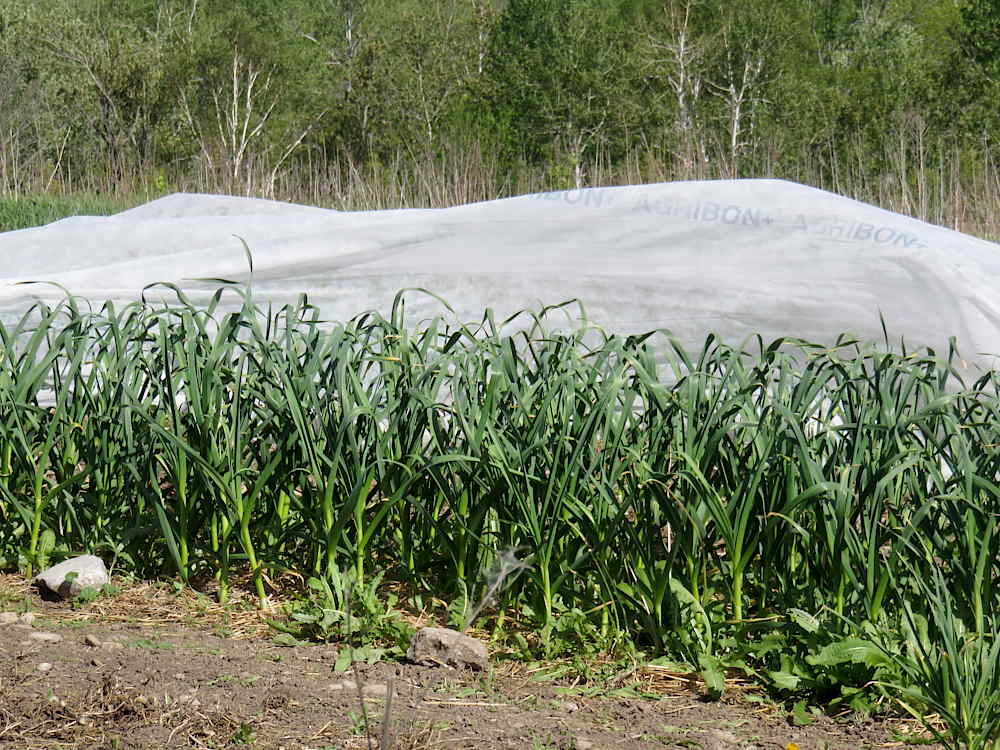
Brave garlic

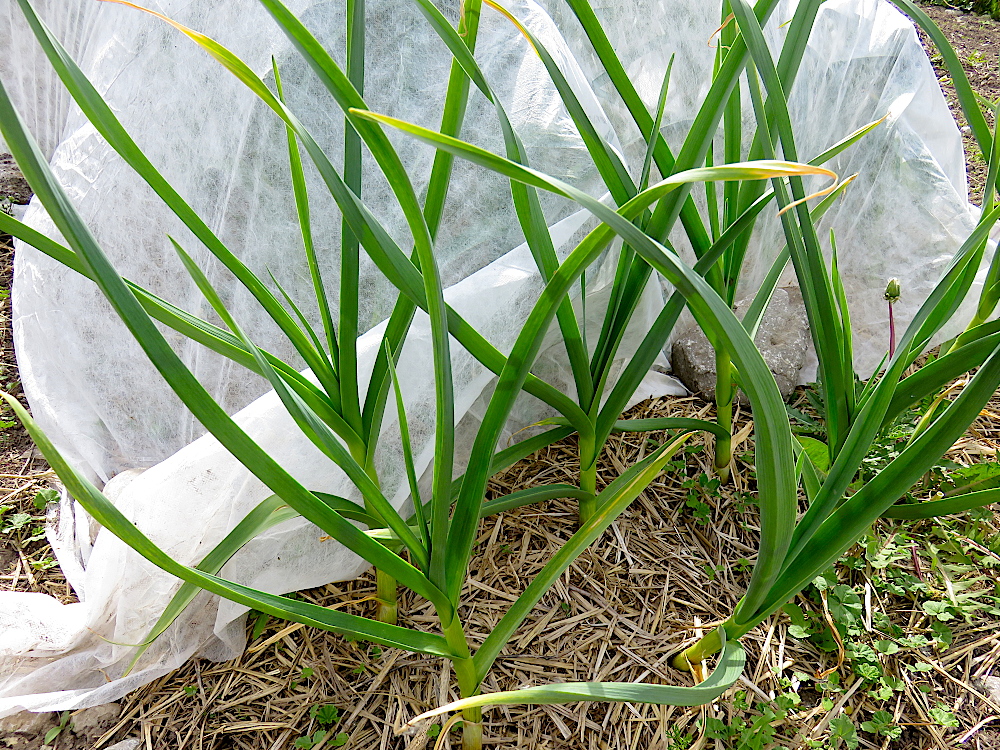
A few garlic, left out of the row cover leek moth protection tent, to see if the moths do arrive. I haven’t seen their eggs, or the moths, in person, just the busy boring larva. The eggs are apparently tiny and laid singly on the leaves, so hard to spot. I check daily. Pretty sure these brave guys, ready to take one for the team, are so far leek moth free.

Wind and more wind

Row cover blown off the garlic

At this point, end of month, I’d have to say WIND has been the weather theme of this May. Practically every day. Gusty enough to sometimes threaten the more delicate seedlings, and to put off ladder work on the big greenhouse. Here, the wind has blown off the garlic’s row cover. Not a problem as far as protection from the nocturnal leek moth horde that may be lurking, but more work to put back. Complicating this little matter, the garlic is growing up and straining at the cover, gradually pulling it out from being fully weighted by the rocks. Since the cover should stay on through June, that will have to be solved. Stay tuned!

Ploughman’s lunch?

A supermarket sandwich

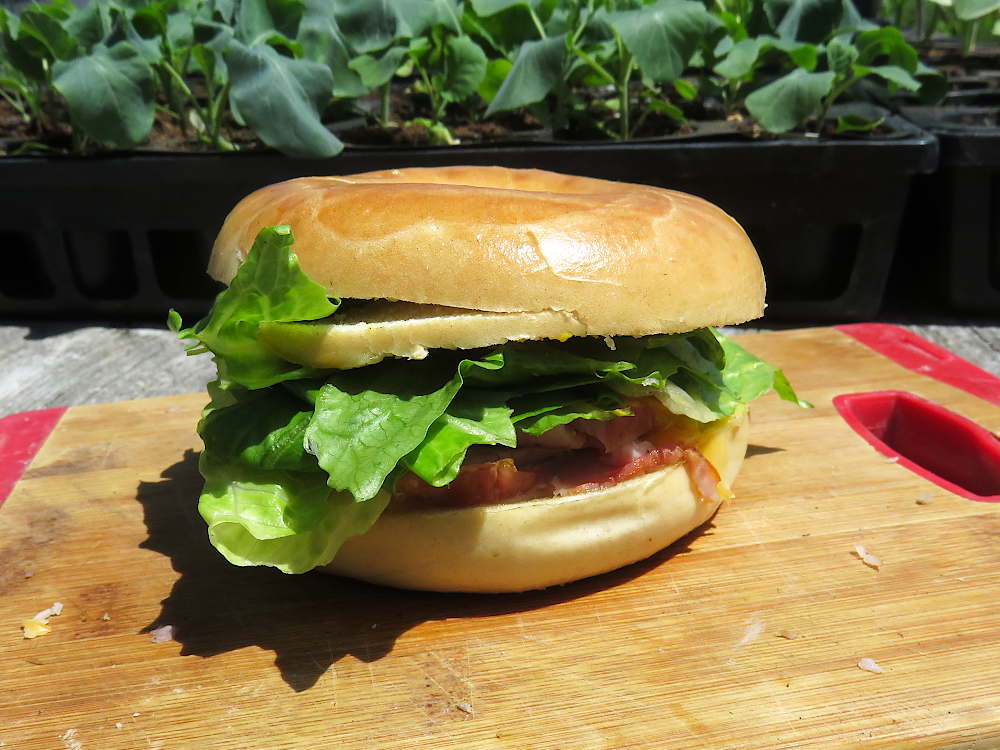
Here we are growing food, so it stands to reason that what we eat while working in the field matters. Like today’s midday meal, a slightly updated ploughman’s lunch I suppose, minus the beer. It’s an entirely supermarket-sourced concoction. Ham, cheese, and romaine lettuce on a bagel, with regular yellow mustard (French’s style, and French’s in fact). There’s no reflection of what’s growing in the garden. And future prospects of adding in the homegrown only really includes lettuce. Substantial, tangy, full-sun field grown lettuce would be magnificent. Other than that, getting hold of local baking isn’t hard, but costly. As for ham and cheese, prices are stratospheric for true small-farm local meat and dairy. One way or the other, we’ve all gotta eat—things will look up as the field fills out, as it always does!

Next generation

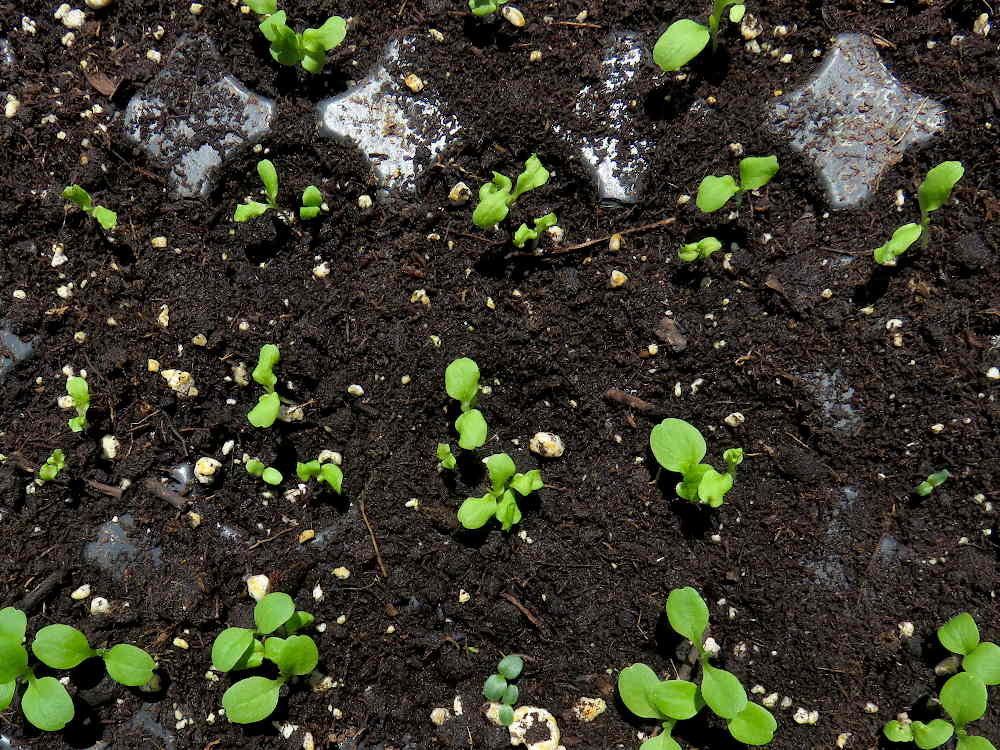
The second round of lettuce isn’t a next generation in a people having kids way, but it feels like one, as one seeding of lettuce grows to tasty salad size, while another is just getting started to take its place. Achieving an endless harvest is super rewarding (not to mention, necessary, if you’re going to market every week)—succession planting so that quick-to-mature, pick-once crops are steadily available at their peak all through the growing season. Salad greens like lettuce, mustard and arugula, baby bok choi and kale, also spinach, radish, summer turnip, green onions, and more can be planted repeatedly. Work out the timing, as things grow fast early on and slow down into end of summer and fall.

Oddly, in the hundreds or thousands of home veg gardening chats I’ve had, I can’t remember anyone beaming with satisfaction over their succession planting successes. It’s as if home garden seeding only happens in spring. Maybe lots of home tiny farmers do it, and just don’t like talking about it. It makes sense, it’s useful, and it’s fun to mention!