
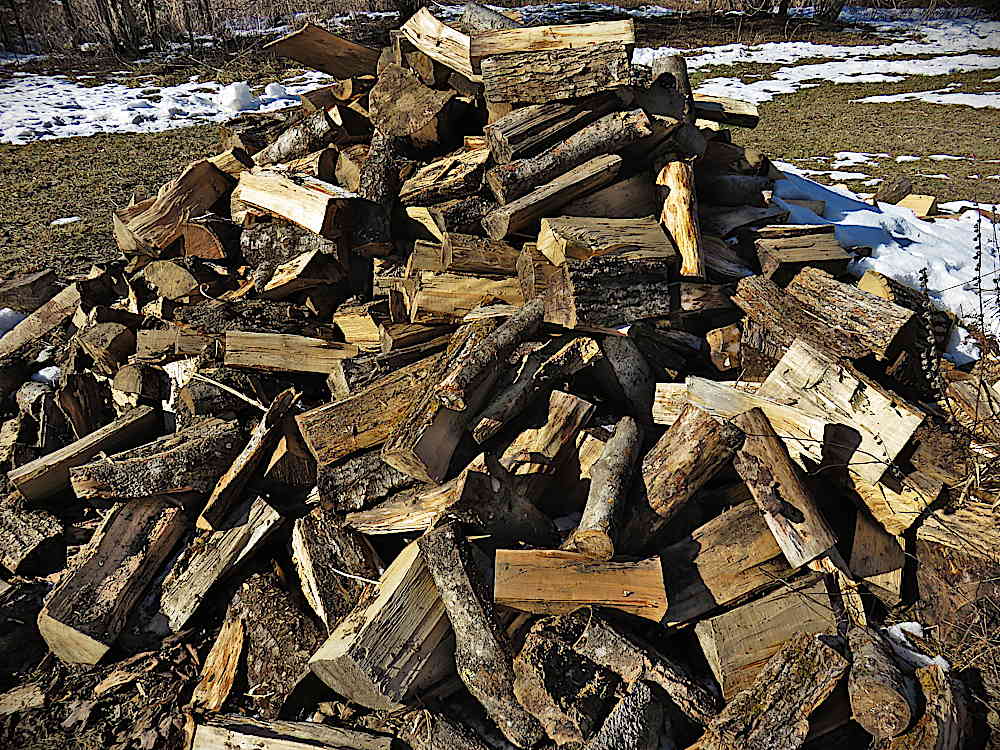
The last pile of firewood, hopefully enough to get through the cold weather. There’s more in another small stack, enough for a week or two, then this. It’s a motley collection, cut further north from here, from the zillion trees felled by that crazy windstorm of three-four years ago and hauled over. Different sizes of tree. Different species, mostly hardwood, but a fair bit of too-fast-burning softwood. Overall well-seasoned, lying around dead for years, and then cut and split early last summer. If it looks like “a lot”, you probably haven’t burned wood as a main heat source, when it’s below freezing day and night, the wood stove eats those big chunks like…bite-sized chocolate bars after Halloween. With the crazy weather, colder cold now seems to come only in spells, a couple days, a week at a time, then back to hovering around zero. We’ll see how the heap holds up!
Off-season
To winter or not to winter
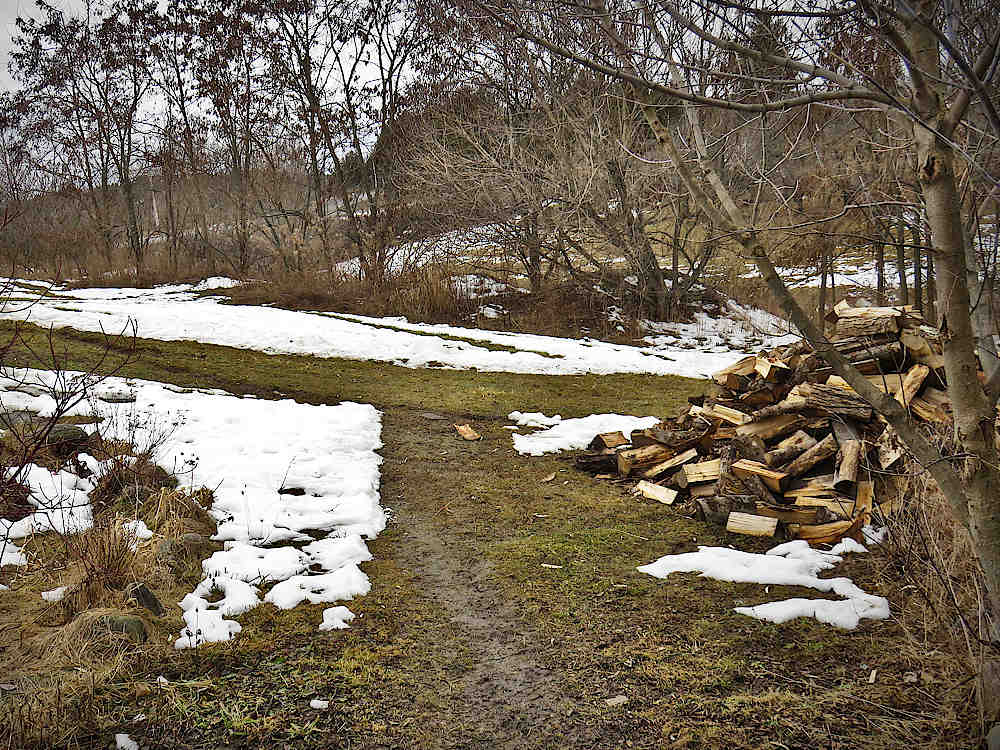
The snow is clearing pretty quickly. I haven’t checked the weather forecast for the next couple of days. It could go either way: all brown again, or…all white, again! We’ll soon see…
The veggies are alright
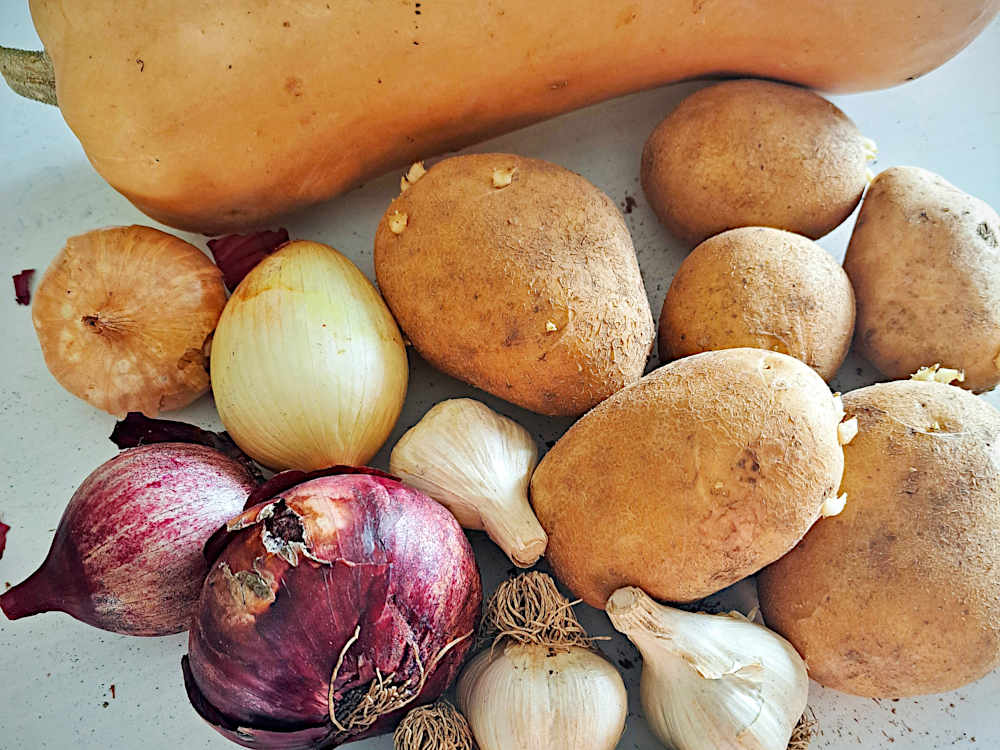
Checking in again with the veggies in storage, about a month after the last inspection, and they’re all still doing fine! The potatoes are starting to sprout. The red onions, not recommended for long storage, are losing their color on the outside, but still firm, and colorful a couple layers in. Garlic: check! Butternut squash, even with the healed nicks from last summer’s intense hail attack: check! Months since harvest, casually tucked away in a closet/pantry, still delicious!
Veggie sleuthing
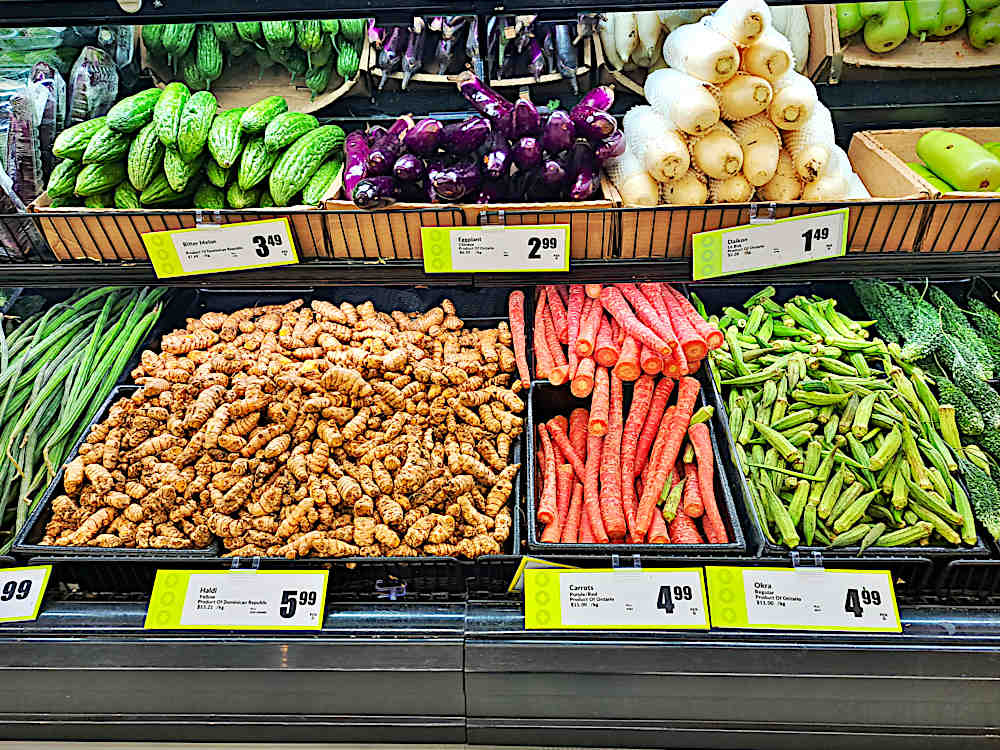
Part of the Asian/Southeast Asian veggie section at one of the local supermarkets. Most of these vegetables are unfamiliar, some I recognize. I usually scan for unusual shapes and textures when I roll by, but my curiosity is never that high. I suppose you could see them in an exotic, different cultures way; to me, they’re just…more veggies! This time, I decided to take a closer look, and took a pic on my phone (which was also my shopping list!). So what do we have?
ID-ing everything from the labels in photo and searching the interwebs for info, here goes. Top row, left to right: I couldn’t make out what that first plastic-wrapped veg is. Next, bitter melon, my mom grew this in her community garden. Used in Chinese cuisine. Remove seeds, keep skin, slice, use in stir fries. Or steam, or stuff. Next, eggplant, and daikon radish, both familiar, I’ve grown these. Then, squash (long) is what the label says, but this one has several names: opo squash, calabash, bottle gourd, and others. It comes in different shapes, like the decorative hourglass-shaped dried gourd version, or really long, or this stumpier look. For cooking, it’s another summer squash, like zucchini, so raw, steamed, boiled, sautéed, or grilled!
Bottom row, from the left: This long, skinny veg is labeled drumstick (label cropped out of photo), and it’s also called moringa. They’re the pods from the moringa tree, from Southeast Asia, India. Lots of superfood claims. When used as a veg, there are these pods, and also moringa seeds on their own. For the pods, cut up, put in soups and curries. Next, haldi, is another name for turmeric, which I have as a ground spice and use in my standard breakfast red lentils spice mix. Relative of ginger, native to Southeast Asia. Use fresh the same as powdered turmeric, grate or slice and add to soups, rice, whatever you like. Also, pickle (one way: lemon juice, salt, jar, fridge), use in marinades, blend. Then, carrot, purple/red, prepared a little differently with the tops and tips sliced off. And okra, also familiar. Last, the bumpy-textured veg is labeled karela, which turns out to be one of many names for bitter melon, so same as above!
And where are they from, fresh not frozen in the dead of winter? Carrot, daikon, eggplant and okra are from right here in Ontario, the drumstick is from India, and the rest were grown in the Dominican Republic. All of them I think can be grown here in colder country, except turmeric, which needs many months of warm weather (it apparently can be done here with a few months of indoor growing, then moved outside).
Now that I’ve finally LOOKED CLOSER, I’ll probably try some of the new veg. Of particular interest: drumstick and (remembering mom) bitter melon!
Winter wonderland for a while
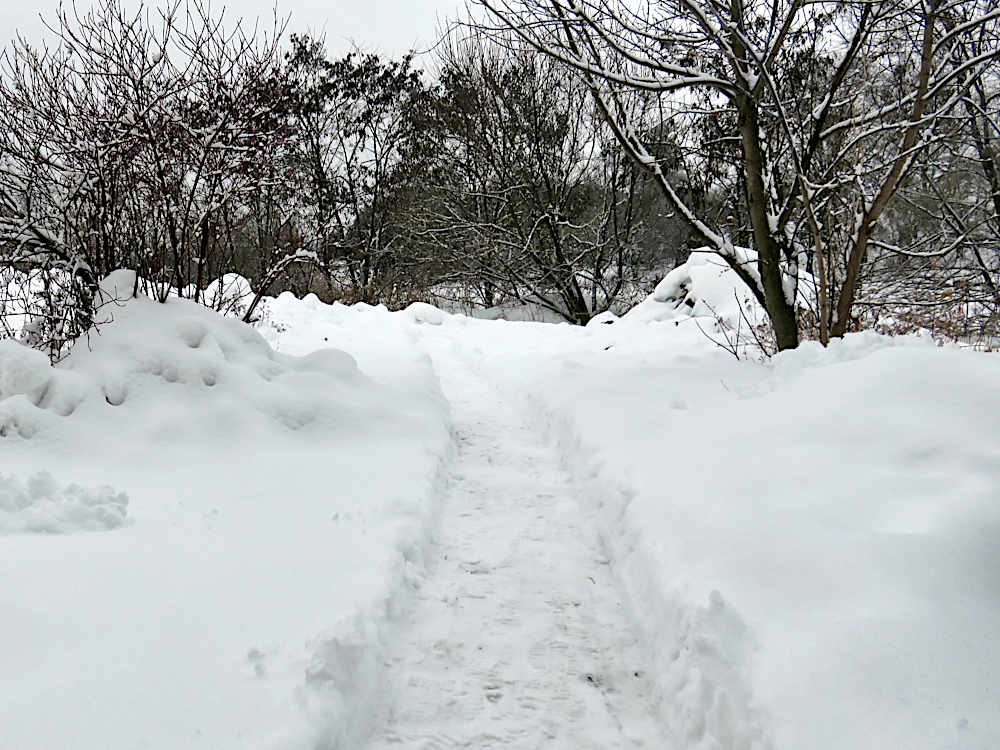
A few hours of steady snowfall blanketed the landscape and we have a magical winter wonderland postcard scene. It may be enough snow to stick around for a while, unless next, it rains!
Firestarter
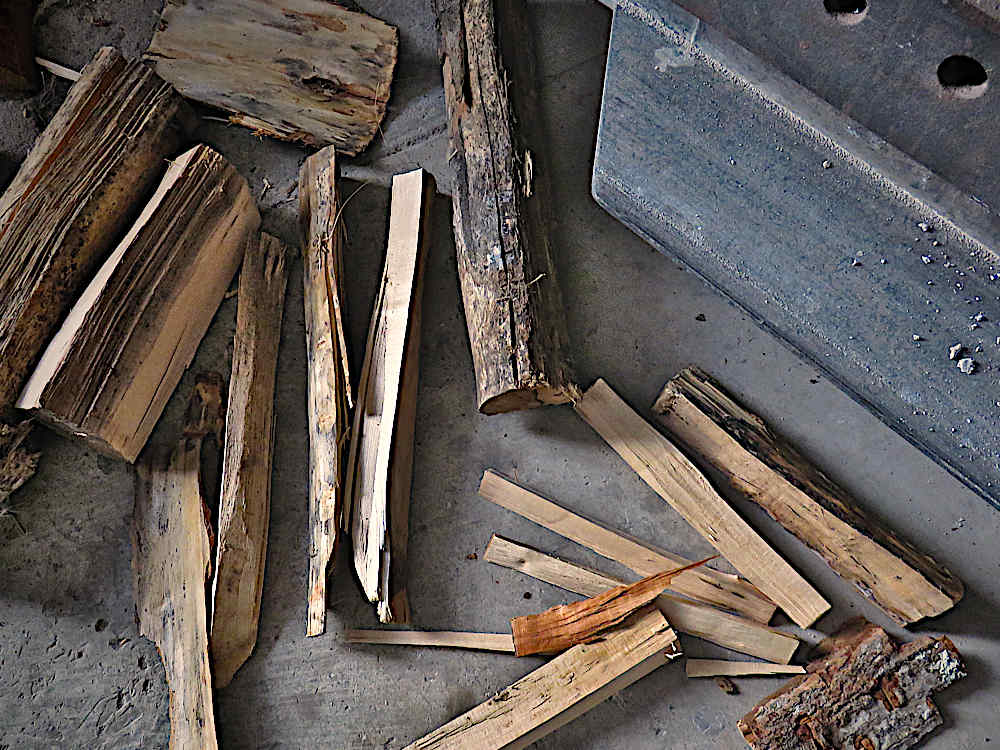
Wood heat has been the winter way around here for the last few years. The old wood stove, and stacks of firewood. In cold snaps, where it stays well below freezing, day and night, the fire is always burning. In the more usual dramatic temperature ups and downs, the fire is often left to run down overnight, and a new one built up early evening. I’ve become a little obsessed with firestarting using the least amount of paper and kindling, and only one match. I don’t suppose you could call that a skill, nor an art, but some kind of a game! I enjoy setting up for a dominos falling effect, but with fire. The easy-to-light, fast-burning paper lasting long enough to ignite the smallest pieces of longer-burning wood, which in turn start the next larger pieces, the bigger chunks get, the more steady, sustained fire it takes to set them ablaze. Idea for a video game?!