
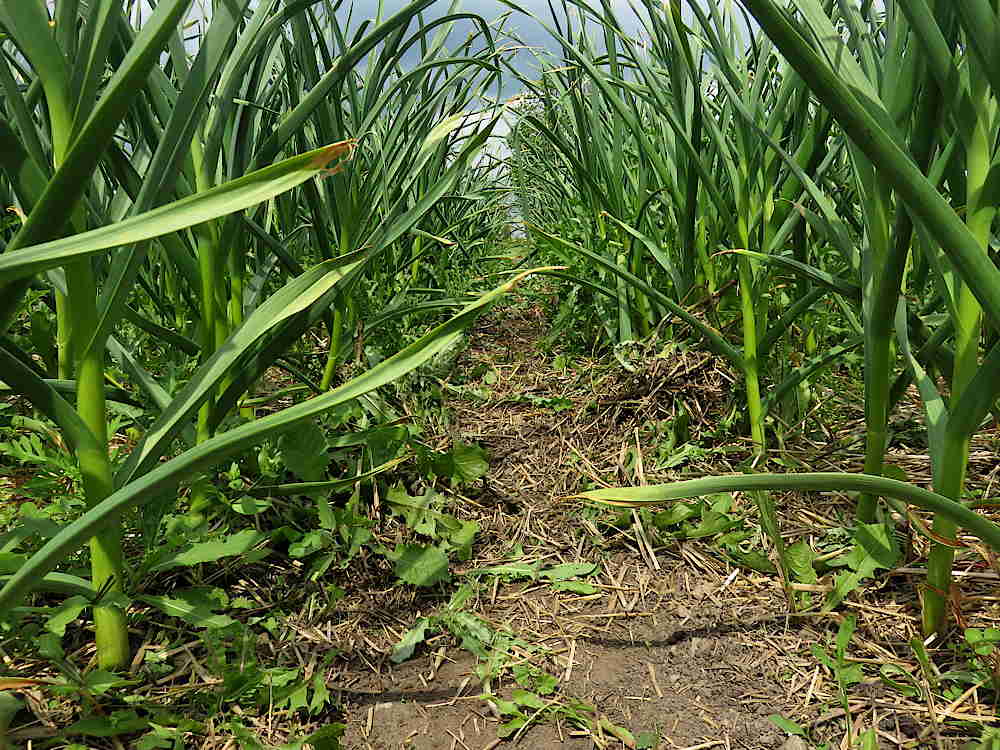
As a foot tall (30cm) version of myself, I can imagine strolling down the straw-mulched path between garlic beds, under the arch of slightly menacing leaf blades, stepping over dandelion leaves and dodging thorny thistles—the weed intruders—while admiring the thick garlic stems, with their promise of good-sized bulbs in a few more weeks. At this point, what could go wrong?! Sure, steady heavy rain over two or three days could leave the ground waterlogged and the garlic soaked and ruined for storage. It’s happened to me before. Call it a leap of faith, but I don’t think that will happen, not this year!
Veggies
Plug sheet gamble, part 2
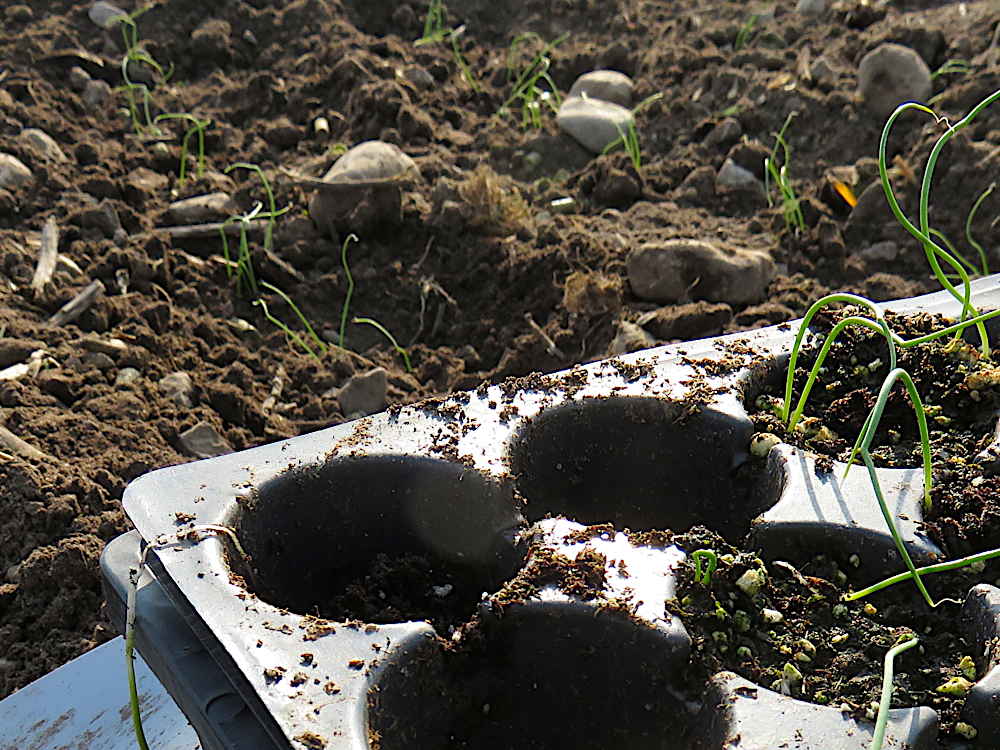
Only a few days after these green onions emerged, they’re in the field and heading into the ground. Haha, there’s no doubt this is a lot more labor intensive than using a seeder. Unless the weather conditions are really extreme, like a long, hot drought with scorching daily temperature and bone dry ground, it’s hard to argue for the plug sheet approach. But not impossible. Let’s see how they do…
IN THE PHOTO: A sharp and critical eye will notice that the seedlings in the tray seem pushed up against one side, instead of satisfyingly centered. This was my error, watering them in with a spouted can, along with a bunch of other seedling trays sitting outside. Onions don’t quickly put out lots of secondary roots that spread through the seedling mix and hold it together. Instead, at first there’s mostly just the radicle, that long white root that comes out of veg seed, heads down and, for most other vegetables, also branches out. So the plugs got kind of soupy and the force of the water pushed the onions to one side. You can see one hanging over the edge because it stuck more to the drainage hole in the cell than to the plug of seedling mix. Details! I should have remembered to use a shower.
Spring seedling snapshot tradition
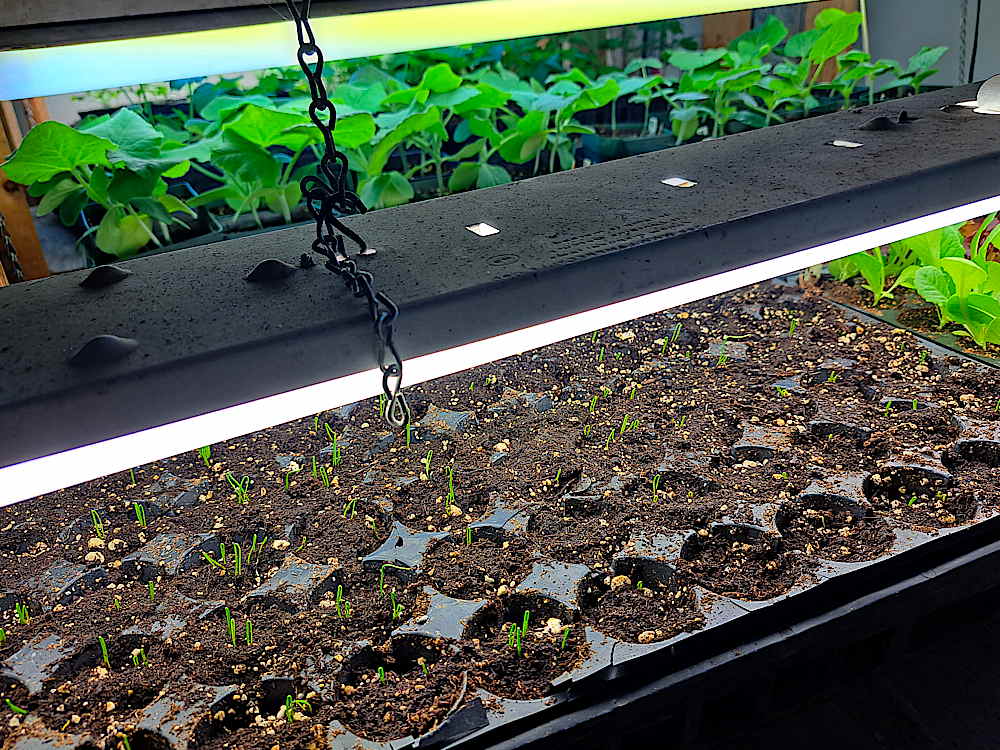
A pretty rough snapshot taken with my phone—its attempt to balance of sunlight and fluorescent doesn’t do the photo any favors—still fulfills the spring photo blog tradition of seedlings on the light racks. (More words to come…)
Plug sheet gamble
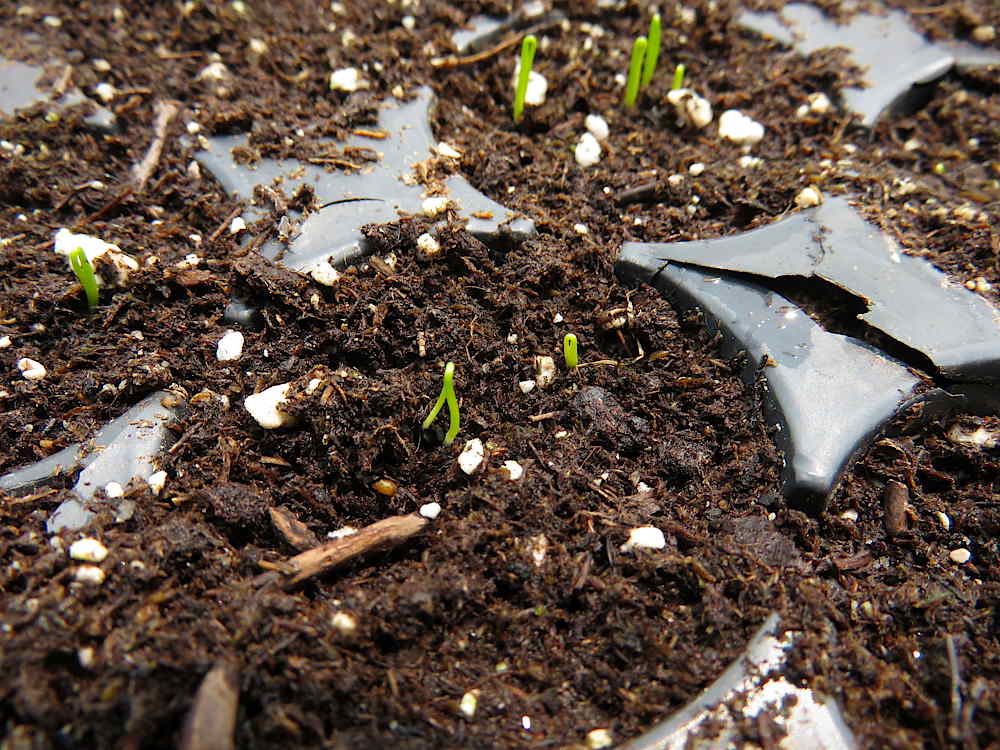
Starting green onions in a 72-cell plug sheet. I tried it last year and it seemed to work out. Instead of directly seeding green onions, then watering them for a few days on their way to germination, start them in plug sheets, where it’s easy to control conditions for good, quick germination, then transplant them. The tradeoff is in the extra time it takes to transplant, offset by the guaranteed good germination. The gamble is, as usual, on the weather. A day or two of gentle rain after direct seeding could be all they need for fast, even germination. A super-hot, dry stretch after transplanting could mean daily watering in for a bit. And so on, one little thing against another!
Cloning potatoes
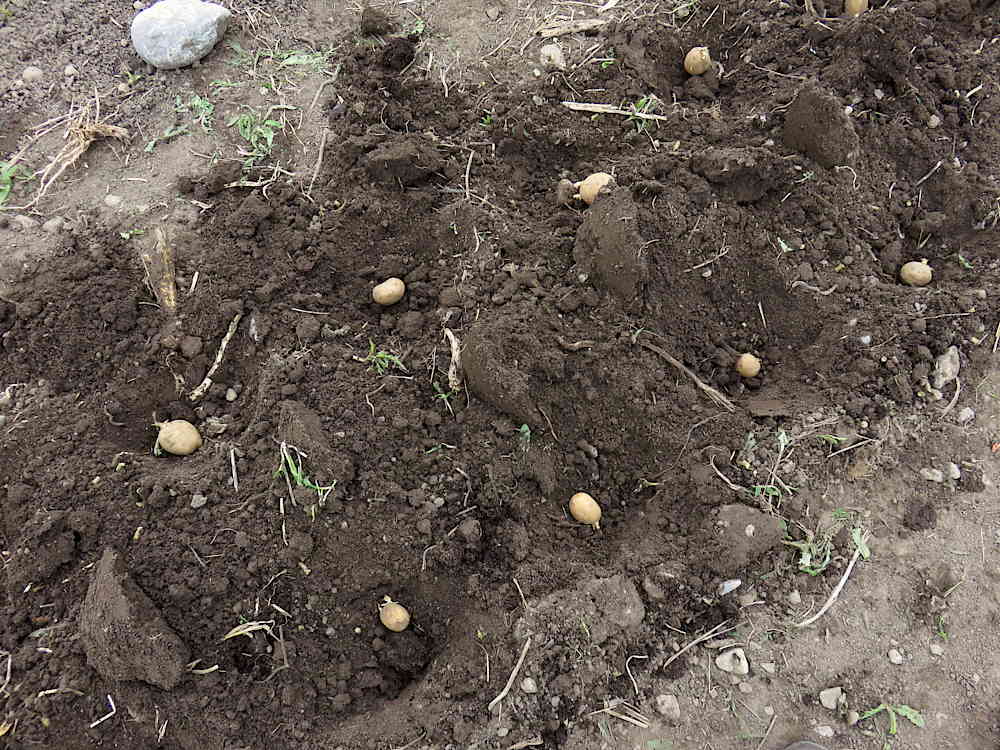
What a difference a word makes. Planting potatoes sounds so normal, wholesome, so farm and garden. Call it cloning potatoes, and now it sounds…weird. Really, it’s nothing special, just another word for the same old thing. Of the common garden veggies around here, potatoes and garlic are cloned: no seeds, no bees and flowers and pollination, instead, plant a piece of the original. Put a potato in the ground and it’s off to the races: vegetative propagation, direct multiplication—so simple!
In the photo: Yukon Gold seed potatoes. They’re regular potatoes, just smaller, and they haven’t been sprayed with sprout inhibitors (unlike many/most/all supermarket potatoes sold through the winter and till the next potato harvests).
Tiny jungle
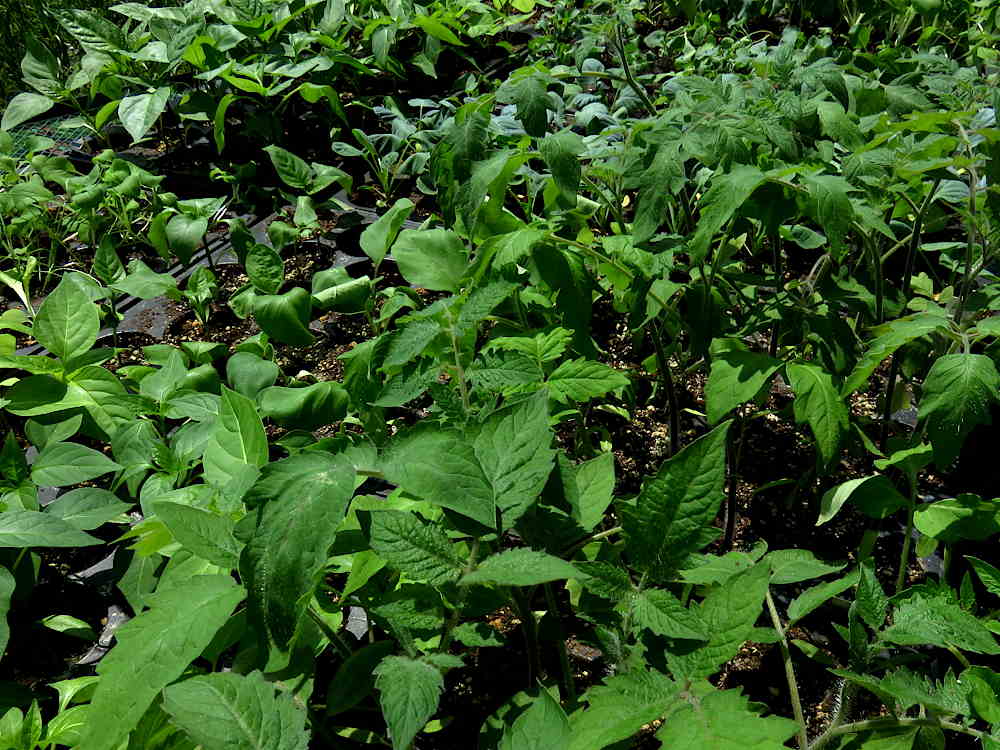
Hardening off seedlings on a mainly sunshiny day. I can see tomatoes, peppers, eggplant, Brussels sprouts, and bok choi. Some are for now, some a little down the line. I’ve been transplanting steadily bit by bit, rather than all out at one time, as a hedge against erratic weather changes. Same with direct seeding. It’s another experiment, and given our short season and the generally unpredictable weather, it’s risky. Then again, depending on the crop, I’ve seen plantings a week or two apart more or less even out. It’s always a gamble!
Transplants love drab weather
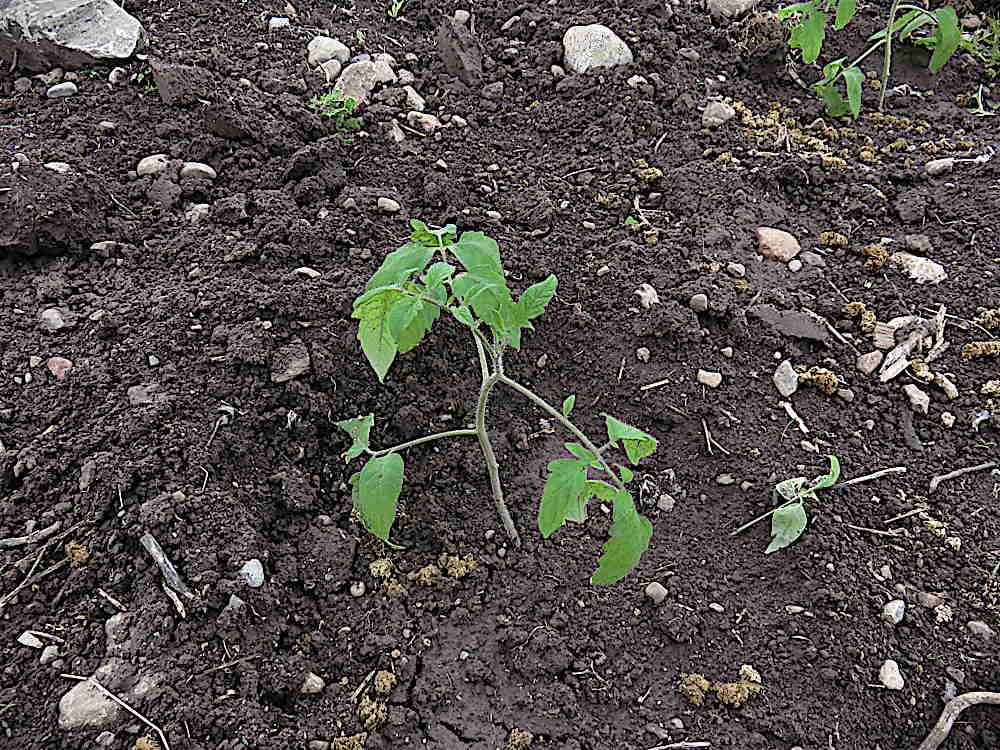
Transplants, like these tomatoes, do well in mostly overcast, even rainy weather for the first two or three days. Funny the way things in life can turn in an instant. One minute it’s put them in the sun, the next, welcome some cloud cover. My transplants start out under fluorescent light, a weak imitation of the sun: putting them out for a few hours, for at least two or three days, and back in to weaker light of the grow rack every night, gets them used to the sunlight. Once transplanted, though, they’ve got more to adjust to than sun. Their roots have been exposed and jostled. The nights usually get pretty cool in May, 20°F below what they’ve been used to. Maybe they sense the general vastness they’ve suddenly found themselves in, with a plant version of, “Oh my.” Whatever all is going on, it’s an adaptation. Full days of hot sun add the stress of having to pump more water into their leaves to keep from wilting. Although they’ll generally survive that sort of thing—as I’ve observed firsthand…—it’s easy to see the difference when the first few days have a good amount of cloud cover, and they really get rolling, stems thickening, the leaves turning a deep green. There are all sorts of ways, often way closer to ideal, to start seedlings indoors. For my simple, low-tech, rough-and-ready approach, this is how it seems to work!
In the photo: The little golden brown blobs scattered around are alfalfa pellets, used as fertilizer. They start of as hard pill-like cylinders, and expand to crumbly little blobs after being wet, then continue to break down as they join the soil food web.