
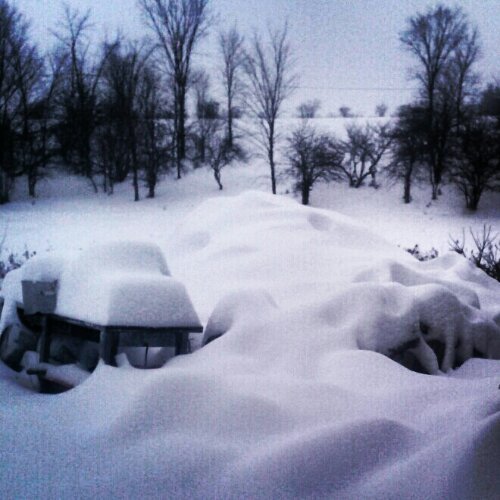
Just snow. At least a foot down in the last few hours and still falling, fast and blowing a bit, but far from what I’d call a blizzard. Pretty! Next, warm and raining forecast for a couple days from now to take it all away. Up to a couple of years ago, I still hung on to the idea of an annual schedule for when to start and stop watching the daily weather that would mark the beginning and end of the growing season. Now, it’s take it as it comes, any time. Always exciting! (Where did the woodpile go?)
Dirt Farmer’s Dialogue
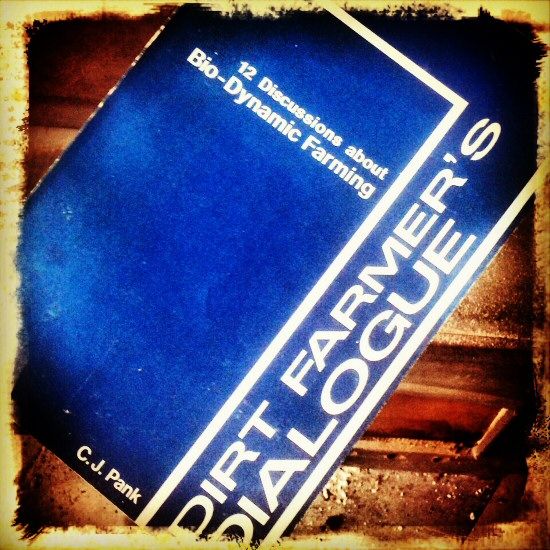
At the top of the winter reading book stack. From the 1970s. Bought by chance from a used book table in the trade show at an organic farming conference. Always fun to hear someone explain what they know and believe, in simple, articulate words. As opposed to…weasel words!
“When I am milking my cows in the barn early in the morning or when I am working in the field, sitting on a tractor for many hours with little interruption, sometimes with searchlights into the night, who is there to talk to? It is then that I have put questions to myself and tried to find the answers, and in writing about farming, why not retain this form?”
Um, why not! Dirt Farmer’s Dialogue, Carsten Jens Pank, B-D Press, 1976. More to follow…
It’s crispy out there
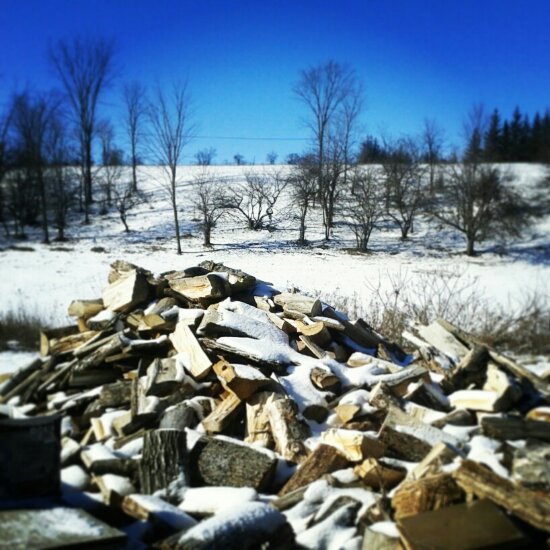
It’s crispy out there. The latest crazy weather trick seems to winter acting like…winter. Except colder. And with less snow. Still, the sun is getting higher, the days are getting longer, another season in the field…comin’ up! I’m quite excited!! (In the pic, next year’s firewood is a real wood pile, a motley assortment of softwood, hardwood, and the occasional bits of lumber, gathered from around the farm, and so much of it that it was easier to cut, split and pile for a while and sort and stack later.)
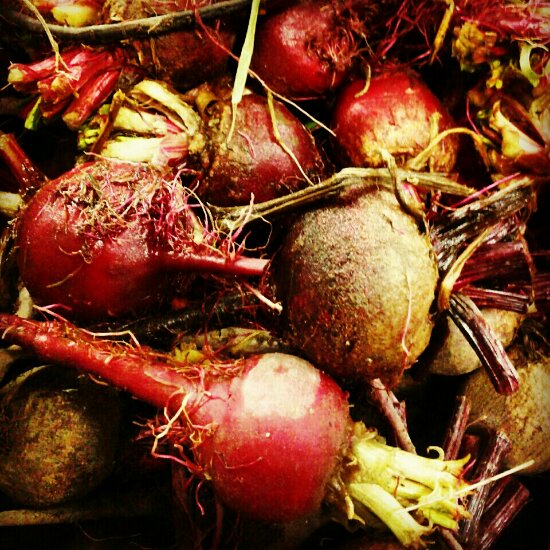
Winter market: third week!
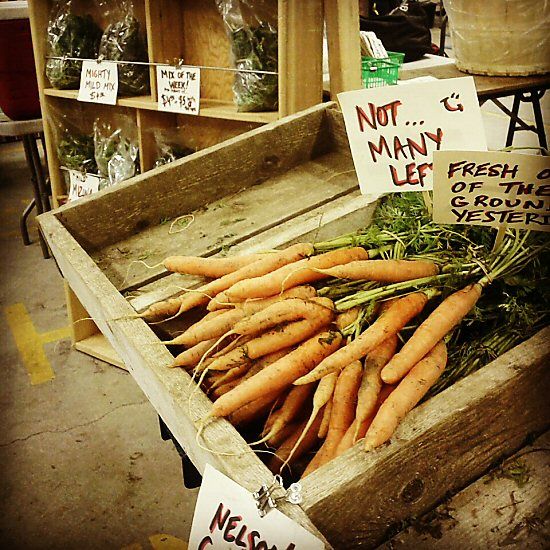
Third week of our first winter farmers’ market and it’s going great. So far, the weather hasn’t been bad, so it doesn’t seem entirely radical to have freshly harvested greens and carrots this late in the season, but it’s still quite a novelty at our market. One other small farm is doing the same season extension stuff for the first time this year, which is cool, it makes the idea of fresh, local food well past the usual outdoor season seem…doable. Which it obviously is. After the last few years of ending the market, outdoors, on the last Saturday of October, being up and running this late in the year feels excellent, and going till Christmas will be fun. Only downside of being indoors here is the rather ghastly lighting, but like most things, you get used to it, and warm is good. On the stand today (and almost sold out by mid-morning): carrots (Nelson), spinach (Bloomsdale), mizuna, mustard, arugula, everything harvested yesterday.
Garlic goes in again
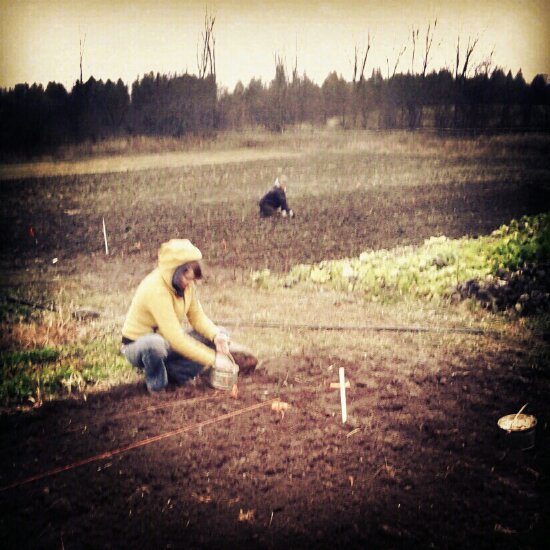
Yep, like just about every year, the new growing season starts here with fall garlic planting. Miserable, damp day, though not so cold. Andrea M (close) and Rochelle (far) are working on different sections to hedge bets on which areas of the field dry out first in case of a disastrously wet spring. Crafty! The little metal pails, paint pails that happen to be from…Home Depot, turn out to be perfect for this job (they’re useful all over the place). Handy!
Tiny Farm vs Elton John
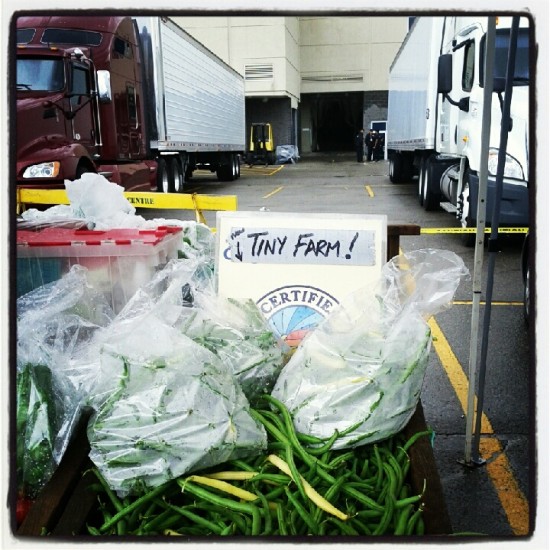
Tiny Farm vs Elton John: Senior rock star has decided to take his tour to smaller towns. It’s 7 a.m. in the on and off pouring rain, and we’re set up a few feet from a half dozen semis and a few tour buses that make up the Sir Elton tour caravan, loading into the local arena. Several of the buses are idling indefinitely, sending a low rumble under the rain. Around half of the farmers’ market area of the parking lot got appropriated for tour parking, forcing us to shove together in the remaining space. Lotsa grumbling…but that’s rock’n’roll, right?! (Update: That night, voice lost, he canceled. Oh well.)