
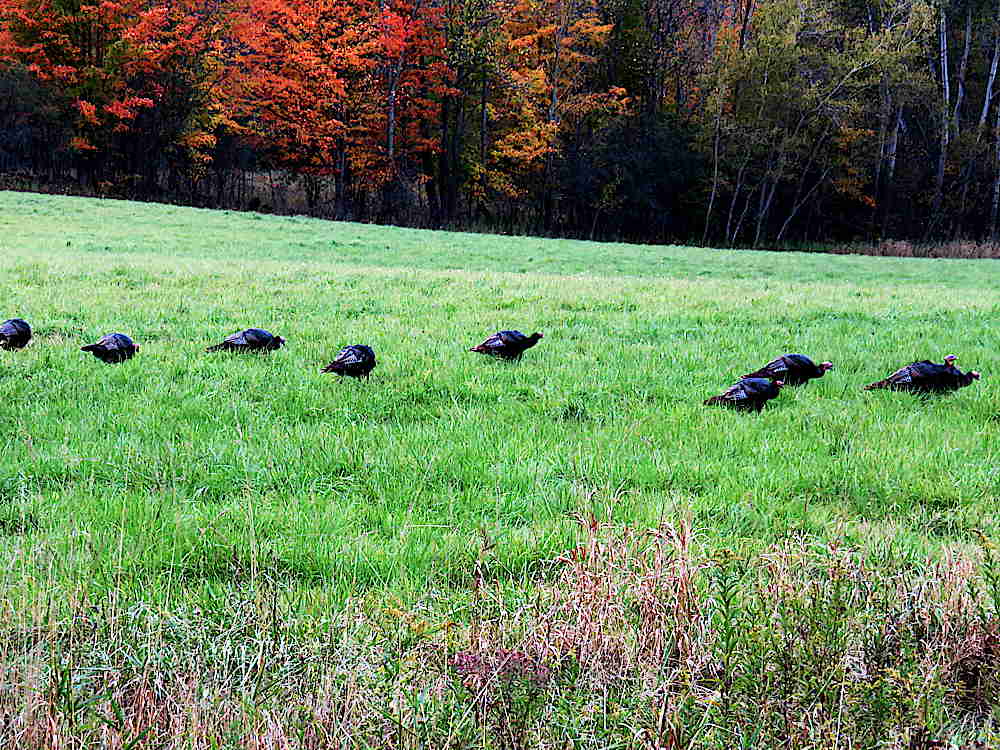
Wild turkeys foraging in a field. I see them all over, all seasons, always looking quite alien as they dart across the road, make their way in a straggling line across fields, take off on short bursts of flight for whatever reason. They haven’t bothered the veggie garden over the years, so I think of them as fellow travelers, their own separate tribe, in a near orbit that hasn’t intersected with mine. (I do hear their meat is excellent, lean and flavorful, though I haven’t properly tasted it, only in homemade meat pie.)
Autumn
Good gloves
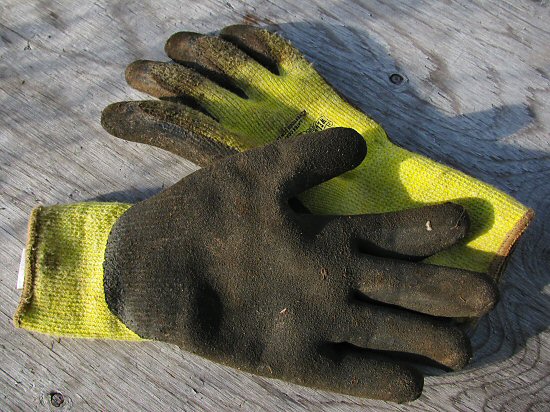
Used right, these gloves are quite fantastic. The different brands I’ve tried have all been pretty much the same: fairly heavy stretch fabric for warmth and a snug fit, and a rough-textured latex coating for waterproof protection and a good grip. Perfect for fall field work, when the temperature is around zero, and everything tends to be damp and cold. They’re close-fitting and not too thick, so the touch is sensitive enough for hand-harvesting of root crops in moist soil when you have to feel around, coiling muddy hoses, picking up various field debris. They’re also tough enough to use as work gloves, to move stuff like damp wood and metal. The trick is that they’re waterproof, and they also breathe, so your hands don’t sweat and freeze they way they would if they were completely waterproofed, but the tradeoff is, you can’t use them in water, only to grip wet things, the minute the fabric gets soaked, well, the fun is over. Most of the time, I choose bare hands: getting nicked, freezing, whatever, it’s usually worth it for that direct contact, and gloves are one less thing to keep track of. When I do decide to use gloves, having the right ones for the job is a little pleasure, and these guys have their place. Nice!
Cold-grown salad
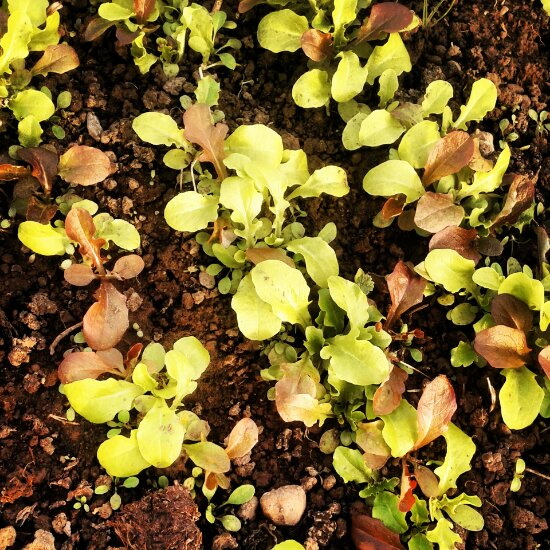
Cold-grown: Tiny lettuce leaves, crisp, fresh and delicious…and grown oh so slowly, without cover, in the unheated greenhouse, through many freezing nights, some down to -15C. Still a while till it’s big enough to harvest, and it was seeded way back at the beginning of October: that’s already 50 days compared to the usual spring/summer 25-35 days for baby lettuce mix). Also, the cold effect gets trickier as the leaves get bigger. All in all, though, seeing food grow in the cold with a minimum of help is quite fantastic.
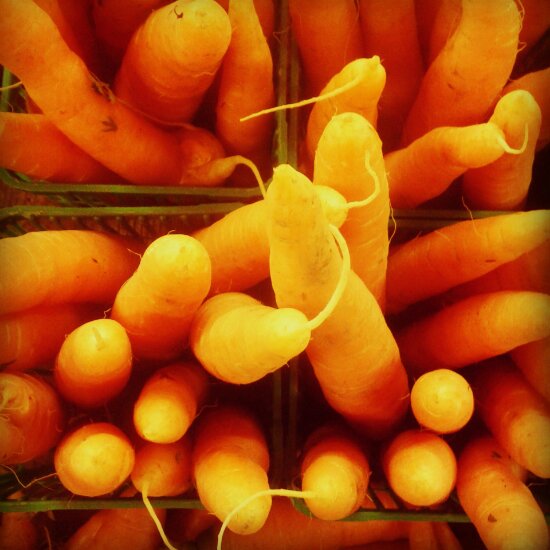
Winter spinach
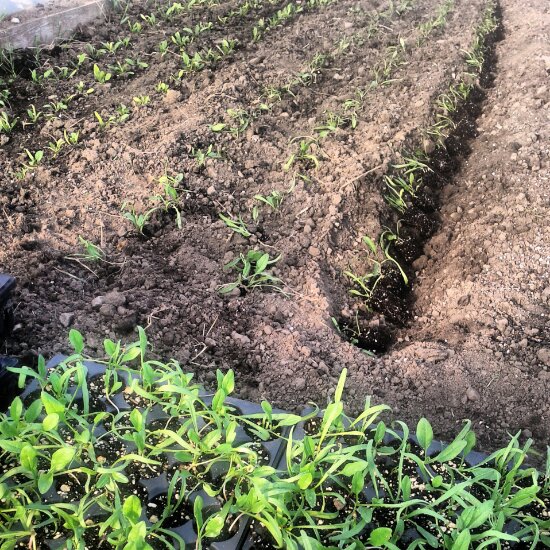
Later and later we go: More late season/winter harvest experiments, with four-week-old spinach transplants into the unheated greenhouse. Also trying out a trench approach to transplanting—a furrow about 6″ deep, made with a hoe—instead of putting them in one by one. Seems a little quicker, but it all takes time!