
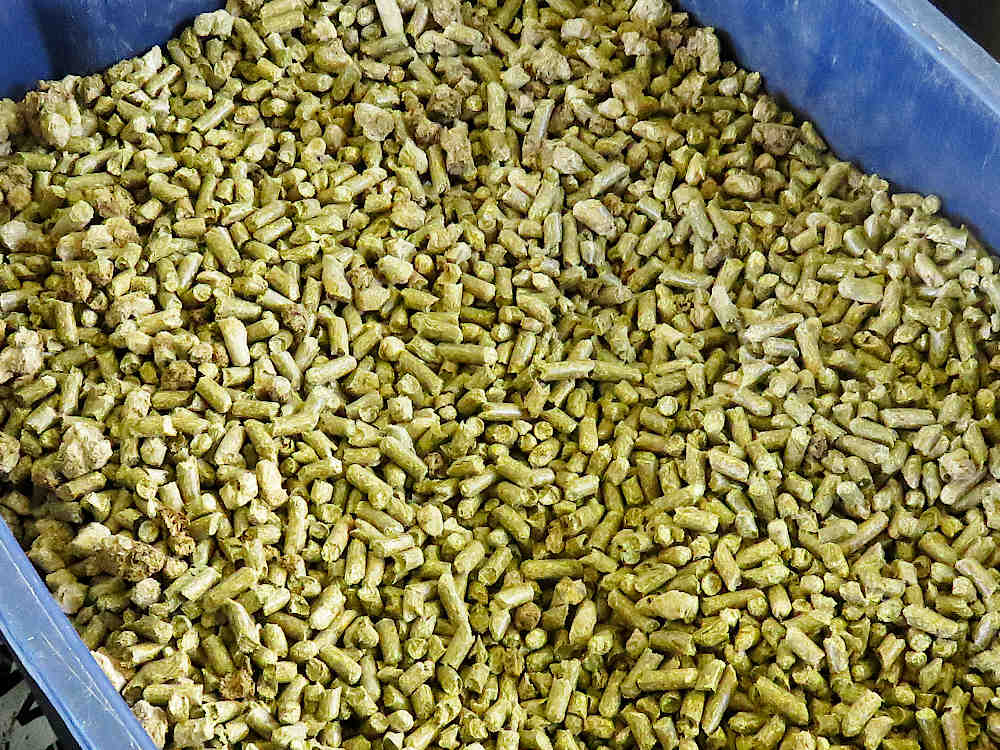
One person’s low-interest bin of unidentified golden-brownish stuff, is another’s stash of pelletized alfalfa goodness. This is plain old alfalfa, the plant in the pasture that cows especially love, dried and compressed into pellets. No additives, nothing but dry plant pills. They’re a great fertilizer in the veg patch. One season, I counted on mostly pelletized alfalfa, instead of the usual cow manure, as the main plant food and it worked out fine. It’s also quite inexpensive, compact, easy to store and spread. Nowadays, I use it to top up beds over the season, after the main composted manure spreading. At one point, I had all the numbers – how many pounds/kilos per bed, cost per acre – and nutritional details, in front of mind. Now, using it as a top-up, all that has receded and I eyeball it. Just scatter.
fertilizing
Building Soils for Better Crops
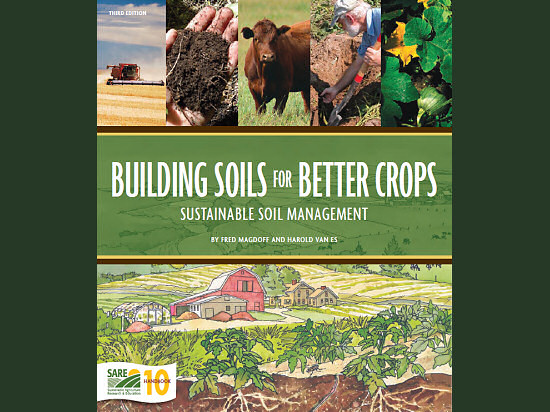
Had the downloaded digital version of this book since the 2nd edition, for at least a couple of years now, dipped into it, but still haven’t read it through. I should and I will. This winter! The 3rd edition of Building Soils for Better Crops: Sustainable Soil Management came out last year and it’s even better, full of practical science for the upward-looking tiny farmer and veggie gardener. Here’s the blurb: “A one-of-a-kind, practical guide to ecological soil management. It provides step-by-step information on soil-improving practices as well as in-depth background—from what soil is to the importance of organic matter. Case studies of farmers from across the country provide inspiring examples of how soil—and whole farms—have been renewed through these techniques. A must-read for farmers, educators and students alike.” The PDF version is a free download, the printed version is about 20 bucks. There’s a fair number of soil books and books that cover soil out there, but for the tiny farmer, this is pretty much one of a kind.
Different kind of compost heap
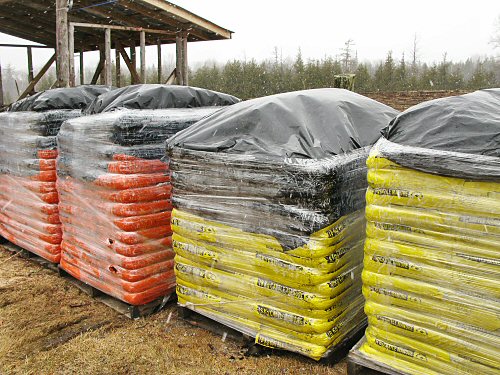
Back to cold and wet, with a bit of snow… Today was an interesting first in my brief tiny farming career: compost on skids! Fertility delivered! How convenient… This is about 5.5 tons (5,000kg) of fully composted, certified organic cow and sheep manure (half and half). According to the people who make it, at this point there’s no appreciable difference between manures, it’s all just high-grade compost now. Our organic certifier agrees: it’s “legal” to use any time, unlike any type of manure, which has to be spread a minimum of 90 days before veggie crops are planted. So here it is, from around 65 miles (96km) away, via flatbed truck and forklift up the drive…
This is a one-time thing, part of what we’re doing to start the market garden from a hay field plowed late last November. Unlike at the old farm, where cow manure was well-aged and plentiful, available by the ton, there are so far no animals here.
While I like the idea of animal manure, and find DELIVERY kind of odd and offputting, the current reality does force one to really think about hidden costs. The cows at the old farm ate far more hay than the farm produced, which meant buying in, so all of that free, on-farm manure wasn’t exactly free, or on-farm. Factor in the total cost and complicated logistics of raising and selling local beef, and the relatively low return, and manure on a tiny farm can seem quite unsustainable.
In any case, maintaining fertility here is a whole new game. Green manure, compost, and a small amount of on-farm manure, from chickens first, are this tiny farm’s future. And today’s delivery is the kickstart. Here we go!
Hitting the books: Composting!
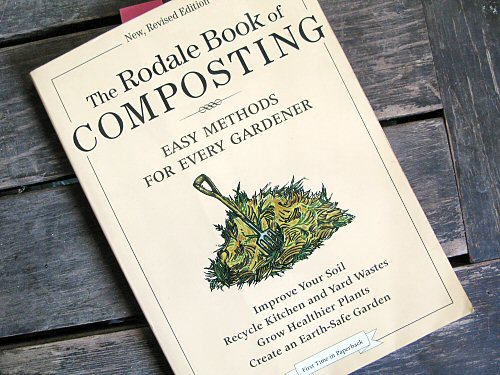
Winters on the tiny farm have always been a time for research and a bit of book learning. My first two seasons were crazy for reading, especially the winter before Year 1, when I had four months to pick up enough, from zero knowledge, using books and the Net, to map out the initial one-acre plot, order seed, get some gear, and “pass” the initial organic certification inspection, in order to start the market garden that spring. That was fun!
Over the last six years, though, a curious thing happened. My original urge to find out how everything worked, to soak up endless technical detail, full of labels and scientific explanations, died down quite a bit—often I’d rather watch a squash decay than read about it…
It seemed more fun to find specific, practical solutions on the farm: how to fix this or improve that. At the same time, I’ve become more and more aware of the growing process as a whole (and really, how relatively little I have to do with it…), not so concerned about its parts. It’s a little hard to explain, though real easy to feel. Maybe it’s just…a phase!
MEANWHILE, this year, Year 7, is a bit of a shake-up. Compared to the old farm, the new farm is pretty bare-bones. One big change: I don’t have the tons of well-aged, almost completely composted cow manure that was available there.
Every year, I made manure-based compost in 50′ (15m) windrows, incorporating crop residue and culled veggies, turning it with the tiny tractor, checking it out, but it wasn’t CRITICAL to fertility. A fall spreading of fine, on-farm, composted manure always did the trick!
Now, with no on-farm animals yet (chickens to come first!), and no prospect of generating huge amounts of manure, compost that relies more on plant sources will be my new friend. Composting and green manure are on my mind.
New necessities require…new learning! So along with everything else over the last 2-3 months, there’s been a more intense hitting of the books, thinking over, chatting, scouring the Net. It’s not exactly like starting over, but it’s definitely…FRESH. I’m excited. More as it happens!
Manure spreading action!
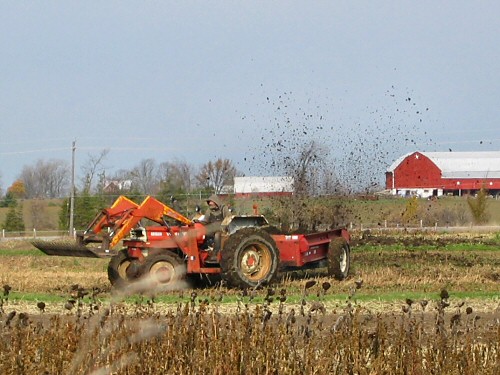
A satisfying few hours today, spreading year-old cow manure on the market garden. Bob and the old White 70hp handled the spreader (and you can see a rock picker attached in front!). I used the Kubota compact tractor to fill from the aging pile in the yard outside the loafing barn. Spreading, and the infrequent moldboard plowing, add up to an average of maybe a couple of full days a year of big tractor action. For 2007, this was a good chunk of it! (Guest photo by Karen.)
A spot of tea…
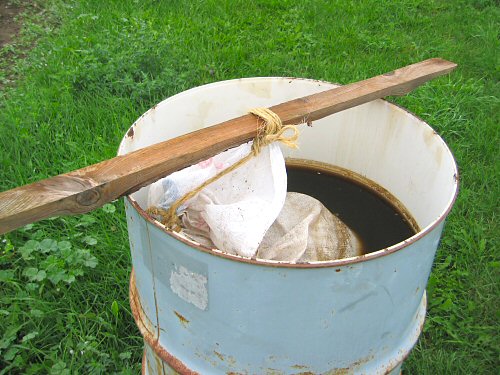
Steeping compost in water is all it takes to come up with a healthy batch of…compost tea. Here we’ve taken some composted cow manure and let it sit in a 55-gallon barrel of water for a few days. There are different methods, ingredients, and all kinds of other details about preparing this stuff, but I’m still in the broad strokes experimental stage: I make it up somewhat differently every time. This time, three barrels are going around the field, strategically placed next to mesclun beds and spinach. Hopefully the small amount of nitrogen, assorted micronutrients, and other possibly unidentified good things will give these late season plantings an extra growing boost! They’re used diluted maybe by half, applied with good ol’ watering cans, then soaked in hours later with a solid hose watering. Veggies don’t get more hand-tended than that! :)
(NOTE: There are different types of “compost teas,” different ways of making and using them, and lots of different opinions about all of this. If you’re thinking about making your own compost tea, a couple of good places to get some quick, general info are Wikipedia’s Compost tea article, and ATTRA’s Notes on Compost Teas.)
Compost tea
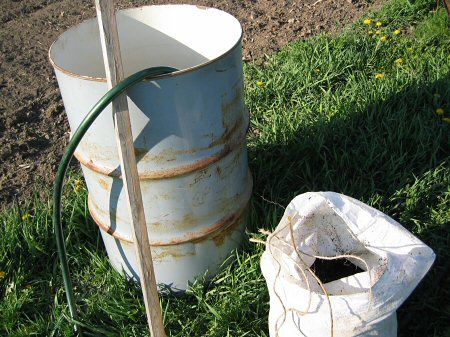
Here’s something easy that could come as a kit: a compost tea maker. One 55-gallon barrel, one strong, porous bag (this one’s a woven plastic grain sack) full of compost, some heavy twine, a strong stick, and water. Tie the sack to the stick, place the stick across the top of the barrel so that the sack is suspended, and add water. In a couple of days, a natural, healthy snack for selected seedlings. Apply by watering can.