After the row cover: weeding!

Weeding after row cover

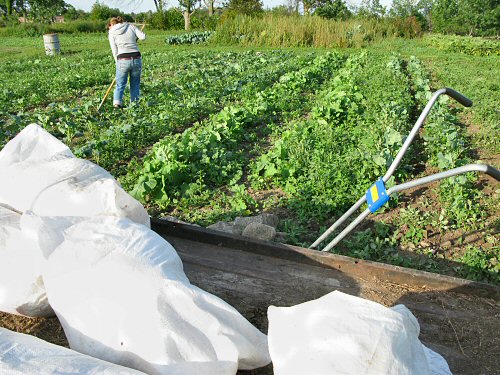
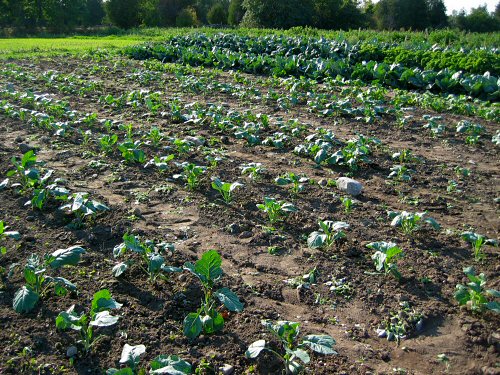
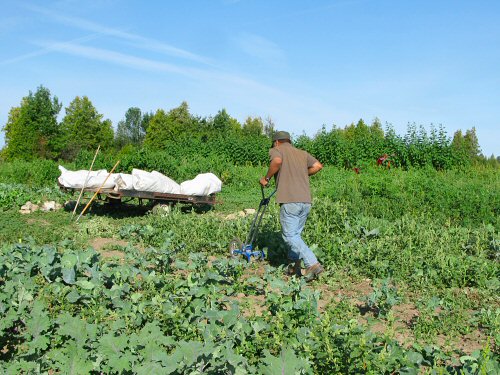
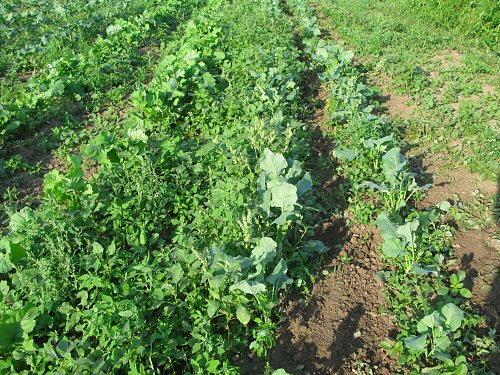
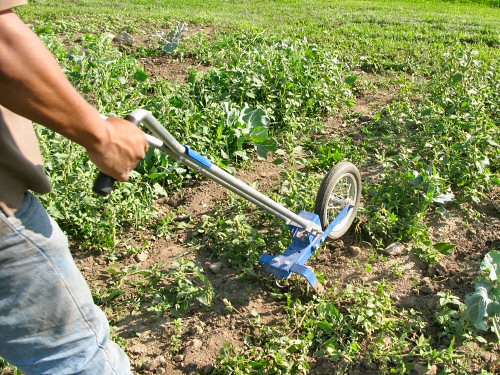
It’s been about six weeks, time to permanently remove the row cover from the last transplanting of fall brassicas! There are two sections, about 20 x 50′ beds in all, with broccoli, caulflower, cabbage, collards, kale. The cover protected against flea beetles, and at this point in the season, the FBs aren’t around much. Which leaves the post-cover weeding! I generally plan to remove the cover earlier, weed, and then replace it quickly, but this seldom seems to happen. Instead, it’s one big weed-a-thon at the end… Here, the mainly pigweed looks fairly big and dense, but it’s actually not much of a problem. The row cover has protected the ground from many days soil-packing rain, so the beds are nice and loose (it’s amazing how much rain can compact clayey soil).  Weeds come out easy! With two people, it’s a relatively quick job, 2-3 hours for a pretty thorough clean-up. We worked with a combination of hoe and wheel hoe, me doing the paths and between-row clearing, and Lynn hand hoeing in-row, between the plants spaced at 18″ (45cm)…

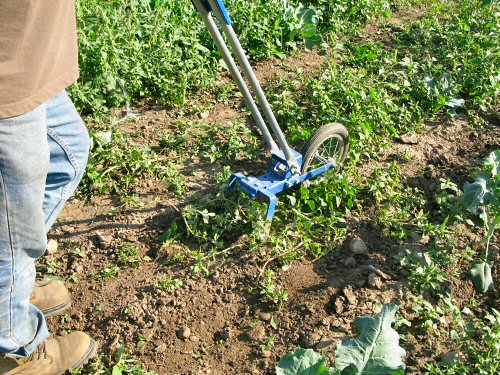
Each time I use the wheel hoe, I grow to love it that much more. So easy, so TIME-SAVING! It’s such a sophisticated yet simple tool, a perfect marriage of wheel, leverage and steel (you could say! :)… Today’s job is heavier work than it’s usually used for, the weeds aren’t just emerging, they’re pretty big. Rather than rolling the wheel hoe continuously down the rows, I’m cutting the weeds with a series of forward and backward strokes that either slice the plants below the surface, or pull them out, roots and all…

Clearing a path (before and after, above) in the loose soil takes maybe 3 minutes for 50′, many times faster than hoeing or hand pulling…

For this heavier weeding work, I use a fairly forceful forward stroke that travels about 1-1.5′ (30-45cm), then raise the blade to clear the felled weeds as I step forward to start the next bit…

The wheel hoe is equally good at cutting on a backstroke, which comes in handy for dense areas and tough specimens… It’s not particularly strenuous work: the blade is sharp, the wheel and angle of the handles give lots of leverage and momentum, and some part of the hoe is always in contact with the ground, so you’re never completely lifting the whole tool. Like most things I do here in the field, I’ve figured out how to use the wheel hoe on my own, by reading instructions, looking at pictures and applying my version of common sense. Techniques no doubt vary. It’ll be interesting to eventually see how others do things! Meanwhile, everything seems to work out…especially, the wheel hoe! (Wheel hoe action photos by Lynn)

Latest brassicas released

On this bright and shiny Sunday, we finally released the last of the season’s brassicas from under row cover. The flea beetles have almost vanished and the plants need all the light they can get if they’re gonna make it to harvest. It’s still a bit of a long shot for the broccoli and cauliflower, but the early and prolific Red Russian kale should do fine. For what it’s worth, the long range forecast calls for a warm September—I’m still starting to slip into frost watch mode!

Radish without holes

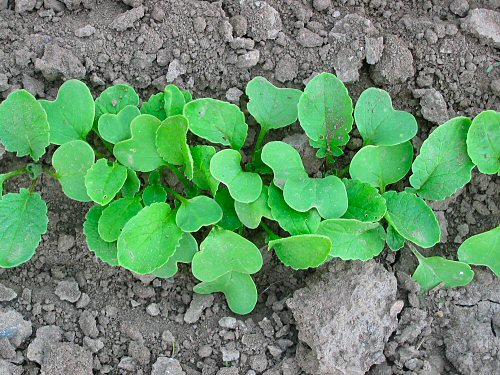
Radishes not riddled by flea beetle bites—it’s a slightly startling and definitely heartwarming sight! The winding down side of the season has its kinda downbeat MINUSES, like frost watch and wholesale row covering/uncovering, and the one special night when most tender crops get toasted by a hard frost and die (even under cover)… It has its PLUSES as well. Round about now, pest pressure declines dramatically, soon to vanish, and that includes PIGWEED, and the tiny but savage flea beetles (cucumber beetles stick around in small, determined numbers right into the subzero nights, but their damaging days are over for the year). Also, the need for irrigation is almost certainly over. These Rebel radishes were planted mid-August and with the recent rain, they’ll do well. Over the last few days, we’ve been laying in more beds of radishes, plus lettuce, spinach, zesty brassicas like arugula for salad greens, even some bok choi, in case we catch an extra measure of sun and warmth during the last of the good growing days. Bonus fall crops? With the pests packing it in, pushing for the latest growing date is the easiest gamble of the year!

Flea beetles

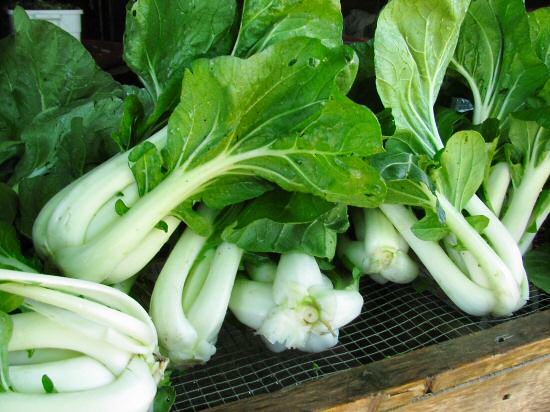
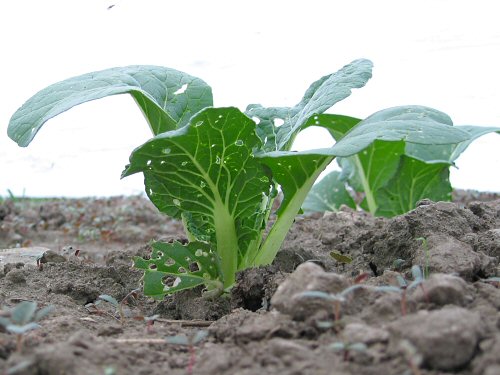
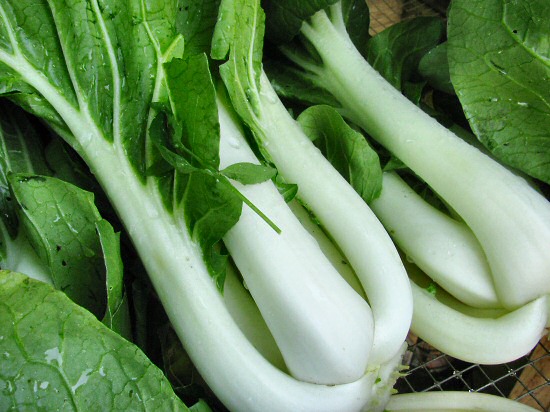
All of the brassicas, except for radishes, start out under floating row cover. It’s the only way they’ll survive the flea beetles. Around here, the FBs are a clear and present menace to the cabbage family. They chew little holes in tender baby leaves until nothing but stems and dried out leaf skeletons remain. It’s awful. I could use organic sprays, like rotenone or pyrethrin, but although they’re “approved” and from natural sources (other plants), it seems to me a slippery slope, or at least habit-forming. I haven’t sprayed so far. I did try a garlic blender concoction as a repellent once, but it was like cooking for the FBs, they hopped off and hopped back on once the spraying stopped: salad dressing! Anyhow, this is bok choi (pak choi). FBs eventually managed to get under the edges and do a bit of damage, but that’ll be outgrown, bok choi grows fast (as do radishes). Once the leaves get a bit more substantial, the FBs can’t as easily chomp on ’em. Cauliflower and broccoli, under this same 14′ wide sheet of row cover, are untouched. FBs REALLY like bok choi!