
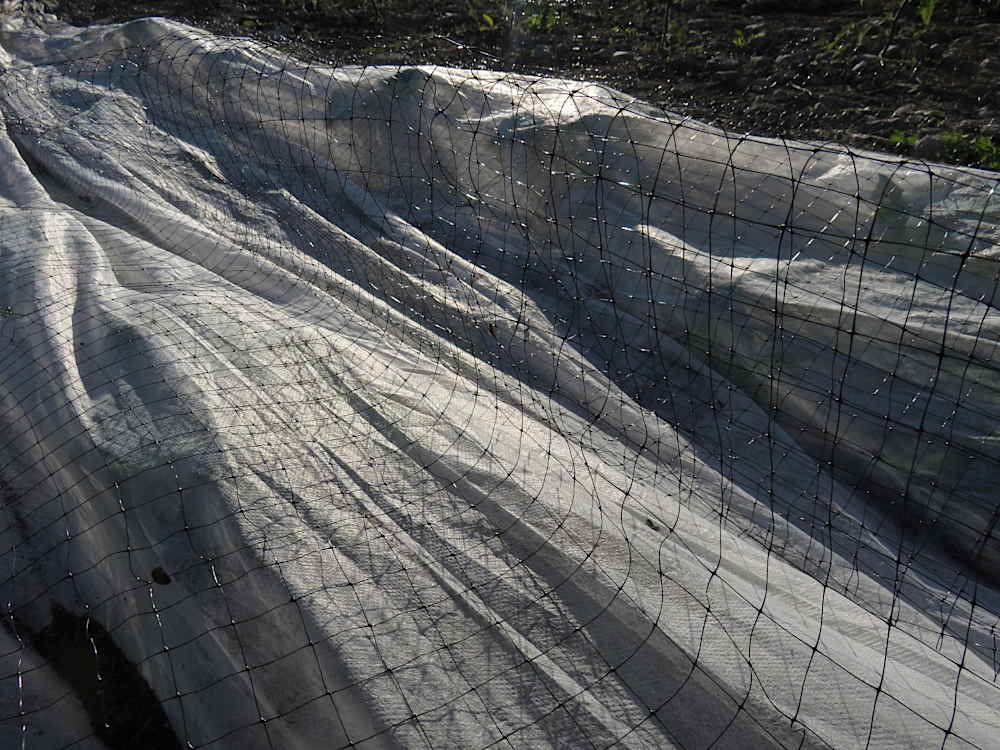
Layered protection for beds of cabbage and cauliflower. First, row cover for the flea beetles, who are out in force as usual. Loosely laid on top, deer netting, that doesn’t actually work for deer (it didn’t for the deer around here) but will hopefully deter the groundhogs. The net could easily be chewed through, but it’s springy, tensile tough and very easy to get tangled in. That may be enough!
cauliflower
Mid-September harvest
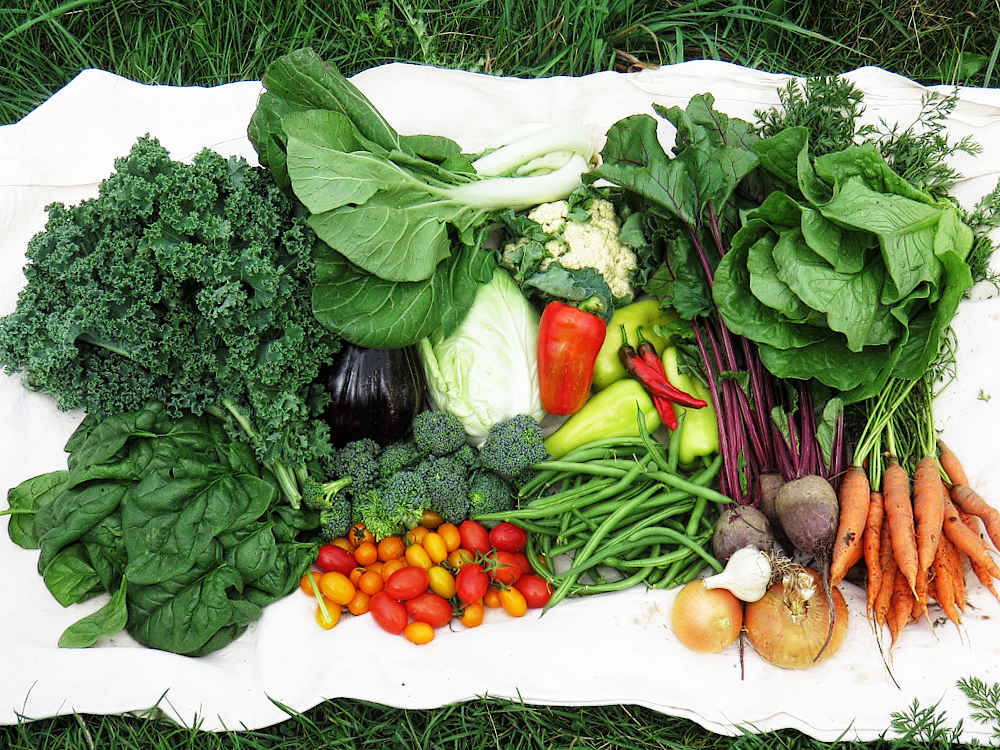
The weather’s been fine, no big frost worries, and the harvest is nice. For the sake of a list, in no particular order, we have: spinach, onion, garlic, carrots, bok choi, broccoli, lettuce, cabbage, kale, hot and sweet peppers, cauliflower, cherry tomatoes, green beans, beets, and…eggplant! I think I got ’em all. The set-up on a strip of canvas is for a newsletter photo–the lighting is an overcast sun, the studio is the field!
Toughening up
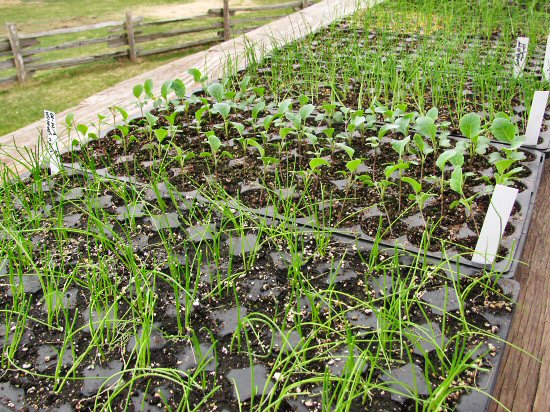
Today, it’s a warmish (57°F/14°C), overcast, gray day, with a light breeze. In the next week or so, the unheated greenhouse is to be relocated, set up, and outfitted to house hardier seedlings. All things considered, right now is a fine time to start this season’s hardening off… In early afternoon, we set outside trays of onion, cauliflower and broccoli, preparing them to head out from the cosy shelter of the seedling room to the real world. They’ll stay out till early evening, then it’s back in for a few more hours under the lights, and more of the same for the next few days. These first acts and sights of spring on a tiny farm never fail to excite (I think it’s the gambler in all of us)…
In the cold garden
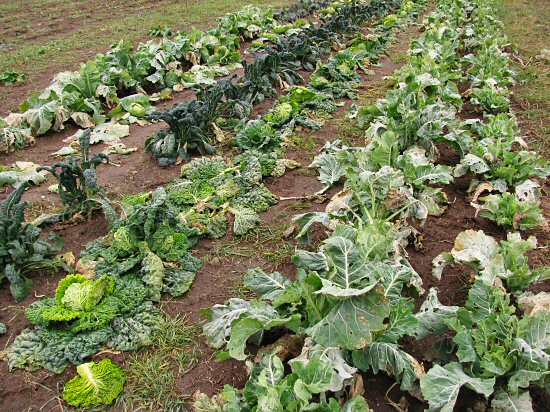
The star by far of the last planting of brassicas, that mostly didn’t size up in time for market or CSA, is without at doubt this unusual Nero Di Toscana strap kale. This Italian heirloom, apparently from Tuscany, is hardly better looking than the cold-beaten rest of the motley-looking crew: tiny cauliflower, mini savoy cabbage, some collards and this kale. But it’s growing back—been picked twice since October—and it’s amazingly, distinctively tasty. In the post-freeze veggie garden, looks aren’t everything! I’ve had the seed for a while, but grew it for the first time this season. It’ll definitely be back.
Tiny fall cauliflower tastes good
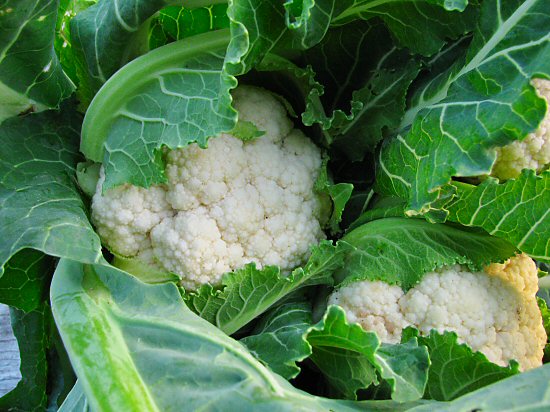
Harvested a few tiny (tennis ball to softball-sized, like, orange to grapefruit…little ones!) cauliflower from the last-planted section of brassicas that also has kale and broccoli. It’s still producing in home-consumption quantities, but with the exception of some strap kale, they entirely missed sizing up in time for CSA or the farmers’ market at the end of October. This is the normal. I usually take a chance on a final, extra-late planting—sometimes they make it, sometimes they don’t. Now, growth is so slow, the field is really just convenient live storage.
Not ideal storage, though. These plants are hardy, but the cold—many sub-zero nights—does take its toll on the parts you want to eat. Kale fares the best, broccoli is quickly savaged, and exposed heads of cauliflower get cold-burned to an unappetizing, mushy in spots, brown. BUT, with self-blanching varieties (this one is Minuteman), the leaves curl close to cover the heads, protecting them from sun discoloration (so our white cauliflower can be…snowy white), and this works fine against cold as well.
Then there’s the eating. The summer’s abundance of fresh-picked veggies has been over for a while, and every little taste of what remains becomes more of a treat as winter approaches, supplies dwindle, memories fade. The wheel keeps on turning…! :)
Garden in transition
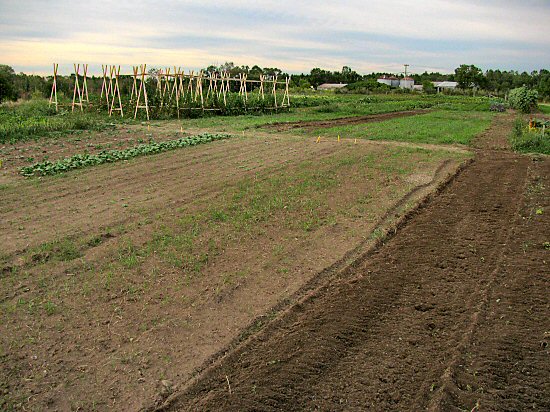
The weather is warm, the days still feel long (although, at 5:00 a.m. for Saturday market, I’m already waking up in the dark)—summer is in full effect, but you know the season’s soon changing because the field is clearing out. Today, I did some tilling, cleaning up before weeds get too established, and preparing for a last seeding of spinach for fall harvest (a gamble, for sure).
In the pic, a couple more passes to the left of the freshly turned strip and we’ll be at the edge of the previous spinach planting, barely visible, seeded about 3 weeks ago. To the left of that, a half-bed of bok choi, delicious and miraculously untouched by flea beetles, at tiny baby stage from seedlings transplanted at the beginning of the month. Beside the bok choi, beds of broccoli and cauliflower, also set out 4 weeks ago, and looking pretty good for harvest in October.
This section was planted out at the start of the season to snap peas, lettuce, and the first spinach. After adding in some of the handy pelletized alfalfa, it gets to go round again!
In the next section (top right of the photo, which is…east), I’ve started tilling in an overgrowth of grass and vetch, where more peas and the first plot of potatoes used to be. That section is done for the year, and may get a protective cover of fall rye, as a green manure to be turned under in spring.
In the market garden, it’s always one thing after another… :)
Transplanting team…
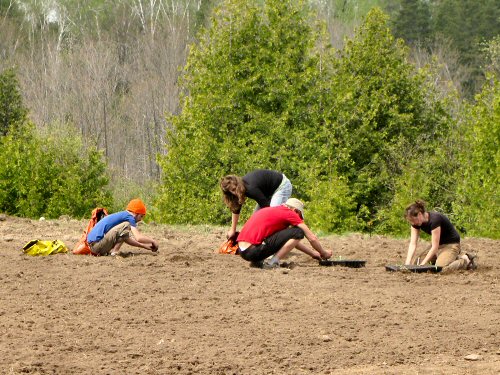
Another big Friday showing of people in the field: Chris, Libby, Jordan and Lynn transplant broccoli and cauliflower, while Andie is on a solo rototilling mission in the other field. Later, everyone got together to plant a few hundred onion seedlings and sets. And some other stuff got done.
Although we’re in the thick of it as far as timing and weather and urgency to get things out, our spring schedule is slower than it could be, and the field days are so far fairly laid back. Slowing things down is the start-up stuff: a ton of tillage to do (working in the grassy remnants of last year’s hay field), water for irrigation to put in place, electricity to run, chickenhouse to build, and a long list of other basic things that we have to put in place along with starting the season’s crops. Getting it all rolling together on this new farm, now that’s fairly intense!