
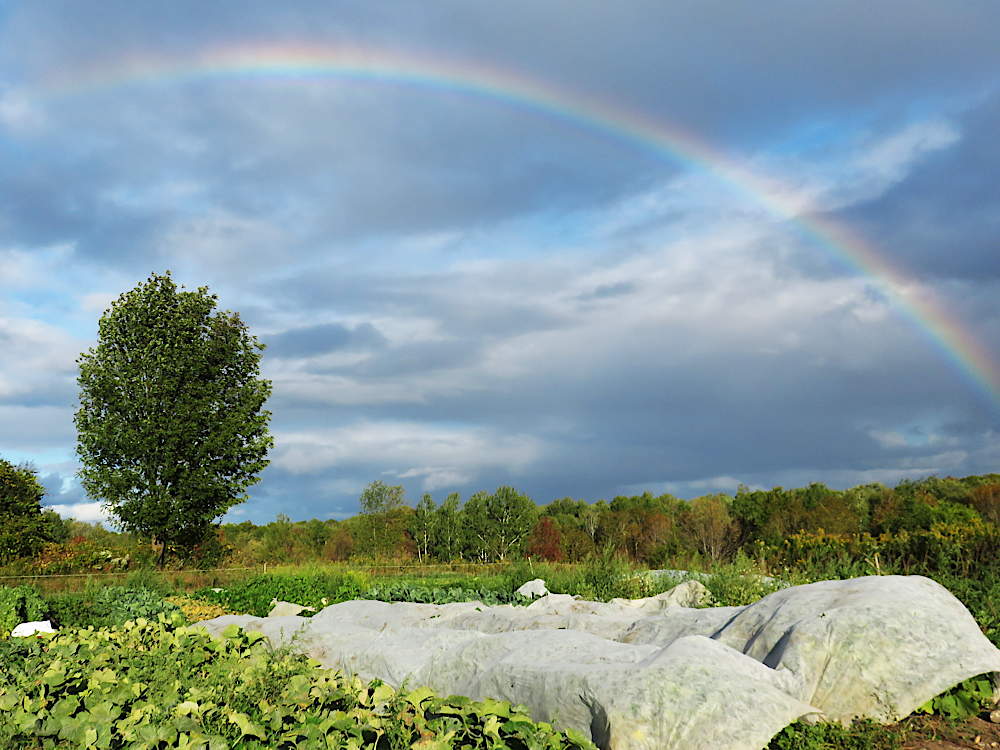
For the last day of summer, a rainbow! The field is looking a bit bedraggled, with some things naturally dying out, some touched by near-freezing overnights, with tender crops row-covered against the possibility of a hard frost. Besides the rainbow, it’s not the postcard look of mid-summer, but what matters most, everything is still producing well!
frost protection
Greens, protected!
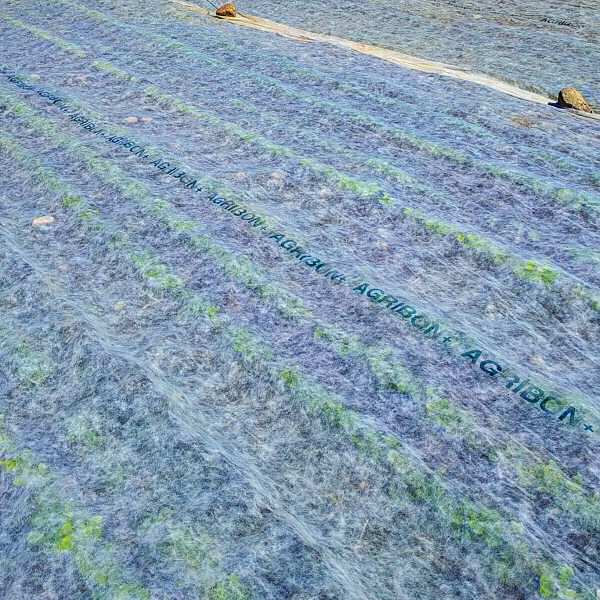
Floating row cover, weighed down and made semi-transparent by water, is all that stands between fine young brassica greens and the scourge of the flea beetle. The cover is placed right after seeding, weighed down by rocks every 12.5′ feet, briefly rolled back for weeding, and progressively loosened as the greens grow—we use 14′ wide sheets on 10′ wide beds. This medium-weight cover has worked as a good all-round solution, offering a few degrees of frost protection, and more durable than a lighter, insect-only weight, which would allow better light transmission (this medium weight one is 85%) and better air circulation, but also be more likely to tear.
Brrrr… Peppers under wraps
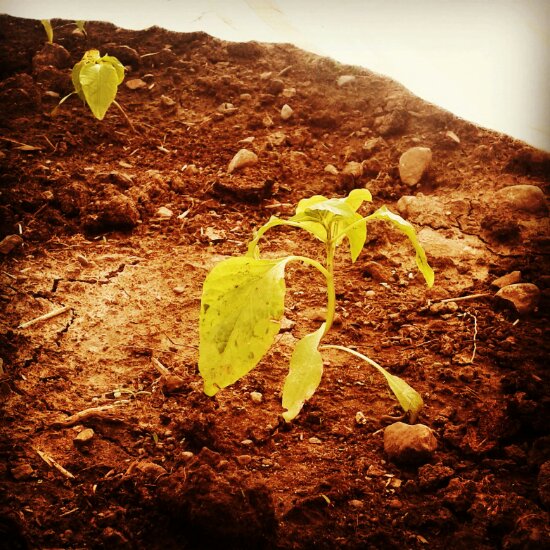
Not the happiest campers after three days and nights of frost protection, peppers and eggplant have one day and two nights more under row cover, if the forecast is to be believed. But the 15-day forecast a week ago was for no more cold nights, so…who knows! We’ve had about a week of frost warning nights so far since the second week of May, which I don’t think I’ve seen before. Normally, the covers would come off during the day, but with everything else to do now, and the kinda elaborate weighting-down-with-rocks setup, it’s simpler to leave it in place till the end…
Patchy frost
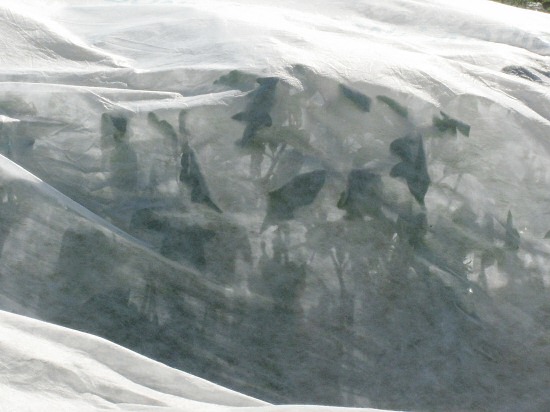
[Fri, Sep 16, 2011] First frost wasn’t too bad at all, a patchy frost that hit the field lightly, and in some areas, hardly at all. Still, the row cover, over some beans, peppers, eggplant, and a couple of beds of cherry tomato, worked out well, the exposed plants in those areas did get mildly to quite well…toasted. In the pic, we have Dusky eggplant, under its thin layer of salvation. Raising the floating row cover with a few non-pointy sticks, so it’s not pressing on the leaves, is a good idea—moisture often collects where the leaves touch the cover, freezes, and can deliver some pretty severe leaf burn. But for mature plants at this point in the season, I usually don’t worry about that—it’s different with seedlngs at the other end—and just float on the cover and leave it at that!
Frost protection time again
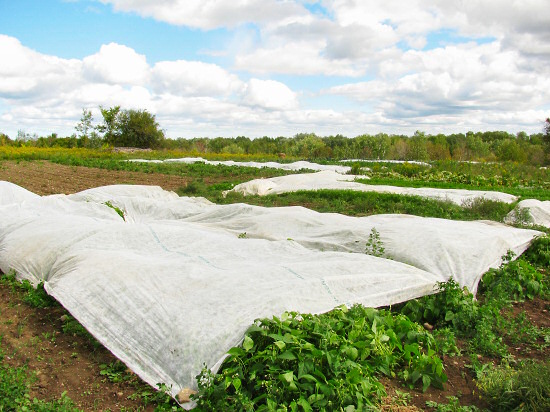
The frost-warning forecast from a couple of days ago, for 1°C (34°C), moved up a day to tonight. so there’s row cover all over the field. Some of it was floated out against the possibility of frost, the rest, as so-far-effective deer deterrent. Up front, around 800′ of snap beans, just starting to form, are bundled up against the cold. Then, row cover over carrots, and farther, lettuce, has been in place for a few days, and seems to still be keeping the deer from munching. In the distance, peppers and eggplant are under frost protection. Elsewhere, we’ve covered a few beds of cherry tomatoes to prepare for tonight. Winter squash and pumpkins are mostly in, and summer squash and cucumbers are finished, and the rest out there are hardy enough, and that’s about it!
Frost protection
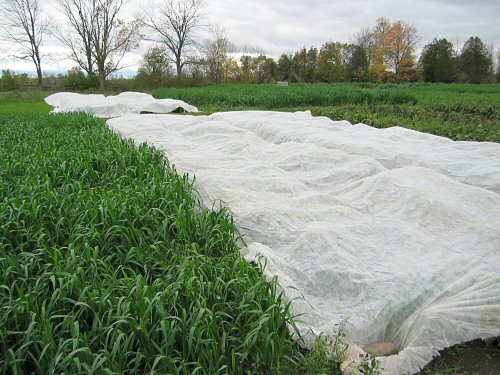
With last night’s forecast calling for -3°C, I finally figured a little floating row cover frost protection might be a good idea. In fact, though, with the cloudy, windy, wet conditions right through to Saturday evening, a solid freeze didn’t seem all that likely. And that turned out to be the case. The min/max thermometer outside the greenhouse registered a low of -5°C, but only a few crops suffered minor damage. Even the basil, which is really tender, did well: the top layer of leaves took one for the team, but the rest were fine. Here, some sweet pepper plants sit under cover, but the forecast for the next week is…quite warm. When exactly does the season end?
Row cover decision
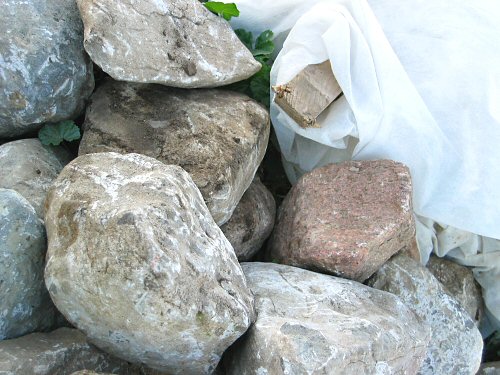
After a chilly and only reasonably busy day at the farmers’ market, it was a bit of afternoon nap time, and then on to making the first frost decision—to cover or not to cover—of the fall season. I “consult” four different online weather services, in general trust none to be very accurate, but when it comes to more dire predictions, like super high and low temperatures and mighty gusting winds, a certain one out the four usually stands apart and is…quite accurate. True to the norm, today three services forecast overnight lows of around 5-7°C (40-44°F), while the dire one calls for plus 1°C with “risk of frost”. So, a couple of hours before sunset, we started assembling floating row cover kits near tender crop sections. The cover, 14′ wide and cut to 50′, is kept loosely rolled on 4′ lengths of 2×2. Heavy rocks, 10lbs and up, are gathered and kept track of over the season. And that’s all you need: row cover and rocks! Unlike for insect protection, where edges of the cover should be buried, or at least, anchored firmly every few feet, frost protection only needs draping over top, and tacking down at the corners and a couple of additional spots. Anyhow, in the end, I considered the breeze, the slight cloud cover, and my…um, instinct (?!), and decided not to cover…