
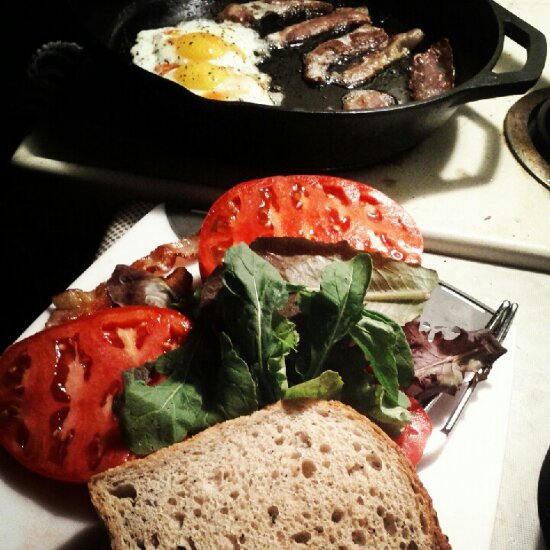
More incredibly simple and tasty local food: the basic BELT – bacon egg lettuce tomato – all local except for salt, pepper, butter, and mayo. Bacon from the farmers’ market. Eggs and veg – heirloom tom, second cut baby lettuces and a smattering of arugula – from here. Organic 7-grain bread from a mid-size local indie bakery available at both farmers’ market and supermarket. When you have INGREDIENTS, everyone’s an instant chef!
meat
Simple stew
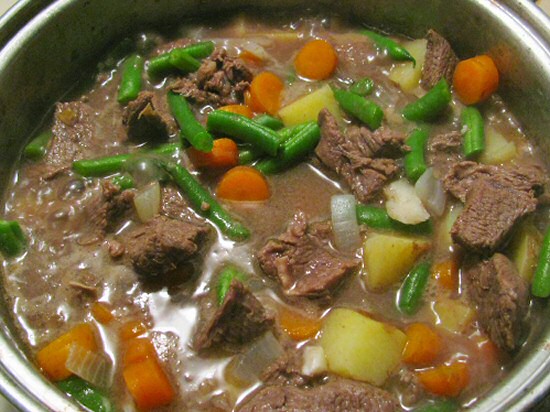
In the end, this is all about food and eating. Tonight, back to basics: heat applied to simple, locally grown ingredients, no culinary art or even a favorite recipe, just some mellow cooking. In the pot: grass-fed beef from a few miles down the road, plus, from our harvest, onions, carrots, potatoes, garlic, and green beans, well water, and a little store-bought salt and pepper. Simmered, covered for a while, for a couple of hours. The Yukon Gold potatoes, medium starchy, added thickness without melting away to mush. The beans, teaming up with the carrots, contributed a little veg lightness to the…stew. Dinner! (Fall must be in the air…)
Chickens, frozen
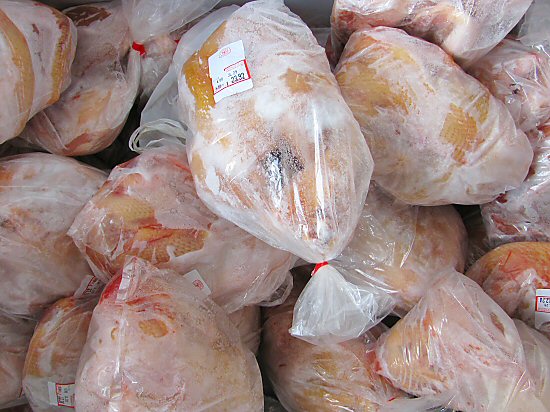
There they are: 38 newly processed chickens, freezing solid in the chest freezer (39 minus the one we took to roast fresh). It’s the last stop before the table on what was a pretty fine meat bird run.
Like everything else on the tiny farm (and in life in general!), when you get down to freezing chickens, there are the details. What I noticed this year is the amount time it takes to actually freeze chickens solid. This wasn’t quite as apparent last year, when we started with under 20 processed birds. Here, checking out the new freezer’s manual, I loosely followed the advice against freezing too much at once. I put in half, around 20 chickens, for a few hours, then added the rest. I’ve also been rotating them—they freeze faster when they’re exposed—but after a day, they’re not all rock hard.
I have it in mind that the faster you freeze stuff, the better it is when you thaw it out: firmer, not mushy. Something about smaller ice crystals doing less cellular damage. Sounds plausible to me!
Luckily, the chickens came heavily pre-chilled from the processing house. Processing your own in any sort of quantity, I imagine you need a fair bit of refrigerator space to cool them down, or a walk-in cooler, or lots of chest freezers. Another thing to look into for…the future!
Of course, the whole freezing thing is another puzzle. It’s quick and easy, and works really well for all kinds of food. Newer chest freezers seem quite energy efficient: this 15 cu ft one uses 400 kWh a year, which is like keeping a 60W lightbulb on for 9 months (at current electricity rates around here, that’s about $50). Doesn’t sound so bad, and there’s room for lots more in there. Still, we’re trusting a lot to yet another plug…
FINALLY, there’s the sticker, another fine feature of commercially-processed chicken. The meat is Ontario government-inspected (a provincial inspector is always on-site, that’s the law), which is indicated by a little logo on the label. Plus you get the date, weight down to two decimal places of precision, AND a price-per-pound of your choice. I picked $4. These birds are for our own use—not for sale—but it’s always fun pulling out an EXPENSIVE farm chicken for dinner, as long as it’s priced kinda within reason…
Weighing chickens
Booked a chicken processing date today: slaughterhouse day is July 29. They’ve been looking good all along, but now the White Rocks seem mighty…tasty. I keep remembering one of them hurrying by with a long worm trailing from his beak, then gulping it down. The last batch got nothing but feed. These guys have foraged for a varied diet, literally free-ranging (no fence!) for most of their lives. Feed plus bugs, plants, and whatnot. Should be a delicious combo.
On this, only my second flock of meat birds, I’ve noticed a new feeling for food animals. The first round was a novelty and a learning experience, now, it’s a comfortable routine. I observe the chickens with appreciation. I like them. I talk to them (although, not about much), hang out with them when I have time. I size them up as soon-to-be FOOD as I look out for their comfort, well-being and cheerfulness every day. There’s no pet-based sentimentality, instead I am grateful. The I-raise-you-then-eat-you feeling may sound harsh, but it feels…natural.
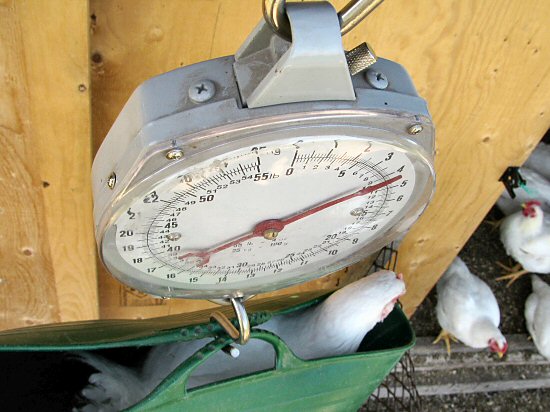
Weighed a few for the first time today, using a hanging scale and a trug (flexible plastic utility bucket). This can-do set-up works fine for spot checks. With the handles pulled together, the top of the trug is pretty well closed, so the chicken inside tends to sit still for a while before starting to look around…
At 9 weeks, most of them are around 7-8 lbs (3.6 kg). About 6-8 of the 39, like the one in the pic, are a little smaller. They’re around 6 lbs (if you’re checking the scale in the pic, the outer number is kgs, inner is lbs, and the trug = 2 lbs). All things considered, that seems good! According to the hatchery catalog, the White Rock average is 6.3 lbs (2.7 kg) at 7 weeks. I assume that’s with confinement and unlimited feed. These guys are out and about, exercising, and I let the feeders empty for 4-5 hours every day. The lighter weight seems to make sense. A couple more weeks and they should be White-Rock-plump, still healthy and happy, and…supertasty!
Local beef
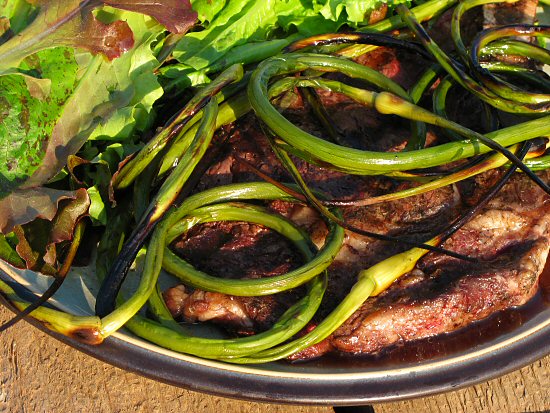
A cool change with the much bigger farmers’ market we’re at this year is the easy access to lots more local food from other market vendors. We’re there every Saturday, and so are they! (Nothing better for really appreciating a farmers’ market than being both a seller and a buyer…).
The biggest change for me is, suddenly, there’s all sorts of LOCAL MEAT. There’s beef, bison, chicken, emu, rhea (ostrich-like), plus a cured-meat-and-sausage vendor, a butcher, and more (venison and elk, I think, and there must be pork in there as well). Still haven’t gone through it all, but I have started to taste my way through the beef. This week, I’m on to a second beef farm.
My sampling approach is simple: buy a steak cut (I prefer rib) and some ground, expensive and…less so. In the first taste test, the beef was certified organic and 100% grass-fed. Today’s, also certified, is fed a combination of grass (pasture in summer, hay in winter, of course) and corn silage, all grown on their farm.
The meal is pretty local: rib steak, grilled to medium-rare and lightly salted, topped with grilled garlic scapes, tossed in a salt, pepper and olive oil, and our all-lettuce mesclun, just cut, with a drizzle of olive oil and a splash of apple cider vinegar.
The scapes are from our market stand neighbors (it’s so sad not having our own fall-planted garlic in the garden this year!), happen to be organic, gotten on a trade for mesclun. The beef was purchased for full price (vendors give each other a 10% discount here, but I didn’t bother to identify myself just for the savings, I’m sure we’ll get to know each other over the summer…!).
All in all, totally tasty, and even easier to buy and cook than to write about! :)
This year’s chickens
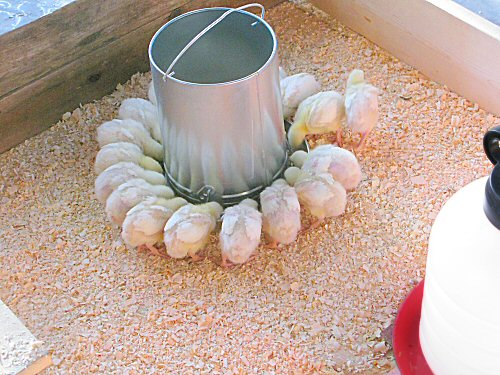
The White Rocks have arrived. Yes, 40 more White Rock Cornish X males, here for the fattening and then away for the slaughter. We got two-week-olds for the same reason as last year: save time and care with so many things going on! Their new chickenhouse isn’t quite ready, so I set up temporary quarters in the barn, 2×10’s surrounding a 4×8 sheet of plywood. A brand new feeder and waterer, some fresh wood shavings, and they’re let loose to do what they do best: EAT! (But there are PLANS to get them properly outside this time, eating bugs and romping in the dirt…)
Odds-and-ends omelet
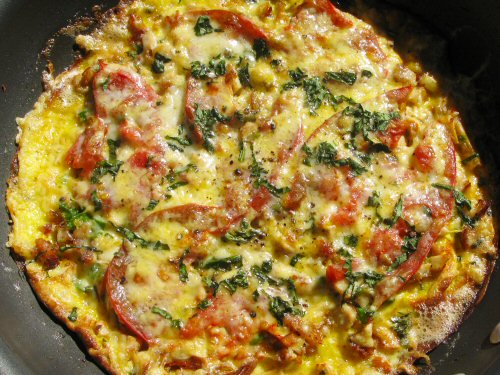
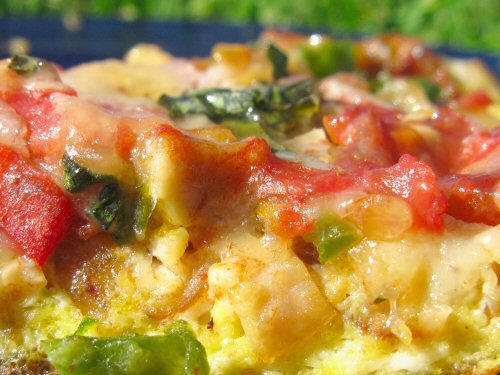
Preparing and gazing at food can bring as much enjoyment as growing, sharing and eating it! I’m really not a cook, but with fresh, quality ingredients, whipping up something appetizing is…simple. For our field lunch today, an omelet made from stuff at hand: eggs, cooked chicken with a little store-bought prosciutto, a black tomato (from Raechelle’s home garden), garlic, onions, basil and 4-year-old cheddar cheese. Chopped garlic and onions were sauteed in extra virgin olive oil, then the chicken and prosciutto were added to warm up. Out with the filling, in with eggs, lightly beaten with salt, pepper and a little powdered cayenne pepper. As the omelet started to set, the meat was sprinkled on, and the whole thing topped with thin slices of tomato, grated cheese, and basil. Quick, easy…
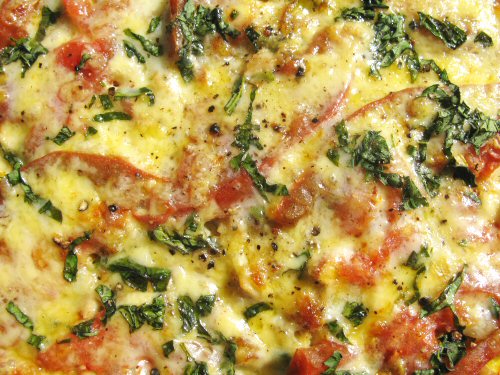
…and pretty tasty. Everything except the ham, salt, pepper, cayenne and oil came from the farm, or nearby. We ate in the field… :)
