
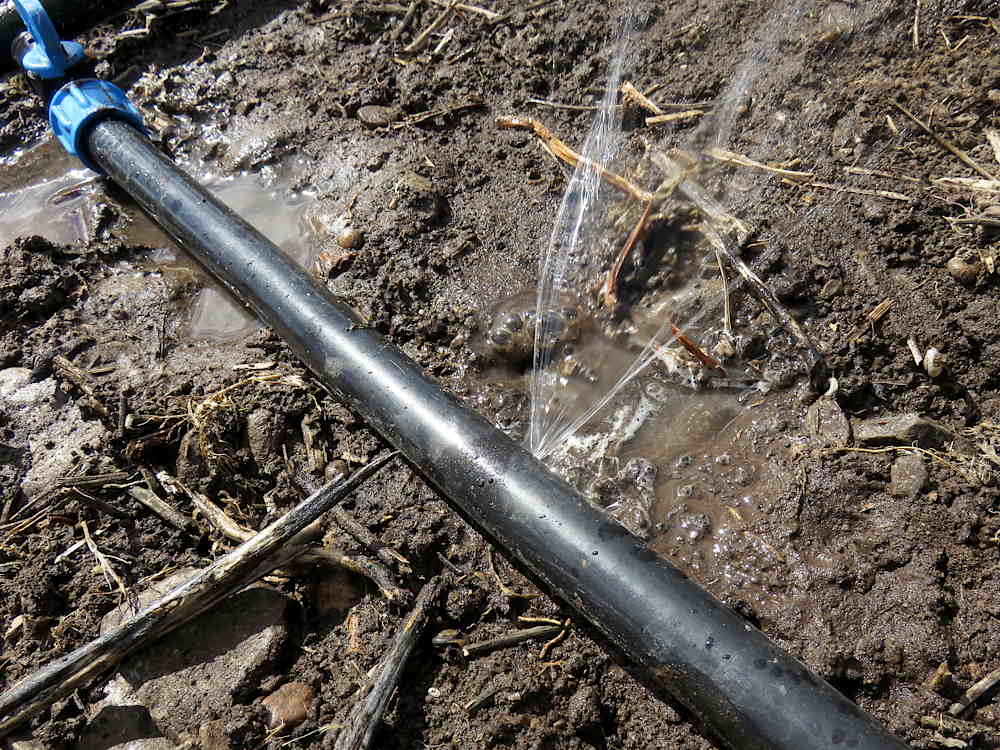
Drip tape is a really fantastic way to irrigate: low-pressure, drop by drop, straight into the ground leaves no room for being blown off target or evaporated by a hot sun. Slow and steady. Peaceful. For years now, I’ve been set up with the tape and fittings to fully drip-ify an acre or two. And it’s really not expensive. Yet somehow, it’s never gone all the way. Whose loss, if anyone’s, I wonder. Instead, the crops have gotten by with natural rain, and in desperately dry times, it’s been dragging around hoses to water by hand, or deploy the water-wasting but quick and easy sprinklers. I have used drip for melons, because they really don’t seem to grow well without the extra ground heat of black plastic mulch, and drip tape underneath waterproof plastic is a perfect pairing. Still, haven’t always used it even there. This year, for the tiniest melon row, it’s drip tape deluxe. Eliminate leaks, then turn the water valves to low!
irrigation
Gushing is good!
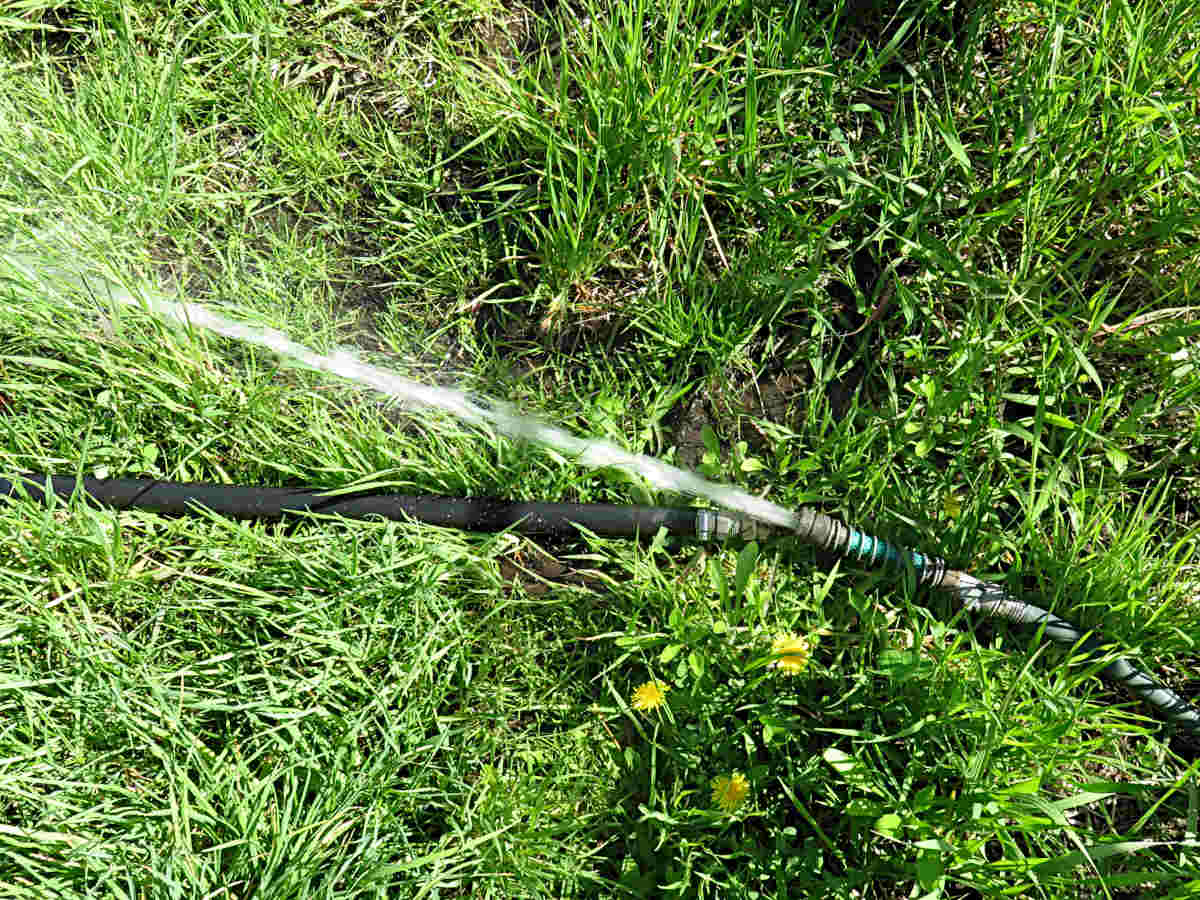
A gushing water hose—nothing more normal and mundane wherever electricity for pressurized pumping, and of course WATER, are in plentiful supply. This tiny farm is in such a place, yet the gushing hose signals something much happier, an elevated event, because it’s proof positive that the dug well that irrigates the field is back in action once again after another frozen winter.
Priming the pump is usually a mid-May thing, when freezing is over. The operation is simple enough: slowly pour a couple of gallons of water into the pump so it backfills the pipe that goes into the well, turn on the pump, and wait for it to catch. It may take two or three top-ups and retries. When water gushes, the pump is primed for the season! It’s not foolproof, though, the pipe could’ve gotten hopeless clogged, or the well-used and dilapidated pump and tank could decide to give up a seal or conk out entirely. Then the simple would likely become costly repairs or replacement. But not this time!
Details! If the irrigation fittings look small, they are indeed. I’ve seen photos of irrigation set-ups on big farms that are full scale waterworks, orderly grids of giant pipes. Here, the setup is a 1″ plastic pipe that snakes above-ground out into the field—it’s the disconnected part on the left. The pipe can be this small because it’s only meant for low-pressure drip irrigation, hand watering by hose, or a few sprinklers at a time: not every day, all crops, all the time. Also, a dug well like the one here doesn’t have an endless water supply, you don’t want to get ahead of its reservoir size and replenishment rate. Finally, the longer the pipe, the lower the pressure the closer you get to the end. Here there’s about 400′ of it, and you can notice the pressure difference at each of the taps spaced along it. It’s not geared to intense large-scale production, instead, a low cost way to connect a fairly distant water source to a thirsty veggie plot when there’s the need!
Working on water
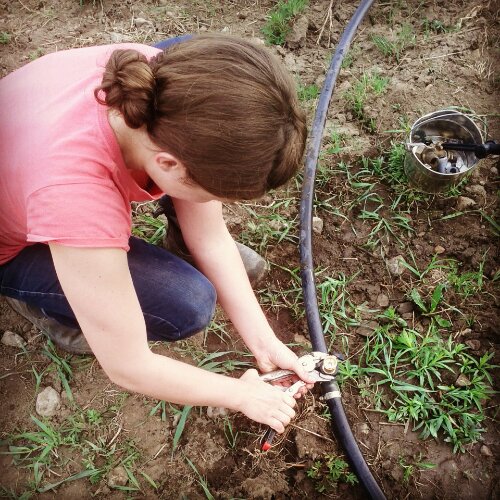
At work on water: Rochelle changes an shutoff valve—a tap!—to the 1″ header pipe that runs from the well through the field. Not exactly a big pipe by irrigation standards, OK for our low volume use. You could call it a hybrid setup, a mix of commercial and home garden gear, with a healthy amount of manual labor thrown in to make it all go (dragging around hoses to where they’re needed and the like, hand watering from 55-gal barrels when necessary). Full drip irrigation has been on the to-do list for years, all the gear has been here, but I’ve never quite got round to it, which sounds odd, I’m sure, but we’ve done well relying on rain, and working with minimal gear when the rains don’t come. Kinda…satisfying! :)
Saved by the barrel
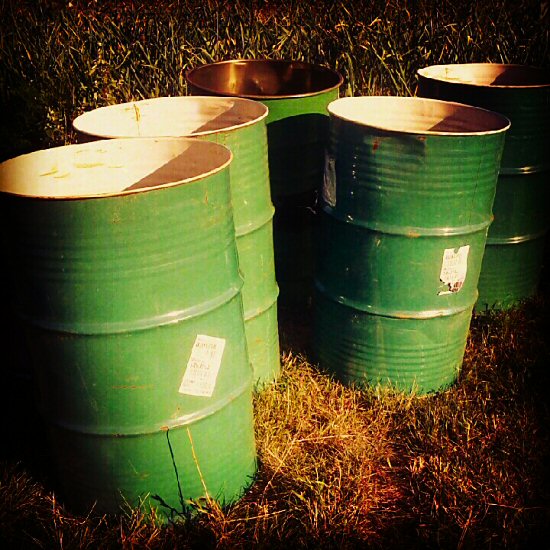
No luck with the dug well—at this point, the standing level has dropped around 10 ft. since spring, and the replenish rate is barely a foot in 24 hours—so it’s on to other water sources and delivery methods. As with most things on this tiny farm, the ultimate fallback tends to be something really labor-intensive. (Hahahahaha. I have to laugh.) In this case: WATER BARRELS. In a thankfully typical seek-and-ye-shall-find situation, there is a supplier of used barrels just down the road. Who’d have thought! These are standard 55 gallon, available in steel or plastic, and only about $10 a pop, with optional lids for a couple bucks more. Of course, they’re food-grade, which means, coated on the inside and used only for food, with those weathered white labels telling the story: pickles, perhaps. Strategically located around newly seeded beds, the barrels are filled from the house well (via the former dead well pipe) and then, 2-gallon watering cans do the final job. We still need rain as things grow, but this will work for germination and seedlings. Whatever it takes!
When the well runs dry
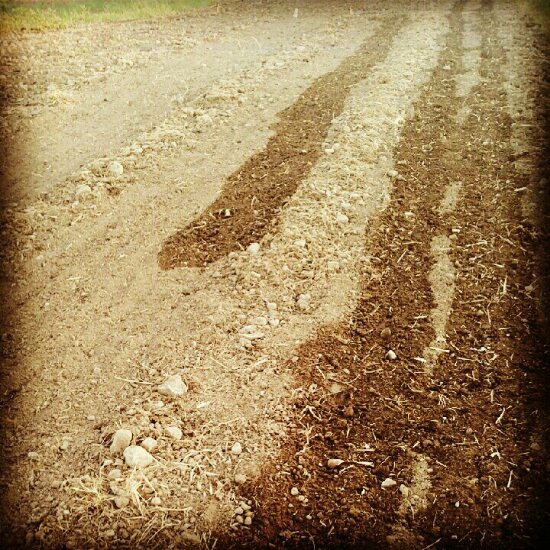
End of the line: what it looks like when your well bottoms out and the water stops flowing. Just like a power failure… We’ve been watching the level in the dug well we’re using, and the refresh rate is pretty dismal. Today, while watering in newly seeded beds, the water finally stopped. After last fall’s failed well drilling, figuring out short and longer term water solution is big here now. The water will come back eventually in this well, but the water table drops as the winter reserves go, and at this point, the well won’t refill high enough or quickly enough to be useful even for seedlings. Water barrels filled from the house well and distributed by watering can is a possible labor-intensive emergency measure. And of course, there is always…rain.
Watering cans
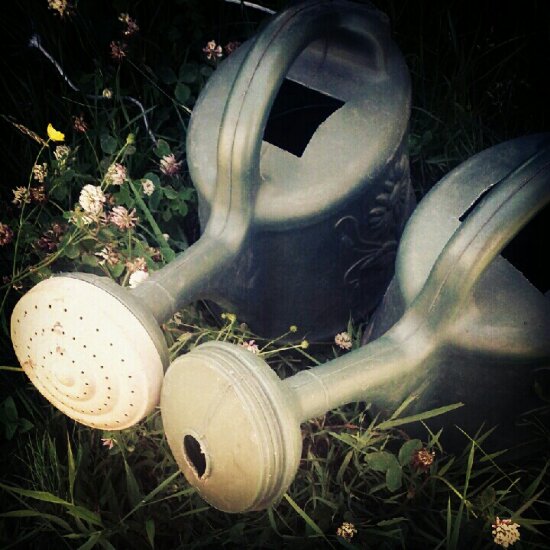
Good tool! These watering cans have been all over—seedling room, greenhouse, field—for the last few years, near perfect for hand watering missions. Five bucks, plastic construction means they’re lightweight, two gallon capacity is decent amount of water that’s still easy to handle, even with one in each hand. The spout cap pours a nice, heavy shower for speed and unscrews for cleaning and for filling smaller containers. I cut square holes on top for quick plunge filling from open barrels. Great!
Rain watch begins
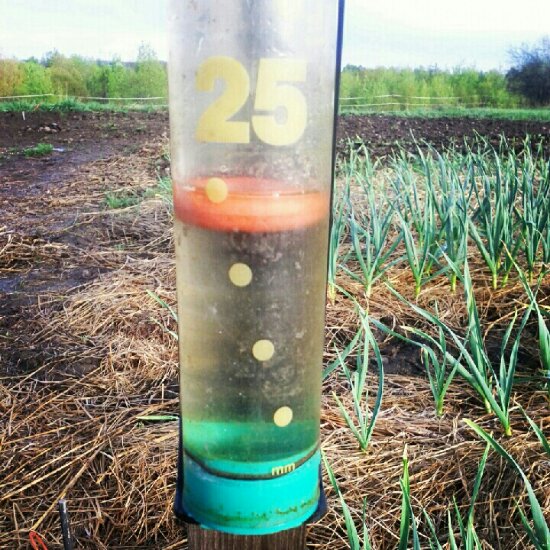
The season’s weekly rain watch begins. Weeks start on Monday. The big 25 on the rain gauge is the magic 25mm/1″ mark, the rule-of-thumb ideal for a week—an inch of slow and steady rain over a few hours, and of course all the rest, sunshine, that’s just…beautiful. A 1/2″ is an OK minimum for a bit. More than an inch a week ongoing for a while can be troublesome, depending on the crop and stage its—disease, small seed washed out, bigger seed rotting, whatnot, it is all possible :)—and it does occasionally happen. So far this week, 18mm here and 20mm total, so, doing fine!