
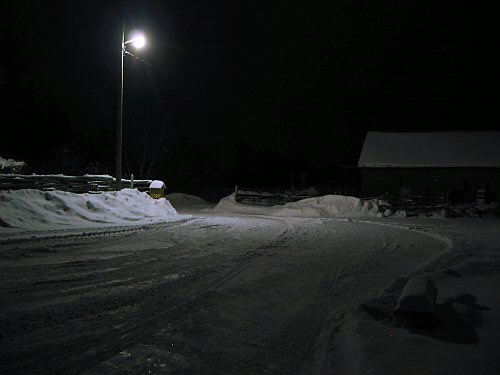
Here’s what I see coming out from the Milkhouse at night, as I head to the house. Facing is the goat barn, with the big old barn out of frame to the right, the farmhouse off to the left behind the rail fence, and the curve turning into the on-farm lane that meets the road. (I borrowed a tripod to check out photos by available light. It’s cool, way more picture possibilities. I’ve been using it for a couple of weeks, avoiding the annoying flash.) The light from the street light-type lamp pools brightly right below and fades across the yard. (Without that lamp, it would be pretty near pitch black around here unless the moon was out.) The scene seems sometimes picturesque, sometimes a little ominous, that desolate, deserted parking lot look…but it’s only the Farm. As far as anyone remembers, the lamp fixture was rented 20 years ago from the provincial hydro company, they still come around every few years in a huge truck with a cherry picker to change the bulb, or tube or whatever it is up there. I could call and find out the details, but at the moment, they’re not important…
snow
Snowbanks
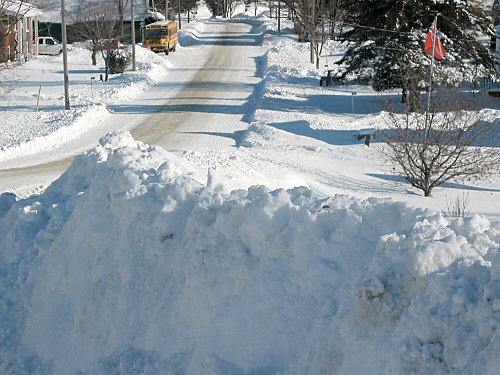
A brilliant sunshiny day after our 24 hours of snow. There are deep drifts everywhere, and the snowplow’s been by, leaving 3′ snowbanks along the roads. The farm is on the edge of a village of 300. Here’s a view down one of the two intersections. I’m on my way to pick up the mail from the bank of mail boxes in the convenience store/post office. It IS convenient, a pleasant three-minute stroll down the country lane (well, two-lane secondary road). And open till 9:30 most nights, too!
Whiteout
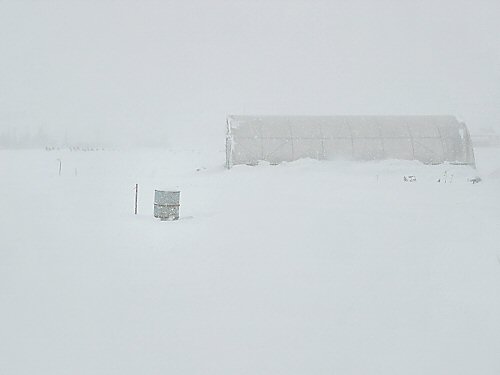
A full day of snow, probably about a foot in all. It started overnight, this pic is early afternoon, over 12 hours in. The winds were pretty high, guess it qualifies as a blizzard, but overall, not bad! The main concern is snow load on the greenhouse and the Milkhouse roof, but the wind has kept the snow moving, and there’s no big build-up so far. For storms in general, the worst non-disaster situation is the power going out (especially in the winter when there are seedlings in the electricity-heated Milkhouse). Outages aren’t a big problem here, but when it goes and it’s cold, things can get miserable. Here on the farm, this storm seems like no problem!
Winter watch: the greenhouse
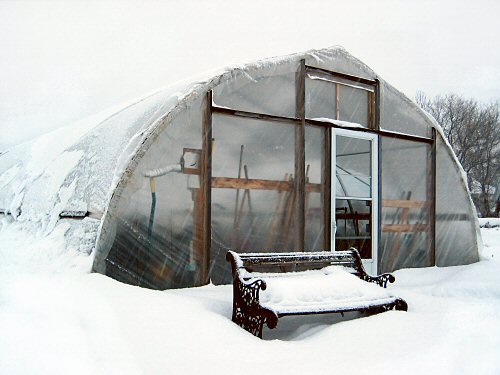
We haven’t gotten a really heavy single dumping of snow so far, but it’s coming down steadily every couple of days and the weather’s staying cold, so there’s build-up. That means increased vigilance on the greenhouse front. The right combination of freezing, a little thawing, and more snow can stick heavy slabs of ice on the hoophouse plastic. It usually slides off, but the weight can build up quick, so I check. If things were to get really weighty, besides removing the ice, I’d have to support the whole thing on the inside by wedging wooden beams under the ridge. I doubt it’ll come to that. And there’s the build-up around the base, some sharp shards of fallen ice could have puncture potential, none so far. AND THEN, this is going into the fifth year for the plastic. The special 6mil hoophouse covering is UV-resistant and rated for four years, so round about now, it’s time to look out for signs of fatigue and disintegration. I haven’t seen this before. I imagine it’ll start tearing at exposed pressure points, the way regular plastic shreds or tears under slight pressure after a while in the sun (well, in the UV, sun or not). I should ask around. The west-facing side, with the door in the picture, is most exposed to really battering winds that occasionally sweep across the fields with not much of a windbreak nearby. (It took me a season to get over being amazed that the hoophouse was still standing after bad storms—I’d actually head out in the howling wind in the middle of the night to check!) So, the usual winter greenhouse watch is on, upped a little. (I should drag that bench inside…)
Checking on the greenhouse
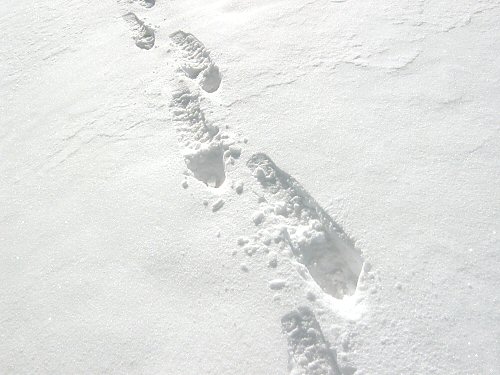
Where am I going? What am I doing here? (Heading out to check the greenhouse. Got more snow today… :)
The Drive Shed
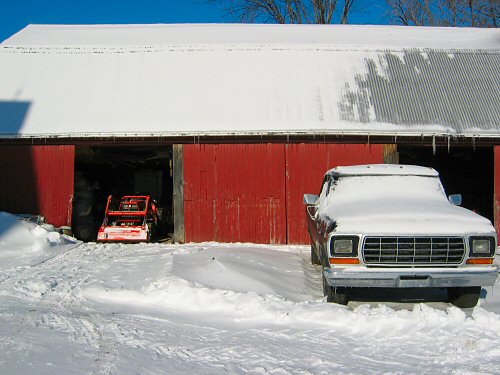
Finally got the tiny tractors in out of the weather. The diesel Kubota took hours and some warming and recharging to get started (I should’ve put ’em in sooner, but I wasn’t believing in the COLD). You can just make out the John Deere riding mower, parked sideways and in for the winter. The Kubota I fire up every few days to keep it limber, and it goes on snow clearing outings, mainly to make paths to the greenhouse. Unheated and uninsulated, the Drive Shed is still the place to be for machines in the cold! This version was built in the 1940s (here’s a view from the other side, it’s sticking in on the left), and like most things on the farm, has quite the history of…uses. All manner of vehicles, probably in the hundreds, have been stored or repaired here: tractors, cars and trucks, dirt bikes, snowmobiles, buggies and sleighs (that’s a 1977 Ford F-150 pick-up on the right, slowly being repaired by Bob’s son, Robert). The upper level is quite huge. It’s now mainly crammed with parts and pieces—assorted useful “junk”—but back in the day, a pulley system raised and lowered a wooden platform (it’s a manual, open elevator), and as the seasons changed, the farm’s various horse-drawn carts and buggies would be swapped up and down with sleds and sleighs for different purposes. Now, they’re long gone—one sleigh and no horses remain—but maybe they’ll be back!
Official: the garden season really is over
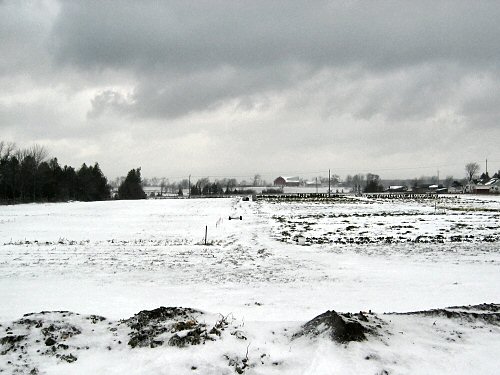
OK, so this garden is really over for the season! Called due to extremely cold, snowy conditions that don’t seem likely to let up any time soon. I’d been counting on one more melt-off, but it’s only been freezing cold and more snow since the fall that covered it all eight days ago. And there’s no let-up in the 15-day forecast… So, I got caught out a bit. There are still carrots under there, that I might not see until spring, and I didn’t finish mulching the garlic (I think I was unconsciously pushing for a side-by-side test of mulch and no mulch, against prudent practice, and now I have one—it will be interesting…). The big experiment (and possibly, gamble) is with leaving the green manure cover crops—oats, rye—over winter, to be tilled in in spring. In the pic, you can see it’s smooth to the left of the main path, and rough on the right (at the very bottom is the composting windrow where the last of the leftovers go). The left side (plus eight sections across the north end, out of sight at the top) is fully prepped and ready to seed as soon as the ground dries out in spring (peas first!). To the right, I’ll have to wait until it’s dry enough to till with the Kubota compact tractor—determined by the weather, this could hold me back a couple of weeks. Or more. After that, again weather-dependent, there’s the minimum wait of a week or two after tilling for the cover crops to break down. But, with two-thirds of the field ready, however the weather goes, it’ll be fine!