
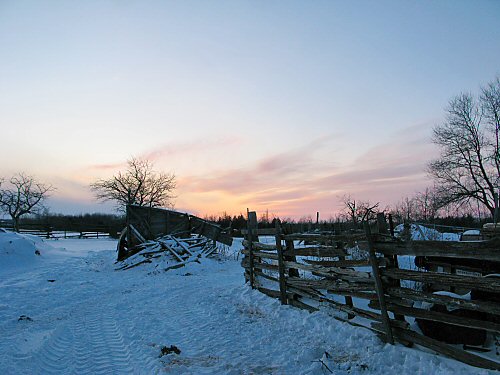
Mid-January, 5pm and still light out. This is the view to the west, with the big barn just out of frame to the left, looking past the loafing barn yard to the second, 11-acre pasture—the 9-acre field where the market garden lives is directly to the right—and then the trees. At the end of the rail fence in the foreground is the gate where the cows come home at night. It’s bitterly cold, my fingers are going numb after only a couple of minutes on the camera, but I’m enjoying the sunset, out here in the deep freeze, thinking about all the work ahead for the new-farm market garden season. It’s crazy. Cool!
night
The incredible shrinking harvest!
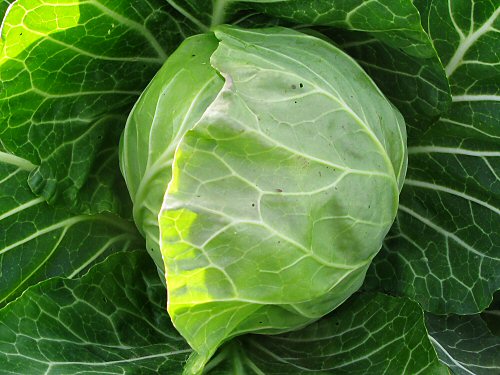
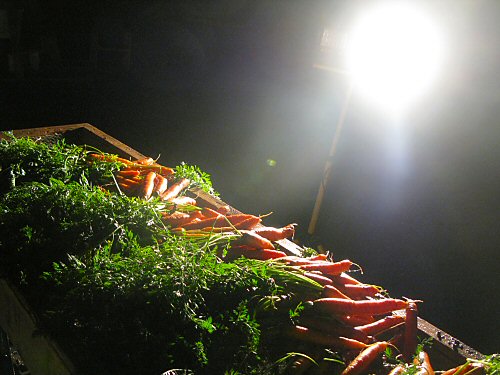
The Friday harvest is shrinking. This is the second to last of the year, and the last for CSA members, and we’re down to mainly root veggies. Some of the last cabbage planting has firmed up, and we’re picking them as “baby,” about 1-2 lbs (450-900g) each (multiplanted, the yield is good, the size really convenient for cooking, and the taste quite fantastic). And there are beets, carrots, parsnips, plus onions, garlic and other storage crops. And some lettuce… As the harvest gets shorter, so do the days, and I’m out rinsing beets and carrots after dark once again. Try not to get wet when it’s COLD…!
Night work
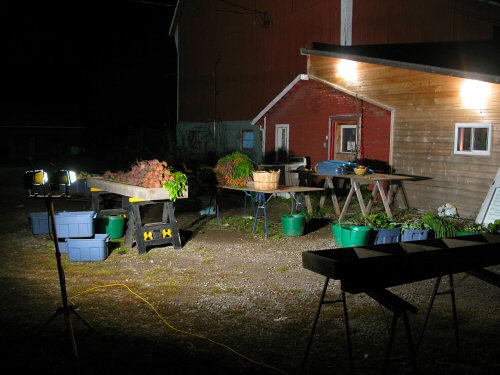
In the fall, post-harvest work doesn’t necessarily end when the sun goes down (it’s dark by about 7:30pm right now). Actually, this year the fall Friday harvest has gone great, with Lynn, Libby and usually Michelle knocking things off in the field by around 5pm, with only bundling and rinsing to go. But I’ve been wrapping up with the crew by 6, taking a break, and doing whatever’s left on my own…later at night. It’s something I’m used to from the first few seasons, when the mainly solo harvest usually went straight through until 11pm or midnight. Tonight was the first time I’ve hauled out the light stand this year. It’s around 10pm, the two lights specally installed on the side of the Milkhouse for this purpose are on (they’re both regular 100W bulbs, the full plan is to install floodlight fixtures), and there are twin 250W all-weather halogens on a stand. It’s not perfect lighting, but quite enough to get the job done without stumbling around. Tonight is a quick set-up to rinse carrots and beets. Full-on post harvest lighting includes a second light stand, with both set higher up and beaming down, and floodlights properly positioned, to give pretty good 360° coverage of the work area, and enough illumination to watch the mud wash off…
Finally, frost!
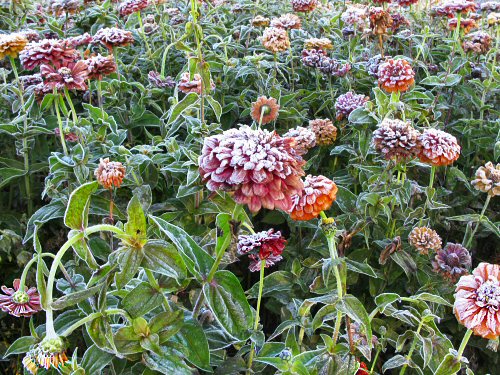
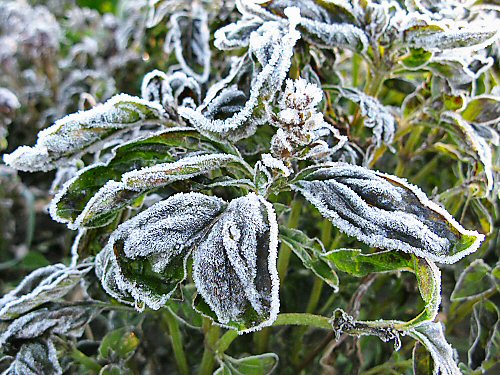
Overnight, the first real killing frost finally hit. A couple of nights it had gotten close, touching some plants in the field, but this was the real deal. At 8am, the lower end of the garden was still in the shadow of the drive shed, and the frost still hadn’t burned off. Basil (above), the tenderest crop in the field, is the first thing I check in the morning for frost damage. Right beside, the zinnias are goners, but still holding color—as the day progresses, they’ll shrivel and turn brown…
All in all, nothing unexpected or terrible—sooner or later, frost always arrives, and this time, the eggplants and peppers under row cover did fine. Besides, frost in the early morning light is pretty…
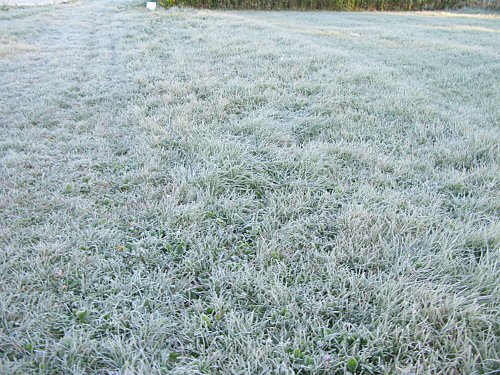
Frost is pretty when…
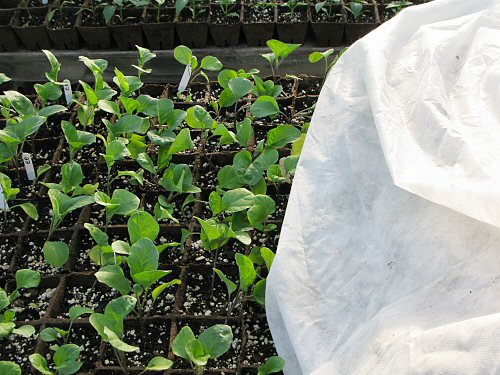
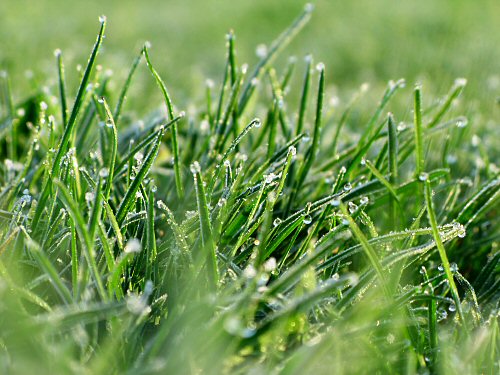
The days have warmed up now, mostly around 60-70°F (15-20°C), but the nights are unusually cold, dropping sometimes to freezing or a few degrees above. Frost burning off in the early morning sun is pretty when you don’t have anything in the field for it to kill, which I don’t… Let’s see: broccoli, cauliflower, radish, carrots, spinach, chard, beets, peas, parsnips, all-lettuce mesclun, tatsoi-mustard-arugula-bok choi mix… Nope, no worries there. (Funny thing, while pea plants are hardy, I believe the pods aren’t… I’ve never seen that in action, fall peas haven’t worked for me so far, and I don’t think there’ll be frost 40 days from now when this year’s first peas come in…). Meanwhile in the unheated greenhouse, although I’ve only fired up the kerosene heater once, just to be safe, row cover goes on all the tender stuff (toms, eggplant, peppers, and now, cukes, pumpkin, melons and squash, just about to poke up): on in the evening, off in the morning, better safe than toasted!
My old friend the min-max thermometer
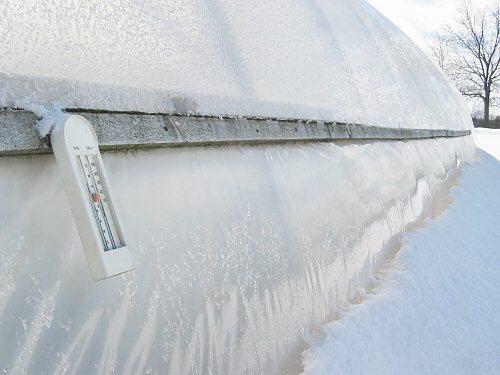
Clearing a path to the hoophouse today, I turned the corner and noticed the original min-max thermometer. I don’t usually. It was one of the first bits of gear acquired in Year 1, when the reality of FROST in the garden was a complete and scary unknown. The thermometer records the lowest and highest temperature that it’s hit; you reset it by pushing the little red button. It’s been hanging on the same nail in the same spot for three or four years, more or less out of sight and mind except in spring and fall, when I check it first thing in the morning to see how cold an overnight cold snap really got. Lately, the min-max is not such a big deal. Each different section of the field, and the particular crop in it, reacts differently to each cold night, so the only way to know what’s happened is to walk around and check things out. And I have confidence in row cover. I still check the thermometer, but it’s not like spring in the first couple of years, when I’d bolt awake at 6:00 a.m. and 10 minutes later be walking through the chill and dewy wet grass, adrenaline pumping, waiting for the verdict from the min-max to see what new transplants may’ve been toasted. It was kinda cool to be reminded, out of the blue, how that’s changed. In the case of gardening, at least, the more you know, the easier going you get!
Getting started
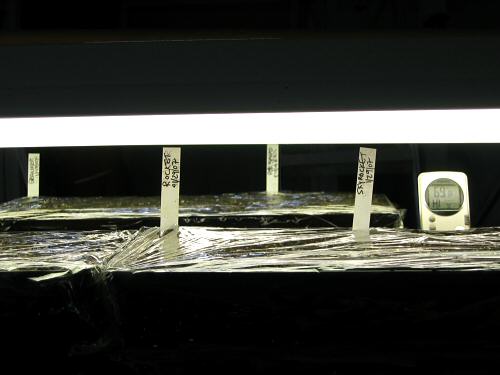
Started the first seeds of the year today: lettuce and arugula. At night, the grow racks remind me of a lab experiment, with the plugsheets in trays, carefully labelled and sheathed in plastic under the intense white light (fluorescents up close are pretty bright). And there’s the digital min/max thermometer, keeping score. The whole set-up looks like what it is. It’s great! In the beginning, I kind of obsessively (and largely unnecessarily) check every few hours to make sure the soil mix is sufficiently moist, the temperature is above 60°F, to see if anything’s emerged and it’s time to take off the plastic. Maybe after another five or 10 years, it will become simply routine, but for now, every single plant to emerge is still cool and exciting… For this, the earliest lettuce attempt yet, I’ve started five varieties, all with maturity dates of 50 days or less. There’s Simpson Elite (a really fast 40-day) and Two Stars, both green leaf, Granada and Red Salad Bowl, both red, and Sierra, which is red tinged. As a salad mix in any combination or all together, they’re a great blend of colors, textures and tastes. The arugula, Rocket and Skyrocket, intended for the mix, is faster growing than lettuce, but I felt like starting some now (I’ll start some more, later). If all goes well, these will hit the unheated greenhouse in the beginning of March, a good three weeks ahead of last year!