
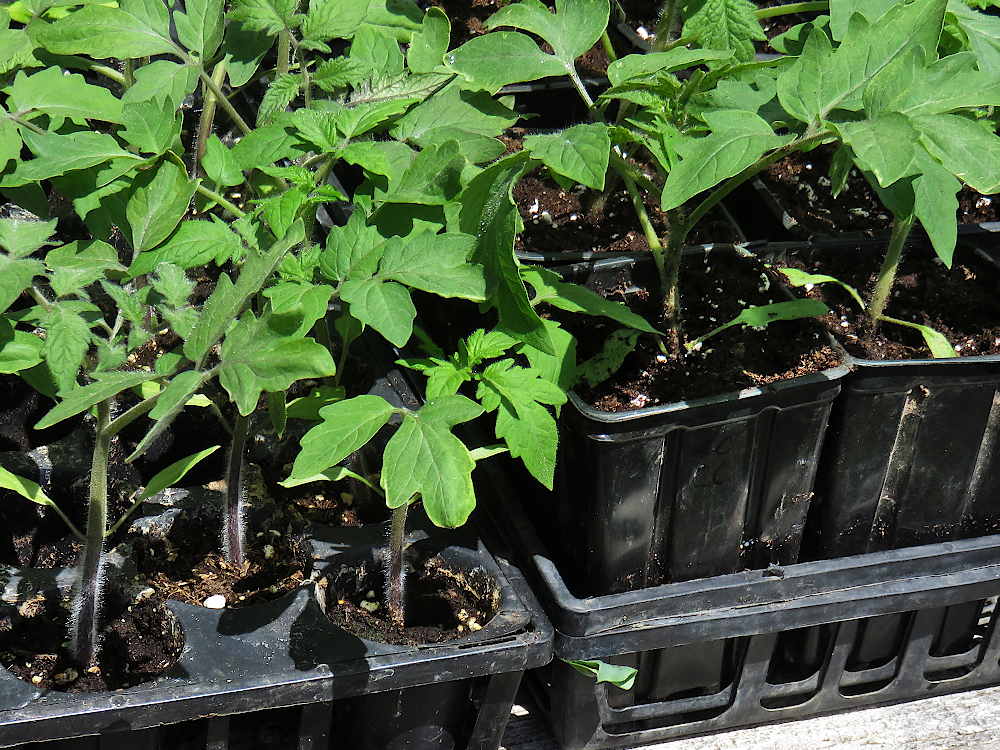
The story so far: Five days ago, 10 tomato seedlings, five each of two varieties, were potted up from the plugsheet where they started, to individual deep pots. The pots measure twice as deep as the cells, though they look taller in the photo. Pretty soon, all the toms will be transplanted at the same time, side by side, to see if deeper rooting leads to bigger, better, faster tomato plants. The ones in pots were also buried up to their seed leaves (that first pair that look like wings)—with their power of adventitious rooting, new roots will develop along the buried stem, so there’ll be a LOT more roots. The leafy parts look about the same between the two, while the real action right now is happening underground. In the plugsheet, roots are already circling around the cell walls. In the pots, it’s a root jailbreak, although they’ll find their new walls pretty quick. But walls that won’t be there forever!
seedlings
Next generation
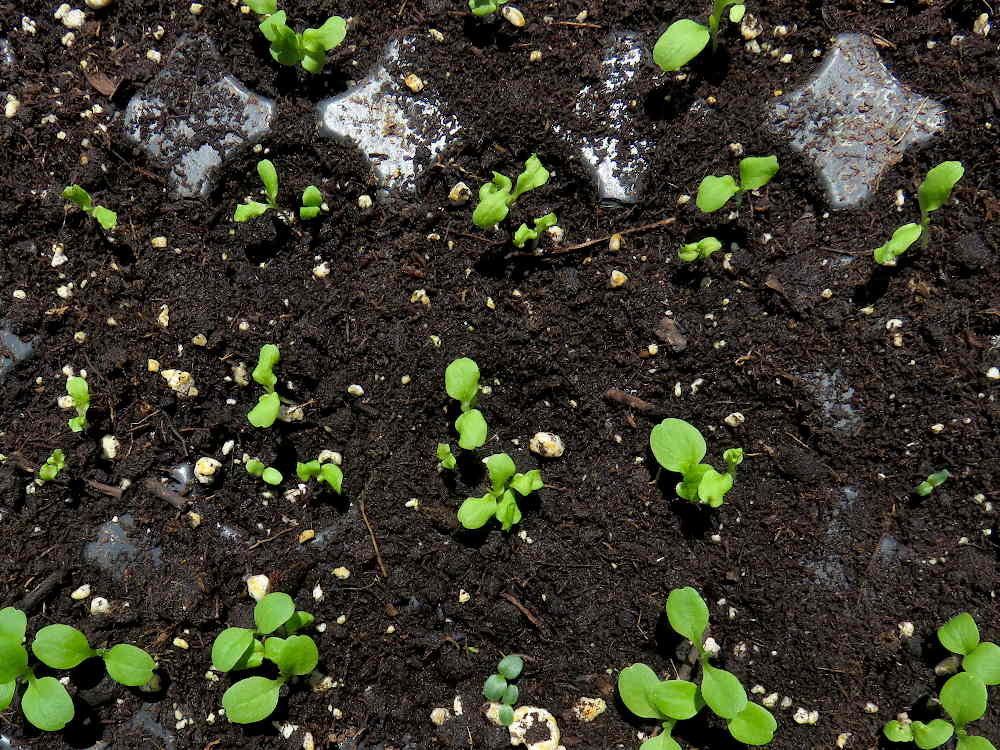
The second round of lettuce isn’t a next generation in a people having kids way, but it feels like one, as one seeding of lettuce grows to tasty salad size, while another is just getting started to take its place. Achieving an endless harvest is super rewarding (not to mention, necessary, if you’re going to market every week)—succession planting so that quick-to-mature, pick-once crops are steadily available at their peak all through the growing season. Salad greens like lettuce, mustard and arugula, baby bok choi and kale, also spinach, radish, summer turnip, green onions, and more can be planted repeatedly. Work out the timing, as things grow fast early on and slow down into end of summer and fall.
Oddly, in the hundreds or thousands of home veg gardening chats I’ve had, I can’t remember anyone beaming with satisfaction over their succession planting successes. It’s as if home garden seeding only happens in spring. Maybe lots of home tiny farmers do it, and just don’t like talking about it. It makes sense, it’s useful, and it’s fun to mention!
Establishing peppers
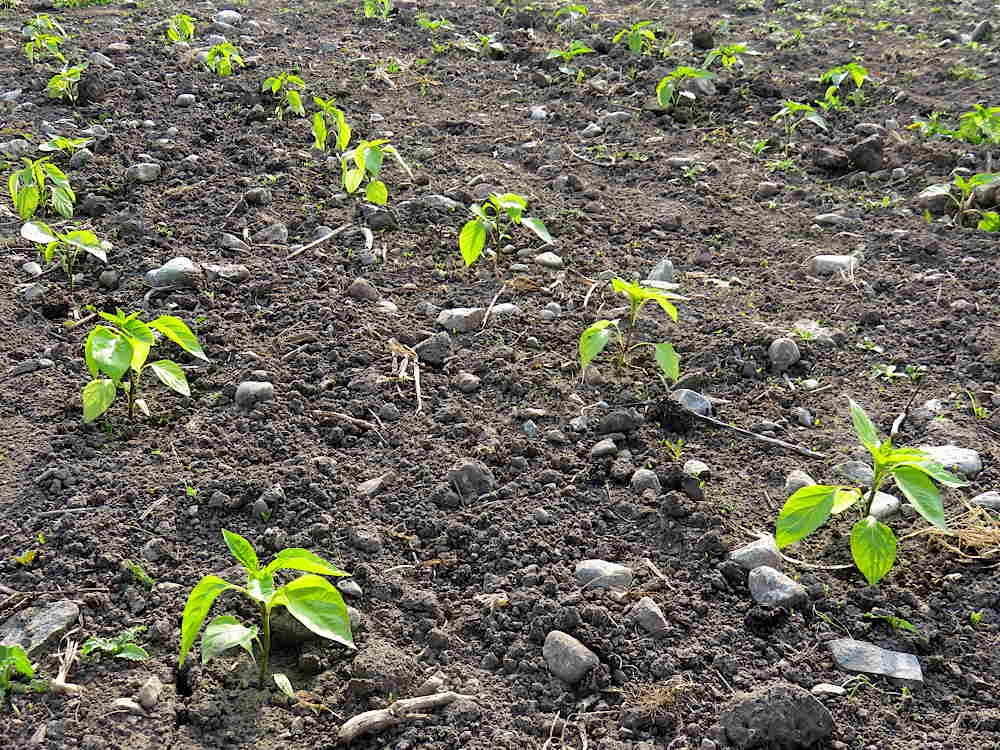
Pepper transplants, backlit by the late afternoon sun, are still looking quite pale and somewhat fragile, but upright and healthy, after a couple of weeks. This is the veg garden equivalent of the suspenseful, hold-your-breath-before-the-big-reveal stage that happens here in June. Transplants and directly seeded crops are showing steady growth, but impatient eyes find it…slow. I think of it as the creep phase. I first heard the gardening “sleep, creep, leap” rule of thumb to describe, not vegetables, but how bamboo transplants get established. First year, nothing to see as they set down roots. Year two, some modest growth. Then—ta-da!—in year three, they shoot up. While none of the veggies in this field follow that three-year plan, I find myself thinking that way about how the crops grow over the season. Waiting for the leap!
Spring seedling snapshot tradition
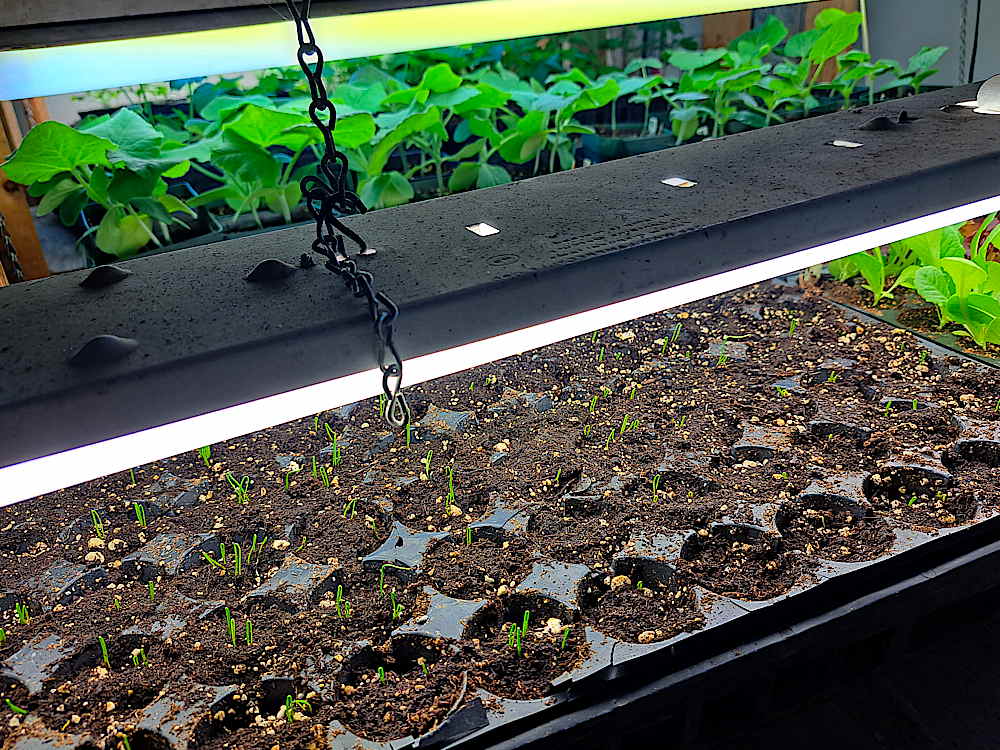
A pretty rough snapshot taken with my phone—its attempt to balance of sunlight and fluorescent doesn’t do the photo any favors—still fulfills the spring photo blog tradition of seedlings on the light racks. (More words to come…)
Tiny jungle
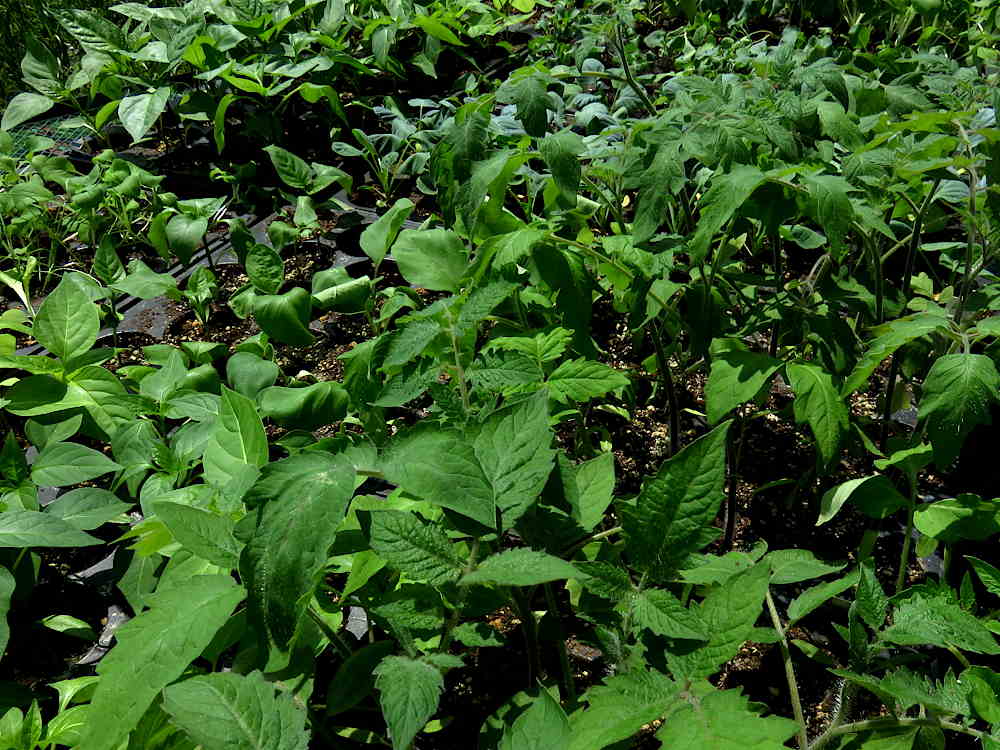
Hardening off seedlings on a mainly sunshiny day. I can see tomatoes, peppers, eggplant, Brussels sprouts, and bok choi. Some are for now, some a little down the line. I’ve been transplanting steadily bit by bit, rather than all out at one time, as a hedge against erratic weather changes. Same with direct seeding. It’s another experiment, and given our short season and the generally unpredictable weather, it’s risky. Then again, depending on the crop, I’ve seen plantings a week or two apart more or less even out. It’s always a gamble!
Potato spotting
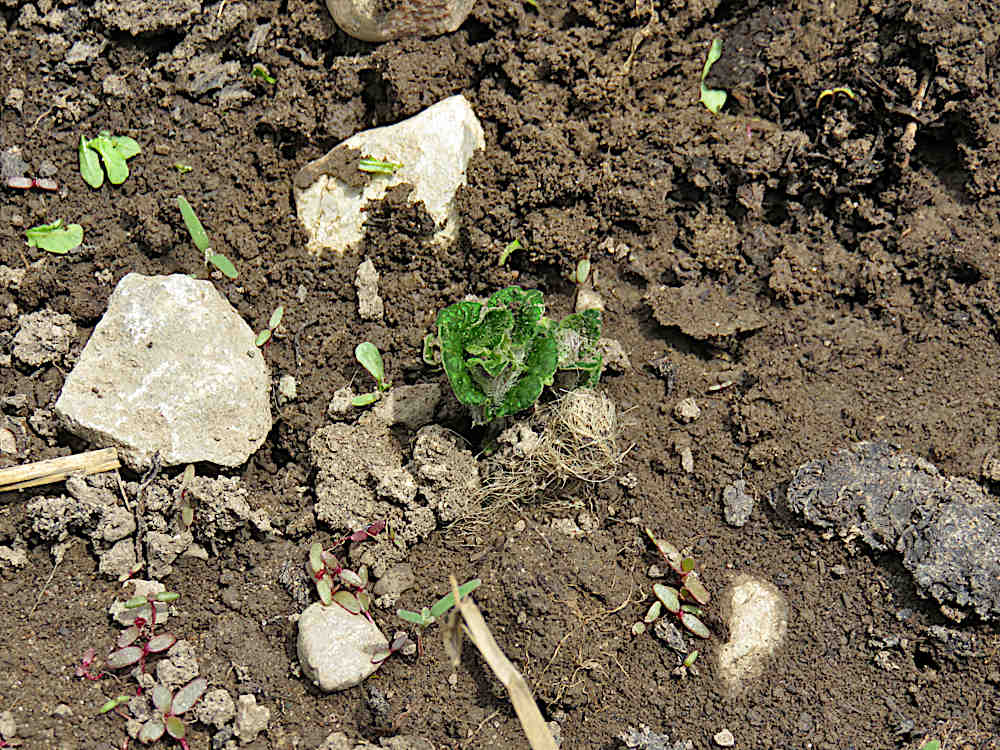
When you spend a lot of time scanning the ground for the very first sign of germination, you get pretty good at spotting new seedlings as they emerge. This new potato plant is easy, it’s quite large, with a rosette of crinkly, distinctively dark green leaves. Carrots and green onions are a whole lot tinier. Beets, spinach, and brassicas can at first look pretty much like the weeds that pop up around them, they blend in. Still, no matter the crop, after a while, you develop a seedling recognition system that automatically zeroes in on even a single new arrival, just like that. It’s always a pleasure to see that seeds are still getting along with the weather and doing their thing!
Squash to the field
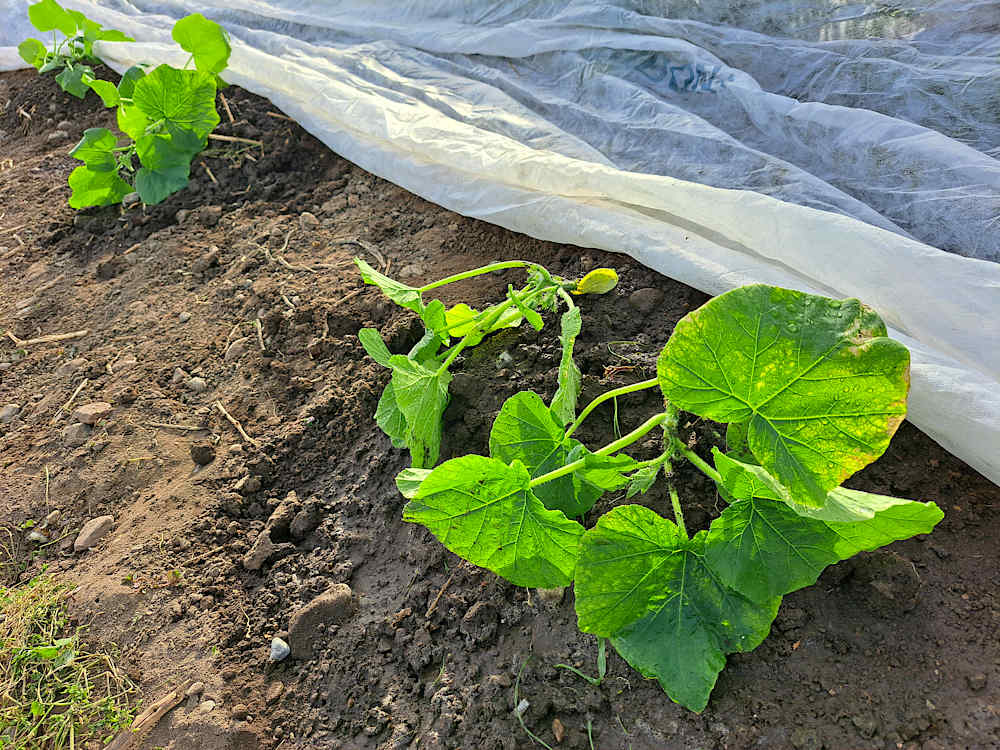
Transplanted butternut squash seem to be doing fine in the great outdoors. The row cover will protect them from the fairly cucumber beetles, until they’re big enough not to be bothered. The beetles eat the plants and can also pass on bacterial wilt (I’ve experienced hungry cucumber beetles, but luckily so far, no wilt). This rock cover is medium weight, thick enough that it’s easy to handle without tearing and can be reused, and thin enough that it lets 85% of the sunlight through. A small tradeoff for no chemicals!