
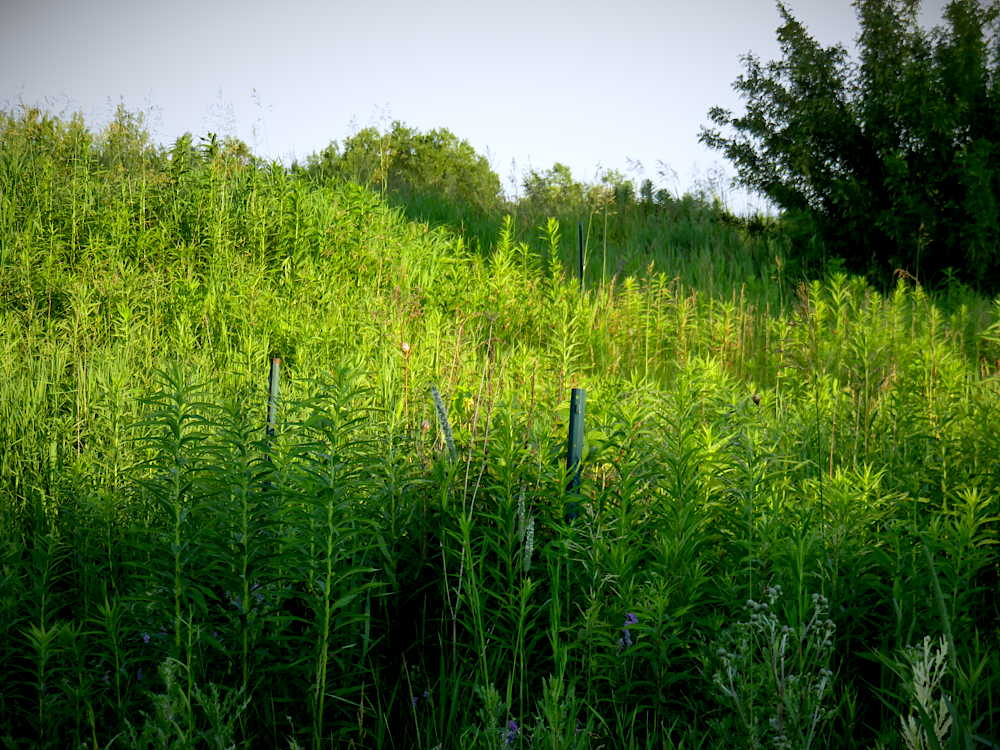
A field of goldenrod and tall grass—what the garden would look like, left to its own devices. It’s Day 4 of the first official heat wave of the season, coming to an end. I’m headed to the veg plot, a couple hundred feet slightly up and to the left, to turn on the electric fence for the night. Earlier in the afternoon, it probably hit around 34°C, which isn’t quite up to the crazy new highs we’ve been getting in recent years. Still, it was exhausting because of the thick, oppressive humidity, so spent much of the day indoors with a fan. Uncomfortable, but here at least, not as scary as the scrolling list of warnings and advice on the weather app made it seem, mixed with equally dire details of a possible sudden, severe thunderstorm. All the weather alerts get kind of annoying when most aren’t as bad as the extremes they describe, but I guess they’re overall useful, especially in cities. We’re being looked out for! And the heat is supposed to end overnight. As the sun goes down, it’s already quite cool and relaxing and the mosquitoes aren’t even bad!
Mike (tfb)
Need a wider lens
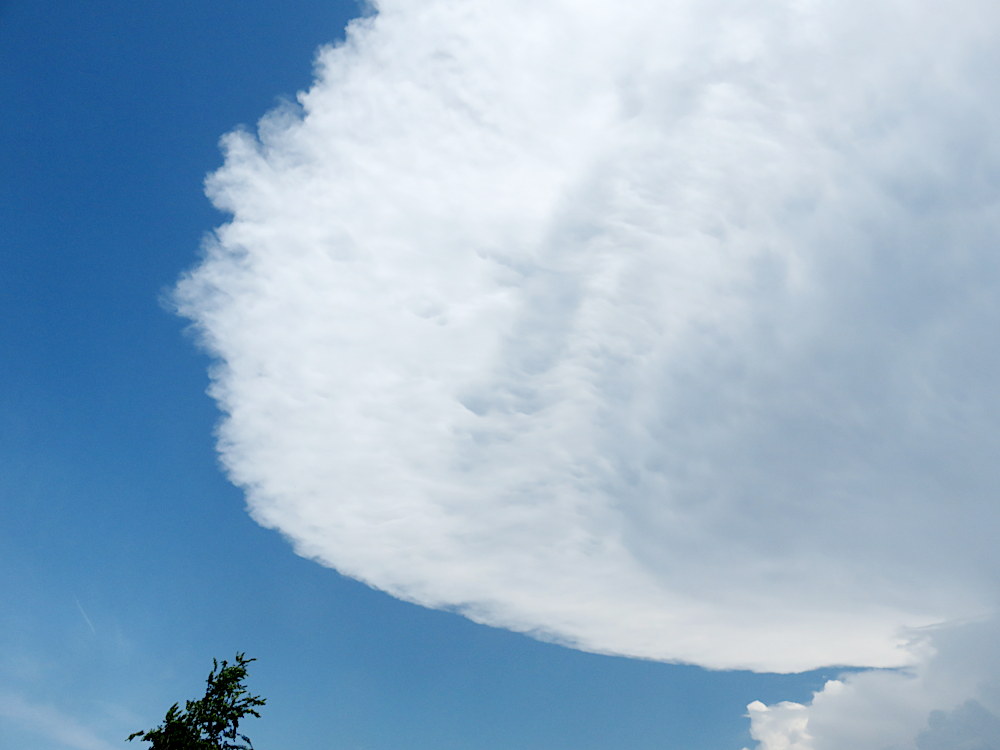
Stepped out into Day 3 of our heat wave, happened to look up and, WHOA! The immediate impression was exactly like the movie scene where the giant alien spacecraft slowly slides over the city. And you know what happens next. After a second, this wasn’t nearly that menacing, just pretty cool. Unfortunately, my fixed lens couldn’t squeeze in the full picture, the complete half-disc emerging from a mass of foreboding dark grey cloud. Nature!
Tree in the wind
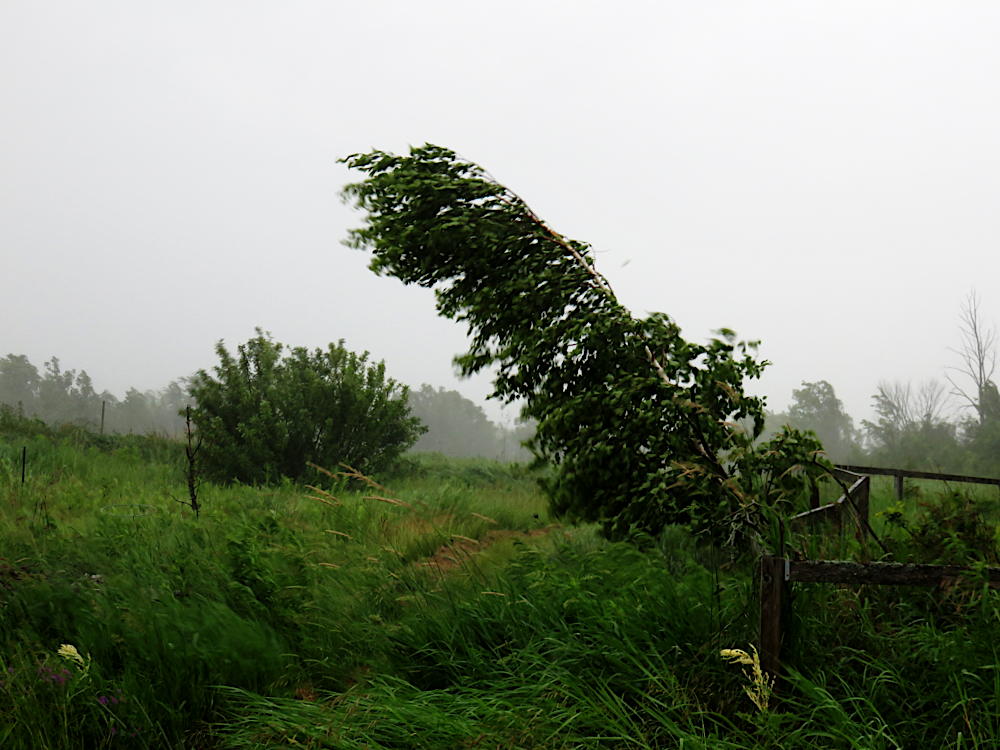
It’s Day 2 of our little heat wave, and apparently time for the daily thunderstorm. This is the second one, same pattern. Heavy wind and darkness roll in for a while, shaking things up and looking ominous. Then rain, building up, pounding down for a few minutes, easing off again, then it’s gone. The whole thing happens in half an hour or so.
The whole thing is a little alarming, especially the wind, mainly because you don’t want the power to go out. But it’s not the storm itself, it’s these short periods and odd combinations of weather that there’s no settling into—a week or a month of one thing, then a quick switch to another. Like now, where after the storm, the air feels cool and fresh for a bit, then it’s back to oppressively heavy, humid heat wave heat.
Weather has become a regular news event, even around here where we haven’t had the extremes I read about. No months long drought with temps above a 100F (35C). No atmospheric rivers dumping massive floods. No wildfires that black out the sun at noon and cause their own local weather systems. No asphalt cracking in the street. No frying eggs on the sidewalk. Just this heat/storm combo for now. I’ll take it!
The green I mean
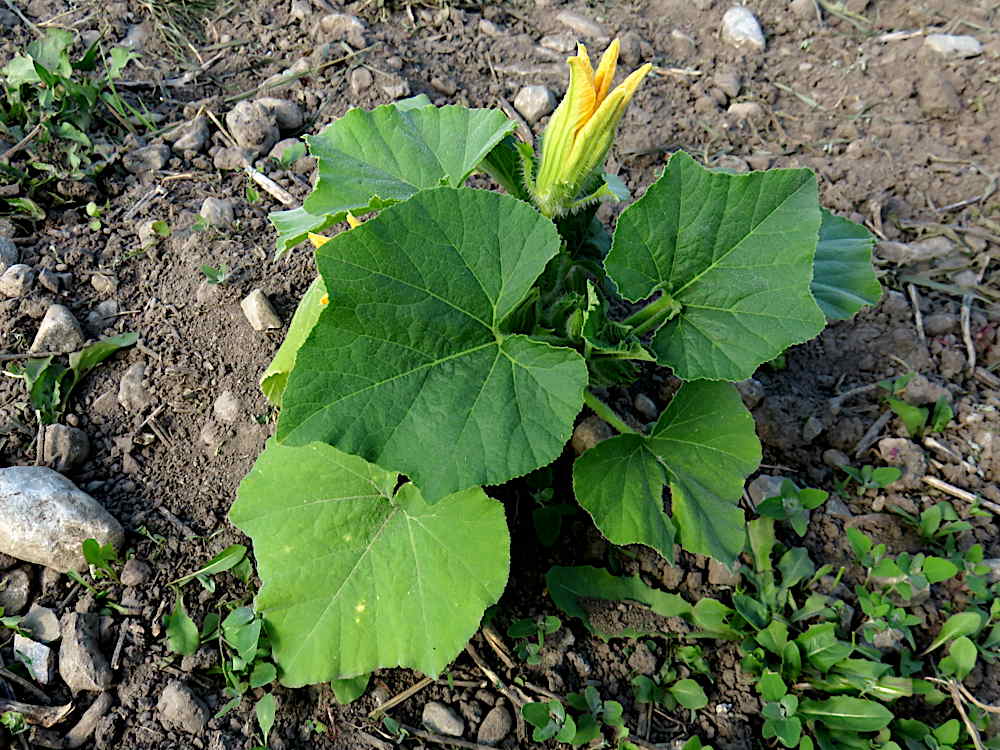
Finally! Here’s what I think of as the indoor and field green difference in transplant leaves—at times hard to capture with the point-and-shoot. It happens for most transplanted seedlings. Their leaves grow, even quite massively, but their color remains…pale. And then a new set of leaves eventually appears that I call with satisfaction deep field green. It’s satisfying because to me it’s a signal that the plant has fully connected and is hunkering down for the growth it was built for, mainlined directly into the planet and the weather, for better or for worse. Transplant, successful. There’s no doubt biological truth to that, but it’s not a comment on some scientific mechanism, it’s just a feeling! :)
Pie plate protection
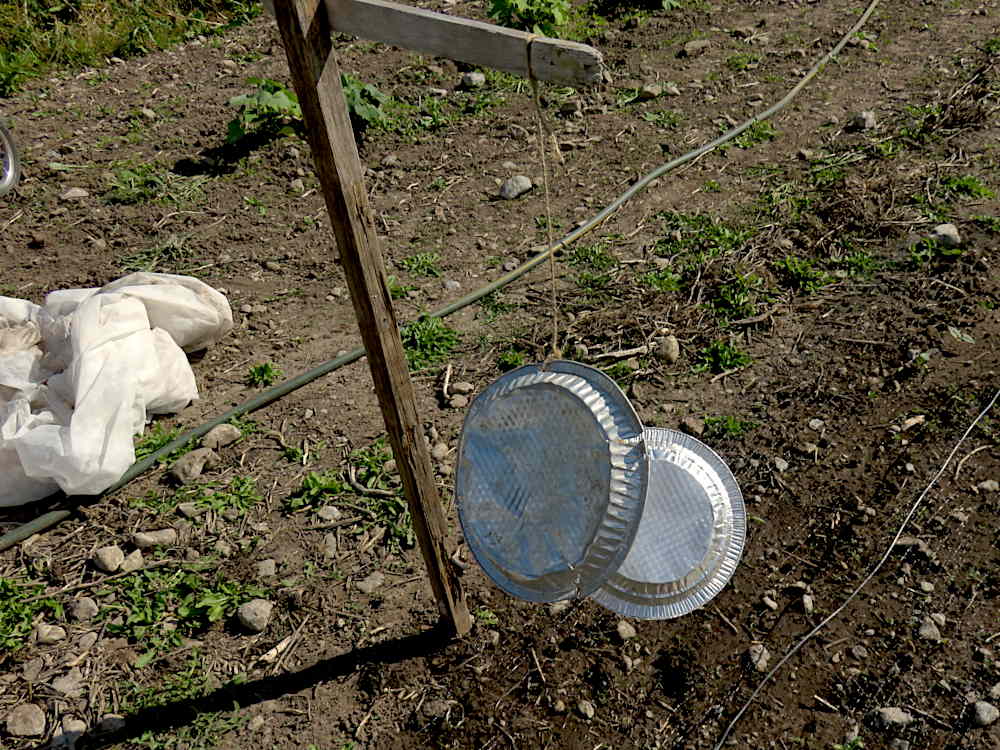
A couple of pie plates tied to a post, fluttering and lightly clanking in the breeze…scares birds. Why mess with the birds? In this case, to protect green beans as they emerge as perfectly peckable bird treats. To prevent avian decapitation, pie plates work, more DIY than scare balls, with the added dimension of sound. Not as soothing as wind chimes, but relaxing in the background, probably because it signals…protection!
DETAILS: Wind is always at work, doing what it can. The holes in the soft aluminum, tugged at by the twine, slowly enlarge. A day of heavy gusts and the plates can eventually tear off—there’s a rip from last year on the upper pan. But that’s an extreme. You could reinforce the hole, but I don’t bother. For the next year, maybe make a new hole. There’s a lot of years in one pan. For the post, which can also get blown over, I dug a small hole with a trowel, filled it with water, then pounded it into the mud. Probably a foot down. The whole rig should hang together just fine. Windproofed!
Really new potatoes
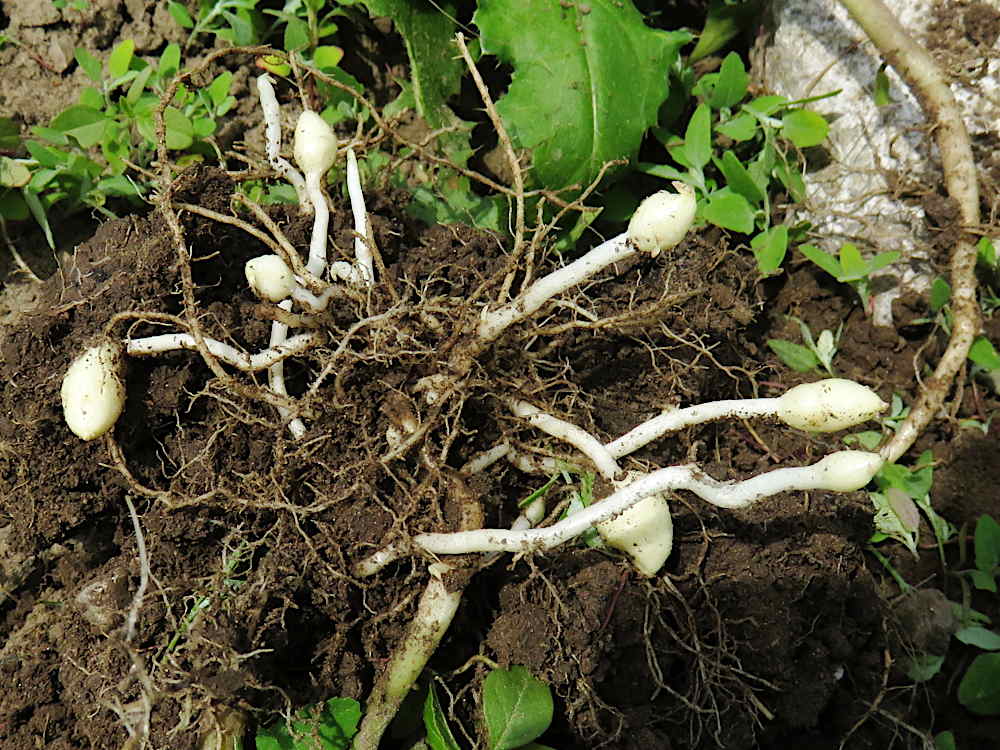
Pulling up some volunteer potatoes growing in close and competitive with some winter squash, I was mildly startled by this bright white activity among the roots. They’re the runners that head out to find a little clear spot to form new tubers—really new new potatoes. Can’t recall seeing them before, probably because this is the first time potatoes have turned up as weeds.
Of course, there is an explainer story. The runners, called stolons, are actually underground stems, totally apart from the roots. Along with the tiny tubers, they’re practically pure potato starch, creating storage for what is the plant’s fuel, and continuation of the plant’s life. The little pod tubers already have eyes, but they stay tiny and invisible to us. The tubers keep growing until they hit their genetic max size, or the leaves start dying off and there’s less starch. Then they form a protective skin to preserve the eyes and starch and wait out winter. When conditions feel right, the eyes start to grow, and eventually sprout into new plants.
If you put the stolons and baby tubers above ground in the light, they’d soon start turning into regular stems, stop storing and start using their starch, and try to push out leaves. I’ll trust the textbooks on this, don’t feel the need to see for myself at the moment…
So really, planting seed potatoes, not actual seed, means it’s all one continuous potato, year after year, as long as you keep planting some of its tubers. It’s vegetative propagation—just like garlic, but with a lot more to see. Pretty cool!
Melons in training
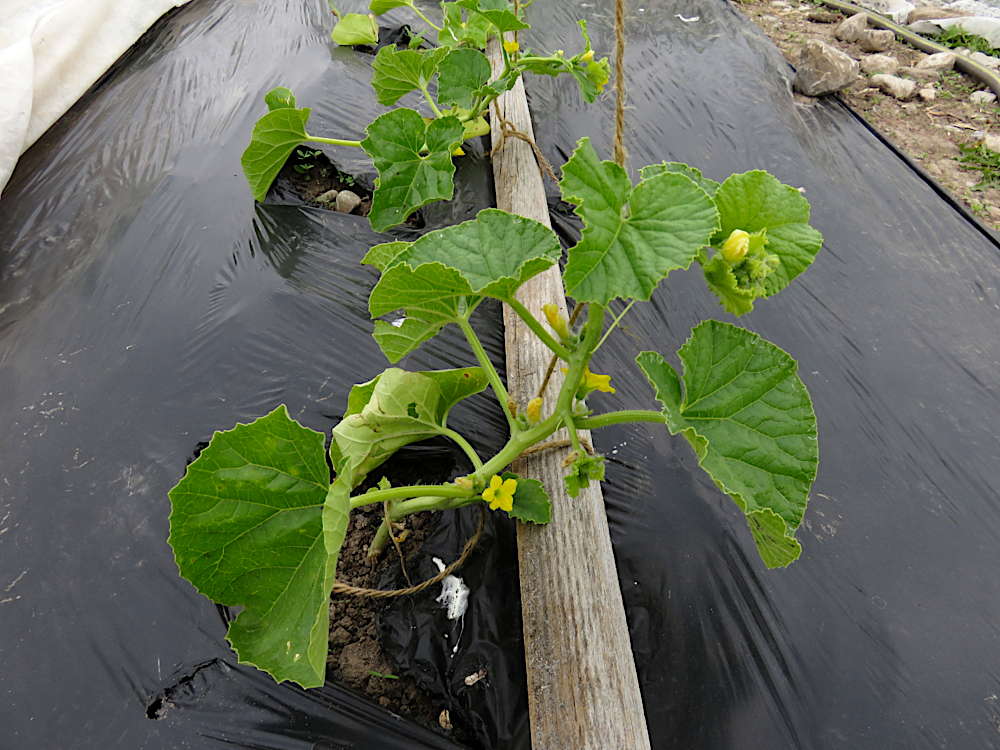
Melons have been out from under row cover for a couple days now, and seem fine. They look a little more vibrantly green in the photo than they do to me. It’s been weeks now of more cloud than sun, and none of the crops have the deep green, raring to grow look so far. But hot sunny days are forecast. I moved the vines to lean on the twine so they can head up. The tendrils haven’t figured it out yet. Those little yellow spots on the one leaf at the bottom left are maybe some sort of bacterial attack. Being out in open with good fresh air circulation will hopefully keep that from spreading. I’ll remove the leaf if it gets worse.
Since I don’t use pesticides, other than occasional plant soap spray, it’s really up to the plants to do their thing. The row cover as cucumber beetle protection worked, although using heavier cover made it more humid under there, perhaps promoting the bacterial spots. Giving them something to climb improves air and keeps them off wet ground. I try to be helpful, without getting in the way! :)