
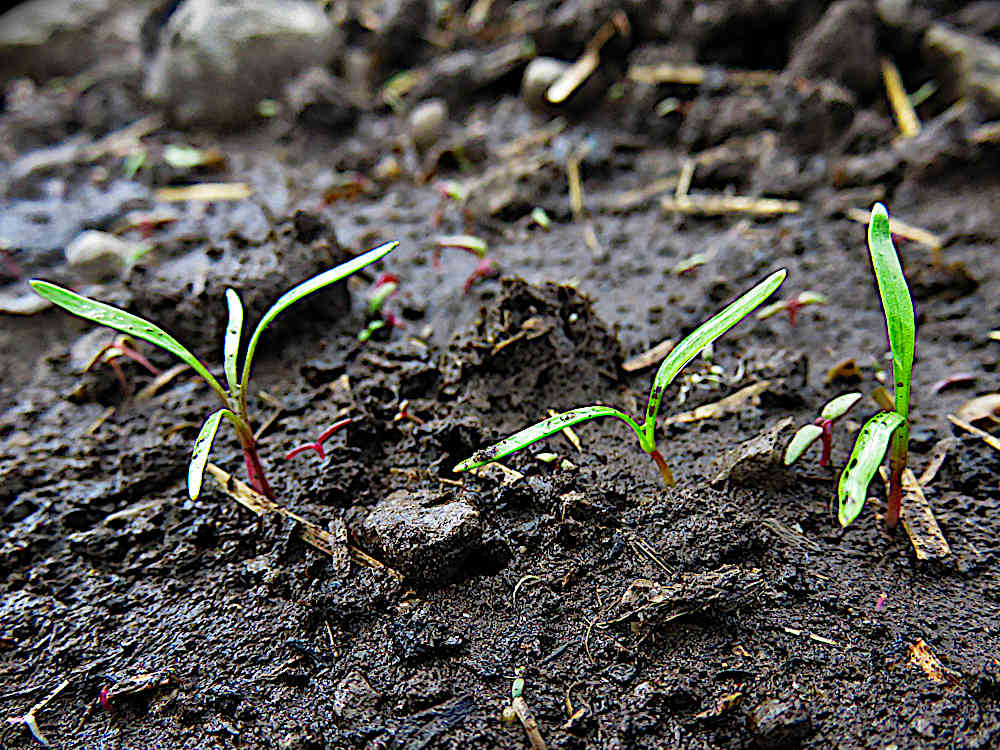
These carrots started coming up a few days ago, uncovered! It’s not surprising given the cloudy, warm and fairly wet weather, perfect for getting carrot seed going, but it’s not usual. Carrots germination generally takes some work. Once up, though, and past the stage where little critters try to chomp them out of existence, they’ve always been an easy-growing, low-maintenance, fun to be around!
Farm lab (research!)
Tomato seedlings compared
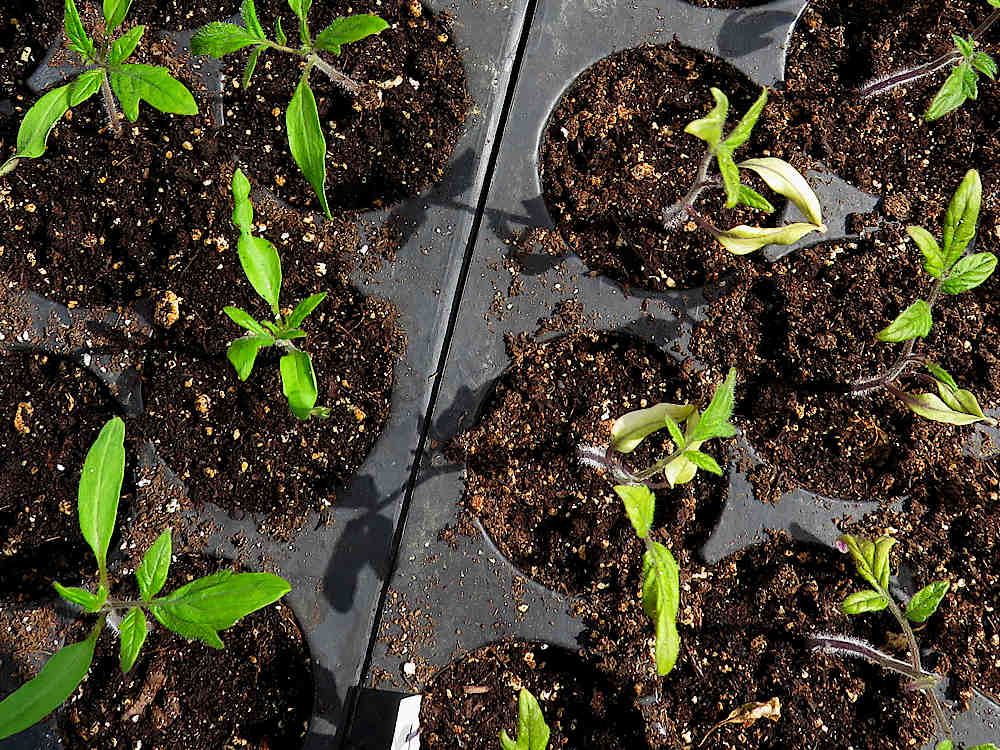
The Big Beef tomatoes on the left look so much bigger, healthier, greener, than the ones right, and they were planted a couple of weeks later. Both are in the same sized plug sheets. Both get the same time under the lights and out in the sun. Hmm…
This year, I’ve been planting smaller quantities more often, to see how a small batch approach works in our unpredictable weather. Instead of putting in four rows of carrots now, I’ll put in two now and two more in a week or so. It’s an experiment. The hard part is actually keeping track of the observations over time, so that later, there’s…data. More to come!
Growing in the dark
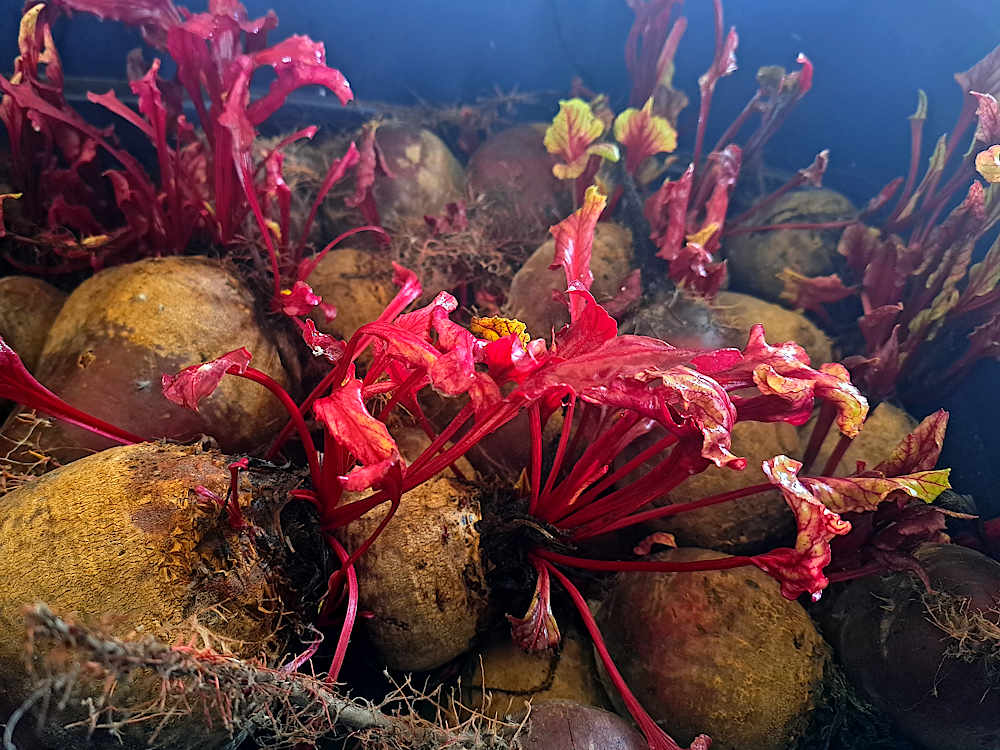
Beets, harvested last fall, stored for six months in a covered bin in a cool room, have been busy growing in the dark. This is a familiar early season sight, there are always leftover beets from last year. They’re still firm and tasty, though a lot less sweet. The new growth has a nice crisp texture and a slightly sweet, beet-y taste, what you might expect! They’re headed to the compost heap, part of the spring clean-up. You could call it wasted food, but I think of it as recycling.
Upcycled food
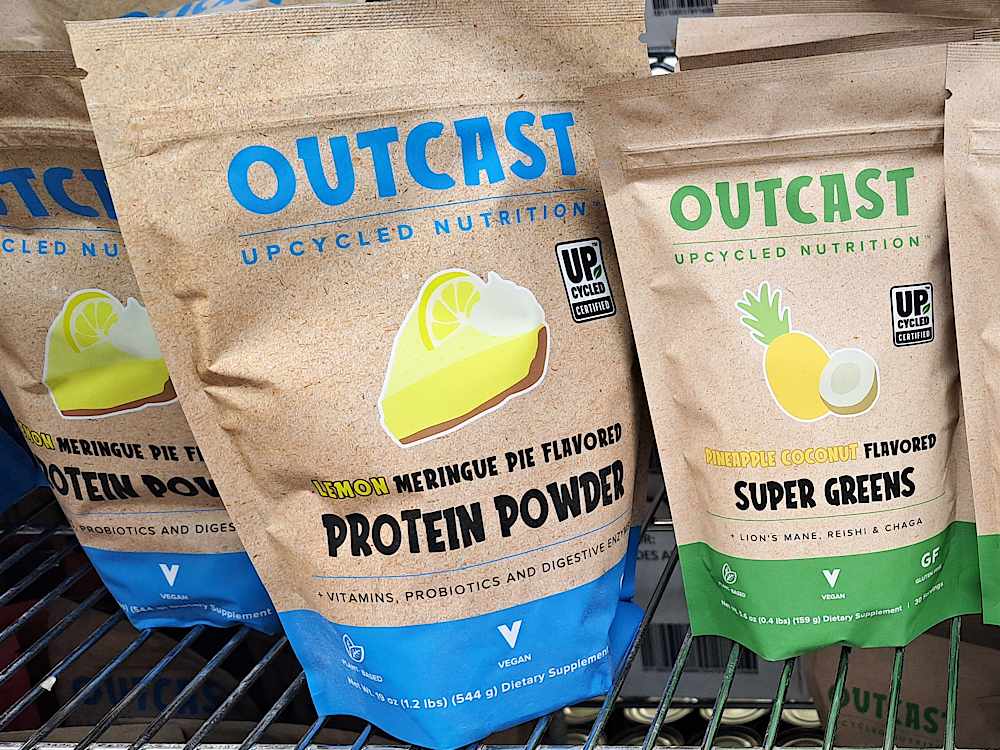
On my last stop-in at the luxury grocery discount outlet* around three weeks ago, the “upcycled” on these labels caught my eye. “Certified Upcycled”? Don’t think I’d heard upcycling applied to food in that direct way, but it made sense. It has an automatic eco-conscious, palatable ring to it that “recycled food” certainly wouldn’t. My immediate thought was that it referred to using cosmetically damaged and unsold fruits and vegetables to make things—damaged meat and meat scraps isn’t as appealing, and we already have hot dogs. I imagined the piles of veggies that at times went onto the compost heap on my tiny farm. I took the photo, figuring I might want to know more…
The big number that is hard to imagine is 35% of food goes to waste around the world. That’s the rough figure I see everywhere I look. Sometimes it’s 25% or 40%. In any case, let’s say, a third of all food is somehow made, then not eaten. How does that work? I finish a harvest, then toss a third of it on the compost heap? Every time I buy three bags of groceries, I immediately dump one in a bin conveniently located at the supermarket exit? There’s an oversupply of some food crop and boxcar loads get left unsold by the tracks? There are lots of ways food can get wasted, and they all add up. It’s one of these modern problems we have that’s so sprawled through supply chains, it’s hard to see a big picture of how we got here, let alone how to do something significant about it.
In that mix, we have upcycled food. Here, protein powder and something called Super Greens. Checking out the company’s web site doesn’t yield much info, and no surprises. Seems they gather various unsold crops and…process them. Assuming the nutritional quality is the same as non-upcycled, is the upcycled product cheaper to buy? Or is the main advantage the feeling as a consumer that you’ve done something good for the environment, for the planet? It’s easy, only a search or an AI buddy away, to get more info. For me, for now, I’m satisfied. Upcycled food means companies out there are making otherwise going-to-waste food into…more food. Got it!
*Luxury grocery discount outlet is what I call the local discount food outlet with a line-up that includes an everchanging assortment of big brand names and specialty organic labels. Great deals, around a third of the normal price or even less (I haven’t done actual price comparisons, but that’s what it seems like). Excellent finds aren’t guaranteed, but it’s always worth a stop. One of my all-time favorite scores: certified organic chicken gravy and brown gravy cubes, 50¢ for a box of four. I stocked up on soooo many! (I don’t think that much of the certified organic stamp in general, there’s all the lawyering and lobbying going on by the big food manufacturers to massage the rules, who knows what exactly it represents, but when it comes to processed products, and for 50¢, why not?!)
The veggies are alright
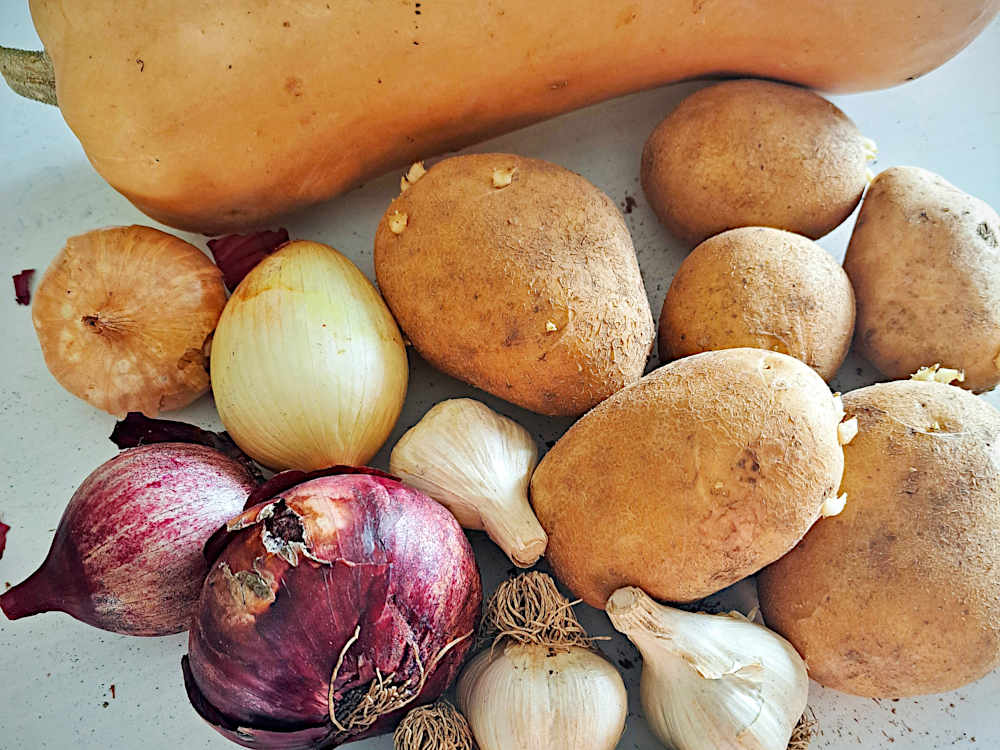
Checking in again with the veggies in storage, about a month after the last inspection, and they’re all still doing fine! The potatoes are starting to sprout. The red onions, not recommended for long storage, are losing their color on the outside, but still firm, and colorful a couple layers in. Garlic: check! Butternut squash, even with the healed nicks from last summer’s intense hail attack: check! Months since harvest, casually tucked away in a closet/pantry, still delicious!
Veggie sleuthing
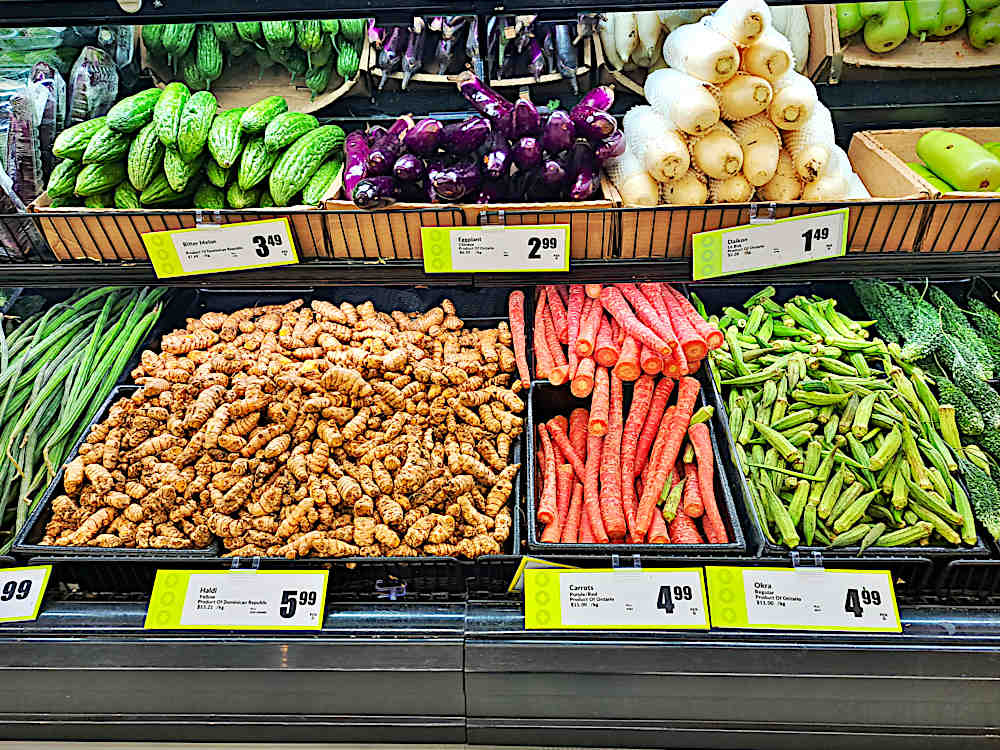
Part of the Asian/Southeast Asian veggie section at one of the local supermarkets. Most of these vegetables are unfamiliar, some I recognize. I usually scan for unusual shapes and textures when I roll by, but my curiosity is never that high. I suppose you could see them in an exotic, different cultures way; to me, they’re just…more veggies! This time, I decided to take a closer look, and took a pic on my phone (which was also my shopping list!). So what do we have?
ID-ing everything from the labels in photo and searching the interwebs for info, here goes. Top row, left to right: I couldn’t make out what that first plastic-wrapped veg is. Next, bitter melon, my mom grew this in her community garden. Used in Chinese cuisine. Remove seeds, keep skin, slice, use in stir fries. Or steam, or stuff. Next, eggplant, and daikon radish, both familiar, I’ve grown these. Then, squash (long) is what the label says, but this one has several names: opo squash, calabash, bottle gourd, and others. It comes in different shapes, like the decorative hourglass-shaped dried gourd version, or really long, or this stumpier look. For cooking, it’s another summer squash, like zucchini, so raw, steamed, boiled, sautéed, or grilled!
Bottom row, from the left: This long, skinny veg is labeled drumstick (label cropped out of photo), and it’s also called moringa. They’re the pods from the moringa tree, from Southeast Asia, India. Lots of superfood claims. When used as a veg, there are these pods, and also moringa seeds on their own. For the pods, cut up, put in soups and curries. Next, haldi, is another name for turmeric, which I have as a ground spice and use in my standard breakfast red lentils spice mix. Relative of ginger, native to Southeast Asia. Use fresh the same as powdered turmeric, grate or slice and add to soups, rice, whatever you like. Also, pickle (one way: lemon juice, salt, jar, fridge), use in marinades, blend. Then, carrot, purple/red, prepared a little differently with the tops and tips sliced off. And okra, also familiar. Last, the bumpy-textured veg is labeled karela, which turns out to be one of many names for bitter melon, so same as above!
And where are they from, fresh not frozen in the dead of winter? Carrot, daikon, eggplant and okra are from right here in Ontario, the drumstick is from India, and the rest were grown in the Dominican Republic. All of them I think can be grown here in colder country, except turmeric, which needs many months of warm weather (it apparently can be done here with a few months of indoor growing, then moved outside).
Now that I’ve finally LOOKED CLOSER, I’ll probably try some of the new veg. Of particular interest: drumstick and (remembering mom) bitter melon!
Pellets of goodness
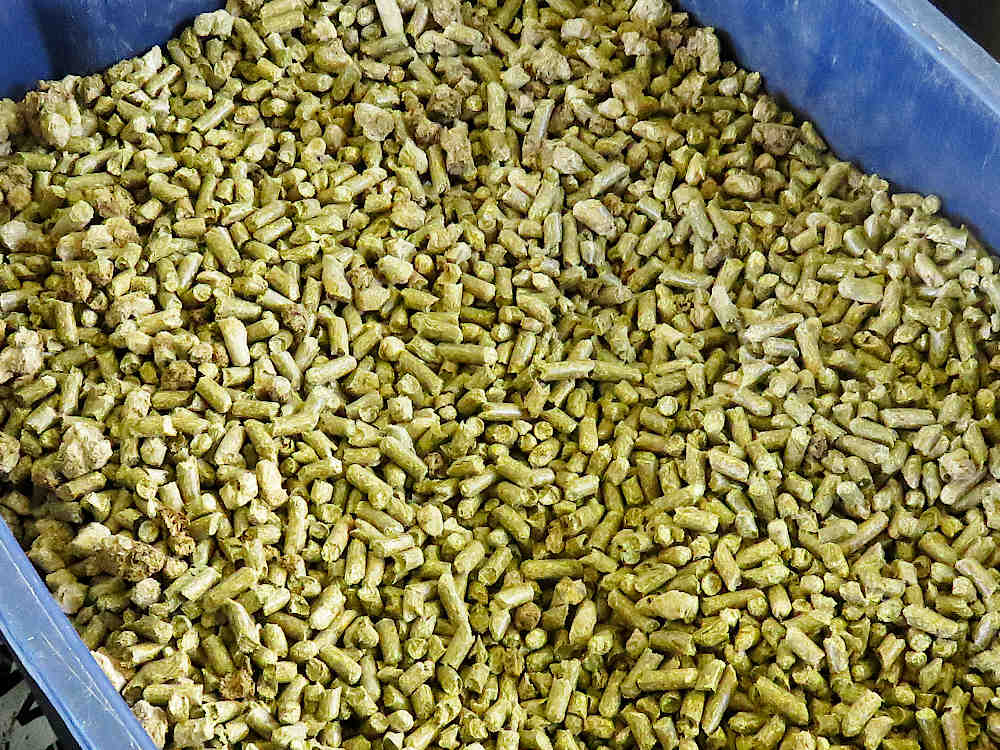
One person’s low-interest bin of unidentified golden-brownish stuff, is another’s stash of pelletized alfalfa goodness. This is plain old alfalfa, the plant in the pasture that cows especially love, dried and compressed into pellets. No additives, nothing but dry plant pills. They’re a great fertilizer in the veg patch. One season, I counted on mostly pelletized alfalfa, instead of the usual cow manure, as the main plant food and it worked out fine. It’s also quite inexpensive, compact, easy to store and spread. Nowadays, I use it to top up beds over the season, after the main composted manure spreading. At one point, I had all the numbers – how many pounds/kilos per bed, cost per acre – and nutritional details, in front of mind. Now, using it as a top-up, all that has receded and I eyeball it. Just scatter.