
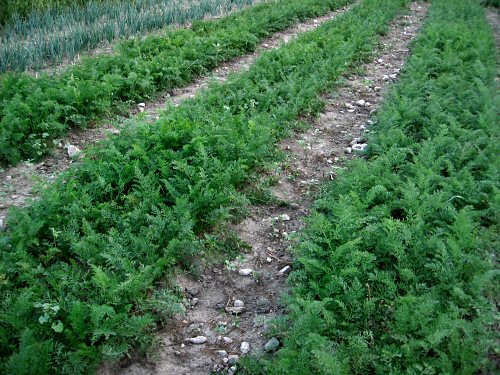
We’re just starting on the second planting of carrots, and green onions as well. It’s the standard four rows (200’/61m) to a bed, which goes a long way. Depending on thinning, and of course, the weather and amount of irrigation, anywhere from one to two feet of a single row of carrots makes up a 1-2 lb bunch, so that’s 100-200 bunches per bed. Here, it’s Nelson, Purple Haze and Touchon, with Ramrod onions up in the corner, and another bed of Nelson out of sight to the right. Once they work through germination and tiny seedlings being eaten issues, carrots around here are a carefree, low maintenance garden veg, a pleasure to host (and munch)!
Veggies
Crops for Fall
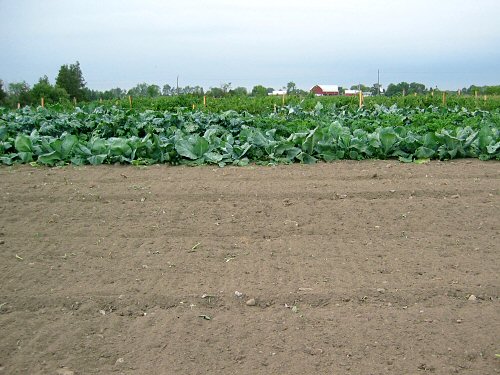
Newly released from row cover, five new beds of brassicas (cabbage, broccoli, cauliflower, kale) get ready for Fall. Beyond, tomatoes (and beyond that, the farm across the road, they gather honey). In front, a vacated section that contained the season’s first planting of peas seeded way back in April, and is now awaiting a mid-August green manure cover crop of…oats! And still, no rain…
Anti-raccoon measures
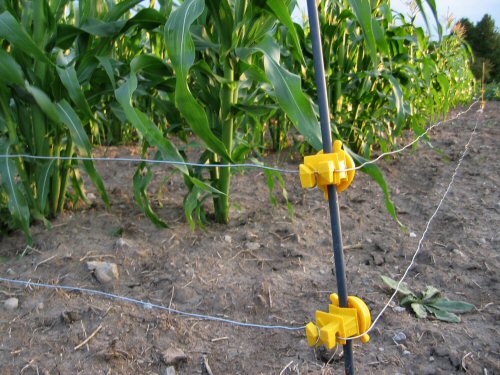
Finally strung up the electric fence to protect the corn from raccoons. Powering the short, hopefully sharp shocks is a solar-charged controller. The lower wire is place about 6″ (15cm) from the ground, with a second strand about 10″ (25cm) above it. The perimeter has to be kept clear of weeds that might ground the fence, which would reduce or eliminate the shocks. In theory, this is a totally effective, non-lethal, physically harmless method, but coons are clever. Already, there’s been some pre-fence eating activity. We shall see what comes next!
Last of the seedlings
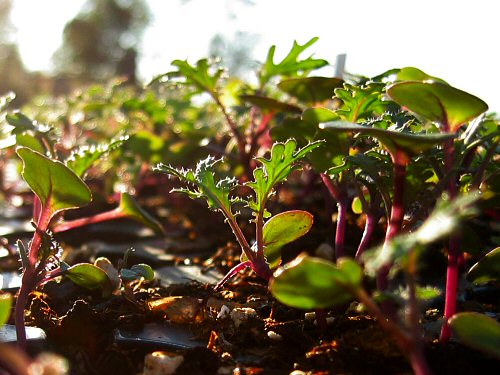
A tray of Red Russian kale are the last transplant seedlings for this year. It’s extremely late to be planting this out now, but RR is a fast grower, there’s space, and it’s always fun (and good experience) to see what happens! Any extra kale is a bit of insurance against a cold October that would see hardy crops as the last ones standing…
Turning to corn…
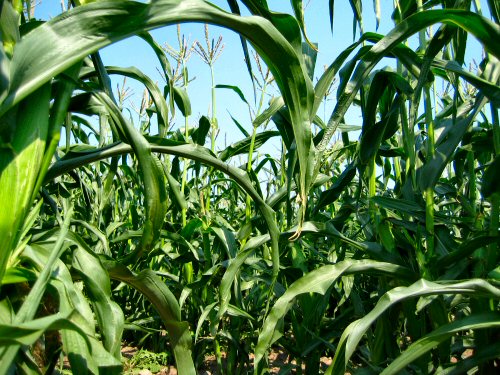
Attention turns to corn. Disproportionately lots of attention, as we prepare for the annual battle of wills and technology with the coons. It’s solar-powered electric fence versus opposable thumbs… Earlivee, the first of two small (50’x50′) plantings, made an impressive leap upwards over the last few days, and now looks set to deliver! Once previously with the super-early 57-day Earlivee and dry conditions, the corn remained stunted, only about 3-4′ high, and produced ears so small they were hardly worth munching. This time around, it’s jumped into the usual 5′-6′ range and the ears are filling out. From one delicately torn back and slightly nibbled ear, I think the early raccoon scouting has already begun.
Peppers…
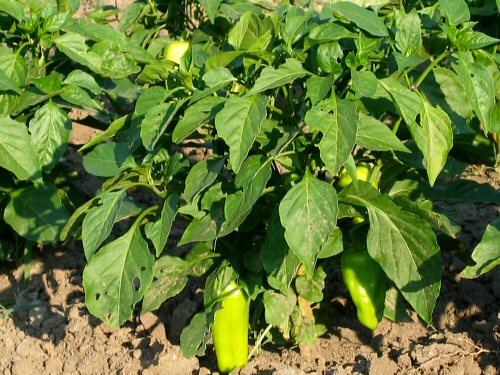
It’s all joy with the peppers (and eggplant). Here, Gypsy sweet peppers put on size and begin to peek out. In the past, these two crops barely made it in, if at all. I planted the varieties, but for eggplant, only the very early Dusky produced satisfying yields toward the end of summer, and peppers made it in decent quantity last year because of the freakishly extended warm weather that went into October. The reason is no mystery: doing the transplanting mostly alone, I’d get to peppers and eggplant last (they’re not prime farmers’ market sellers); this year, they got a good week or more head start. So we have the fruit of extra labor (and pretty good pepper-growing weather)—straightforward and…satisfying!
The end of July
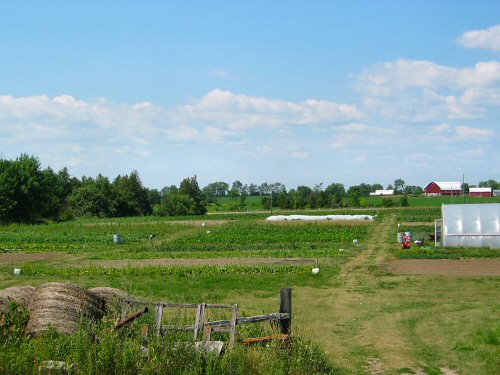
From the gangway to the upper level of the barn, the View shows the new, unusual pattern of the field as summer progresses: less veggies! Compared to barely a month ago, the difference is clear. And it’s even more striking when you walk through. What’s happening is, with this year’s more intensive planting and harvesting, larger sections are finished earlier than in previous seasons. I don’t find this pleasing: too much emptiness, where crops should abound—it’s not the main season fullness I remember (although even now, there is still more upcoming yield out there than ever before)! That’s the way of the busier market garden. And according to the plan, this year’s first organized fall cover cropping—oats, winter rye—should actually fill up the emptied sections, starting in August. I guess you’d call that positive progress, though I still take great, simple pleasure in seeing pure abundance in the field. Not logical, but there you go!