
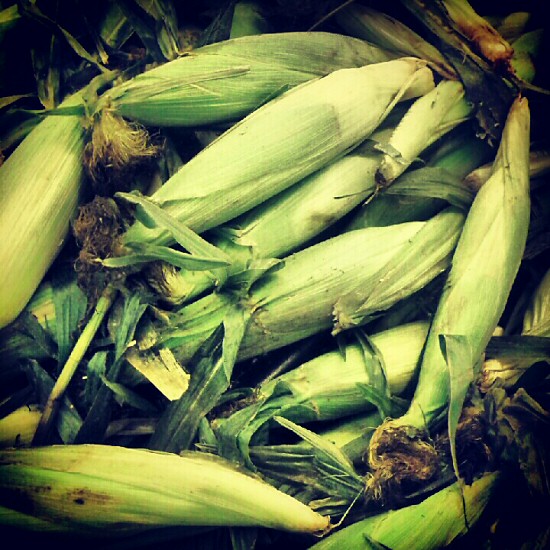
Fresh sweet corn at the beginning of May?! Wow, it’s a miracle! After a period of mild outrage when I first started tiny farming, as it sunk in how far and in what conditions most of our fresh food travels, the knee-jerk negative reaction to the sight of long distance food at the supermarket, and especially at the farmers’ market via the big resellers, thankfully faded away. Automatic anger is a waste of energy that could be put to better uses (weeding comes to mind). So seeing corn in big bins at the store as if it’s fresh from the field down the road, with fields here barely dry and seedlings still in trays, doesn’t surprise or annoy me much now…but it continues to look odd and kinda ridiculous. A miracle, indeed! (I took the photo, but didn’t even think to check the sign to see where exactly this batch is from…)
corn
Hitting the books
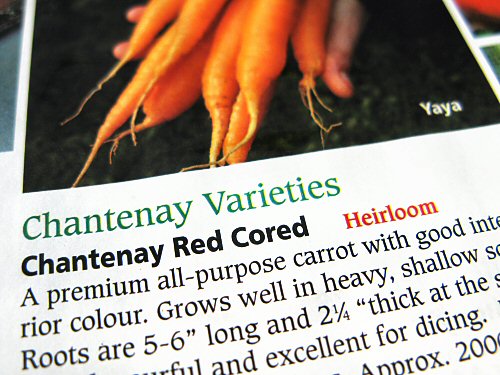
The first new seed catalog came in three weeks ago, but the first from the two seed companies I mostly use arrived on Friday. Today, I took a quick look, checking to see what’s new, but mainly making sure that reliable stand-bys are still around. Dusky eggplant, that manages to come through in the craziest conditions. Rich, earthy Bloomsdale spinach (open pollinated!). Earlivee sweet corn for its speed and it’s more-corn-less-sugar, not-overly-sweet taste (it’s…gone!). Early Dividend broccoli and First Crop beets, planted in spring for their reliably extreme earliness. The shortlist goes on. Most of ’em are still there! The ones that fall off tend to be open-pollinated varieties, as they make way for “better” hybrids… These catalogs are convenient, but I wonder when I’ll get around to seed-saving for real. Progress!
What’s new at the farmers’ market…
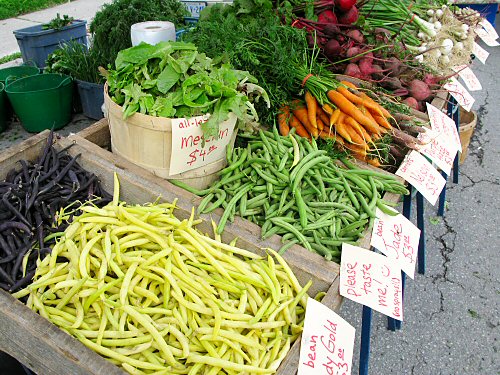
Ahhh, something new on the farmers’ market stand: BEANS in three colors (we had the first green beans last week)! There’s yellow (Indy Gold), purple (Royal Burgundy), and of course, green (Jade). One way I watch the season unfold is through the debut market days for the headliner crops, the big people pleasers. Lettuce is always the first up, a hit partly because it’s the first fresh veg of the season. Then, roughly in order, there’s spinach, peas, carrots, beans, garlic, and tomatoes. Strawberries and corn are also standard hits around here, but we don’t grow berries, and when we do have corn, it’s only for CSA shares. I find it odd that these particular veggies are so generally popular. What about delicate and delicious summer squash, lightly grilled? Versatile and tasty beets, diced and broiled, or grated raw with carrots in salad? Beet greens and Swiss chard, sauteed in butter and olive oil? The list goes on and on… Just about ALL of the 20+ basic garden veggies we grow are equally great to me, but that’s not the case for most people. Curious…
Sun and silo
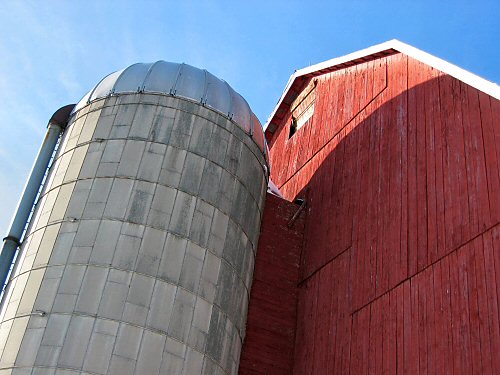
We haven’t had much sun lately, but it came out for the top half of the day today. What a difference sunshine makes, if you have any choice at all, you certainly can’t stay indoors (especially in front of a computer!). In my slow and steady exploration of all the many parts of the barn not used in tiny farming, I snapped a shot of the silo at the south end, looking quite imposing in the bright light, kinda industrial, and still in good shape. This is an old concrete silo, about 40′ (12m) high, used mainly for silage (partially fermented crops used for livestock feed). It was last filled around 15 years ago, when this was a full-fledged dairy operation. Field corn was chopped up and blown up the tube on the left. Packed in, the corn would start to ferment, which helps preserve it for winter feed. Cows apparently love silage! At times, the silo was also used to store dried corn (the kernels) for feed. Hmmm, wonder how to reuse a silo…
Anti-raccoon measures
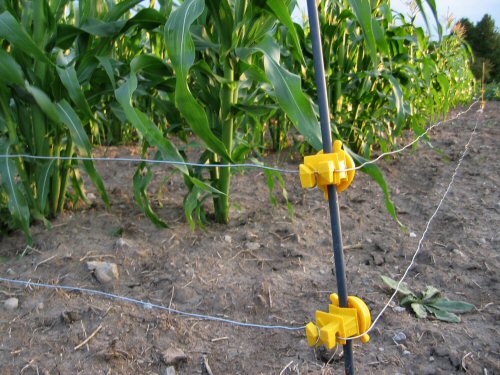
Finally strung up the electric fence to protect the corn from raccoons. Powering the short, hopefully sharp shocks is a solar-charged controller. The lower wire is place about 6″ (15cm) from the ground, with a second strand about 10″ (25cm) above it. The perimeter has to be kept clear of weeds that might ground the fence, which would reduce or eliminate the shocks. In theory, this is a totally effective, non-lethal, physically harmless method, but coons are clever. Already, there’s been some pre-fence eating activity. We shall see what comes next!
Turning to corn…
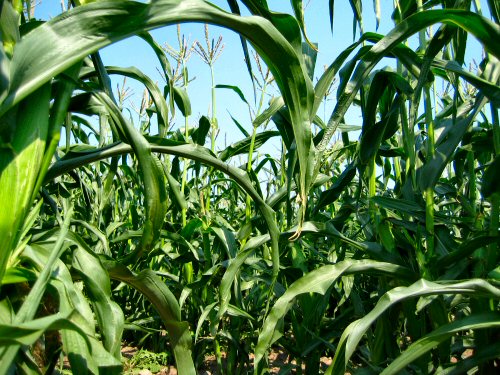
Attention turns to corn. Disproportionately lots of attention, as we prepare for the annual battle of wills and technology with the coons. It’s solar-powered electric fence versus opposable thumbs… Earlivee, the first of two small (50’x50′) plantings, made an impressive leap upwards over the last few days, and now looks set to deliver! Once previously with the super-early 57-day Earlivee and dry conditions, the corn remained stunted, only about 3-4′ high, and produced ears so small they were hardly worth munching. This time around, it’s jumped into the usual 5′-6′ range and the ears are filling out. From one delicately torn back and slightly nibbled ear, I think the early raccoon scouting has already begun.
Corn
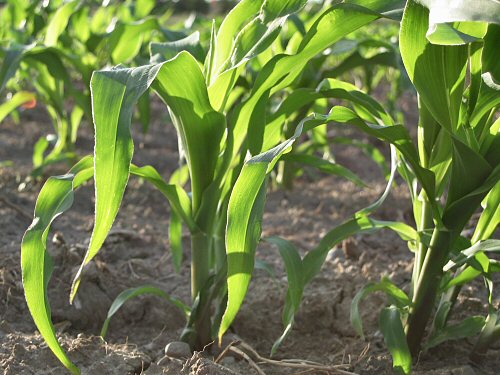
After a month, the first planting of corn is about a foot (30cm) high and doing fine. There are two varieties this year, Earlivee, an “old fashioned corn taste” (su) type, and Bon Appetit, a sweeter (se) type, only about 800′ of each. Corn every year is a battle all its own, the corn and me against the raccoons. The coons are my biggest (as in, size and intellect) garden foe, and unfortunately, they usually win. A couple of years ago, I invested in electric fence and a solar-powered controller. This only kept them at bay for a while. I still haven’t figured out how they got past it…I’ll have another chance to find out this year. No fence, positively no corn (maybe a few ears, literally, out of a couple of thousand). I grow only enough to eat and to include a dozen or so in the CSA shares. With the amount of sweet corn out there, and the ridiculously rock bottom prices when it’s in season, selling corn at the market or stand hasn’t seemed worth it. At the very least, it’s fun to watch it grow!