
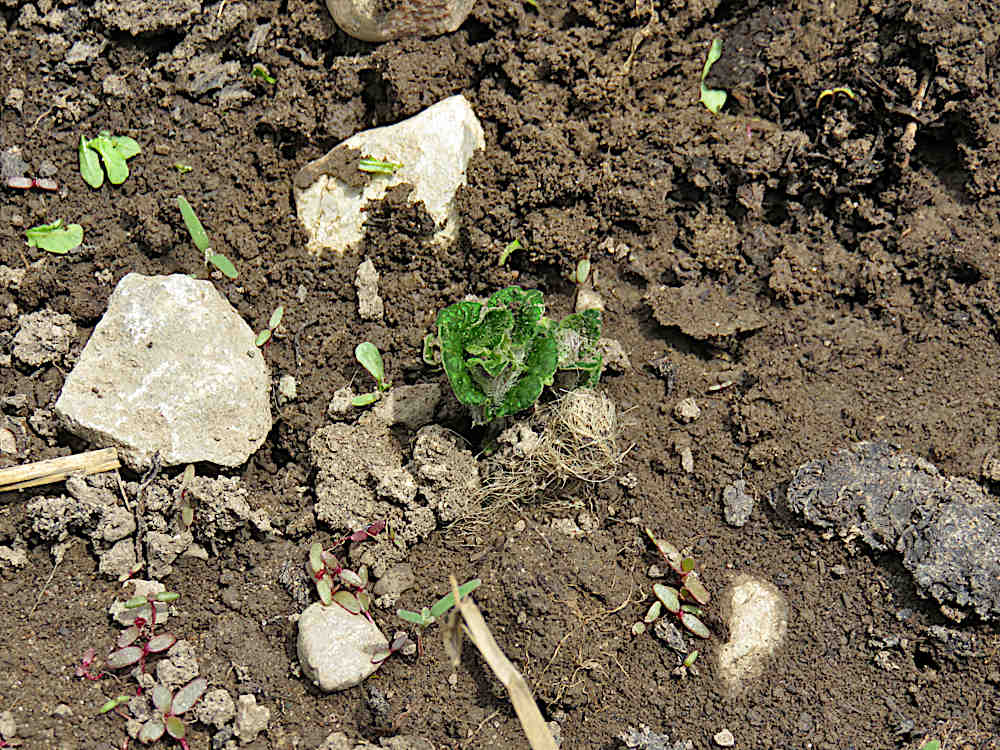
When you spend a lot of time scanning the ground for the very first sign of germination, you get pretty good at spotting new seedlings as they emerge. This new potato plant is easy, it’s quite large, with a rosette of crinkly, distinctively dark green leaves. Carrots and green onions are a whole lot tinier. Beets, spinach, and brassicas can at first look pretty much like the weeds that pop up around them, they blend in. Still, no matter the crop, after a while, you develop a seedling recognition system that automatically zeroes in on even a single new arrival, just like that. It’s always a pleasure to see that seeds are still getting along with the weather and doing their thing!
Veggies
Squash to the field
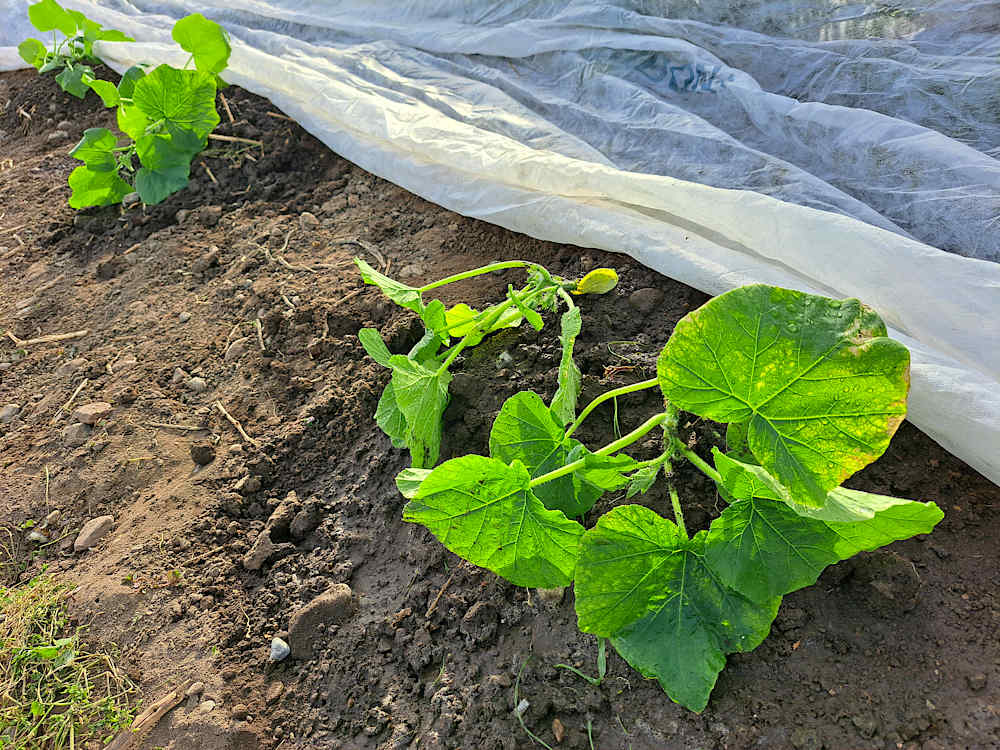
Transplanted butternut squash seem to be doing fine in the great outdoors. The row cover will protect them from the fairly cucumber beetles, until they’re big enough not to be bothered. The beetles eat the plants and can also pass on bacterial wilt (I’ve experienced hungry cucumber beetles, but luckily so far, no wilt). This rock cover is medium weight, thick enough that it’s easy to handle without tearing and can be reused, and thin enough that it lets 85% of the sunlight through. A small tradeoff for no chemicals!
Spinach taking shape
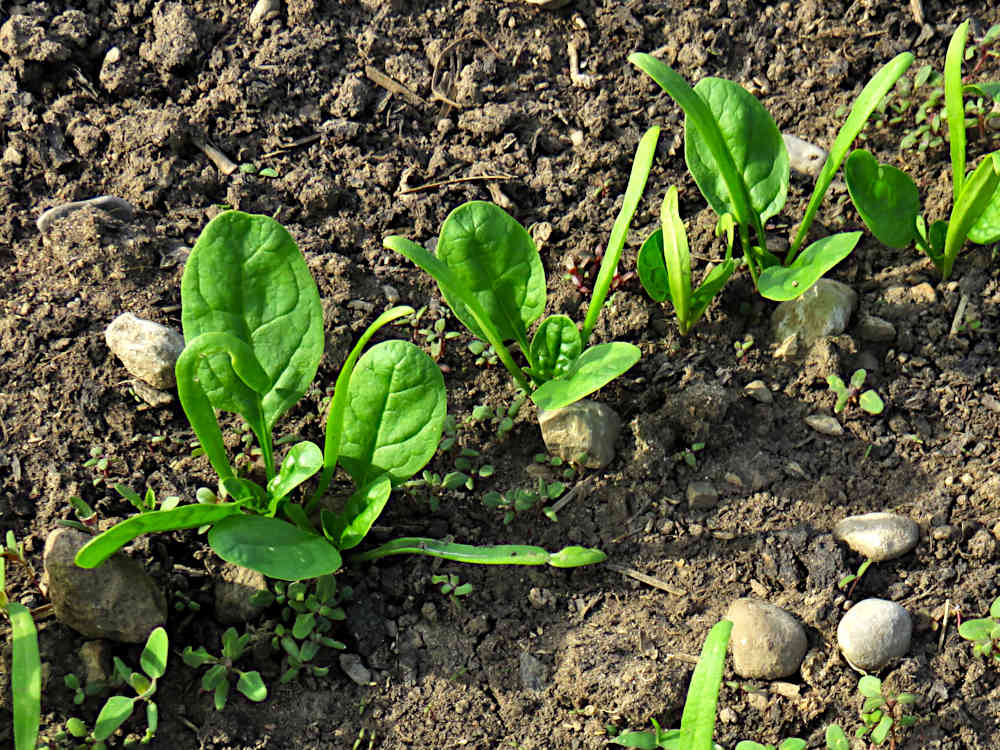
A perfectly germinated tiny section of a tiny row. Eleven days after our last look at the spinach, it’s definitely made some progress. It already looks good enough to eat!
Onion seed, dead and alive
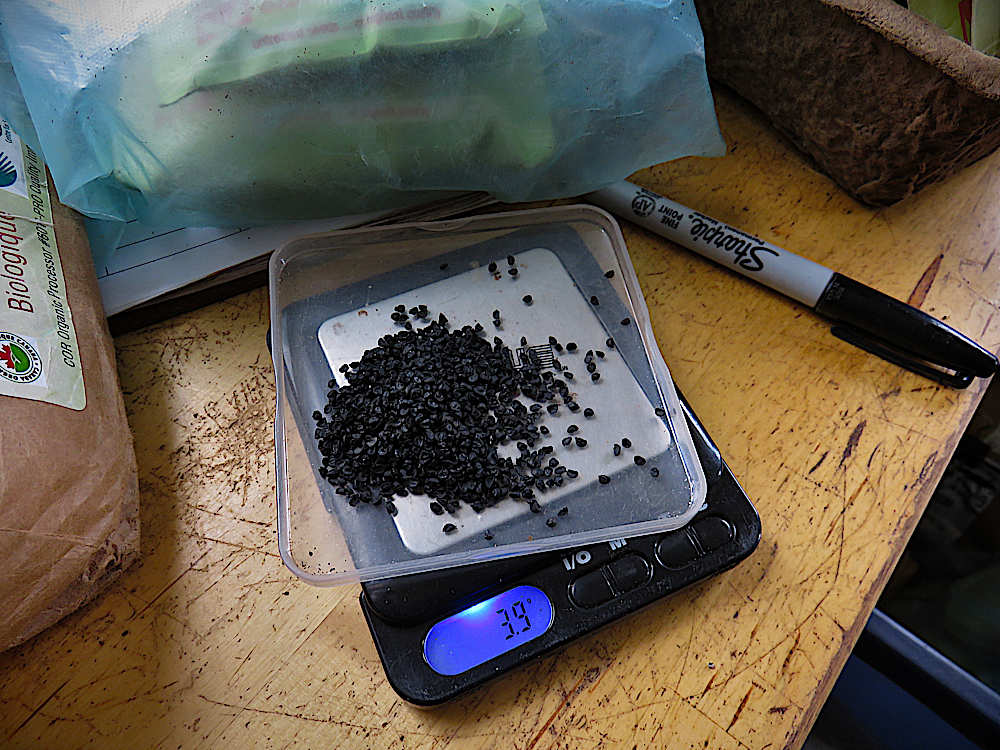
Mixing a small batch of green onion seed, half fresh from this year, half from years ago and no longer viable. Why? The mix of dead and alive seed makes it easy to spread quickly, getting good coverage and not having to thin out a bunch of seedlings that pop up too close together. Works when seeding by hand, as I’m going to do with these, or with seeders that tend to drop a lot of seed, like the Planet Jr. and the Earthway!
Seeding potatoes
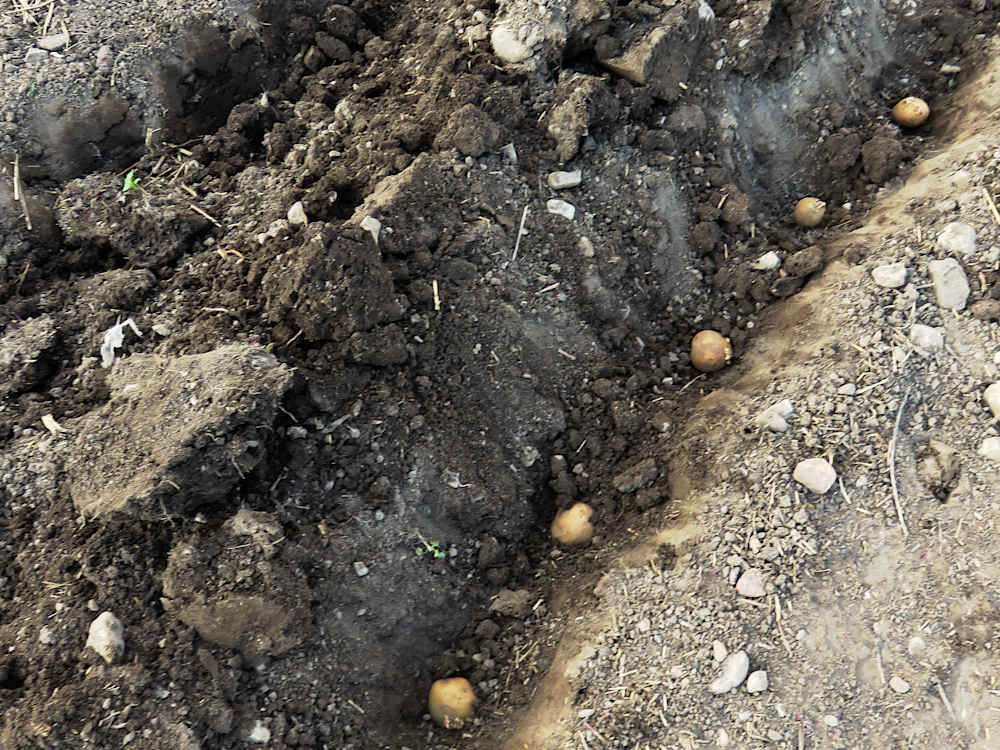
Place seed potatoes in a hand-dug trench at about 12″ spacing. Cover with a couple of inches of soil. Wait for stems to grow a few inches. Start hilling: pile on soil to bury the stems so there’s more underground stem rooting and allowing for potatoes to form. Keep hilling every couple of weeks for as long as it’s practical—stems still growing, more soil easy to get at, leaf cover not in the way. As simple as it seems!
Zukes in the field
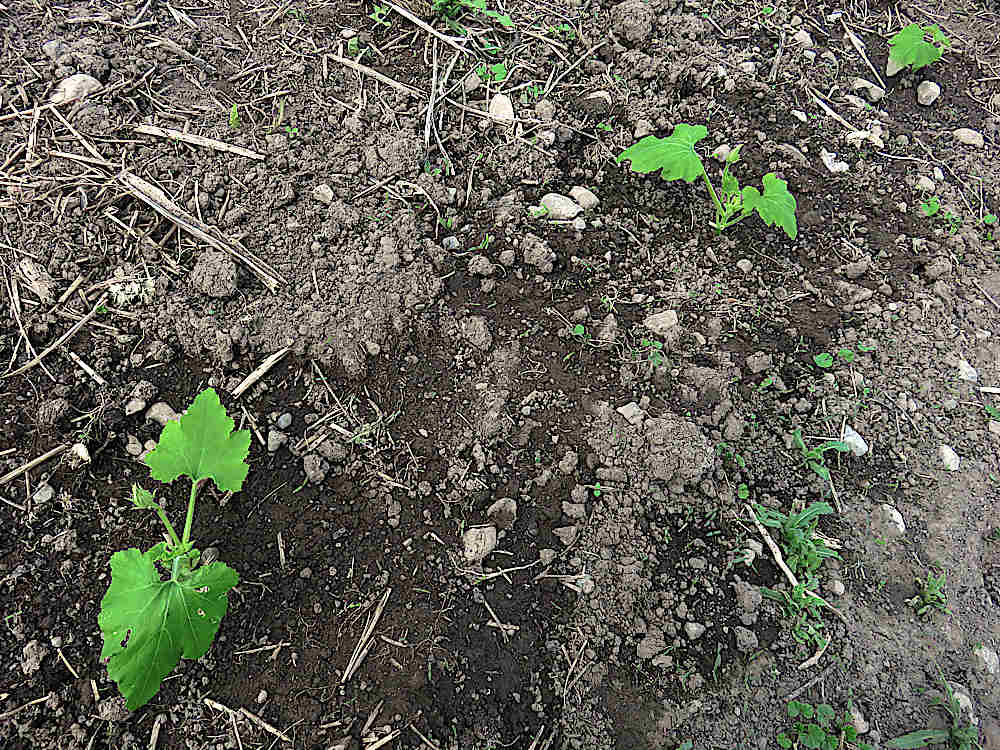
Zucchini, transplanted into the field a couple of weeks ago, don’t seem to be doing much so far. Don’t be fooled! Once they get settled—I imagine a lot of root action, spreading wide and down—they will explode. Pop! They’ve been under row cover to protect them from the cucumber beetles that attack all the cucurbits. I’m giving them some air on yet another mainly cloudy day. It’s generally not a good idea on the leaf disease front to keep our local garden veggies in warm damp conditions that can happen under row cover when there’s not a lot of sun. Looking at the photo, I can’t help but notice all the other garden would-be inhabitants, what we call weeds. I see some thistle, mallow, dandelion and of course, pigweed (aka amaranth). Like the zukes, they only seem like they’re not doing much…because I recently wheel hoed!
Carrots, once they get started…
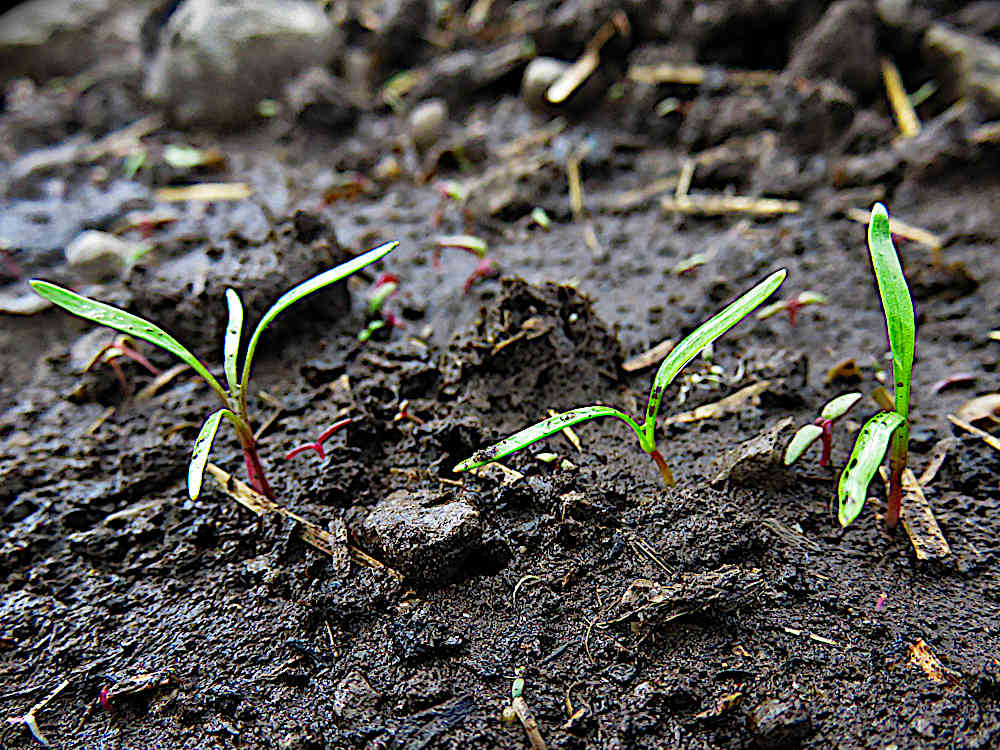
These carrots started coming up a few days ago, uncovered! It’s not surprising given the cloudy, warm and fairly wet weather, perfect for getting carrot seed going, but it’s not usual. Carrots germination generally takes some work. Once up, though, and past the stage where little critters try to chomp them out of existence, they’ve always been an easy-growing, low-maintenance, fun to be around!