
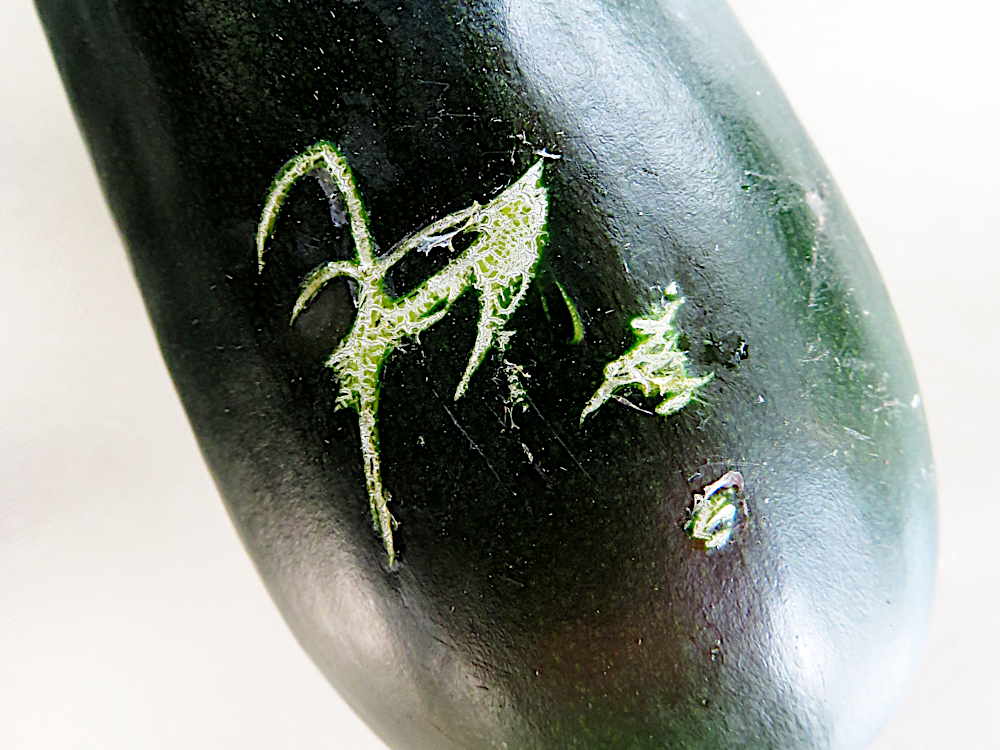
Groundhogs are back again, and they seem to be more active than last year. I’m checking everything out every day to see how far they might go. It comes down to what they turn their beady little eyes and big sharp teeth to next. My garden ravager experience has been for the most part with deer. When a veg garden is new to them, they tend to explore crop by crop. A night or two of nibbling on a new one, then, full-on devouring, and off to the next. So far, the over-sized rodents have focused on lettuce and brassicas. Today, I noticed what look like scratch marks on a single zucchini. I’m no wildlife biologist trained in animal feeding behavior. Still, I suspect some fair-sized beast, like a groundhog, tried to scratch their way into the zuke. And failed. That’s kinda weird, doesn’t look like an A-game effort. Have they given up for good? Or was it a much smaller veg-eating creature? Or something else entirely? The big question is, will the zukes be next?
Kale under cover
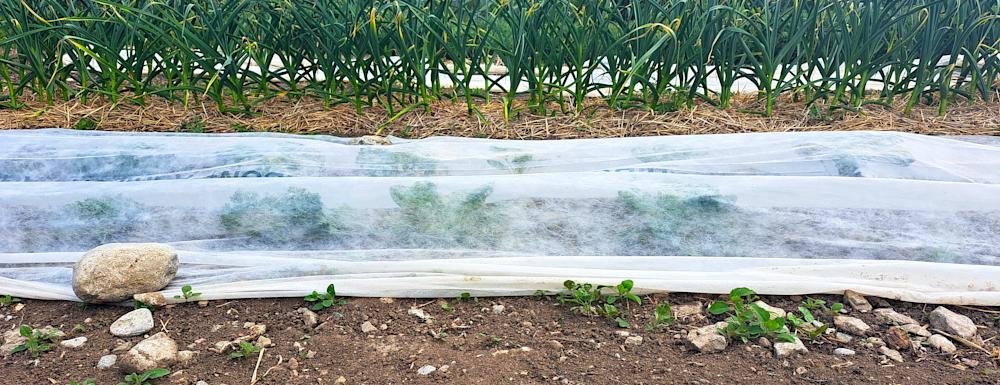
Kale and Brussels sprouts are tucked away under floating row cover (with straw-mulched garlic in the back). This is usually to protect them from flea beetles that can devour the seedlings. This year, unfortunately, it’s also a deterrent to the sudden invasion of groundhogs. Invasion isn’t the right word if we’re talking about numbers, as my best guess is that there are only two doing the damage. Their work, though, is so far somewhat alarming. They have a particular taste for lettuce; they’ve already gone under and through the cover to get a it. But in the last couple of weeks, it seems they’re out to at least sample just about everything. Since last year, and especially this spring, I’ve seen several groundhogs in the general area, which is new and a lot. Last season, there was a little veggie munching, but nothing out of hand. So, to a point, live and let live. This time around, seems like it could get more serious. As far as pests and disease, from year to year, if it’s not one thing, it’s another…
Early mini-harvest
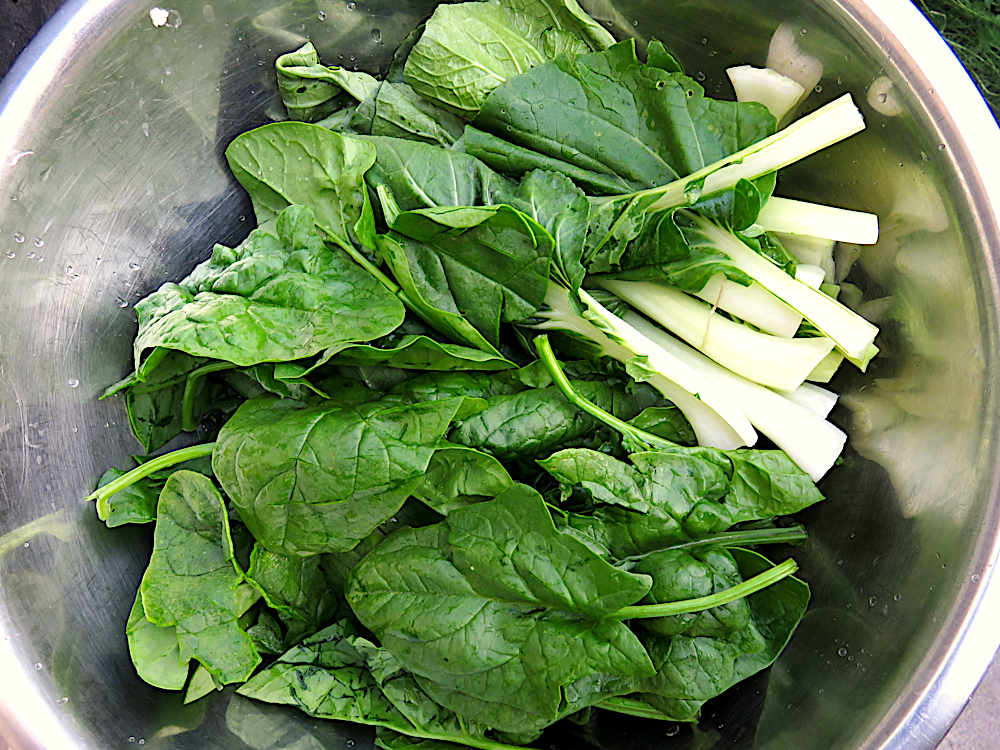
A small harvest of spinach and bok choi for dinner! It’s always a pleasant little shock to taste the first of the season’s garden-fresh veggies. After the winter months when the only fresh produce is grown in faraway lands, it’s a treat. In recent years, I used to buy a limited amount of veggies in winter. Onions if I ran out of my own. Green onions. Sometimes cauliflower and broccoli. Salad mix. Nowadays, I freeze spinach, kale and cauliflower. That, along with stored beets, carrots, and winter squash, covers most of the winter. So, for food satisfaction, the first new harvests every year are a big deal! :)
Pellets of goodness
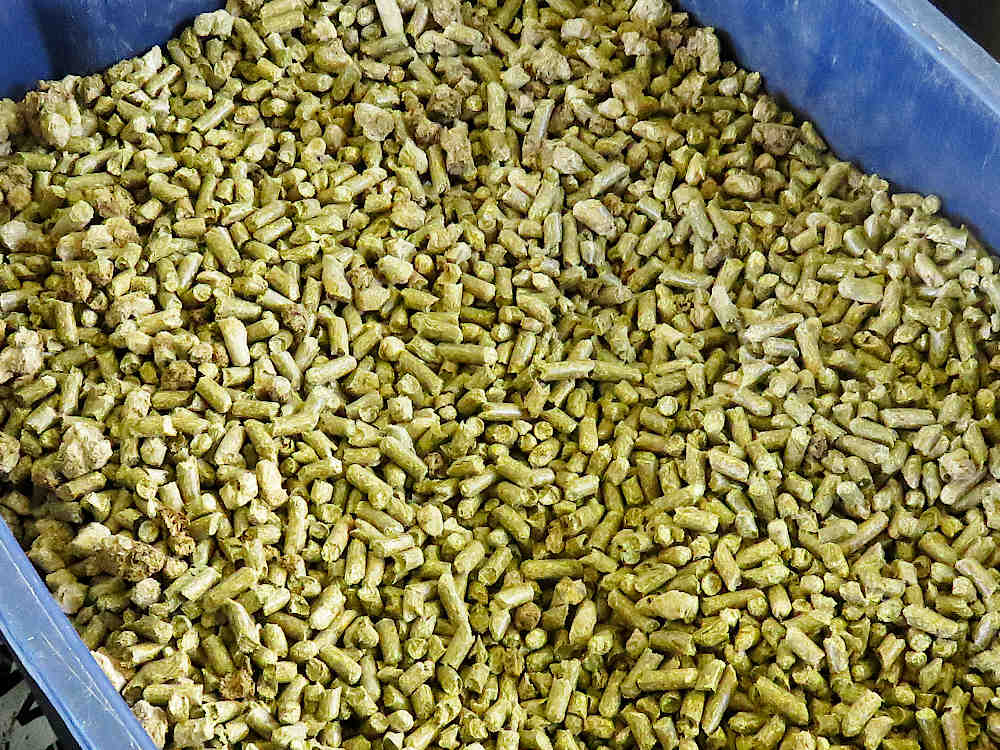
One person’s low-interest bin of unidentified golden-brownish stuff, is another’s stash of pelletized alfalfa goodness. This is plain old alfalfa, the plant in the pasture that cows especially love, dried and compressed into pellets. No additives, nothing but dry plant pills. They’re a great fertilizer in the veg patch. One season, I counted on mostly pelletized alfalfa, instead of the usual cow manure, as the main plant food and it worked out fine. It’s also quite inexpensive, compact, easy to store and spread. Nowadays, I use it to top up beds over the season, after the main composted manure spreading. At one point, I had all the numbers – how many pounds/kilos per bed, cost per acre – and nutritional details, in front of mind. Now, using it as a top-up, all that has receded and I eyeball it. Just scatter.
Bonus onions!
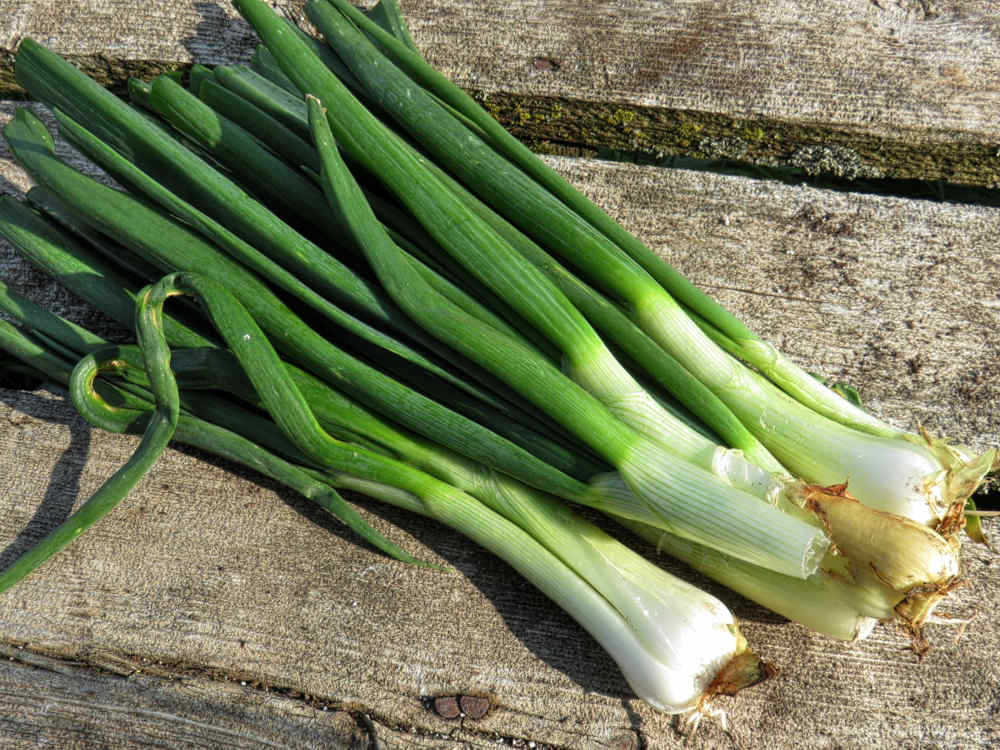
Leftovers from the previous season can turn into a delicious spring surprise! These onions grew from ones that were overlooked during fall harvest, and in a spot that hasn’t yet been tilled. There’s an official name for this: volunteering. Strictly speaking, I think a volunteer plant means it comes from seed dropped by a previous crop, or carried in by wind, birds or otherwise. These onions are new growth this year, from mature onions left in the ground over winter, kind of like leaves coming back on a tree. In any case, I think of them as volunteers, but mostly as a tasty treat.
Simple system
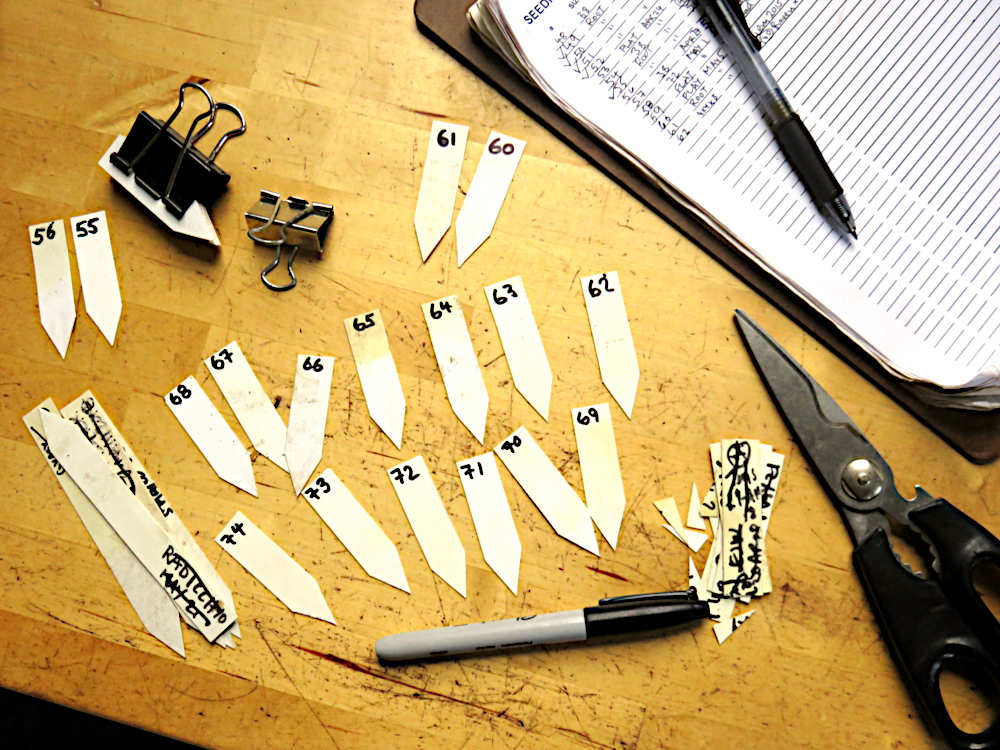
Nothing like improving a way to keep organized! This may look like some sort of craft-y looking set-up, when in fact it’s my new, state-of-the-art seedling tracking system. For years, I’d print the variety and seeding the on these tiny plastic stakes with a trusted Sharpie fine point, and stick them in the plug sheets. You can see the old approach on some of the stakes I’m reusing (old-fashioned recycling). Recently, I started instead to use a number code, writing the variety, date, and notes on a form I printed up. Why the change? Who knows, it just suddenly seemed like the thing to do.
It’s so much better! With only a number to read, the stakes can be half the height and don’t stick up and get in the way. It’s also a lot easier to see what’s going on overall by looking at the sheet. I always kept a list anyway, but now I’m doing half the printing and labeling work. I can also reuse the numbers season to season. The biggest advantage is psychological: I find that, when doing repetitive manual work, like seeding a few plug sheets, the less steps, the smoother the process, and less mental resistance. Rather than find a clean stake, print the info, pierce the plastic covering the plug sheet to stick it in, and rewrite the info on paper, I just insert the next number at almost soil level (no holes in the plastic wrap covering) and fill out the form! If this doesn’t resonate with you with a feeling of simple satisfaction, well, I guess you never had to keep track of a bunch of seedlings! :)
Onion sets
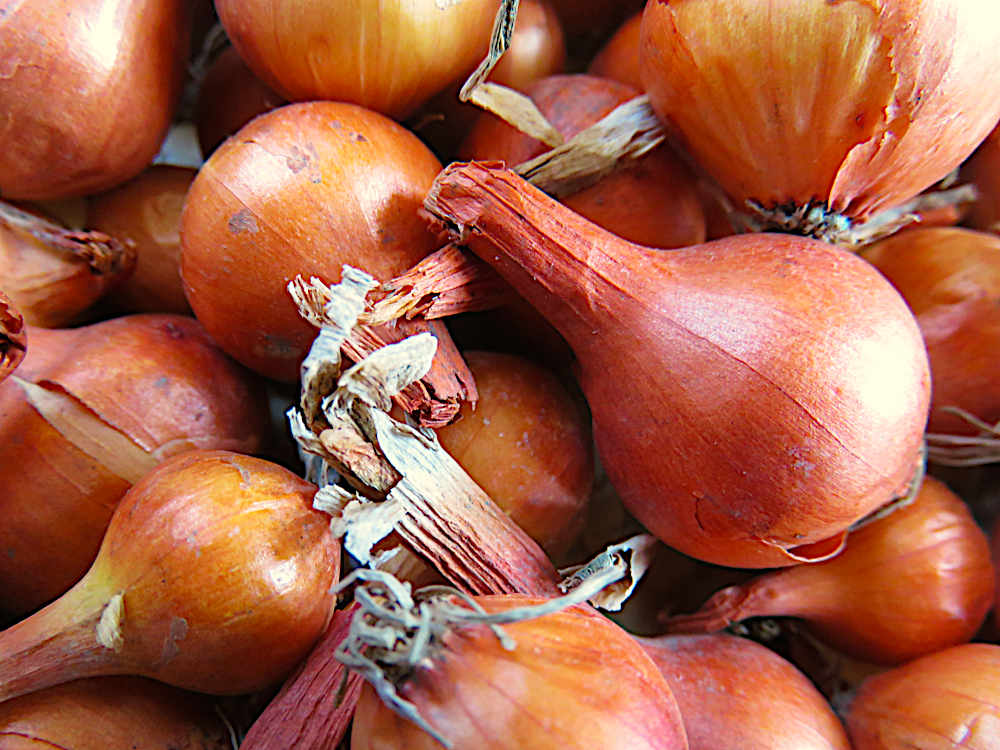
Tiny onions, grown the year before, pulled up early and dried out, are known as onion sets. They’re a bit of a shortcut. Pop them in the ground, and they begin growing again. Starting onions from seed gives you a lot more choice in variety, but it also means taking up indoor space under the lights to produce seedlings. When you simply want…onions, in the tiny market garden, onion sets is a quick and easy way to go!