

Much of veggie farming is playing garden defense. Yesterday’s garlic surprise attack was handled as an immediate emergency action, by hand-picking larvae before they could really tunnel in. The other no-chemicals approach is row cover, which seems to be laid out on more crops as each season. (More words to follow.)
garlic
Attack of the leek moth
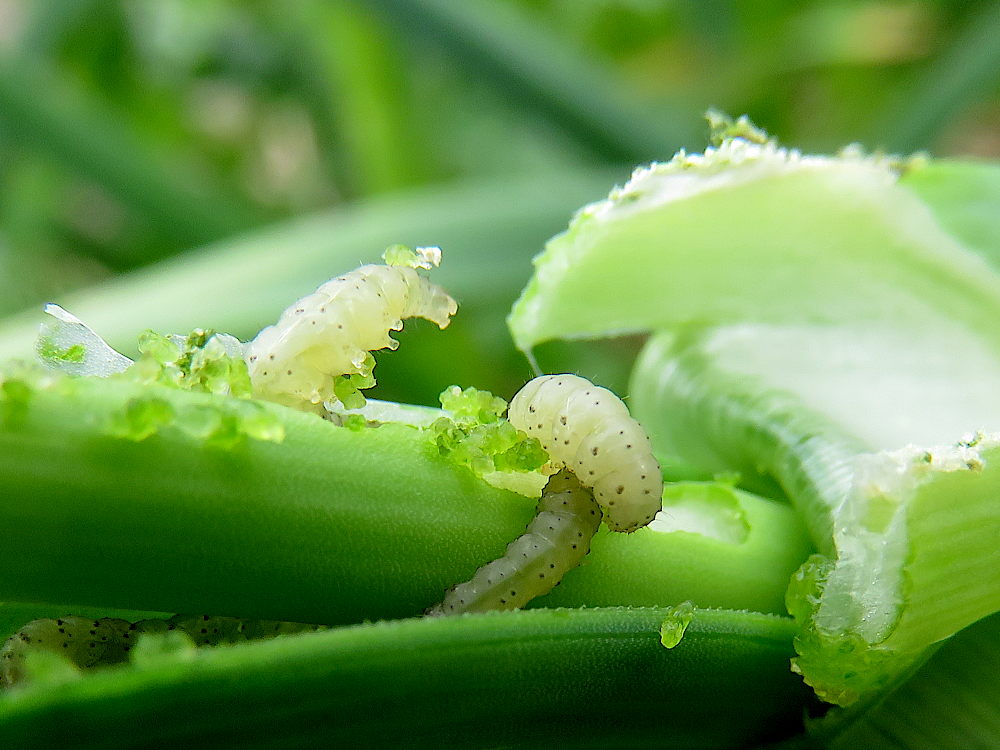
Checking for scapes today, only a couple of days after the last all-good garlic check-in, and found absolute carnage thanks to a leek moth invasion. For years, I’ve heard about these voracious leaf devourers ravaging alliums—garlic, onions, leeks—in the general region, but they’d never shown up here. Until now. After hours of hand picking and squishing, the situation may be somewhat under control.
FACT-FINDING: I did a bit of quick research to get the bigger picture. Leek moths (Acrolepiopsis assectella) are nocturnal, operating in full darkness. They overwinter in plant debris, emerge and mate when the temperature gets up to around 50°F/10°C. There are usually three generations a year, around here in mid-May, June and July. The first generation grows up (fast, in around 3 weeks) and starts laying another round, and so on.T hat means, in unusually warm or cold weather, there could be more generations per year, or less. Each female has around 100 eggs, lays them singly not in clusters, usually on the underside of leaves near the base of the plant (but, naturally, look EVERYWHERE!). There’s of course lots more, but that’s what I need to know for veg protection—garlic under row cover (and it would be pretty safe to uncover them during the day).
Down the garlic path
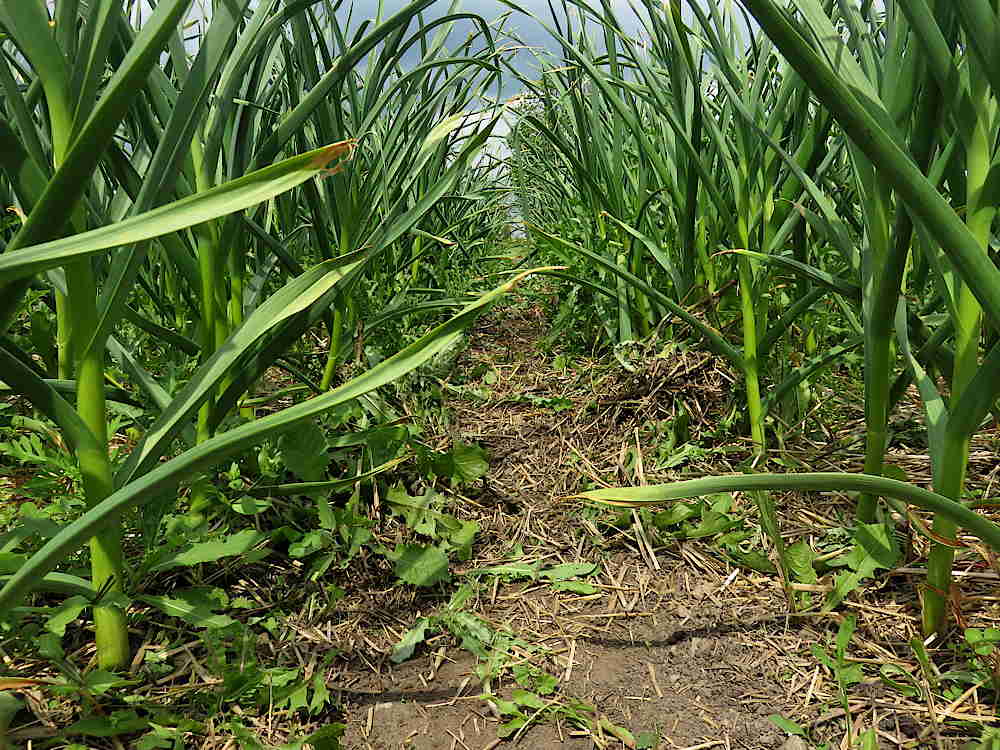
As a foot tall (30cm) version of myself, I can imagine strolling down the straw-mulched path between garlic beds, under the arch of slightly menacing leaf blades, stepping over dandelion leaves and dodging thorny thistles—the weed intruders—while admiring the thick garlic stems, with their promise of good-sized bulbs in a few more weeks. At this point, what could go wrong?! Sure, steady heavy rain over two or three days could leave the ground waterlogged and the garlic soaked and ruined for storage. It’s happened to me before. Call it a leap of faith, but I don’t think that will happen, not this year!
Season of the snail
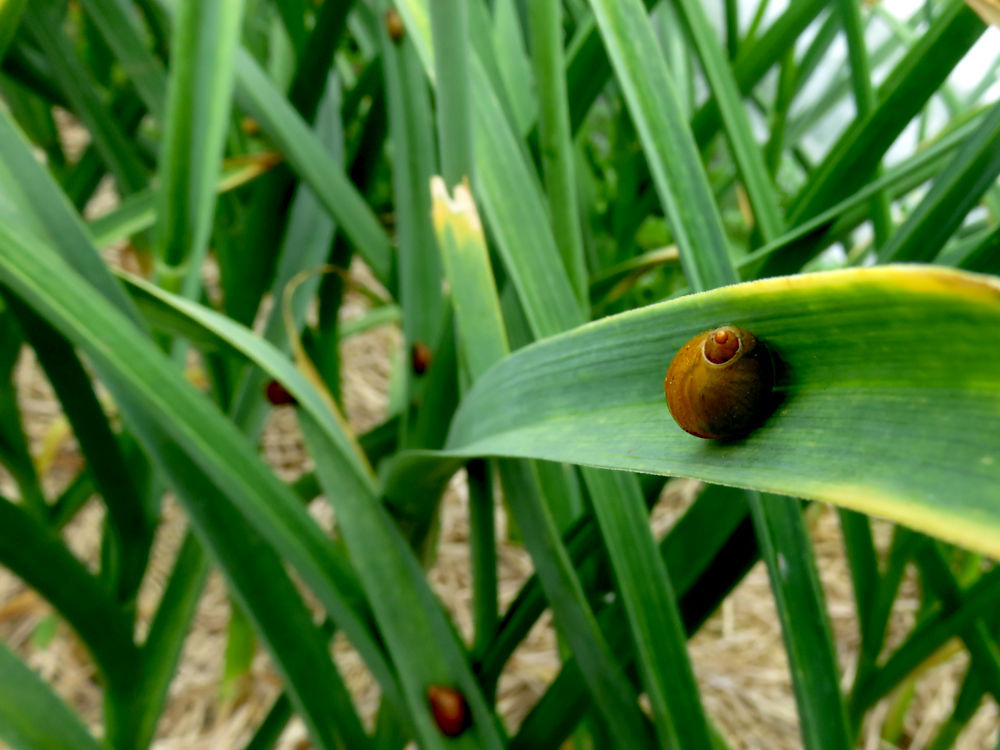
This year, small snails everywhere! My best effort at identifying them (posting pics to the iNaturalist app on my phone) suggests they’re in the amber snail family (Succineidae). Wherever the ground is sheltered and moist, like under rocks or piles of uprooted weeds, and on some veggie leaves and stems, you’ll find a bunch. Here, they’re on the garlic. Voracious leaf munching doesn’t seem to be what they’re up to, so that’s good (and I read that they aren’t likely to be a veggie problem). For better or for worse, no damage, no problem is my motto, and that usually works out!
Garlic: the bug’s eye view
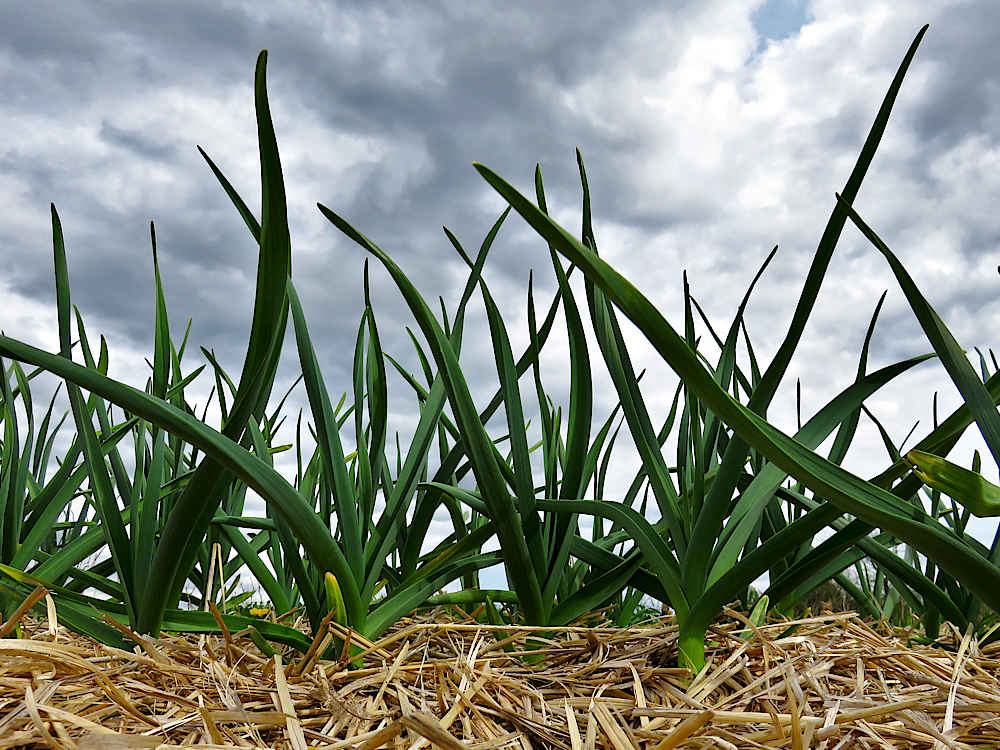
Another cloudy day. The garlic is still the only thing to see as far as crops in the field. It’s looking quite happy and healthy. That’s good!
Garlic spreads its wings
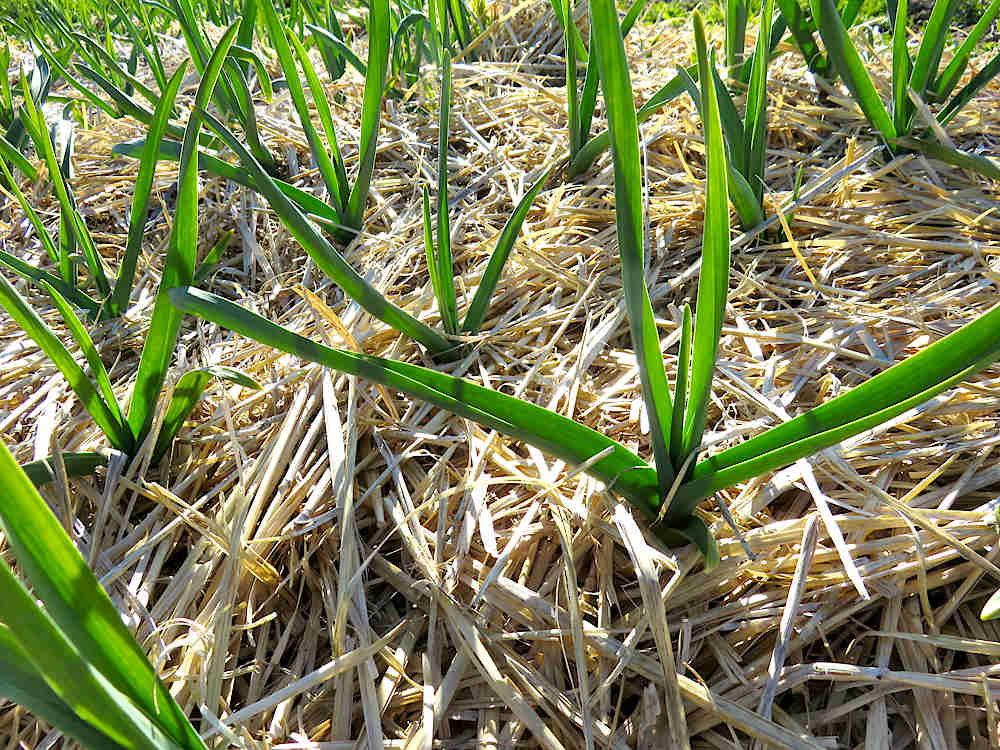
Considering there was nothing to see six weeks ago, the garlic is healthy, spiky and coming along nicely!
The veggies are alright
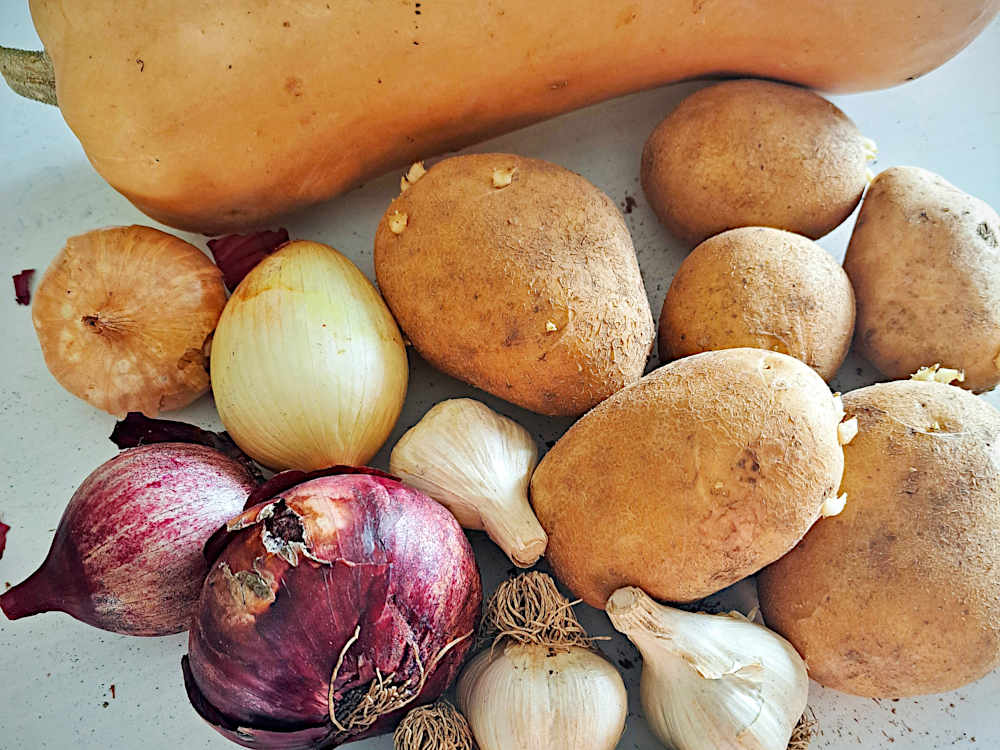
Checking in again with the veggies in storage, about a month after the last inspection, and they’re all still doing fine! The potatoes are starting to sprout. The red onions, not recommended for long storage, are losing their color on the outside, but still firm, and colorful a couple layers in. Garlic: check! Butternut squash, even with the healed nicks from last summer’s intense hail attack: check! Months since harvest, casually tucked away in a closet/pantry, still delicious!