
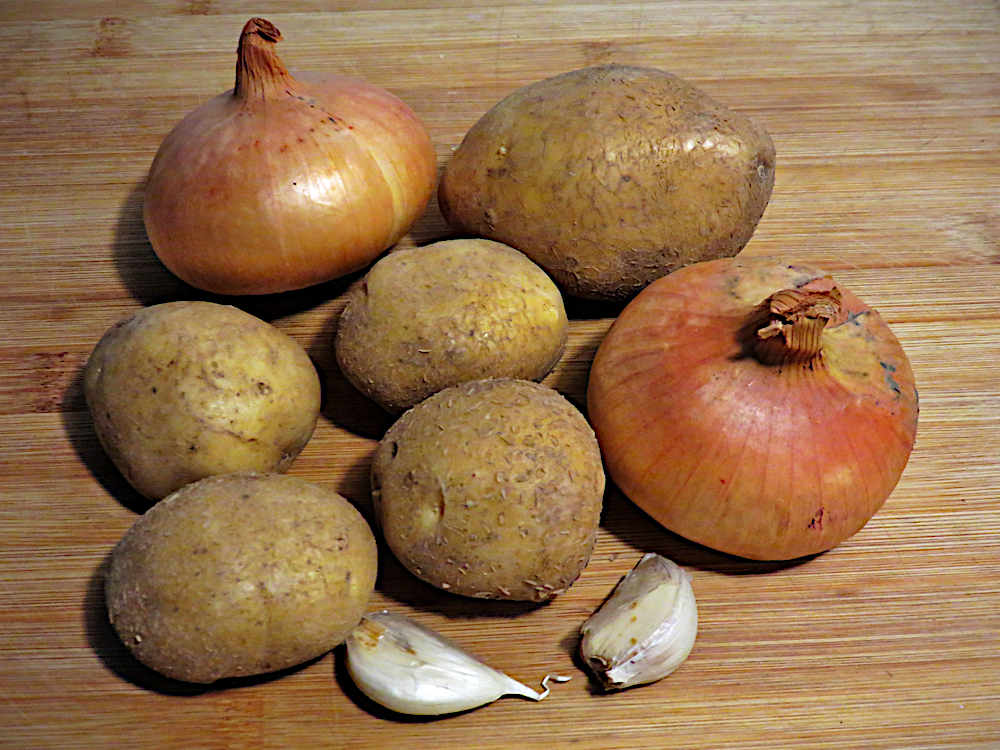
Beauty is in the frying pan! A sampling from the small cache of onions, potatoes (fingerlings), garlic, all pulled from the ground last summer, sitting since then in boxes and bags on the floor of a closet that could be called a pantry. Still firm and looking not really worse for the months of storage. There’s something extra satisfying about eating tasty food that’s been lying around, unrefrigerated, for several months!
garlic
Kale under cover
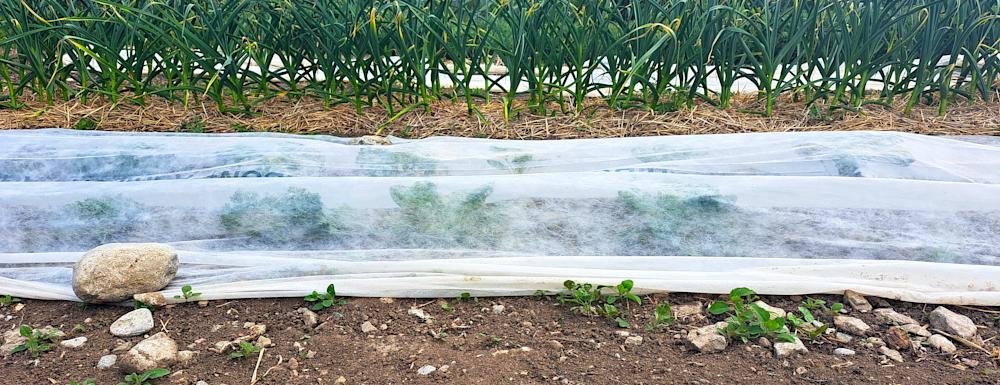
Kale and Brussels sprouts are tucked away under floating row cover (with straw-mulched garlic in the back). This is usually to protect them from flea beetles that can devour the seedlings. This year, unfortunately, it’s also a deterrent to the sudden invasion of groundhogs. Invasion isn’t the right word if we’re talking about numbers, as my best guess is that there are only two doing the damage. Their work, though, is so far somewhat alarming. They have a particular taste for lettuce; they’ve already gone under and through the cover to get a it. But in the last couple of weeks, it seems they’re out to at least sample just about everything. Since last year, and especially this spring, I’ve seen several groundhogs in the general area, which is new and a lot. Last season, there was a little veggie munching, but nothing out of hand. So, to a point, live and let live. This time around, seems like it could get more serious. As far as pests and disease, from year to year, if it’s not one thing, it’s another…
October harvest
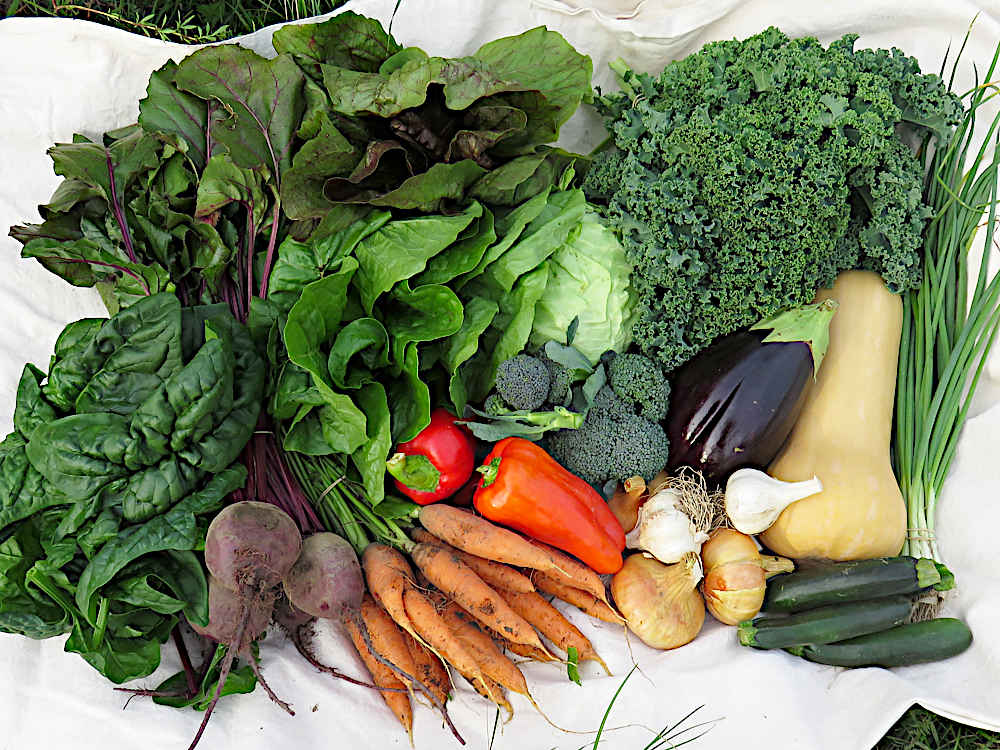
Great weather into the first week of October, with no hard frost so far. The veggie harvest list: beets, carrots, peppers, garlic, onion, green onion, zucchini, spinach, kale, lettuce, cabbage, butternut squash, radicchio, broccoli, eggplant. Nice!
Mid-September harvest
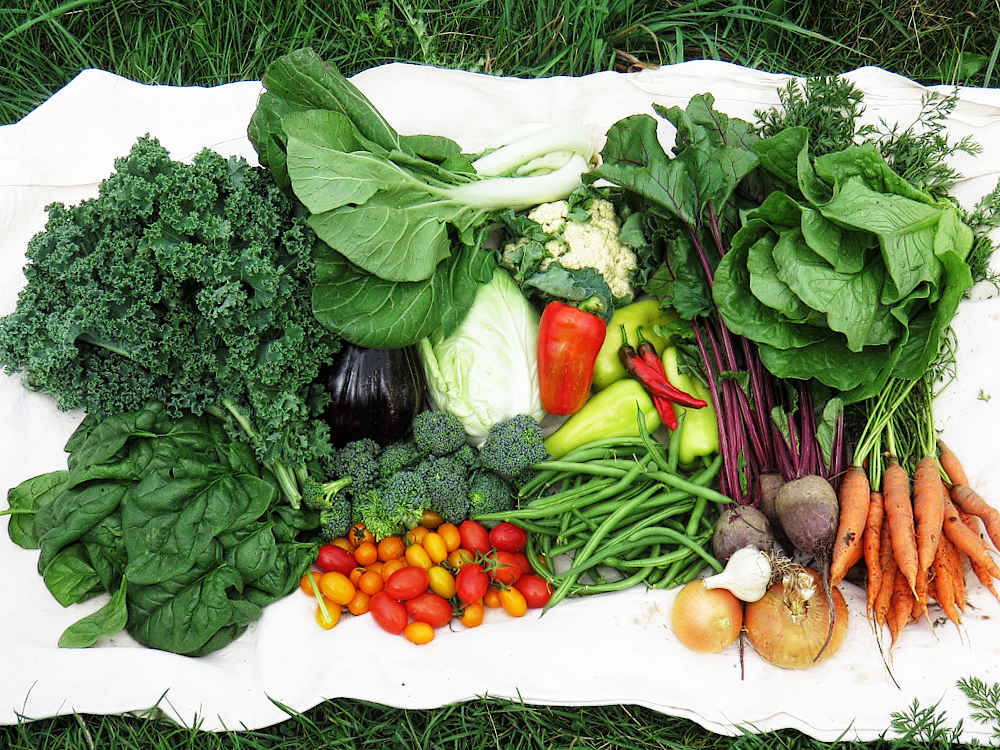
The weather’s been fine, no big frost worries, and the harvest is nice. For the sake of a list, in no particular order, we have: spinach, onion, garlic, carrots, bok choi, broccoli, lettuce, cabbage, kale, hot and sweet peppers, cauliflower, cherry tomatoes, green beans, beets, and…eggplant! I think I got ’em all. The set-up on a strip of canvas is for a newsletter photo–the lighting is an overcast sun, the studio is the field!
Seed in the field
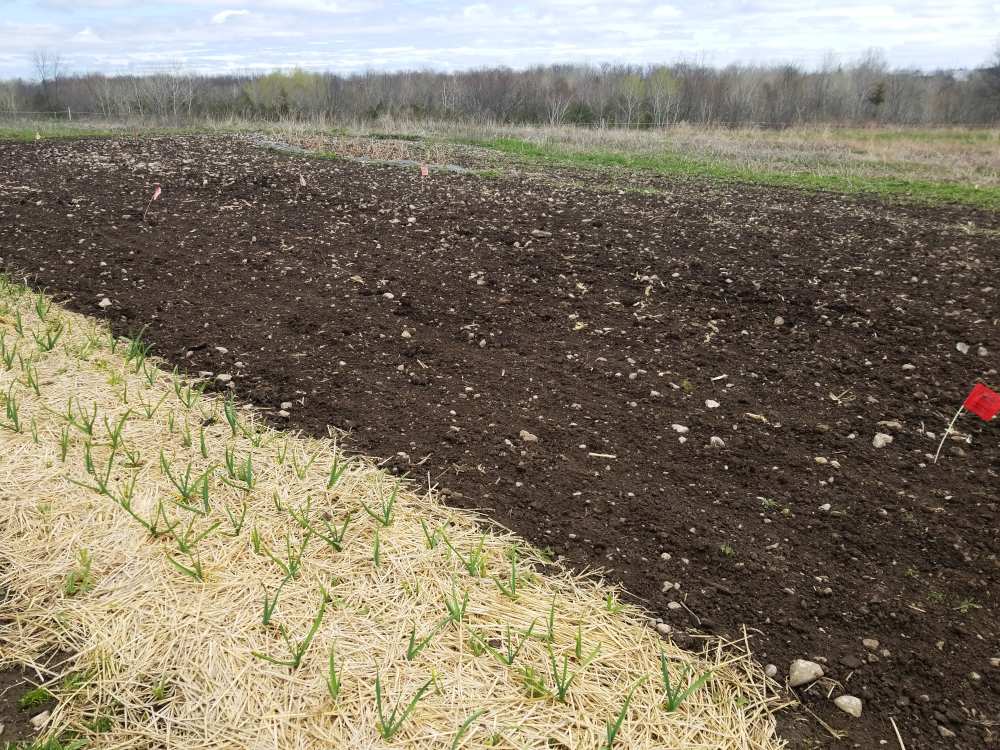
Pretty drab view of an empty patch on a partly cloudy day, but there’s new seed under there! Spinach, radish, peas, beets, green onion, lettuce, went in a few days back, perfectly timed for the last couple of days of slow, steady rain to get them started. You can see the faint lines of the seeder. (In front, mulched with straw, this year’s garlic is coming along well.) Rain also exposes the many stones and pebbles in this ground. Thousands have been cleared away, and they keep pushing up. It may look like a lot, but they’re not a problem. Live and…let be rocks!
First up: garlic!
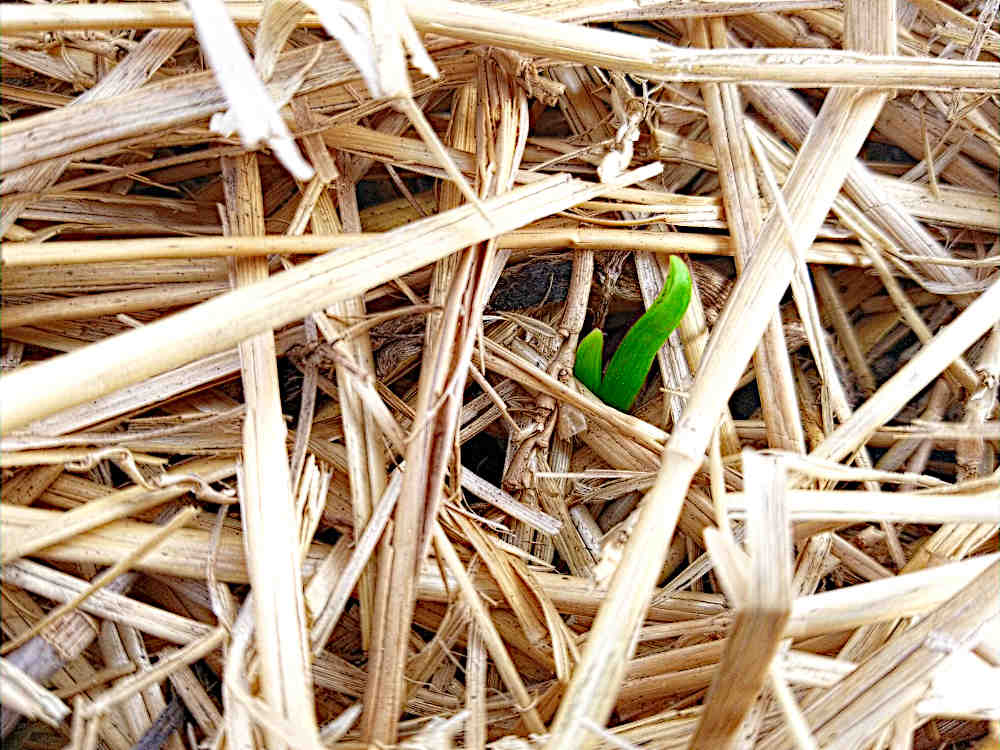
Clear away some straw and there it is, a garlic shoot pushing its way up to the light! It’s the first sign of new veggie growth in the field this season. Garlic planting happens in the fall. It spreads its roots for a while, goes dormant for the winter when the ground freezes, and wakes as the weather warms. That’s what the books say. Whatever it’s doing in the frozen ground is fine by me, as long as it shows up for spring. Which it always has. It’s been…reliable!
A blanket of fresh new snow
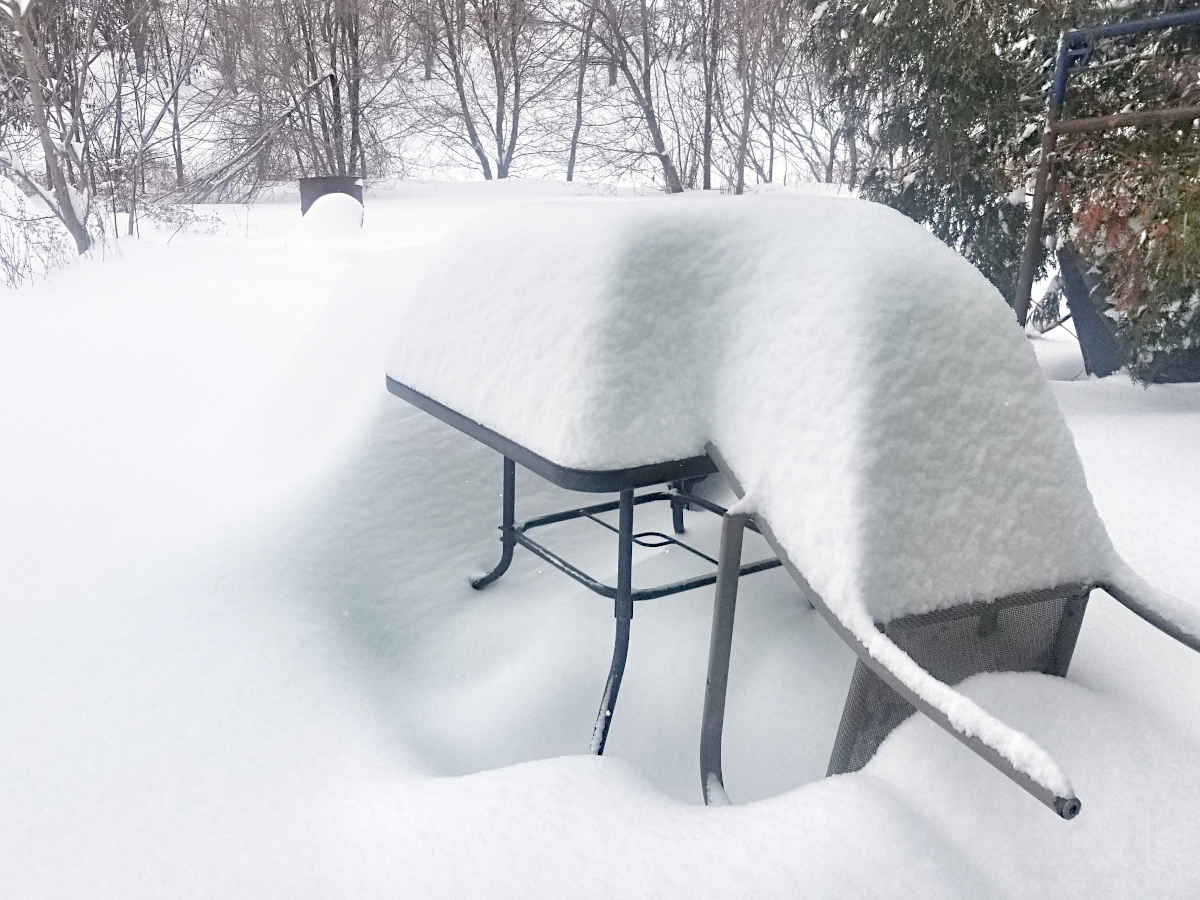
The weather app was right: more snow! Fresh new snow piled high never fails to make me wonder what it must be like to see this stuff for the very first time…
On a snowed-under mid-winter day, pictures of veggies growing in the field don’t come to mind. Except, I do like thinking about the fall-planted garlic, tucked under a layer of straw, biding its time.
The only other overwintering crop out there is Jerusalem artichoke. Rather than dig it all up in fall and replant in spring, lately I’ve been leaving a good amount to come back on its own. The chokes can fend for themselves.