Extreme makeover

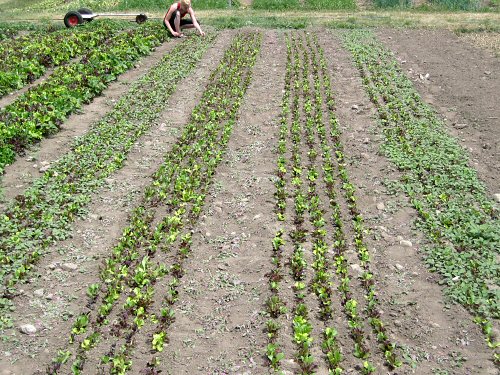
The one dark secret of this organic field, something you couldn’t really tell from selected photos, is the prevalence of pigweed (amaranth, mostly or all Amaranthus retroflexus if I’m ID-ing correctly). About two-thirds of the garden seems to be completely saturated with pigweed seed. Weeding two or three times for all-new outbreaks is common. In some spots, it’s literally as if some phantom planter is broadcasting new seed, thickly, every couple of weeks. And when it’s a closely space crop like the all-lettuce salad mix in the pic, this means painstaking fingertip weeding.

Here, Andrea and I spent about two and half hours clearing 200′ of 5-row beds, the entire latest succession planting. Luckily, conversation made the time transparent (thinking about all of the extra labor devoted just to de-pigweeding is a little painful). As best as I can figure, the pigweed came along with the two-year-old, not-fully-composted cow manure that we spread in the fall of Year 2 (three years ago). We put down I’m not sure how many, but many, tons on just over an acre—the ground was positively springy!—which was great. Except for the pigweed seed. Eventually, the vast store will be depleted (the seed is apparently viable for five years). Until then, it’s a lot of extra work… The pop quiz question: “What have those cows been eating?!”
Packing station

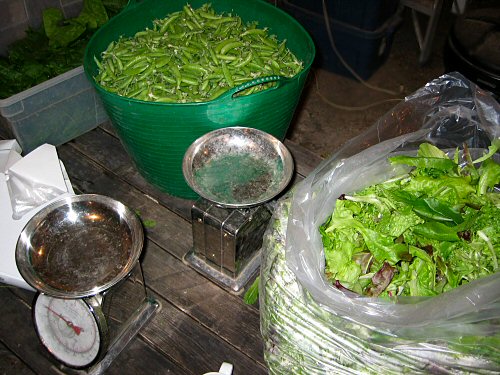
The post-harvest is a simple, straightforward process that has to be done fast since we don’t have a cooler. The set-up is manual and basic. Today, we packed indoors to get out of a stiff breeze that would’ve taken the salad greens sailing (usually, we do everything outside, in the shade of the barn; the indoor option is part of the new luxury of the Extended Milkhouse). There are a couple of 2 kg kitchen scales for the snap peas and lettuce mix. Everything is sold by bunch and bag, not weight, but the scales are useful for keeping things consistent. It’s quite easy to get the right amount by eye, so it’s into plastic bags and pop onto the scale for a quick check. If it’s underweight, add more, otherwise, somewhat over is just fine!

Three generations…

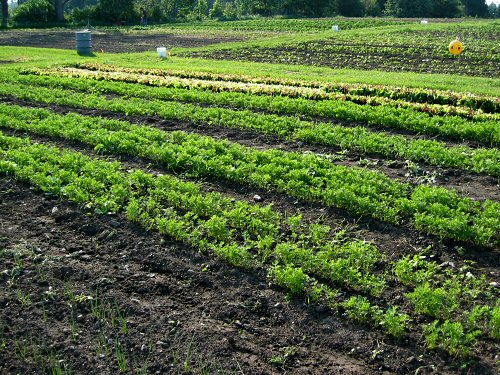
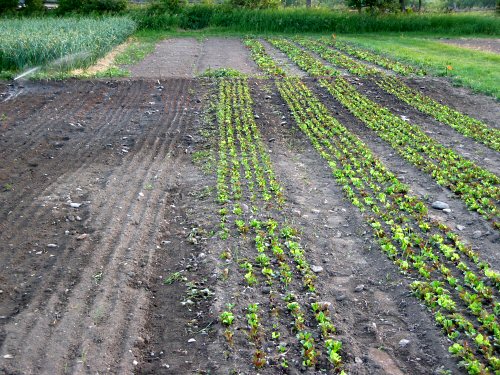
On the left, watering in the latest of six succession plantings of mesclun with a basic lawn sprinkler that’s quite efficient for shallow irrigation of newly seeded beds, when there’s no wind. Here you see the last three generations. I started planting four beds at a time, a week apart, and stretched that to nearly two weeks as the sun, heat and regular rain we’ve had so far made the growing fast. With the great weather, they’re catching up to each other—you can see the beds on the bottom right are moving up on the previous planting up top—and I’ll be tilling under a lot. This is absolutely strange for me, in past years, cutting every last bit of available salad greens every week was normal. But the people and planting expansion this year make this sort of abundance the new normal, production levels that assure harvests for all the CSA members, market and stand, even if conditions get tough. It’s not WASTED, I tell myself, it’s organic matter and even nutrients, back to the soil… I’m getting used to it!

New view

Field and hoophouse

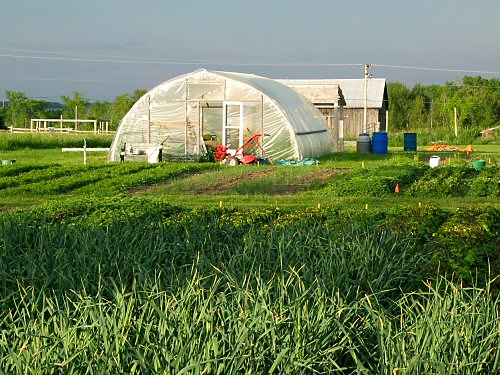
Here’s a view of the lower part of the field, from an angle that I don’t check out too often, looking over the garlic, past mesclun, carrots, green onions, beets, to the greenhouse, and you can see the veggie stand—it’s still roofless—tucked away behind. (Normally, only the mesclun would be in this area, with the root crops at the top of the field, but because the new section wasn’t ready in time for putting in fine seed—too much sod to break up—I’ve had to move things around a bit.) And so, it’s nearing the end of another hot and sunshiny day of weeding, seeding, more weeding…and so forth. We started pruning, staking and caging tomatoes, before they got too far carried away—it’s good to be on time!

Back to growing

From the left: green onions, carrots, mesclun, snap beans, potatoes… After back-to-back frost warnings for the last two nights, the sun is shining, the air is warm, conditions have returned to reasonable, veggies are growing. Overnight, the min/max thermometer in the field went down to -1°C, but only a few rows of beans were slightly burnt by cold. Meanwhile, 25 miles away where we dropped off some greens today, the pond had frozen over solid and a kitchen veggie garden was completely toasted. Lucky us!

Rabbit food

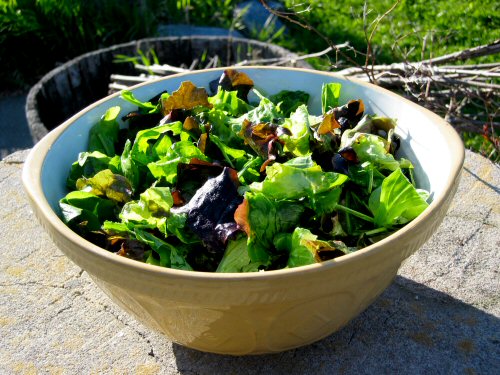
Around here, there is a definite segment of the population for whom salad greens, while accepted as possibly “good” for you, are not really considered proper human food. I might even think it’s an old school, meat-and-potatoes farmer thing, though I haven’t chatted with enough farmers to…generalize. In any case, I’m an all-new first generation farmer and to me, salads are great! This is the first dinner salad harvested this year, picked from the early lettuce aisles. It’s a mix of arugula and four lettuces: Simpson Elite, Granada, Red Salad Bowl, and Sierra, each with its own color, texture and flavor. Lots of fresh veggie variety is an excellent concept. :) Tastes good, too!

CSA share!

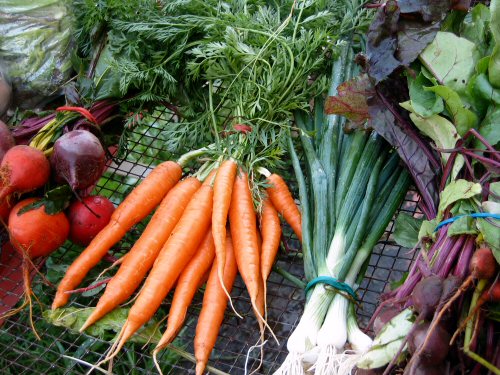
Here’s part of a weekly CSA share. There are about 25 members this year. A third pick up here, the rest on Saturday mornings at the farmers’ market 15 miles away. It’s all local! In the pic, this week’s washed: carrots, beets (red, golden and striped), mesclun (the bag’s in the top left corner), green onions, baby beets for cooking greens. These go in with cucumbers, string beans, baby potatoes, zucchini and other summer squash, garlic. Still waiting on early tomatoes, but the main season harvest is picking up! (I’m still thinking over the what-to-wash question. Washed veggies look nicer and are less messy when you get ’em home, but there are various arguments for not washing, like longer storage and even better nutrient retention. Not to mention, saving lots of post-harvest time. I do know it’s a lot more work)