Simple system

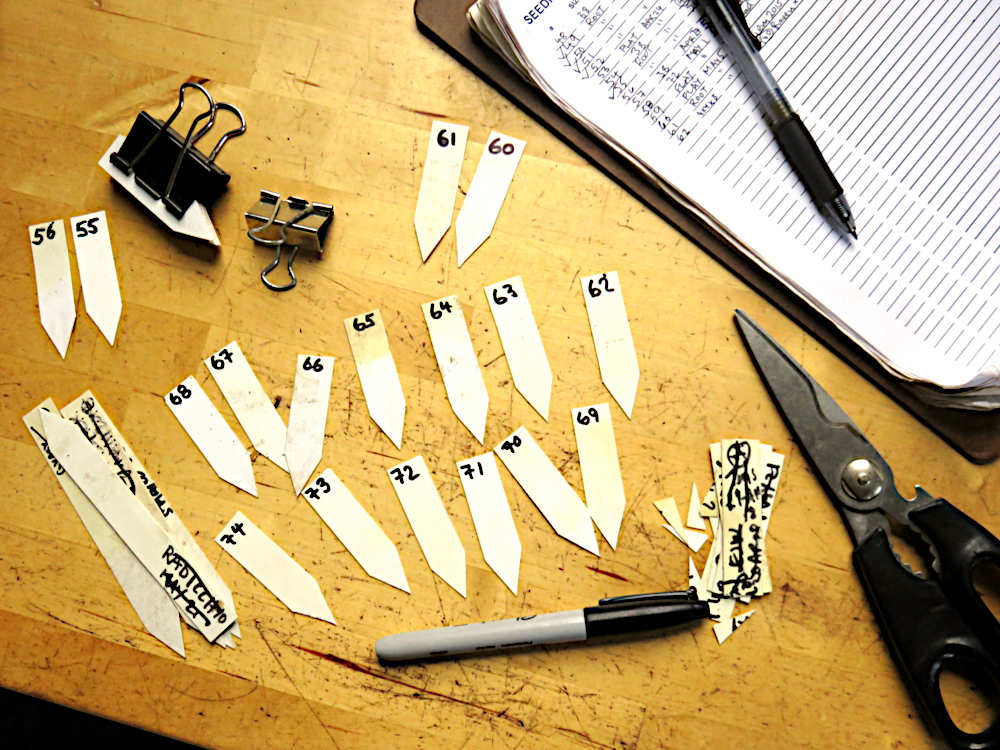
Nothing like improving a way to keep organized! This may look like some sort of craft-y looking set-up, when in fact it’s my new, state-of-the-art seedling tracking system. For years, I’d print the variety and seeding the on these tiny plastic stakes with a trusted Sharpie fine point, and stick them in the plug sheets. You can see the old approach on some of the stakes I’m reusing (old-fashioned recycling). Recently, I started instead to use a number code, writing the variety, date, and notes on a form I printed up. Why the change? Who knows, it just suddenly seemed like the thing to do.

It’s so much better! With only a number to read, the stakes can be half the height and don’t stick up and get in the way. It’s also a lot easier to see what’s going on overall by looking at the sheet. I always kept a list anyway, but now I’m doing half the printing and labeling work. I can also reuse the numbers season to season. The biggest advantage is psychological: I find that, when doing repetitive manual work, like seeding a few plug sheets, the less steps, the smoother the process, and less mental resistance. Rather than find a clean stake, print the info, pierce the plastic covering the plug sheet to stick it in, and rewrite the info on paper, I just insert the next number at almost soil level (no holes in the plastic wrap covering) and fill out the form! If this doesn’t resonate with you with a feeling of simple satisfaction, well, I guess you never had to keep track of a bunch of seedlings! :)
Onion sets

Onion sets

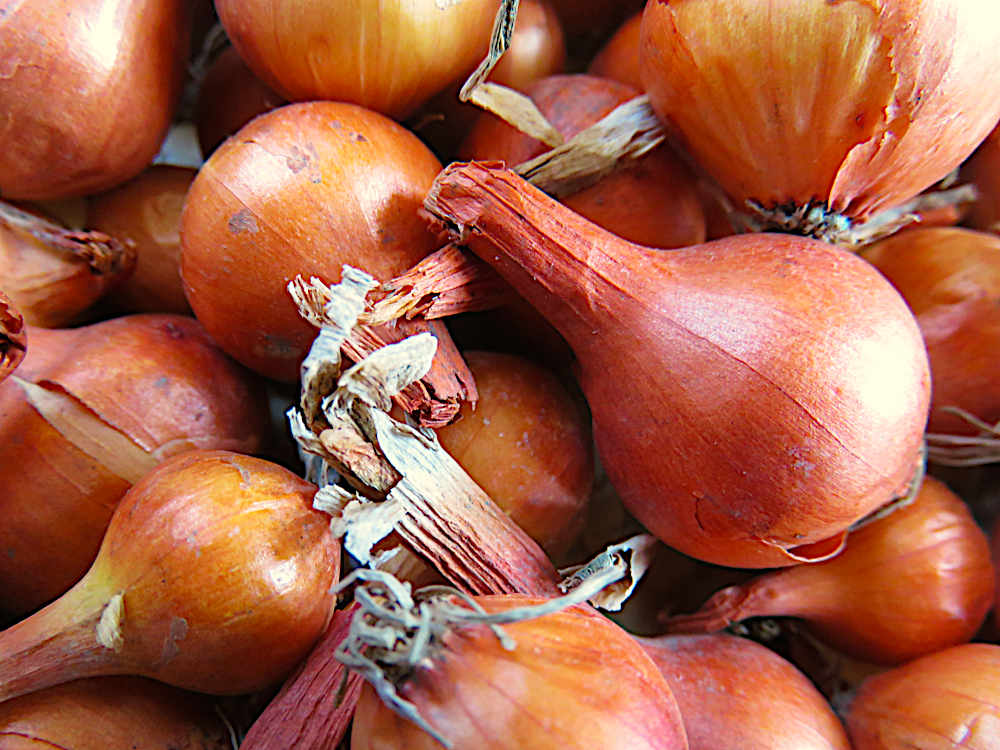
Tiny onions, grown the year before, pulled up early and dried out, are known as onion sets. They’re a bit of a shortcut. Pop them in the ground, and they begin growing again. Starting onions from seed gives you a lot more choice in variety, but it also means taking up indoor space under the lights to produce seedlings. When you simply want…onions, in the tiny market garden, onion sets is a quick and easy way to go!

Baby brassicas

Brassica seedling

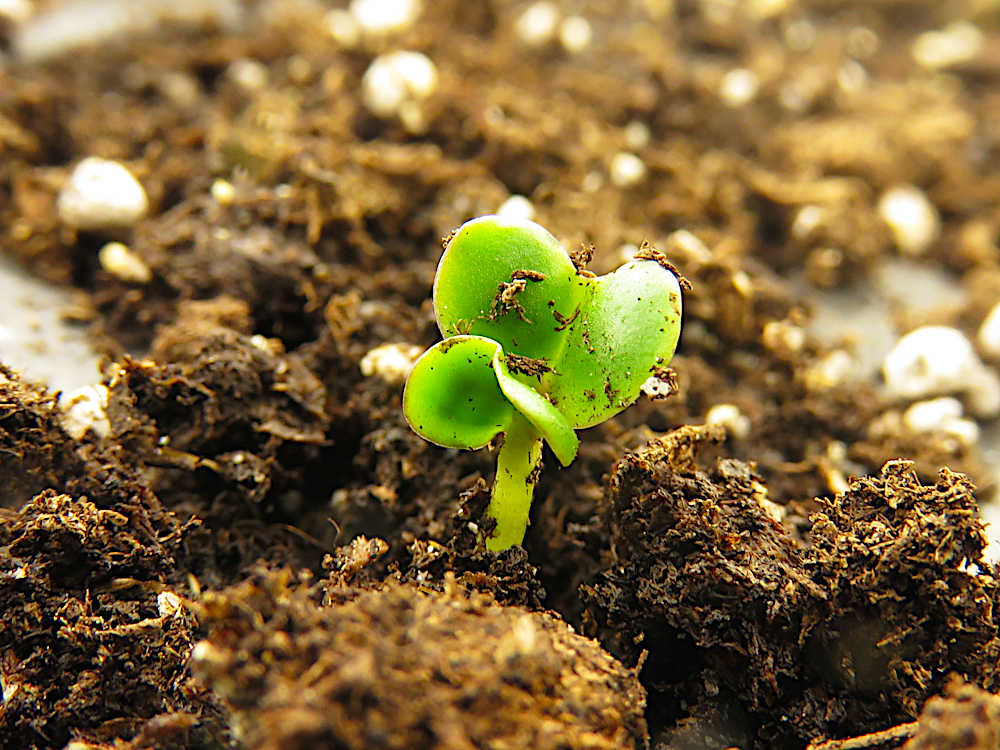
Broccoli? Brussels sprouts? I forgot to check the tray after taking the pic, so I can only narrow it down to one of the two based on size. They’re both in the quite vast garden veggie branch of the brassica family, that also includes cabbage, cauliflower, kale, mustard, bok choi, radish, lots more. The first pair of seed leaves look pretty much all the same. Next leaves take on their own look. At this point, they’re all similar, tiny and pushing up…

Bare root Brussels sprouts

Brussels sprout seeds germinating

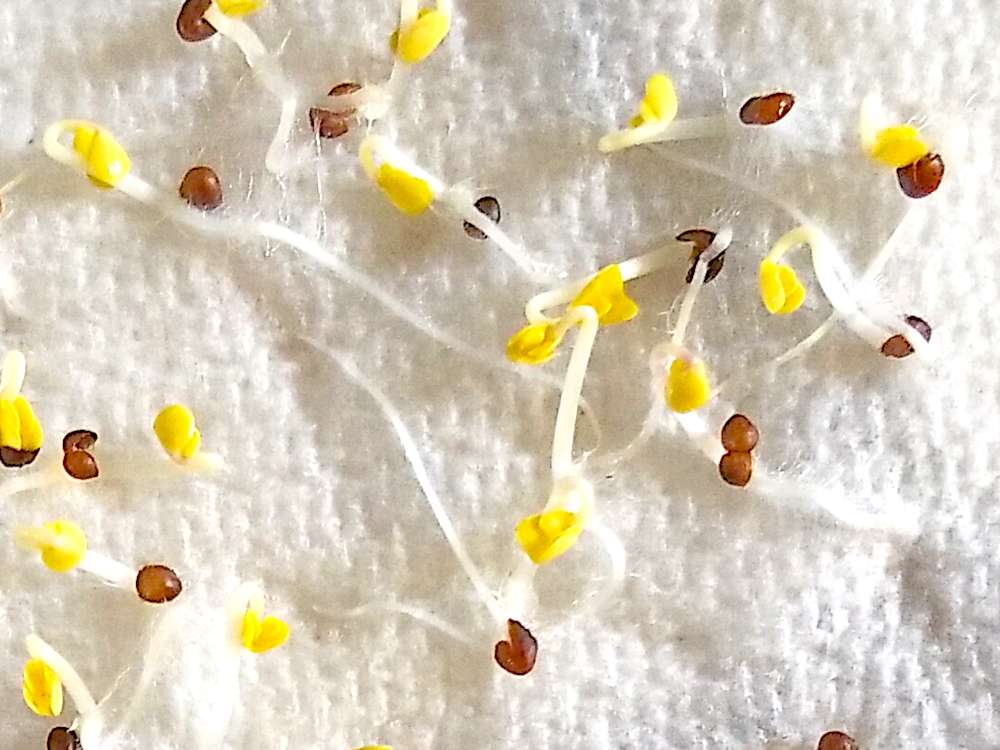
Yep, a wonder of Nature, up close. Three days or so after folding up the pinhead-sized seed in a damp paper towel, we have Brussels sprouts! Of course, this is only step one of many before we get to the deliciousness of actual Brussel sprouts. (Halved, tossed in corn meal and sautéed in butter is one way to go!)

Bare root germination like this is good for at least two things. It’s a useful germination test to see if old seed is still good. It’s also a way to start seedlings: transfer the sprouted seeds to a plug tray or pot, wait a few more days, and up they’ll pop. Let the greening begin.

The bare root approach adds an extra step compared to putting the seed directly in the plug or pot. It’s a little more work. It can be good with hard-to-germinate crops. Or if the seed is old, with a low germination rate, and you want to be sure that every plug has a plant. That it’s fun to see what’s going on is also a fine reason!

Lettuce landscape

Plugsheets of lettuce

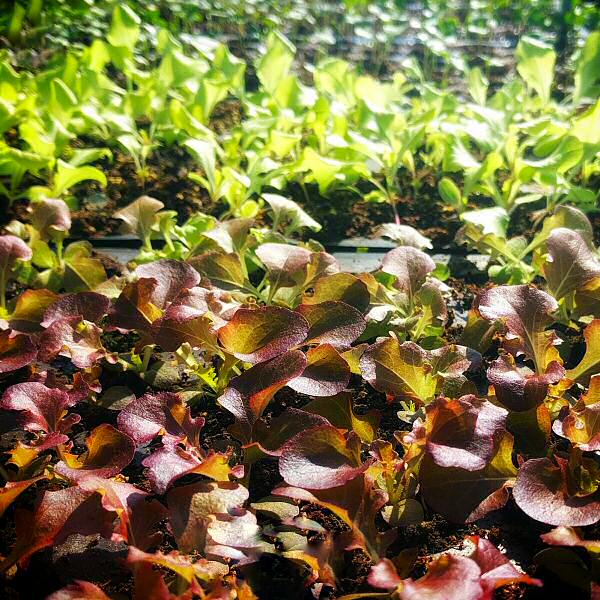
A tiny landscape of lettuces: Especially with the hot, dry weather we’ve been having, you can’t go wrong with a few trays of leaf lettuce seedlings, lending support to the baby greens in the field! Transplanted at 8-10″ spacing, lettuces in a variety of colors and shapes—oakleafs, salad bowls, lollos—can be picked at least a couple of times as leaves for a bigger-leaf greens mix, or thinned as they start to really fill out, with two or three varieties bundled and the rest left to grow all the way. Lettuce options!

Transplanting…never twice the same!

Lettuce transplants in the greenhouse

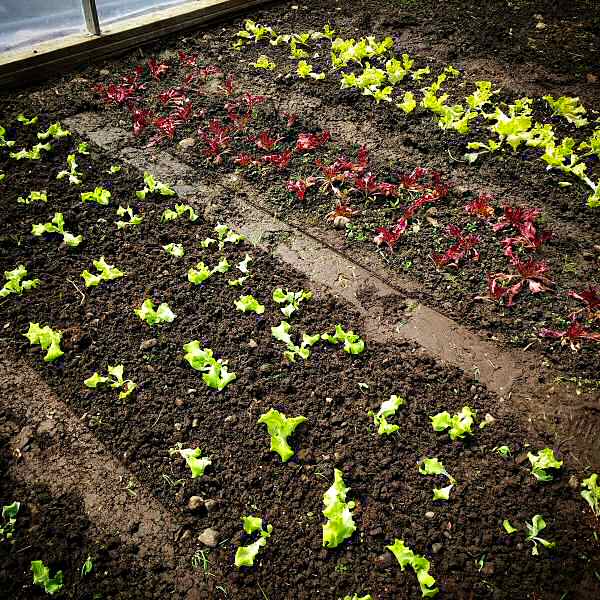
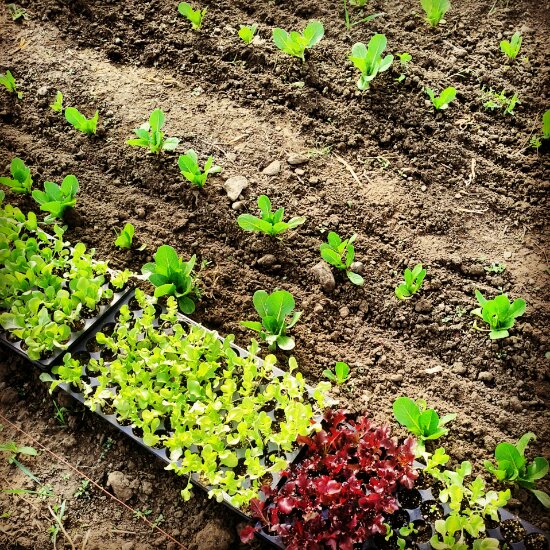
Today’s transplants: Still steadily plugging in seedlings in the greenhouse, waiting for more ground to dry out. This round, lettuces (above) and bok choi (elsewhere). All this transplanting is pretty straightforward—taking the photo, I might wonder, “What’s the difference between these seedlings stuck in the ground, and any others…why bother posting the same thing over and over?” Well, I don’t literally ask myself that, but I can see how some folks may think that. There’s no good answer, it really is in the eye of the beholder.

On a tiny farm, where weather runs everything, you never know how little decisions will turn out, and how critically they may affect things. Decisions like, let’s put up this greenhouse in this wet-in-spring field that’s also slow to dry, and see what happens (because the alternatives are too expensive), and fix or work around any problems we may run into. In that greenhouse, THIS lettuce planting, in mucky ground,  in all-new conditions that may also in a few days get infernally hot and downright lettuce-unfriendly if we don’t finish the end-wall windows for ventilation before the temperature shoots up, is entirely different from every other lettuce transplanting. New story, ending unknown, let’s see how it turns out! It’s always something different… :)