
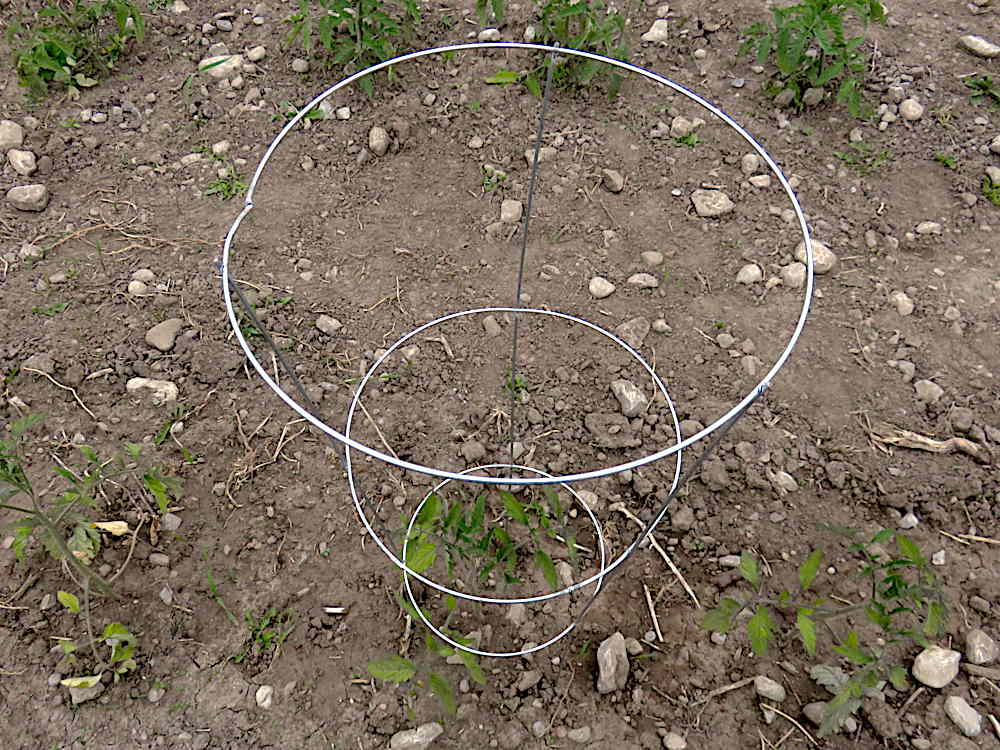
Ran into these cheapest of tomato cages in town, two bucks a pop, so I picked up a few. They’ve been around unchanged since I started growing veg over a couple of decades ago: three hoops flimsily spot welded to three support legs. Can’t speak for every last use, but from first-hand field tests, they’re pretty useless—a nice, neat-looking gesture to being in control when the toms are tiny, but prone to sag or tilt or snap at the joints under the weight of grown plants. Not great for a home veg garden, and really not for any sort of tiny production quantities. So why bother now? Well, one can always hope and dream. Since these toms went in late, given our short season, and the small number of plants, I can imagine carefully tending them—suckering enough to keep them productively compact, harvesting regularly before they get heavy. Plus, they take literally 30 seconds to place, and, at first at least, they look kinda cool and organized. Like a Jetsons garden. We’ll see how it goes!
Summer
Layers of protection
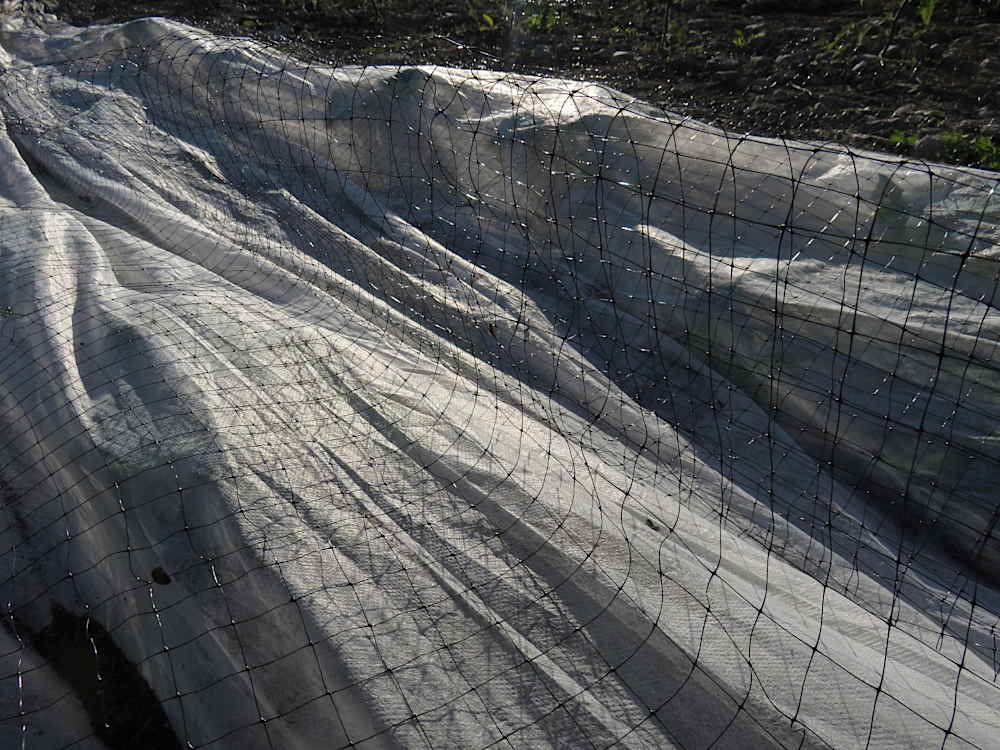
Layered protection for beds of cabbage and cauliflower. First, row cover for the flea beetles, who are out in force as usual. Loosely laid on top, deer netting, that doesn’t actually work for deer (it didn’t for the deer around here) but will hopefully deter the groundhogs. The net could easily be chewed through, but it’s springy, tensile tough and very easy to get tangled in. That may be enough!
Curing garlic
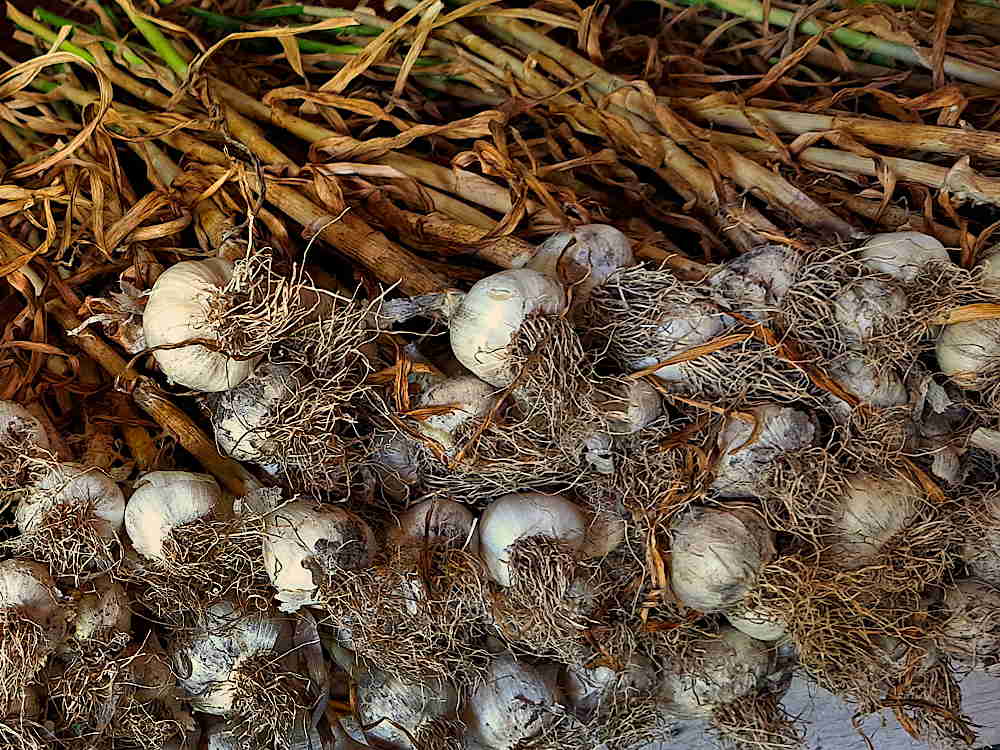
The invasion of the leek moths a few weeks back left the garlic somewhat ravaged but unbeaten. The moth larvae seem to have been stopped up top, snipped and pinched and dug out before they had a chance to tunnel their way down through the stems, reaching the bulbs, and eating into them as well. Instead of that, the harvest has turned out just fine. The bulbs overall are a bit on the smaller side, but the cloves are nicely filled out, so…all’s well. A few weeks of air drying till everything’s woody and brown, then done!
Best lettuce!

Just watered heads of Mezquite lettuce, doing well given all the heat they’ve had to deal with over the last weeks. This is a great, fast-maturing romaine lettuce. It’s sweet and crunchy, even in full summer heat that makes most lettuces strong flavored, with a slightly bitter edge.
I grew up with mild lettuce, the standard supermarket fare that’s sourced from wherever the crop grows most abundantly. Here in the mixed veg world of the tiny market garden, no crop can expect its own perfect conditions. That doesn’t mean inferior vegetables, instead, you get a full range of tastes. Grown in summer heat, lettuce often develops a full-bodied flavor and a pleasing hint of bitterness—with a little oil and vinegar, salt and pepper, or in a sandwich, it’s a whole new, elevated taste bud experience!
Anyhow, this Mezquite variety combines full flavor with sweetness, holds up well in all conditions, matures a week or two faster than most other romaines, and is even open-pollinated so you can save the seed. As long as a roving critter doesn’t breach the defenses, like the row cover these guys spend much of their time under, they’re a treat in the making! I harvested a couple today for early tasting purposes…
Brassicas waiting in the wings

Another wave of brassicas, mostly cabbages and cauliflower, are getting a little big as they wait indoors under lights. In recent years, decent fall weather has extended a whole extra month from what used to be. So I’ve been planting later to extend the harvest. (More text to come…)
Sweet tooth
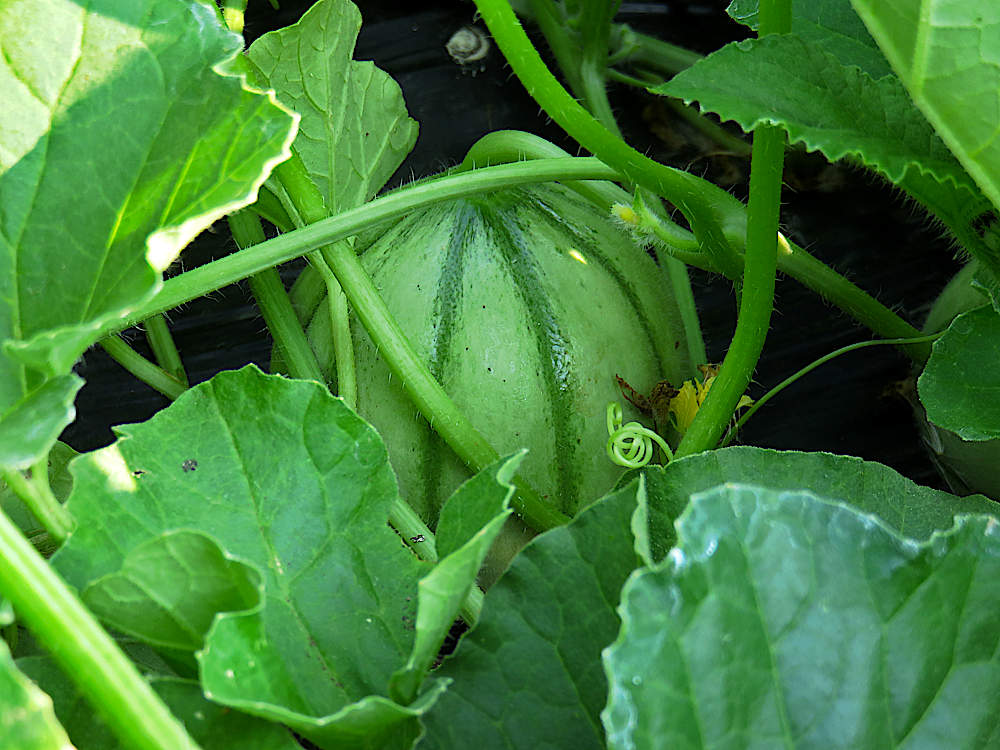
A baby cantaloupe, nestled in a tangle of vines under a canopy of leaves. Mmmm, will be…delicious. It’s well on its way to fully-matured, ready-to-eat goodness, a few weeks to go, but anything can happen. Last year, a freak localized hailstorm hit my tiny melon patch, marble-sized hail shredding the leaves and fatally damaging just about every fruit, while missing where I was at the time, just a mile down the road. Especially with our crazy erratic weather, you can’t 100% count on it until your teeth are sunk in, juice dribbling down your chin.
Munching and mating
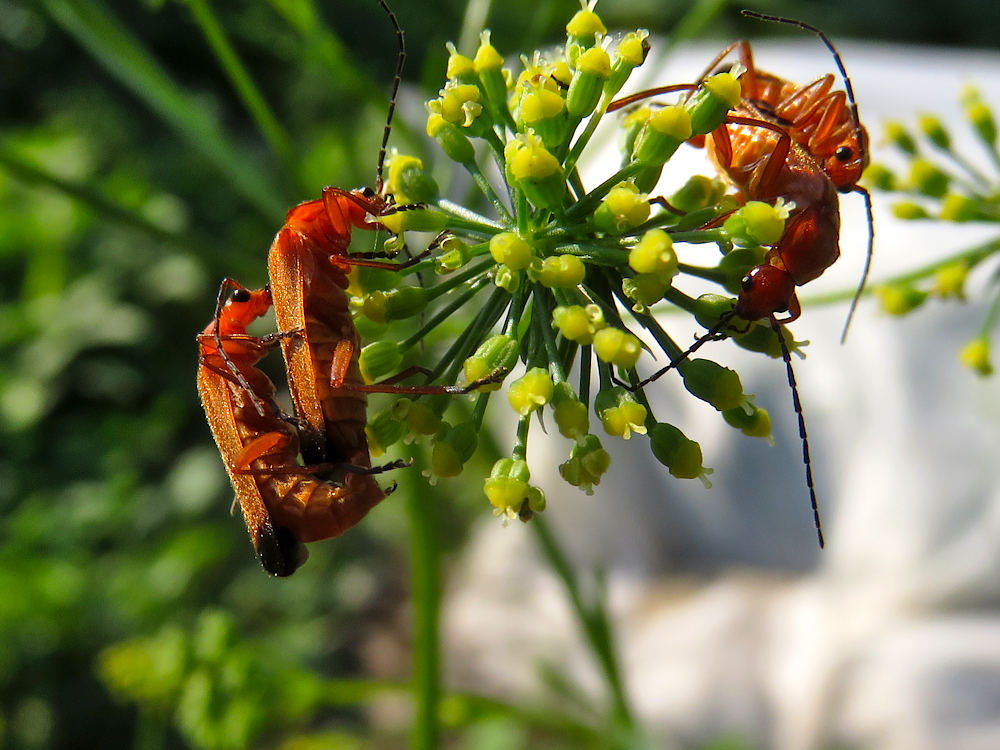
Definitely on the good bug list, these common red soldier beetles are happily multitasking, munching on the pollen and nectar from flowering parsley, while mating. Now that’s procreation! A quick background check comes up all good for these guys in the garden: the adults are great later-season pollinators, and in addition to feasting on flowers, they eat aphids and other small, pesty insects. Plus, their predatory larvae feed on insect eggs, snails, slugs, and more. Welcome, my friends, to the show that never ends!