
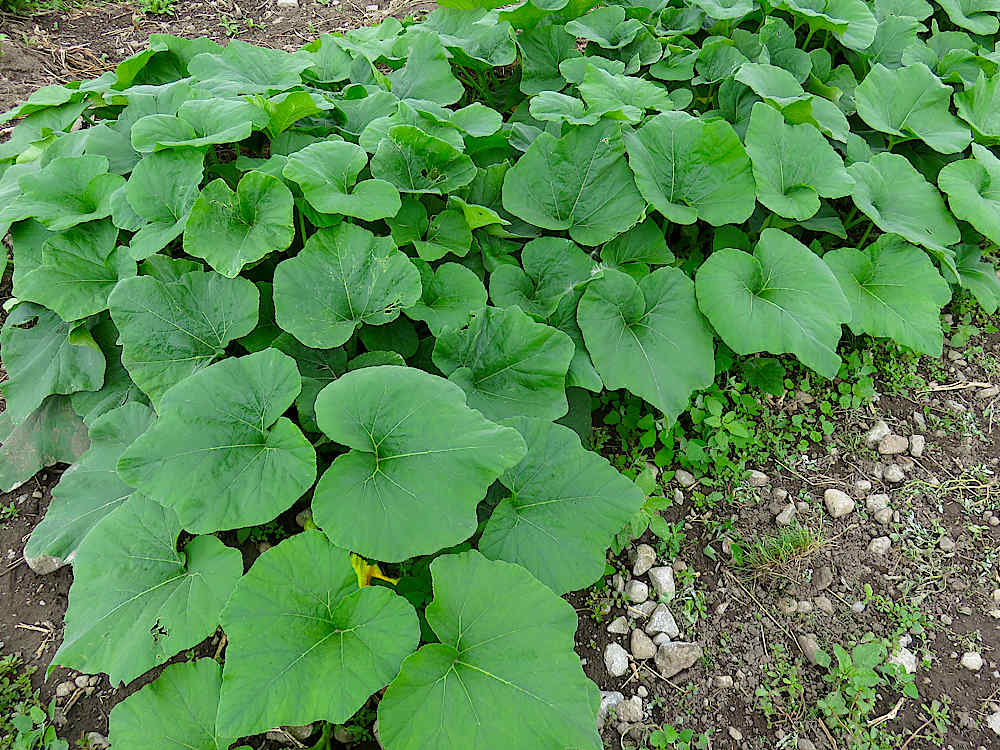
Even with little sun, the winter squash won’t be kept down. What it likes to do is spread far and wide: huge leaves and vigorous vines snaking out all over the place. The big sprawl is just kicking in, flowering is underway, and tiny green baby (butternut) squash can already be found tucked away in there.
Summer
Not a buddy
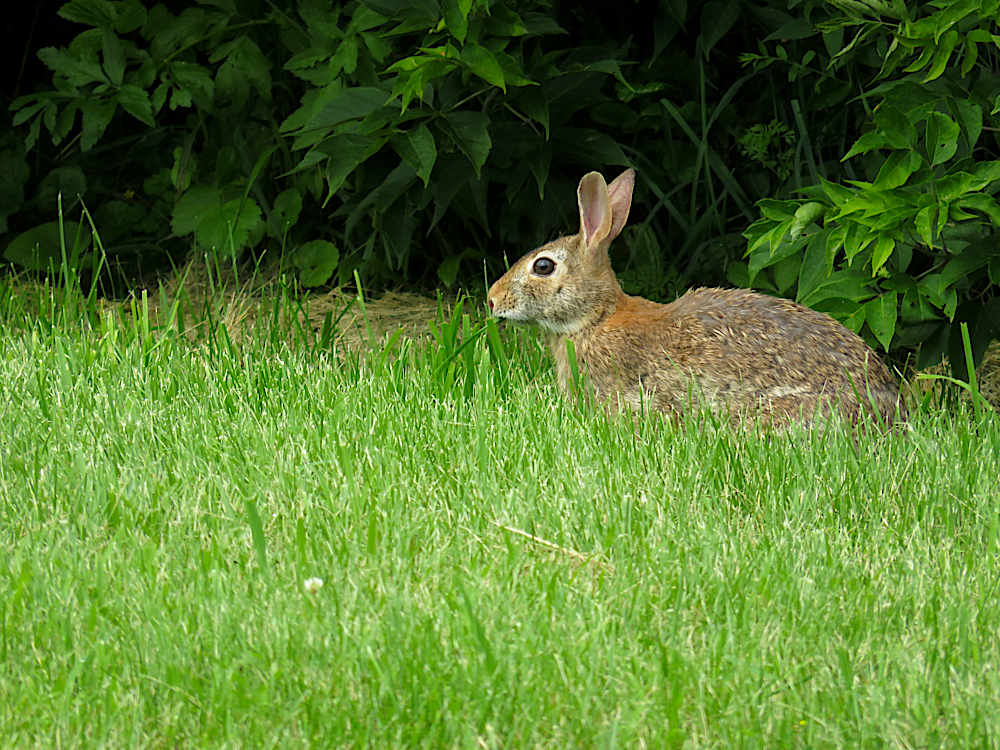
Yeah, these aren’t my buddies. This season, the first time for me, rabbits hopped out of the cute woodland creature category and into Pests & Disease. At least one or two are definitely creeping around the garden, so far not damaging much, but making their presence clear with sightings and droppings. The way it seems to go, regular appearance leads to exploratory munching, then full-on devouring. Where the low-slung electric fence seems to be working for the groundhogs, I suppose bunnies might just…hop over?! Stay tuned!
Season of the snail
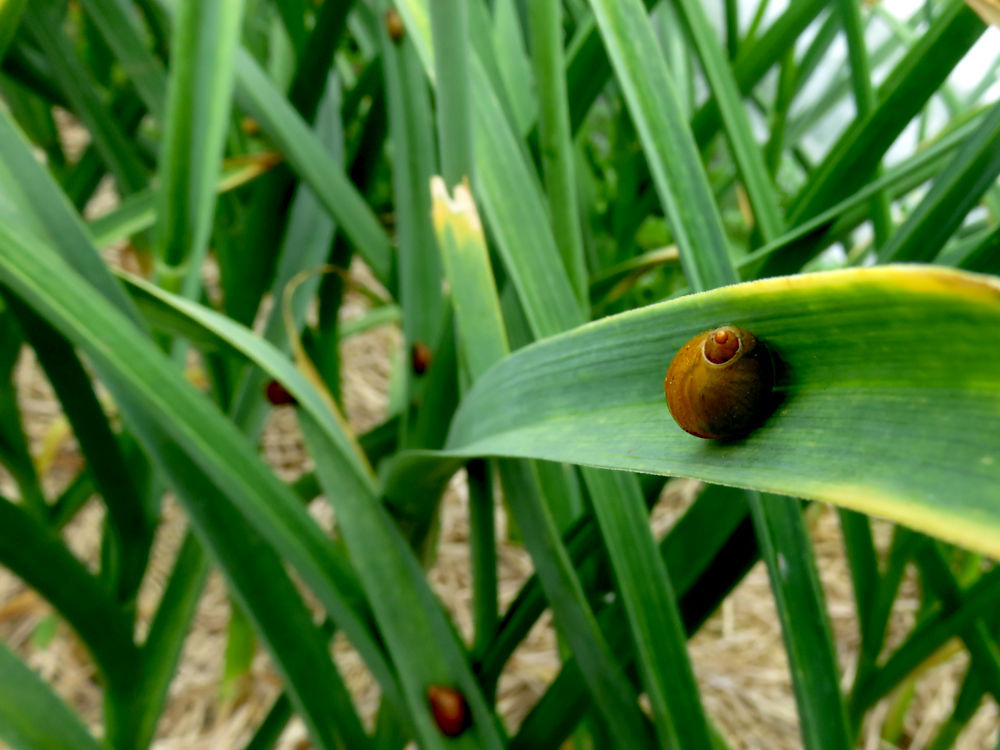
This year, small snails everywhere! My best effort at identifying them (posting pics to the iNaturalist app on my phone) suggests they’re in the amber snail family (Succineidae). Wherever the ground is sheltered and moist, like under rocks or piles of uprooted weeds, and on some veggie leaves and stems, you’ll find a bunch. Here, they’re on the garlic. Voracious leaf munching doesn’t seem to be what they’re up to, so that’s good (and I read that they aren’t likely to be a veggie problem). For better or for worse, no damage, no problem is my motto, and that usually works out!
Scratching the zuke
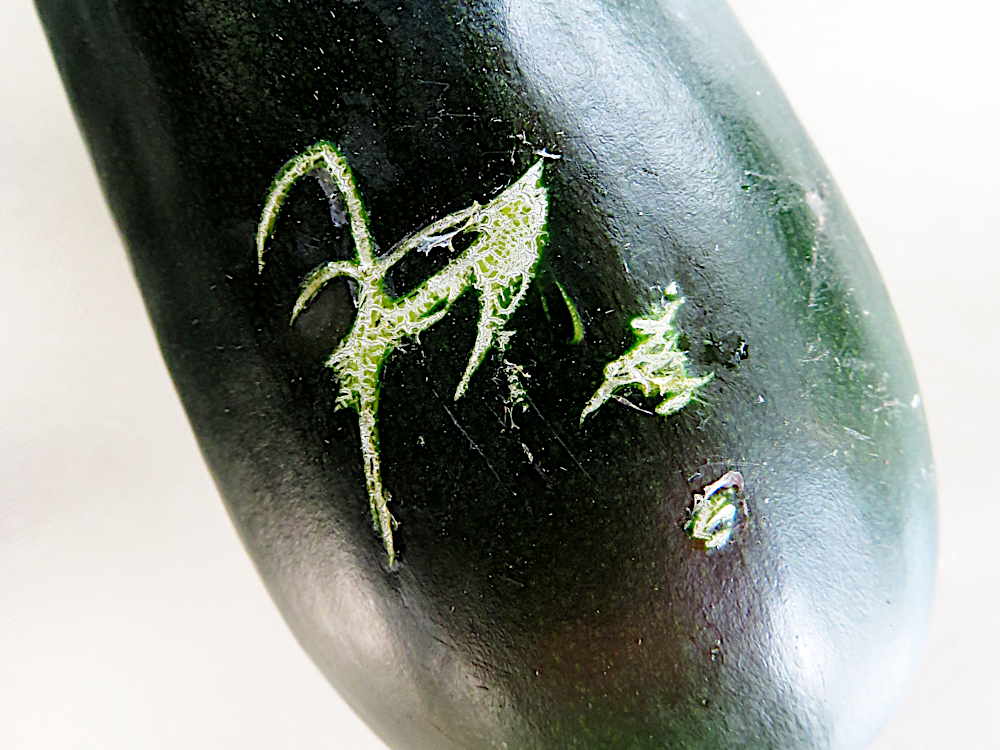
Groundhogs are back again, and they seem to be more active than last year. I’m checking everything out every day to see how far they might go. It comes down to what they turn their beady little eyes and big sharp teeth to next. My garden ravager experience has been for the most part with deer. When a veg garden is new to them, they tend to explore crop by crop. A night or two of nibbling on a new one, then, full-on devouring, and off to the next. So far, the over-sized rodents have focused on lettuce and brassicas. Today, I noticed what look like scratch marks on a single zucchini. I’m no wildlife biologist trained in animal feeding behavior. Still, I suspect some fair-sized beast, like a groundhog, tried to scratch their way into the zuke. And failed. That’s kinda weird, doesn’t look like an A-game effort. Have they given up for good? Or was it a much smaller veg-eating creature? Or something else entirely? The big question is, will the zukes be next?
Summer ends!
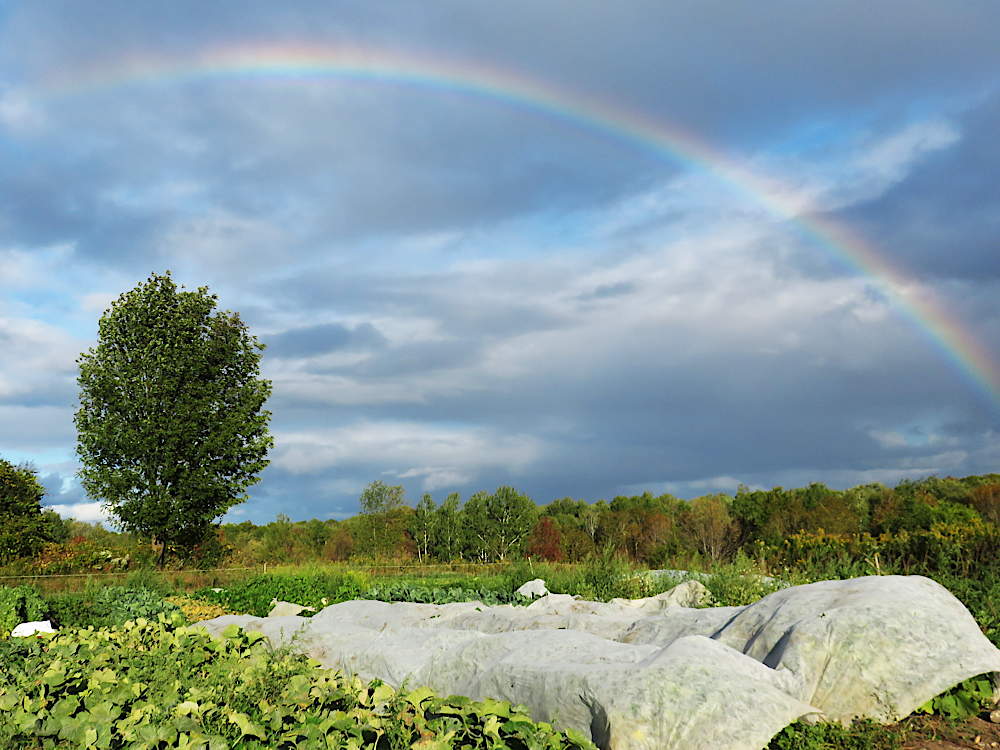
For the last day of summer, a rainbow! The field is looking a bit bedraggled, with some things naturally dying out, some touched by near-freezing overnights, with tender crops row-covered against the possibility of a hard frost. Besides the rainbow, it’s not the postcard look of mid-summer, but what matters most, everything is still producing well!
Mid-September harvest
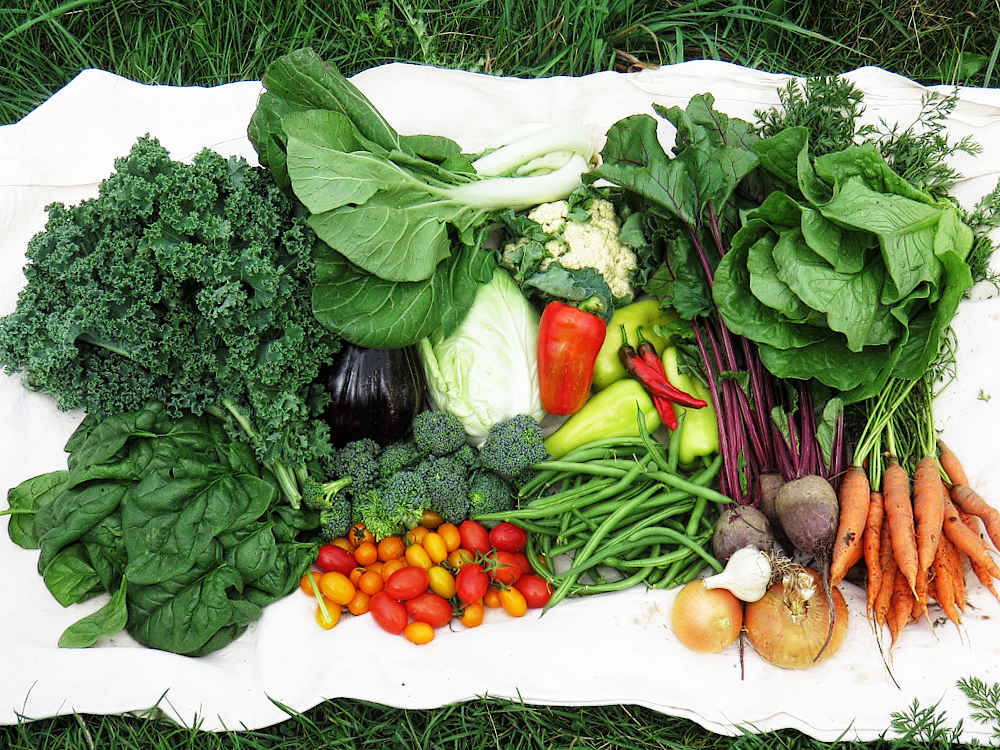
The weather’s been fine, no big frost worries, and the harvest is nice. For the sake of a list, in no particular order, we have: spinach, onion, garlic, carrots, bok choi, broccoli, lettuce, cabbage, kale, hot and sweet peppers, cauliflower, cherry tomatoes, green beans, beets, and…eggplant! I think I got ’em all. The set-up on a strip of canvas is for a newsletter photo–the lighting is an overcast sun, the studio is the field!
Summer spinach
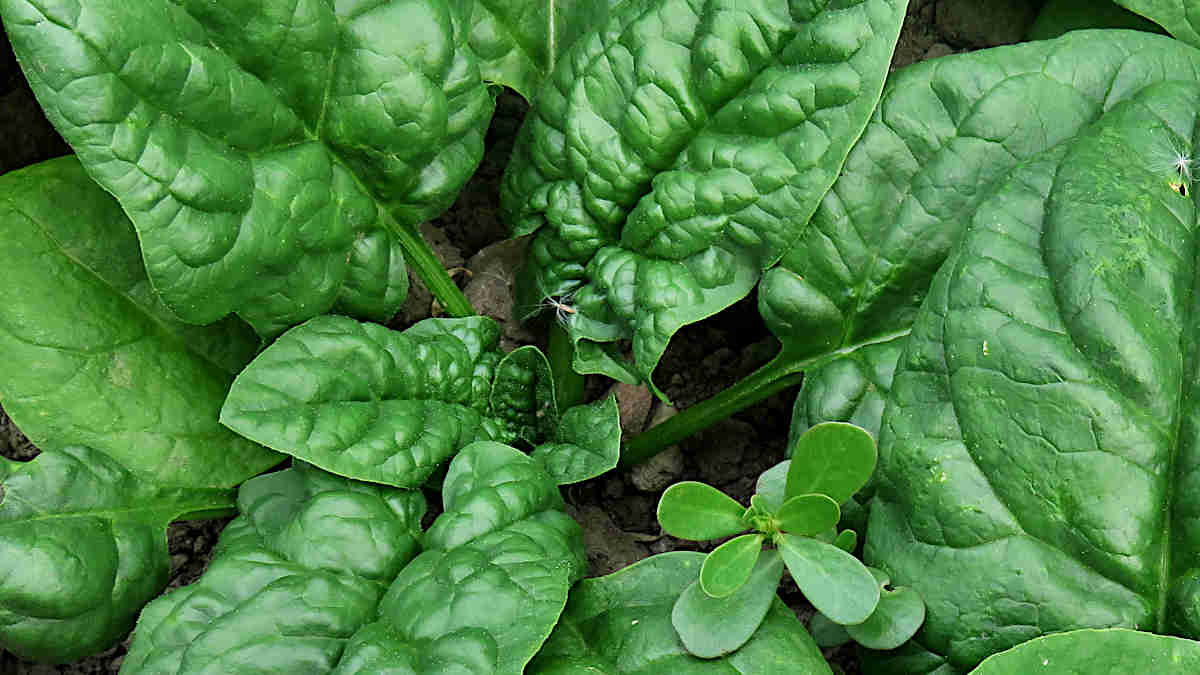
Spinach in August is never a sure thing. Germination in the summer’s heat is a roll of the dice. Keep seeding, over and over, every few days, and the odds of catching the right conditions go up. When a seeding does take, the going gets easy! Here, a sprig of volunteer purslane has pushed through to share the sun.