Birds 2 – Beans 1

Bird damage on bean plants

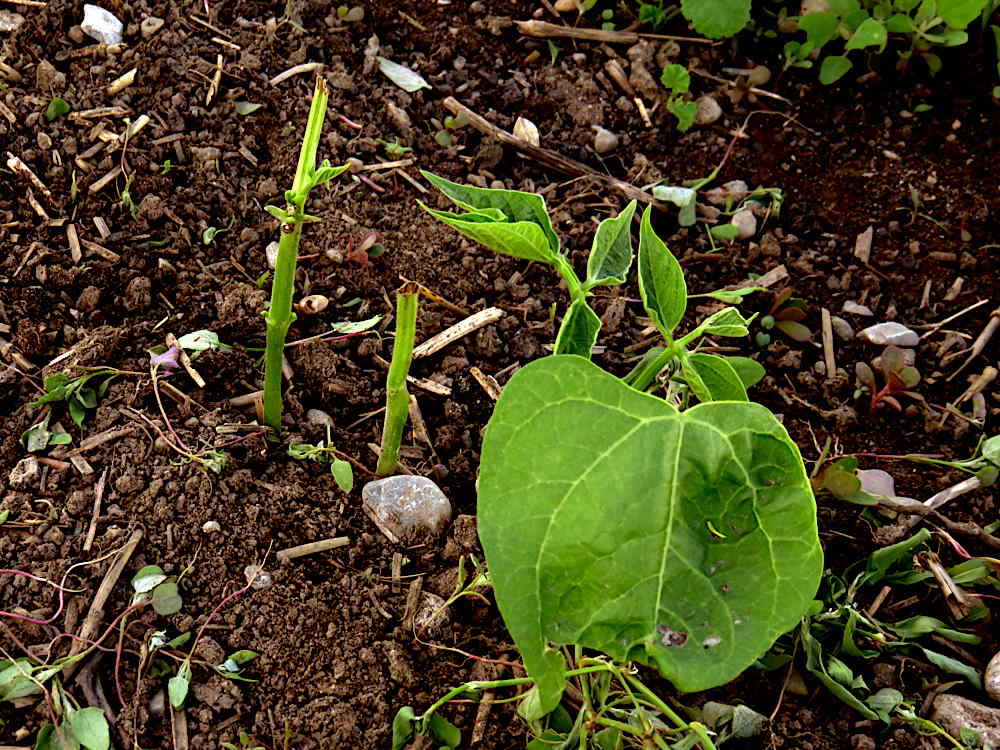
The first small bed of green beans was coming up fine—then I lapsed for a moment, and the beans were mercilessly attacked. So it goes in the rough-and-tumble world of the country veggie garden. I suspect birds. Can’t be sure but I’m pretty sure. I’ve seen them in action before. The ragged tops of the stems seem to point to pecking action, not the clean angled slice of creatures with teeth.

Instead of seed leaves, beans emerge with the actual bean split in two right on top of the stem, like an irresistible treat on a stick. Not sure what sort of garden raider survival strategy that represents. I usually put out anti-bird measures: inflatable scare balls or aluminum pie plates suspended on string. Or toss on some row cover—the duct tape of the garden—until a few leaves develop.

Here I didn’t act as soon as I saw the first signs of emerging beans. Also, I’m not used to hand-seeding and probably got a little too precise and seed-saving. With a seeder, plenty of seed drops, so there’s room for thinning, even by birds. Unforced human errors!

Anyhow, there are still enough plants for a decent first harvest, and a bigger bed is seeded and underway, with pie plates heading to the field. Bonus quarter point for the beans—you can see a tiny new leaf on one of the bare stems as it goes for a comeback!
On the right side of the fence

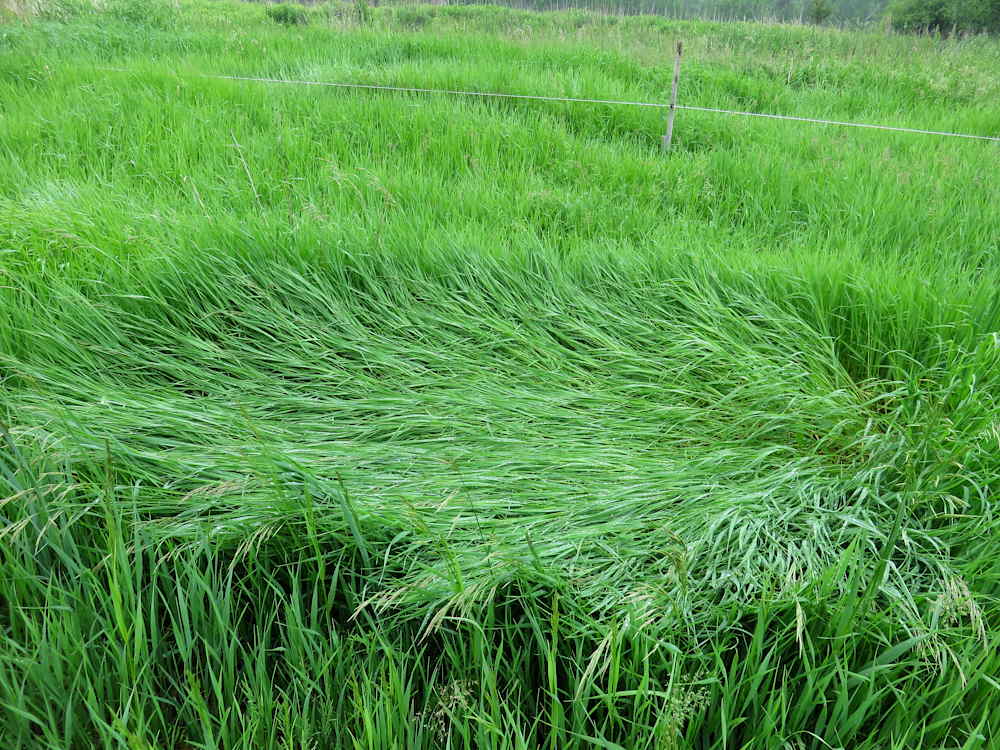
Flattened grass marks deer bedding spot

Wonder who spent the night here in the tall grass, so close to all those veggies. At least they stayed on the right side of the fence! It’s endlessly satisfying how that single white line and its steady pulse of intense electrical jolts have managed to keep the veg plot clear of deer. I can’t say for sure that’s what’s doing it, but deer are definitely all around, traveling through these fields, and they were a big garden forager before and during various lighter-weight fencing attempts. They only completely stopped devouring after that single line of defense went up. No electric fence guides I’ve read suggest just a single line, and yet, the plot’s been deer-free for years now. Can’t say the same for groundhogs, that extension of the electrical defense was a fair bit of work and a fail. But, still no deer!

“It’s flea beetles on radish, baby!”

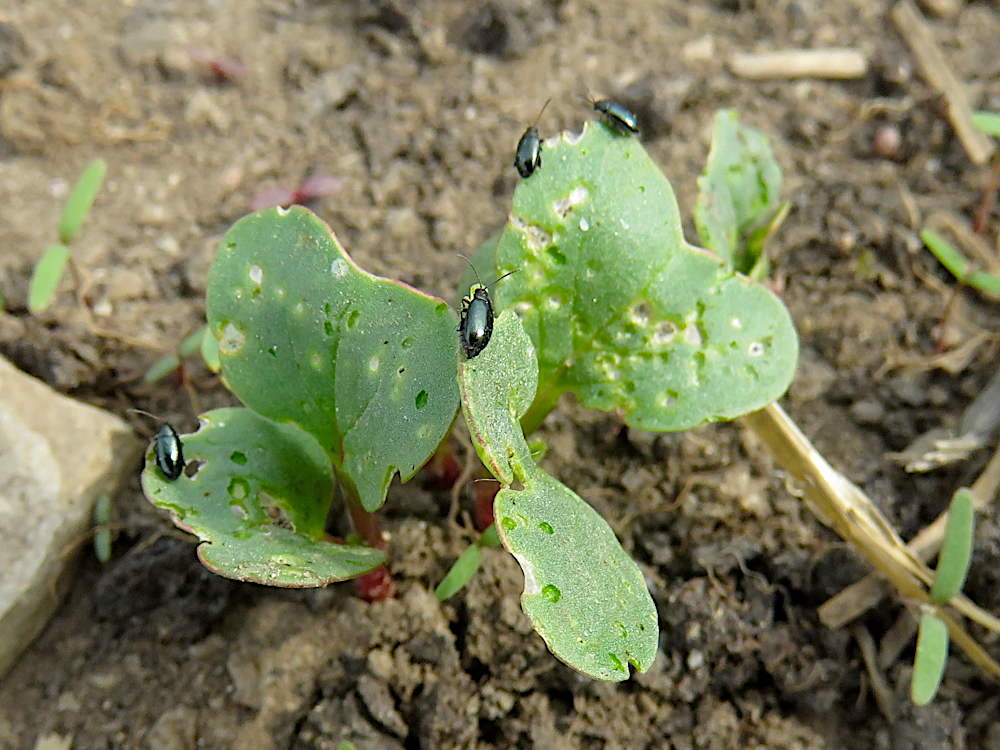
Flea beetles munching on radish seedlings in the field

Yes, the flea beetles are back! They’re the size of a pinhead or less. In the photo, they’re at work on the first pairs of radish leaves that’re smaller than a fingernail. The action is all quite tiny-scaled. With the radishes, I’m not concerned about the damage. In the large veg-garden brassica family that the FBs favor, unlike the rest, radish grows so fast, the flea beetles can continuously feast and their damage is outgrown. Outcompeted in the veg garden arena. The leaves are scattershot with holes and dents, but the radishes themselves are fine, and…no need for row cover!

Grabbing this photo, getting as close as possible without making them flee, I notice how my relationship with the FBs has changed over the years. Even though they’re a scourge on the brassicas, meaning lots of row cover expense and labor right through the summer, they’re no longer an enemy, more like fellow travelers. Welcome, even—on the first radishes, they’re a sign that all is still in order this new season. They arrive, I row cover, except for radishes. They do their thing, I do mine. “Hey guys, how’s it going?” “Good, good. Just getting to work on these radish leaves.”

Crop cooperation

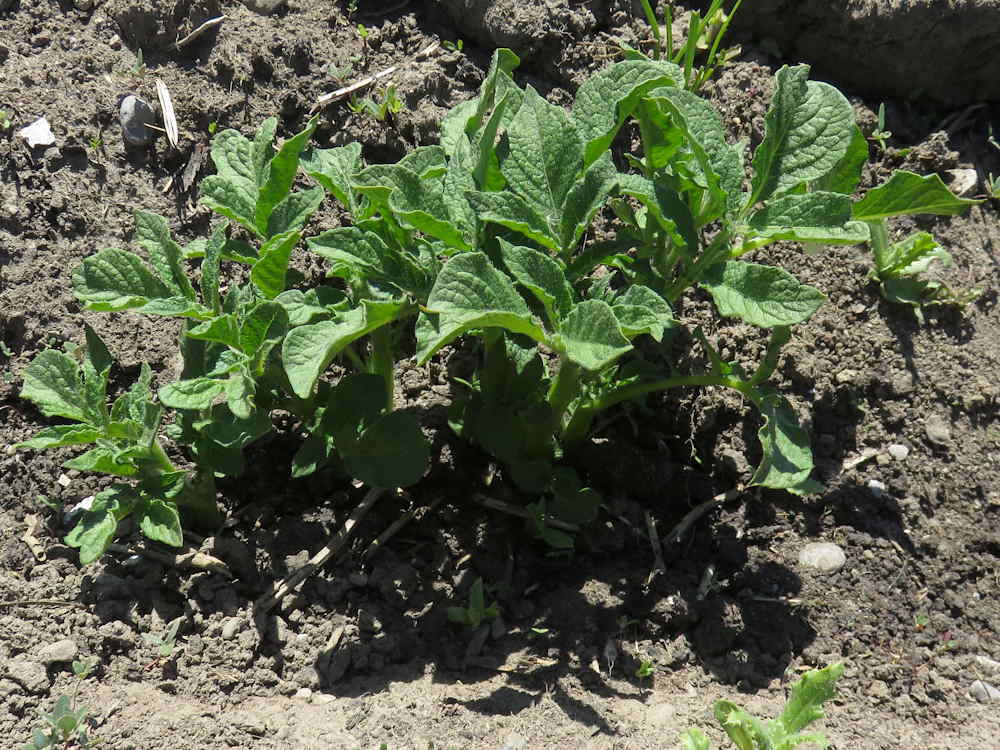
Small potato plants and their shade

Round about this point in the growing season every year, I probably notice the same things, have similar thoughts. Late this morning, I happened to pay attention to the shadow of this happy little potato plant. That immediately led to thinking about how, as they grow, the veggies do their bit in helping you keep the garden going in the direction you want, that is, healthy crops not savaged by predators or overrun with weeds. The veg are like…partners! A pleasant way to look at it, though imaginary. In any case, the shade under leafy plants helps suppress weeds, keeps the soil temperature even, and preserves moisture. The bigger the plant gets, the more of the garden it covers! Of course, it works the other way as well!

Brave garlic

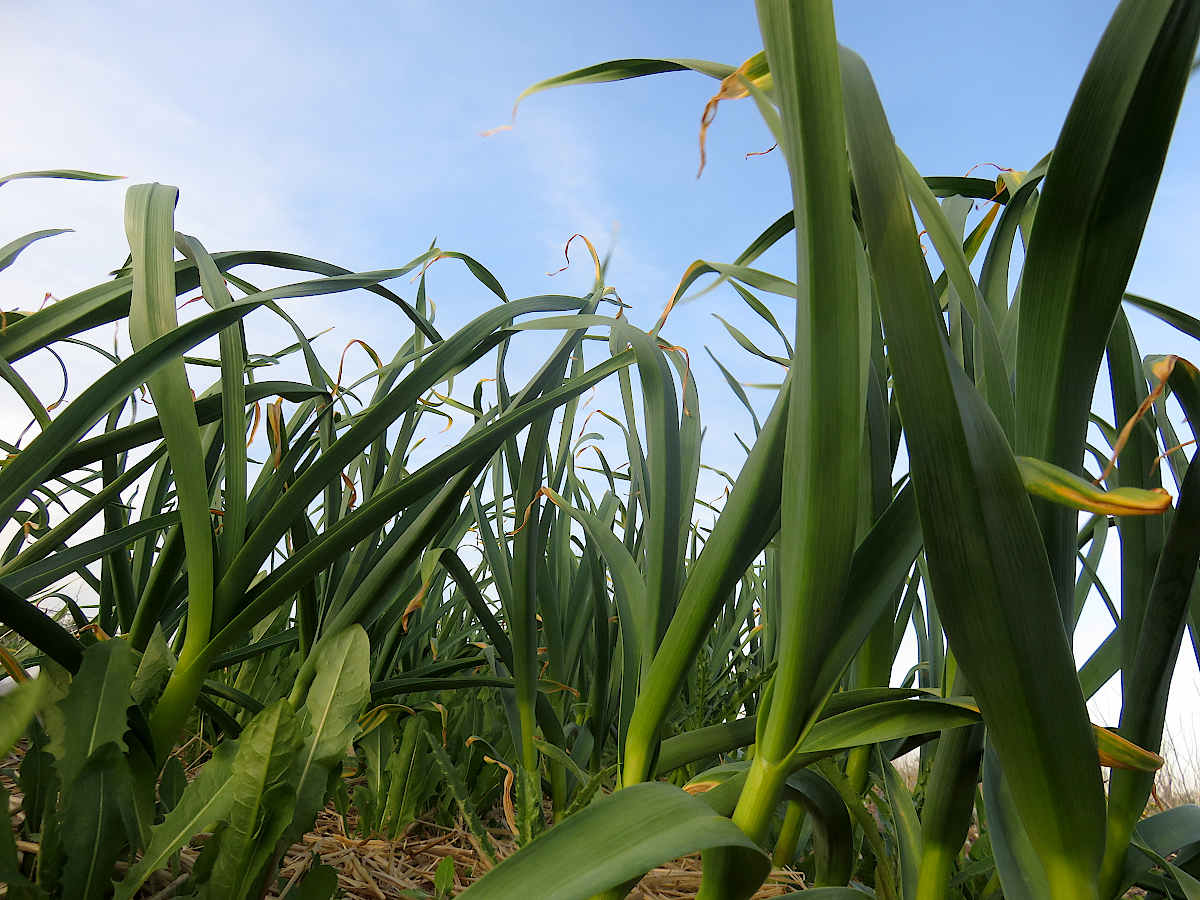
A few garlic, left out of the row cover leek moth protection tent, to see if the moths do arrive. I haven’t seen their eggs, or the moths, in person, just the busy boring larva. The eggs are apparently tiny and laid singly on the leaves, so hard to spot. I check daily. Pretty sure these brave guys, ready to take one for the team, are so far leek moth free.

Garlic revealed

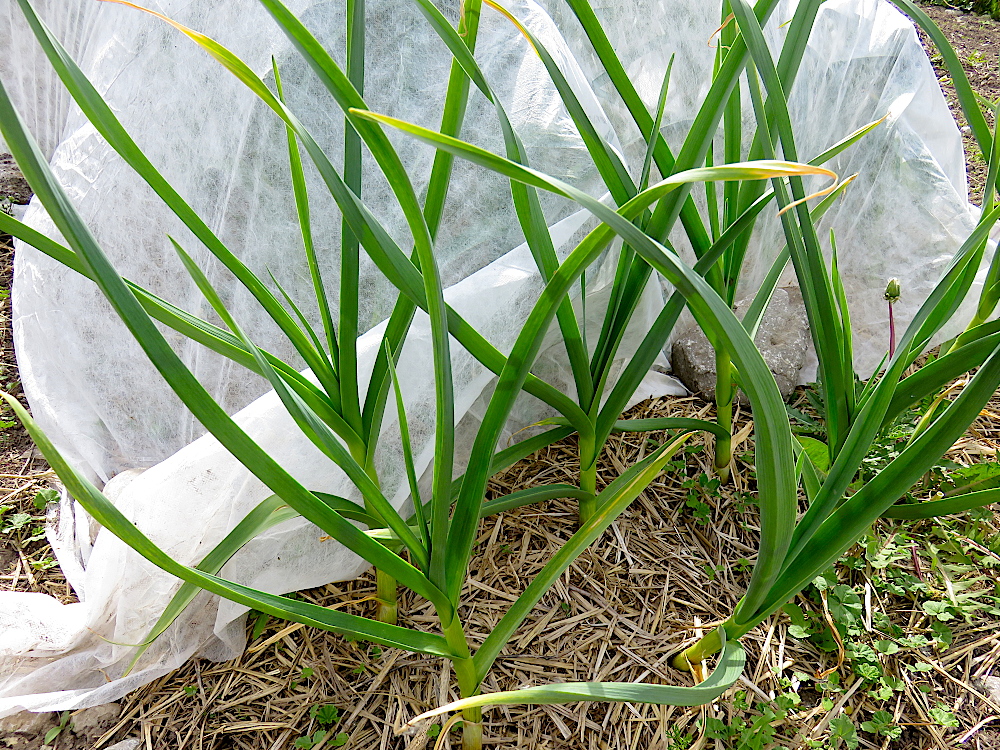
Garlic mid-May

For the first time after years and years of growing garlic, they’ve been under row cover since planting in fall, protection from a repeat of last year’s surprise invasion of the leek moth. No longer the one crop that every garden pest, from deer-sized to flea beetle, seemed to studiously ignore. I covered them right after planting so I wouldn’t have to muck about in the marshy field in April before it dried out, and loosened it up earlier this month.

Today, a full day of unfiltered sun. Leek moths are out and about at night, so the garlic should be safe even if the moths are in the neighborhood. The plants look fine, healthy and growing quite fast, though the leaves were a bit bent at first by pushing up against the cover. Cover went back on late in the afternoon. Better that than be bored (by leek moths).

Curing garlic

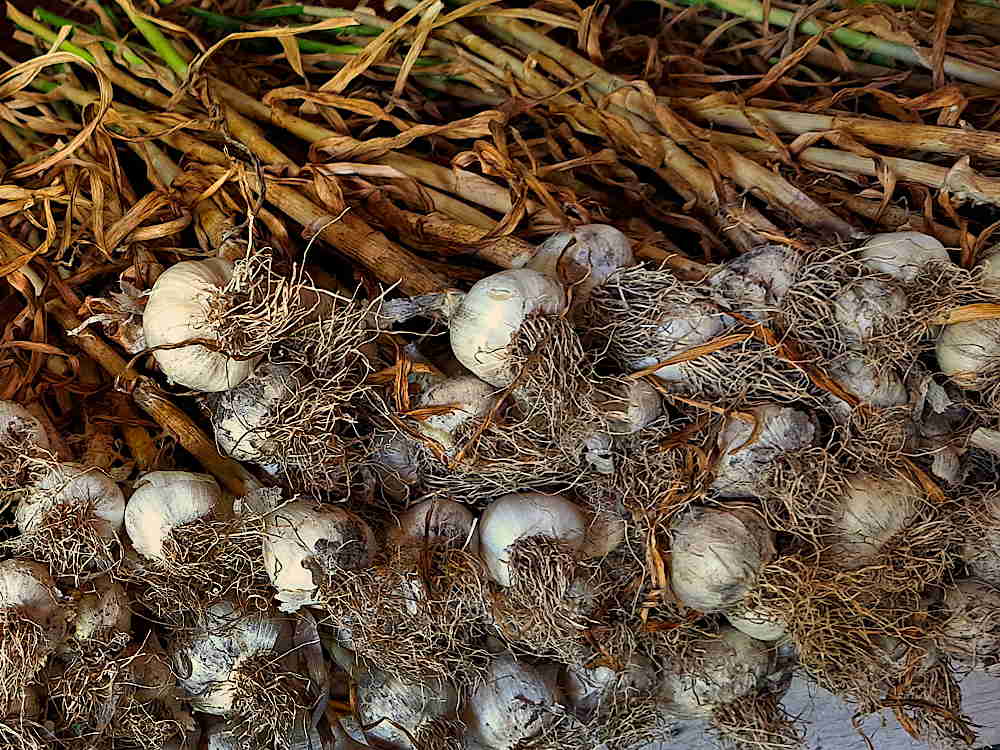
Garlic, harvested and stacked to cure by air drying.

The invasion of the leek moths a few weeks back left the garlic somewhat ravaged but unbeaten. The moth larvae seem to have been stopped up top, snipped and pinched and dug out before they had a chance to tunnel their way down through the stems, reaching the bulbs, and eating into them as well. Instead of that, the harvest has turned out just fine. The bulbs overall are a bit on the smaller side, but the cloves are nicely filled out, so…all’s well. A few weeks of air drying till everything’s woody and brown, then done!