
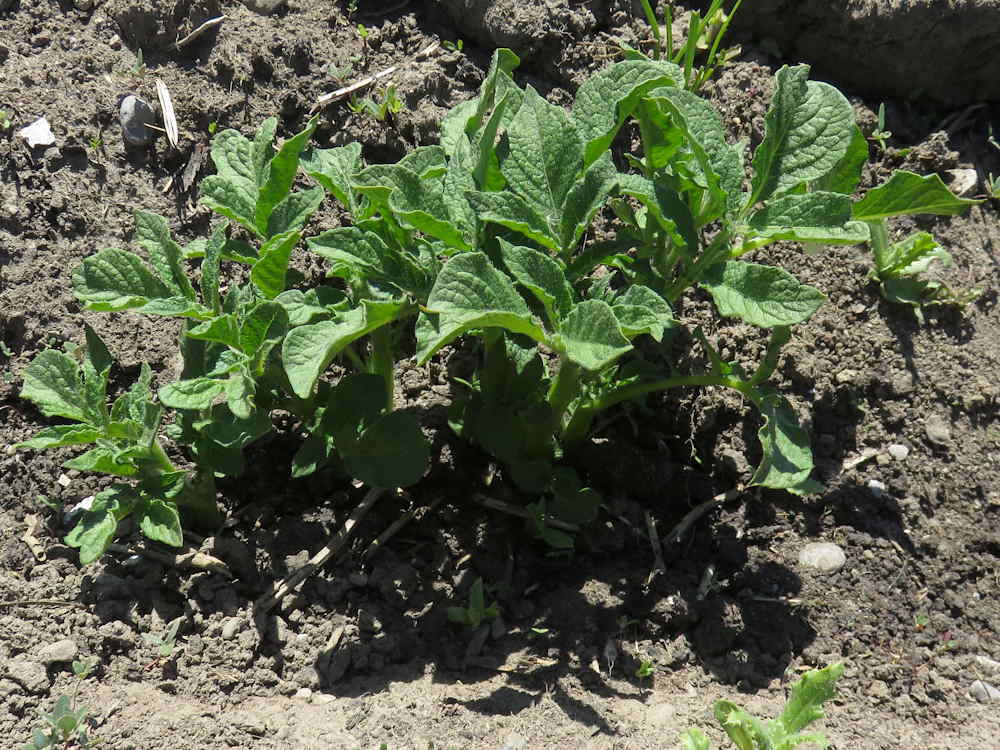
Round about this point in the growing season every year, I probably notice the same things, have similar thoughts. Late this morning, I happened to pay attention to the shadow of this happy little potato plant. That immediately led to thinking about how, as they grow, the veggies do their bit in helping you keep the garden going in the direction you want, that is, healthy crops not savaged by predators or overrun with weeds. The veg are like…partners! A pleasant way to look at it, though imaginary. In any case, the shade under leafy plants helps suppress weeds, keeps the soil temperature even, and preserves moisture. The bigger the plant gets, the more of the garden it covers! Of course, it works the other way as well!
Pests & Disease
Brave garlic
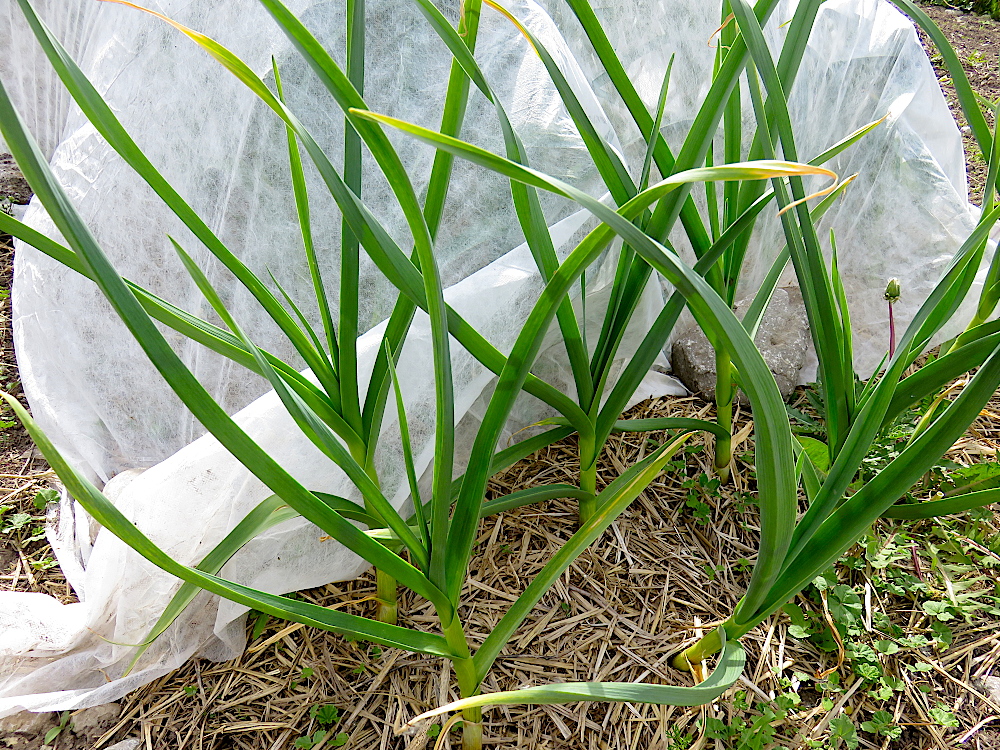
A few garlic, left out of the row cover leek moth protection tent, to see if the moths do arrive. I haven’t seen their eggs, or the moths, in person, just the busy boring larva. The eggs are apparently tiny and laid singly on the leaves, so hard to spot. I check daily. Pretty sure these brave guys, ready to take one for the team, are so far leek moth free.
Garlic revealed
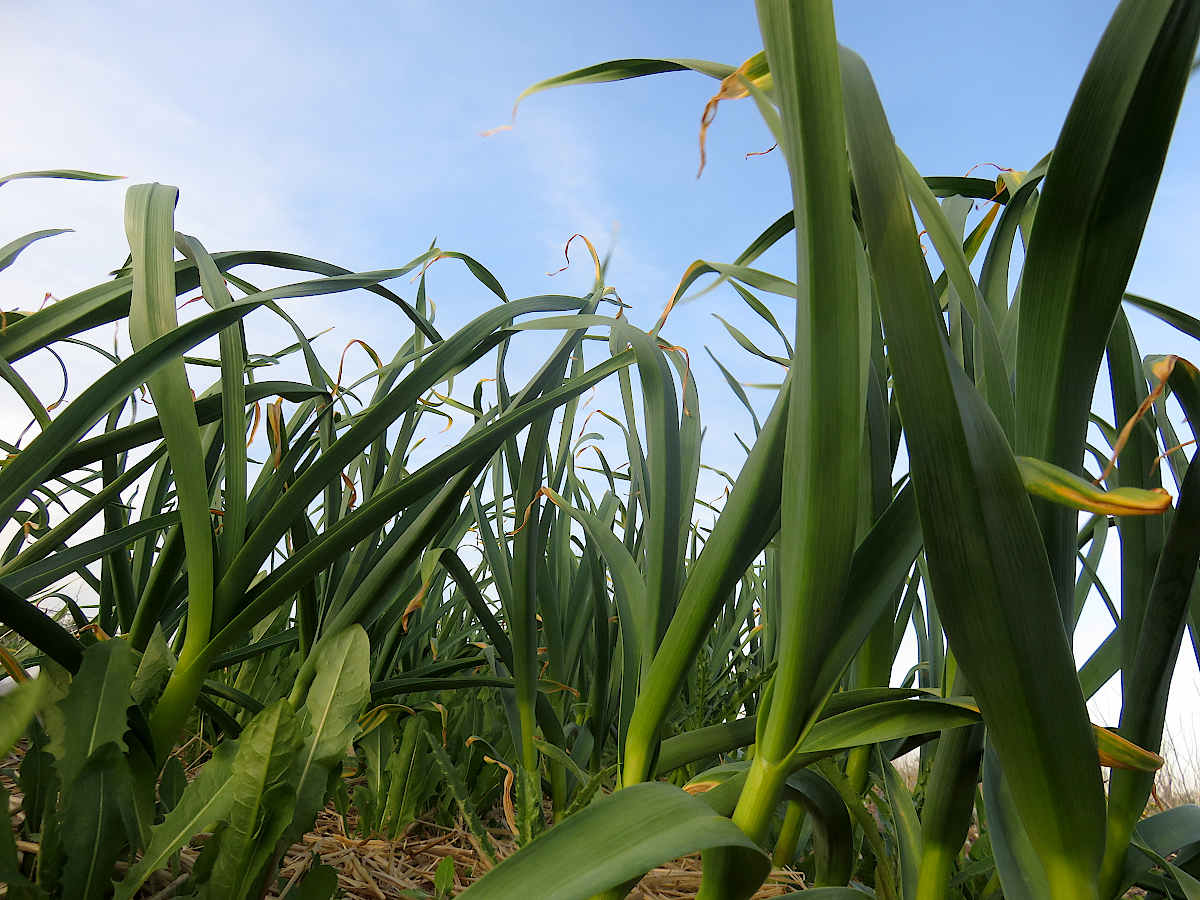
For the first time after years and years of growing garlic, they’ve been under row cover since planting in fall, protection from a repeat of last year’s surprise invasion of the leek moth. No longer the one crop that every garden pest, from deer-sized to flea beetle, seemed to studiously ignore. I covered them right after planting so I wouldn’t have to muck about in the marshy field in April before it dried out, and loosened it up earlier this month.
Today, a full day of unfiltered sun. Leek moths are out and about at night, so the garlic should be safe even if the moths are in the neighborhood. The plants look fine, healthy and growing quite fast, though the leaves were a bit bent at first by pushing up against the cover. Cover went back on late in the afternoon. Better that than be bored (by leek moths).
Curing garlic
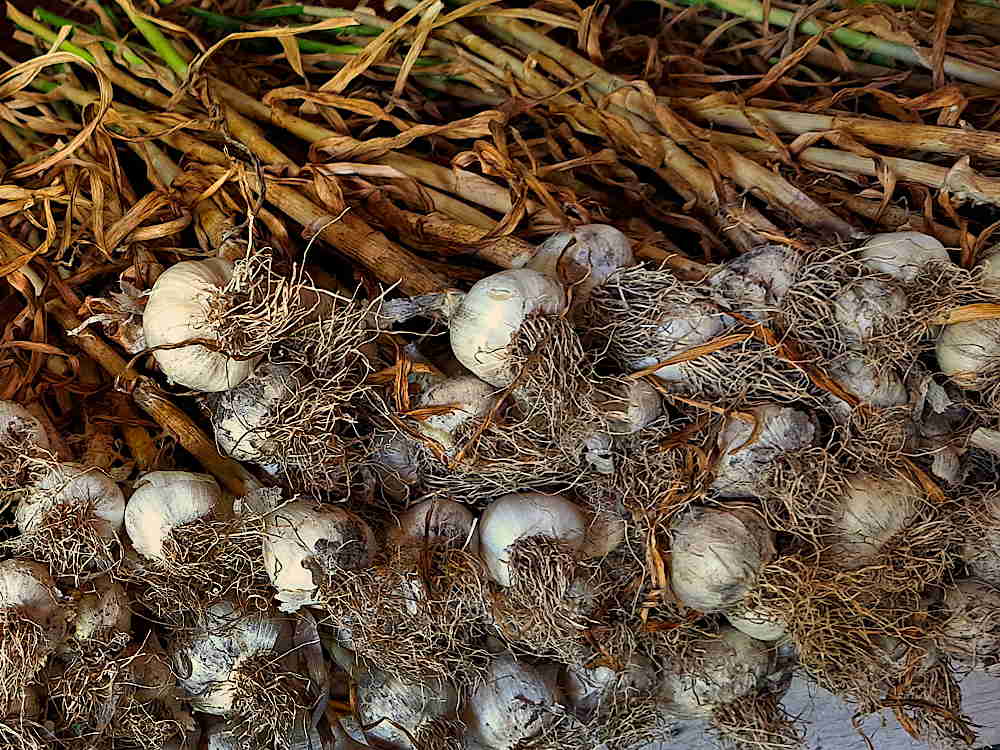
The invasion of the leek moths a few weeks back left the garlic somewhat ravaged but unbeaten. The moth larvae seem to have been stopped up top, snipped and pinched and dug out before they had a chance to tunnel their way down through the stems, reaching the bulbs, and eating into them as well. Instead of that, the harvest has turned out just fine. The bulbs overall are a bit on the smaller side, but the cloves are nicely filled out, so…all’s well. A few weeks of air drying till everything’s woody and brown, then done!
Attack of the leek moth
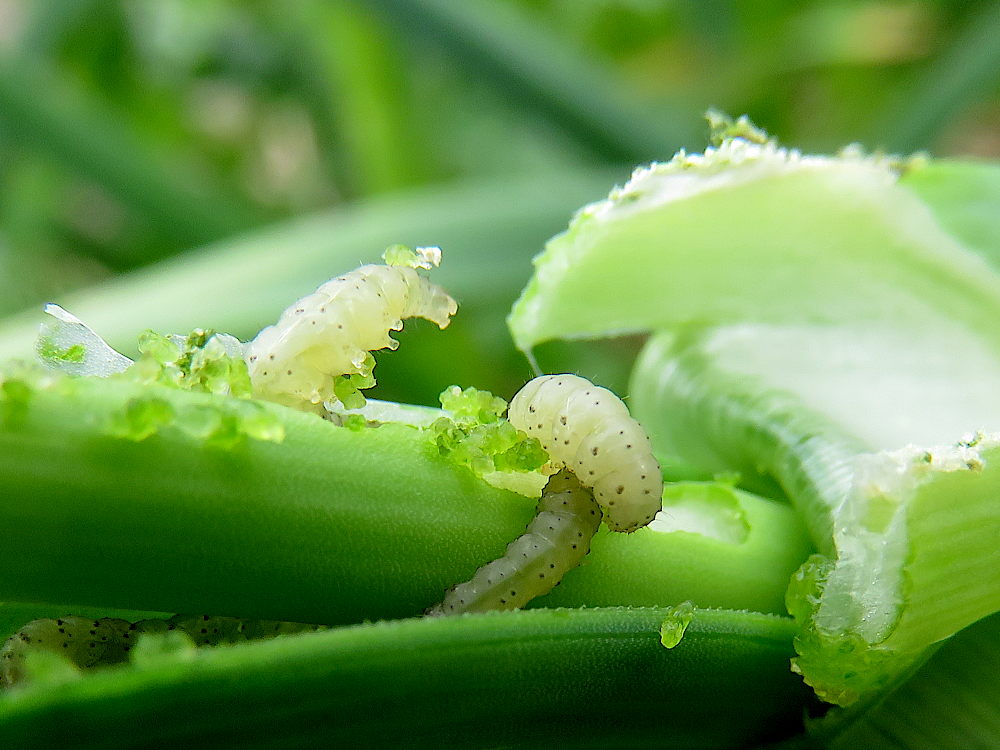
Checking for scapes today, only a couple of days after the last all-good garlic check-in, and found absolute carnage thanks to a leek moth invasion. For years, I’ve heard about these voracious leaf devourers ravaging alliums—garlic, onions, leeks—in the general region, but they’d never shown up here. Until now. After hours of hand picking and squishing, the situation may be somewhat under control.
FACT-FINDING: I did a bit of quick research to get the bigger picture. Leek moths (Acrolepiopsis assectella) are nocturnal, operating in full darkness. They overwinter in plant debris, emerge and mate when the temperature gets up to around 50°F/10°C. There are usually three generations a year, around here in mid-May, June and July. The first generation grows up (fast, in around 3 weeks) and starts laying another round, and so on.T hat means, in unusually warm or cold weather, there could be more generations per year, or less. Each female has around 100 eggs, lays them singly not in clusters, usually on the underside of leaves near the base of the plant (but, naturally, look EVERYWHERE!). There’s of course lots more, but that’s what I need to know for veg protection—garlic under row cover (and it would be pretty safe to uncover them during the day).
Best not to touch!
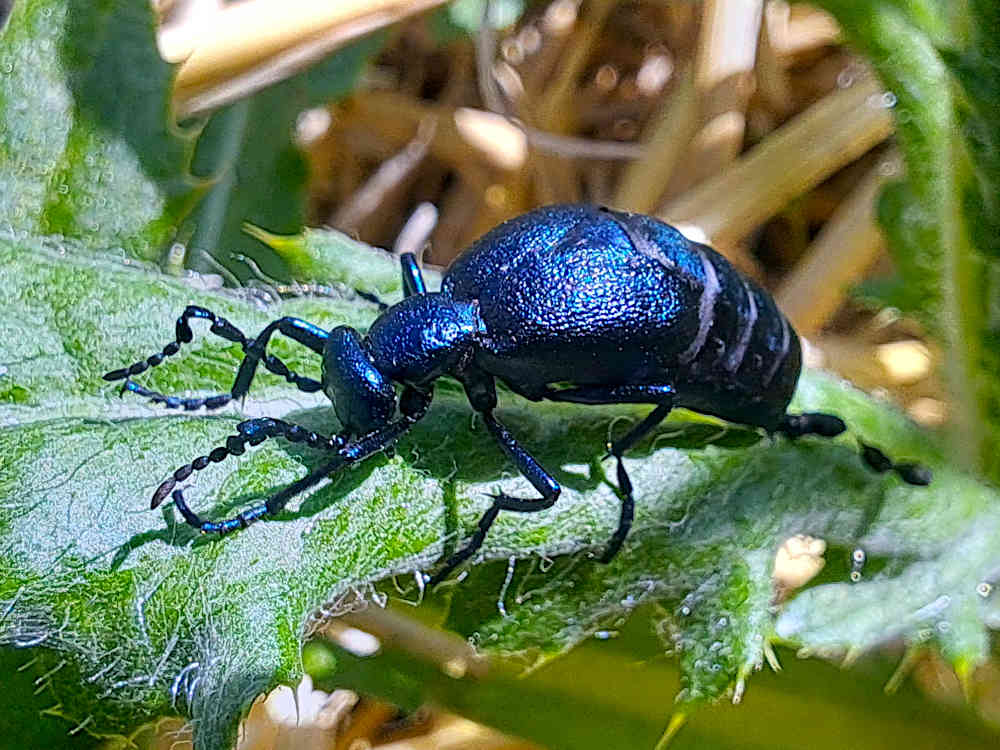
Meet the oil beetle! When I see new insects that I don’t immediately recognize, there’s an automatic, “Who goes there?!” challenge in my head. So many little critters can do so much veggie damage, one can’t help a “you’re either with me or against me” reaction to the unknown. In this case, I have to identify this fairly spectacular, sparkly beetle, sitting on a thistle that will soon be tilled under. (More to follow… Think powerful blistering agent, voracious beehive raider,… I doubt there’s a single insect species that doesn’t have it’s own odd and elaborate quirkiness )
Munching and mating
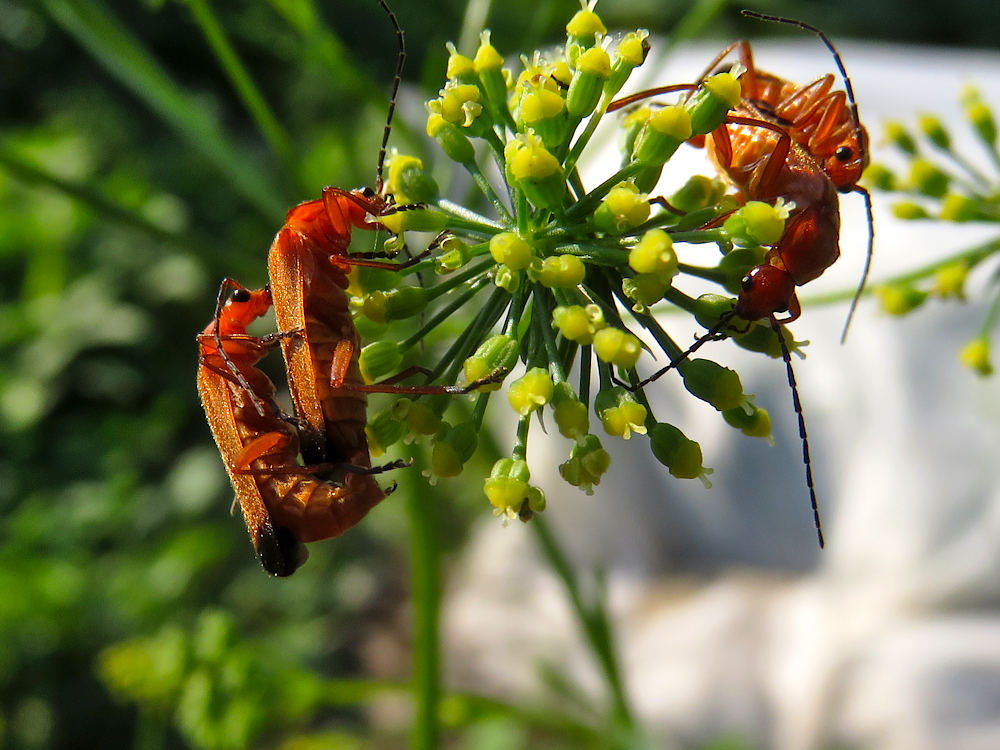
Definitely on the good bug list, these common red soldier beetles are happily multitasking, munching on the pollen and nectar from flowering parsley, while mating. Now that’s procreation! A quick background check comes up all good for these guys in the garden: the adults are great later-season pollinators, and in addition to feasting on flowers, they eat aphids and other small, pesty insects. Plus, their predatory larvae feed on insect eggs, snails, slugs, and more. Welcome, my friends, to the show that never ends!