
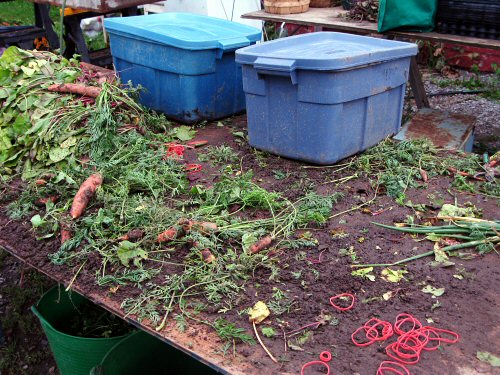
Sorting and packing after harvest—post-harvest processing!—is in good part a wet job, made a lot messier in rainy weather when root crops come in with a load of mud attached. Once again this season, the main work surface for sorting is a 4’x8′ sheet of plywood set on sawhorses. Actually, we added a second table, so now there are…two. Here, we’ve just finished sorting and bundling carrots, which then went for a rinse on the screen table. Sometimes, rinsing is done first, depending mostly on who’s doing what and what else is going on. In the closed blue bins, which hold a little over a bushel each, are carrots already bundled, rinsed and ready to go. This week, there are four bins of carrots, around 160 lbs (73kg). The residue is sorted out: here, damaged carrots will probably be topped and kept for house use, and the greens (there are some beet greens as well at the end of the table) are fed to the goats, some to the chickens, and the rest onto the compost pile. Then the table is hosed off. Couldn’t be simpler or wetter!
rinsing
Rinsing…
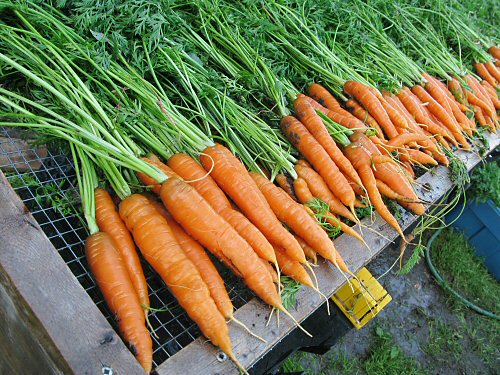
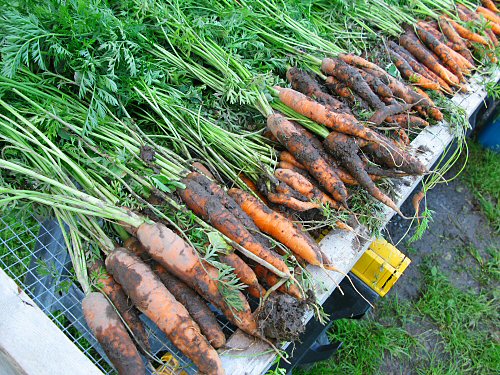
On-going debates about the merits of rinsing are…academic right now as the near daily rains continue, and the soil remains between moist and mucky. Even on a rare hot and sunny day like today, crops are coming up caked in mud. Carrots are messy…
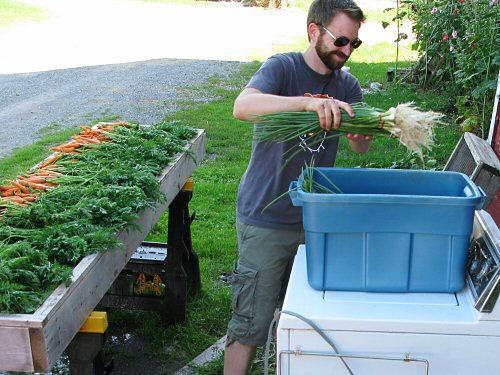
…and so are green onions (being rinsed by Mike) with tangled roots that hold clumps of mud so well…
Harvest wet work
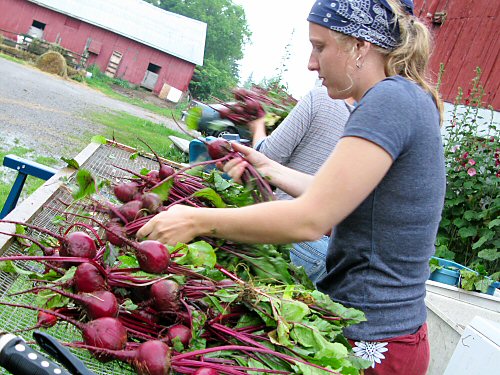
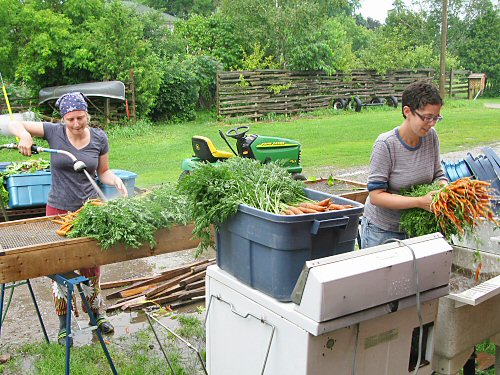
Yet another in this summer’s series of wet and gray afternoons, the weather blending perfectly with the wet work of rinsing and sorting muddy root crops. Instant efficient team chemistry between Rachel and Mel, both doing post-harvest here for the first time. (Above, carrots, below, beets.) The process is very small scale and manual. Crops are first dumped from harvest bins onto the screen table, clinging earth is quickly blasted off with the jet setting on the water wand. Next, double handful bunches are dunked for a final rinsing. Then it’s back into the bins… Simple and quick for a few bushels. Get wet!
Dirty hands at the farmers’ market
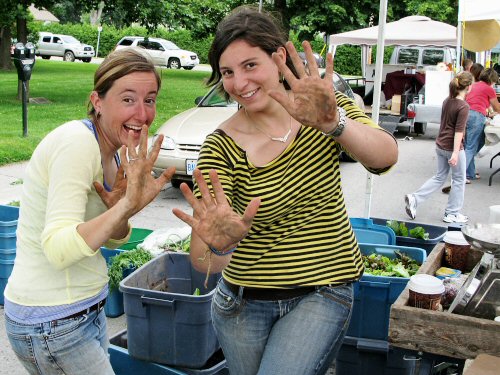
Over the last couple of weeks, we’ve been experimenting again with rinsing versus…not rinsing. This comes up a couple of times every year, where I think (or someone suggests) that rinsing various veggies is not necessary: to save time, to improve storage, to preserve nutrients,…the reasons vary. (For me, the time-saving is always a big attraction!) Sometimes, crops just have to be rinsed to cool them down quickly if harvested in the heat, or because they’re really mucky from heavy, mud-splashing rain. In any case, this week, we didn’t rinse the carrots, beets and beet greens, so sorting at the market was a bit messy. That’s Lynn and Maria, happily dirty-handed… The conclusion is usually the same: when the harvest is really kinda muddy, which is often the case this year with all the rain and wet ground, a quick rinse is better all around, for handling and for presentation. Still, the experimentation continues!
Tiny harvest!
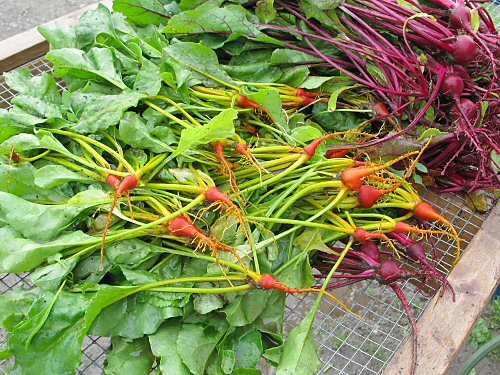
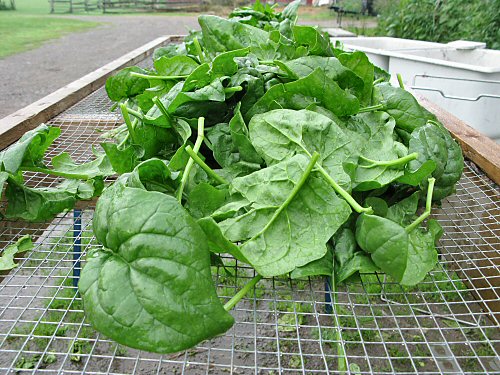
Spent the early morning harvesting a few CSA shares for a Monday drop-off. This is the first week of shares, and they’re still small, mainly greens… There are many tiny farming routines, things you’d probably never do in a bigger operation, that I find extremely relaxing and fun: the final rinsing and putting together of a handful of shares is one of them (it’s not really economical to separately harvest and drop off less than 10 shares or so, this is an…exception). There’s something deeply satisfying about this final post-harvest step, with the veggies together at their finest, the memory of the different quick individual harvests—picking, cutting, pulling—still fresh, that’s…cool! The spinach (above) was quickly dunked in cold well water to rinse off dirt splashed up from recent rain, then allowed to drip dry for a bit on the screen table.
Picked two types of beet greens, Golden Detroit and Scarlet Supreme. The stems are a little long on these—it all depends on the density of the rows, the weather, the harvest timing, leaf size is the luck of the draw since these are really thinnings, they’re not being grown just for the greens. Still young and tender, the baby beets and all can be cooked up, or the leaves used raw in salad (or as a salad!). Really tasty…
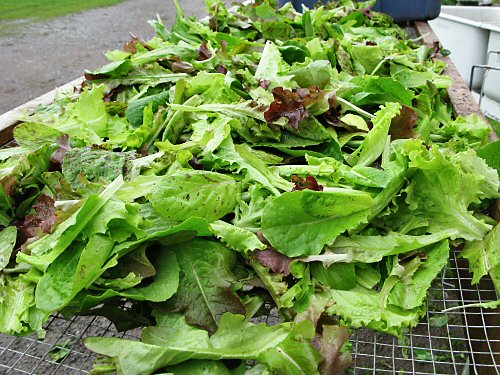
And mesclun, of course. This all-lettuce salad mix is a staple crop this year as usual, always on my mind! This cut’s nice and clean! Unrinsed—I let the morning dew dry off a bit on the screen table… More simple pleasures for the simple of mind! ;)
Just radishes…
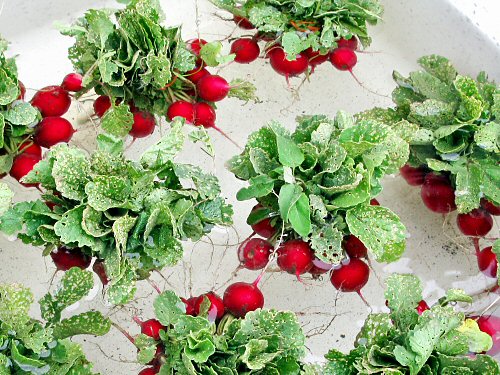
The only thing new for the farmers’ market this week were a couple of rows of Rebel radishes, with their signature flea beetle-bitten leaves—today was nothing like the busy Friday harvest days to come… Radish is the only brassica crop I grow that doesn’t have to be row covered against FBs. They grow so fast that the damage doesn’t hold ’em back much, and most people around here don’t eat the leaves… Here, they’re bunched and floating in one of the rinsing tubs. They could’ve used a few more days in the ground to get BIGGER, but they’re light and perfectly crisp as they are. Tasty! (Guest photo by Shannon.)
Rinsing station gear comes out
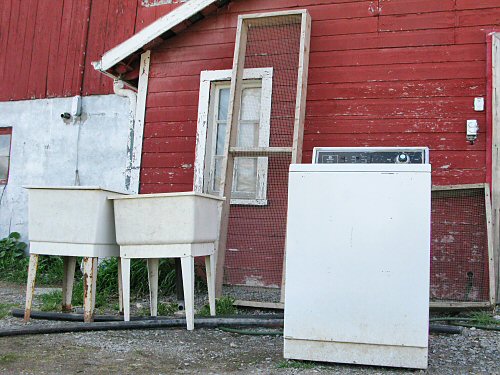
Today was the day I decided to bring out the rinsing gear! Upfront for its fourth (or fifth?) season, the trusty Maytag washer turned giant salad spinner. Once again, after a winter in the unheated drive shed, it started up (on Spin, of course) without a protest. (Maybe it’ll get a cool paint job this year, finally?!) Leaning up against the Milkhouse wall, there’s the original, square screen table (formerly used to sift gravel), and beside it, the new one I built last year—just add sawhorses… On the left, the pair of laundry tubs. Drainage pipes lie on the ground… First harvest can’t be far off!