Main order done!

Five hours and done! This year’s main seed order was a first: finished in one session! Usually, it takes two. My head was starting to spin a little, but I felt COMPELLED by the late date to keep going (although I don’t think I’ve ever been much earlier, I always just plan to be). Guess I’m getting…better. A small order went in a while ago, for early starters like onions. This is all the rest!

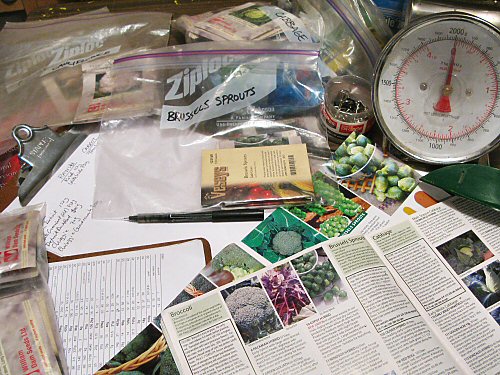
It’s a comfortably familiar routine. I cleared an end of a work table and set things out. A couple of clipboards, one with the always-handy, slightly magical  seed calculator sheet. Catalogs from the main two seed houses I use. A scale for weighing heavier seed, and seed in larger quantities. A seed scoop for checking what’s left in packets (pour out, pour back!). Tiny (3/4″/19mm) bulldog clips, great for clipping together packets. And sitting by the table, three Rubbermaid bins that hold the precious seed inventory in freezer-weight ziploc storage bags.

First, I weighed the bulkier stuff: beans, peas, larger quantites of beets, radish, and so on, stored in their own bags. Then, I settled in, going through ziplocs, more or less alphabetically, from arugula to tomatoes. See what’s left, decide what more I need. Check the catalogs, try not to go wild with extra packets of stuff, “just to try”—the amount of seed needed per veggie is already worked out on that calculator sheet. A few of the ziploc bags have only a couple of packets of seed, each a different variety, like the Brussels sprouts in the pic. Most have 10-20. Tomatoes are getting near 200. It’s a lot to go through, but it’s like hooking up again with old friends. Easy. Fun. And I’m done!

Another snow day

Greenhouse and snow

More snow. A few inches, I guess. I don’t pay attention any more, unless there’s too much snow to get out the door… I trudged out into the field, snow up to my knees, to check the greenhouse. It’s doing fine as usual, fully inflated (it has two layers of plastic, with a fan blowing air between) and shedding snow with ease. The greenhouse (and the veggie stand behind it) won’t be moved to the new farm until the snow clears and it’s easy to get at, hopefully sometime in March. I hope dismantling it doesn’t make it fall apart. The plastic is rated for four years, which means the UV resistance should be giving out any time now. I suppose the plastic will start to disintegrate. I don’t really know what happens when greenhouse plastic expires. Guess I’ll find out. Until then, I expect it to last forever! :)

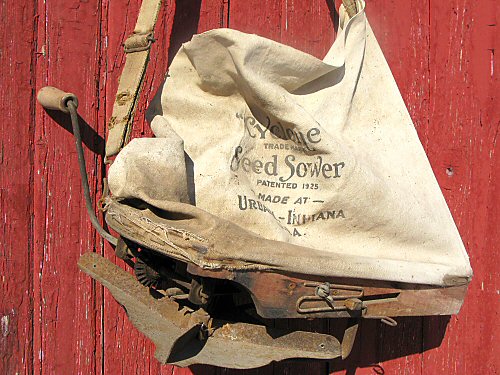
Old broadcast seeder

Found this antique broadcast seeder hanging on a nail in the drive shed, the Cyclone Seed Sower, made in Urbana, Indiana, sometime way back when (patented 1925). The canvas is torn, but it’s otherwise in good working order. Dunno exactly when it was last used, in the last decade or two. With a little patching—in a hurry, even duct tape would work—and a few drops of oil, it’d be good to go. In this case, time hasn’t improved on design: this seeder is essentially identical to the modern version I use, except the cloth and wood and most of the metal have been replaced by plastic. Operation is simple: fill the bag with seed, adjust the size of the opening, and start walking while cranking the handle—seed hits the  plate and gets flung out by the ribs (here’s a more detailed description). Simple, then and now!

North field in snow

The North Field—I think that’s what I’ve taken to calling it; there’s also the South Field and the South Slope—somewhere around two acres including the sloping perimeter, is the main market garden at the new farm. It looks suitably inscrutable under more than a foot of unbroken snow: what does the soil under there have in store? My look-around in November didn’t turn up anything immediately alarming, and that’s mainly what I looked for, things that could make farming these fields really tough. The few handfuls of soil I dug up were a nice clay-loam similar to the old farm. I didn’t find any super-invasive and tenacious quack grass, and the equally troublesome Canada thistle showed up only here and there in the strips beside the fences and paths. So far, so good, but that’s only the most obvious stuff. On the list of a million things to do over the next three months to get ready for the May plant-out, beginning to know the soil and the lay of the land is way up there. We’ll soon find out. For now, I have to wait…

New seedling room: doorknobs and AC plugs

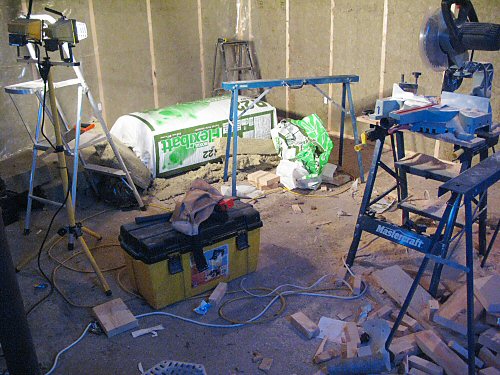
More building the seedling room at the new farm. Bob came by on Sunday, and I stayed on to work solo for a couple of days. This is where we get down to details. What gets me here is the number of PARTS that suddenly come into play near the end. Where initial demolition and framing are really simple, with few tools and materials, now, there’s tons of stuff. Door handle kits, latch kits, electrical receptacles, switches, receptacles covers, electrical boxes for receptacles and switches, door kits, window kits, shims, low expansion foam, screws of different types and lengths, and then there’s quick-set concrete for patching the floor, drywall mud, caulking, paint, and more still to come. It’s interesting how the convenience of buying endless products eventually takes over, even when it’s rough carpentry, in a barn! OK, I’m going on a bit, it’s not all that complicated. Guess I’ve got FINISHING THE SEEDLING ROOM on the brain as the calendar flips…

Anyhow, the insualtion is now going in—that’s quick—and as soon as plywood is on the walls, I’ll be able to start setting up! You can see on the left of the photo the handy twin 250w indoor/outdoor halogen lights-on-a-stand, lighting the scene—last gig, they were lighting the barnyard for rinsing beets and carrots after dark… :)

Greenhouse overgrown

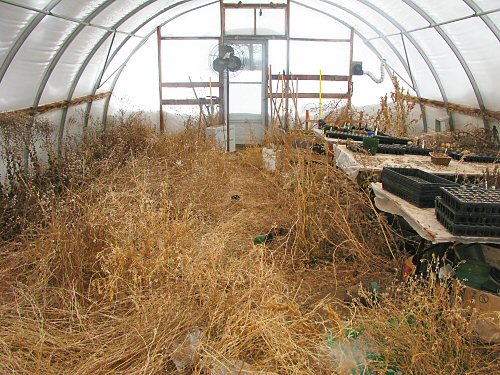
The greenhouse is still snowbound. I cleared away the east-side door to get in and check out what’s left to pack up for the new farm move, coming soon! Usually, I do a bit of greenhouse clean-up in the fall, and then around February, prep half the area for some early greens. This time around, I’ll take out the small stuff—there’s tools, the big industrial fan, a few plug sheets, and tons of plastic pots stored under the tables—lots of good gear! The tables will probably be left till March, after the melt-off, when we come for the greenhouse itself. Once the bubble is removed, this little winter oasis will merge into the rest of the field. The pleasantly golden-brown dead stuff is mainly arugula allowed to go wild…

Village general store

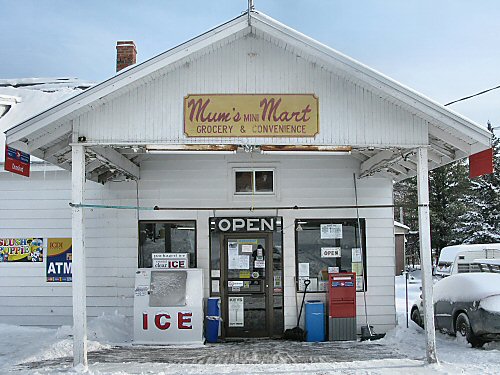
When I came to the farm six years ago, there was a second, slightly bigger store, actually called the General Store. It was sold, managed badly by the new owners, and soon went out of business, and Isabel’s mini-emporium of necessary stuff became the last store standing for 10 miles around. It’s a three-minute walk down the road—the farm is right on the edge of the village—and I’ve gone there for this or that, including picking up the mail, most of the days that I’ve been here. It doesn’t have a particularly quaint, rustic country store look, but it does the job! Isabel had been running it for decades, knew everybody, and her easy blend of diplomacy, discretion and informative chat made it a news hub for the area (no small thing: you find out the rural life is all about what people are up to). And she had a sharp eye for country retail. As I slowly found out with some amazement (coming from a land of endless stores), she managed to pack just about everything you had to have NOW into one small space. A 3-inch drain plug, gear clamp, 2-stroke motor oil, Kikkoman Japanese soy sauce, photocopies, if you really needed it, chances are it was in there. I used to joke (well, I was serious) that on one tiny, 2’x4′ section of wall, she had 90% of the most useful stuff in the giant hardware store in town. Her strategy was pretty simple, keeping tabs on exactly what her customers, farmers and cottagers, and the more “city” type commuting folk living in the village, needed again and again. Combined with my not driving, Isabel’s efficiency encouraged the growing make-do-or-do-without part of my tiny farm experience. It’s startling how much extra junk you don’t really need to buy. For minimalist one-stop shopping: 4 stars! :)