
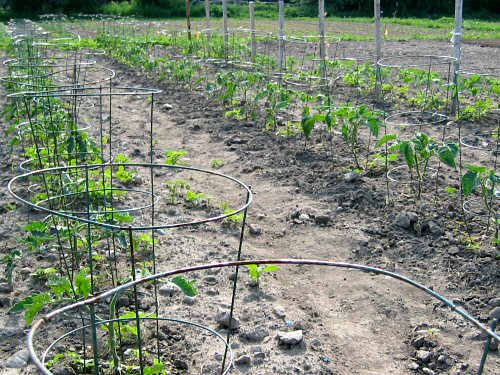
Prune, sucker, stake and cage—there’s a lot of (brutal-sounding!) stuff to do with tomatoes. On the other hand, as I’ve done in past years, simply by not having enough time to support them all, you can let ’em sprawl. I’ve always wanted to have the toms neatly assisted by the basket-weave method. This involves pounding in stakes every second plant (maybe every third would also work), then weaving twine in and out, in front then behind every other plant in one direction, then back again, weaving the opposite way, this done every 12″ or so of growth. This way, each plant is then supported by twine on both sides. You also have to prune and sucker (remove the shoots that grow at the intersection of new branch and stem), so that you have one main stem. This year, we should have several beds set up this way. There are also around 250 home garden-style tomato cages, which are quick, but don’t provide that much support when the plants get heavy. An advantage of caging: you don’t have to be as strict with the suckering. For at least a few plants, I’d also like to try caging with cylinders made of 6″ mesh concrete reinforcing wire, a heavy duty (and fairly expensive) approach… This year’s mix of methods is underway. More as it happens!
Fieldwork
Working in the rain
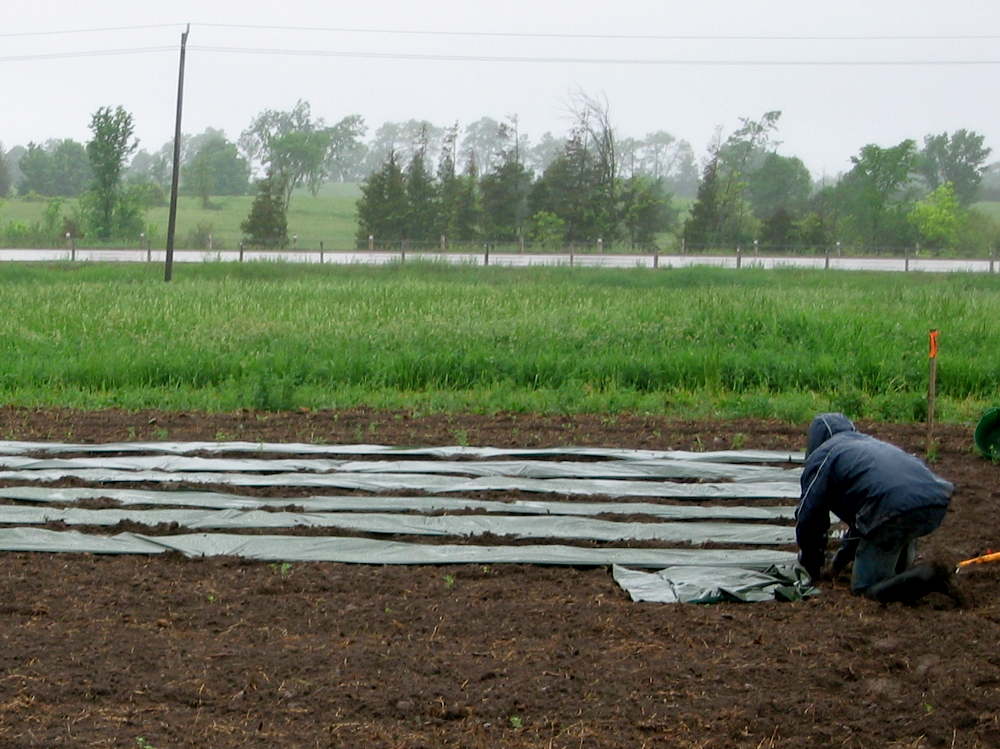
The rain is good (15mm over the last day), the chill (there’s a frost warning for tonight and tomorrow) and sticky clay-loam mud are not so good. But the calendar is flipping and there’s really no time to take shelter. Conall puts in plastic mulch for melons, anchoring it every few feet by scooping out soil, pushing down the plastic, and replacing the soil. We’ll cut X’s to transplant into, and water by hand around each plant as necessary. Labor-intensive, but it’s the most reasonable way to decent melons I’ve found so far, and it worked out well two years ago. After experimenting with straw mulch for tomatoes and melons last year, I’m back to using plastic for melons, and that’s it. Straw is great, but the extra work of spreading and then the fall clean-up seemed like stretching it for everything else that has to be done this year.
Sunflowers come up quick!
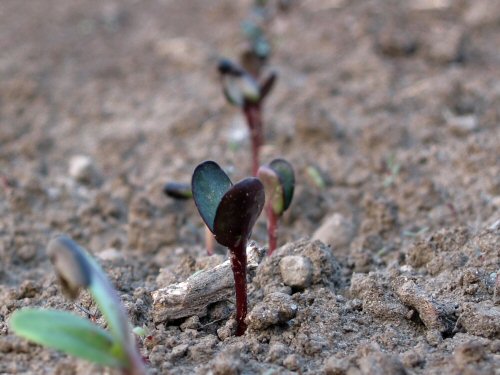
Sunflower is my new favorite flower…because it comes up quick. These Claret seedlings, along with Sunrich Orange and the Go Bananas mix, all poked up after barely three days, with even germination down the rows. Flowers this year are lower priority than the veggies, so they got in a little later than they could’ve. Yesterday, I showed my production list to a flower gardener, who nodded as she read, said “oh, cosmos” in what I took to be an approving tone, and finally commented, “well, you may be a little LATE for some” (my emphasis on LATE). She was only referring to the longest possible season for each, but it made me realize what a dread concept LATE has been all along, only usually it’s just in my own head. You’re constantly trying to stay on top of seeding and transplant timing, hoping for early last frost and late first frost, attempting to squeeze in one more planting, and always wondering if this or that will be…TOO LATE. In fact, it always works out… What you learn is, either way, no worries!
Team harvest!
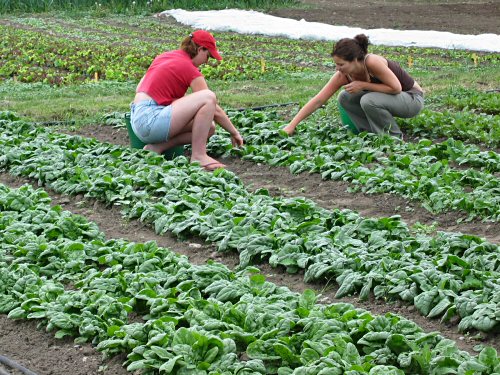
Today was the first team harvest of the season and for this tiny farm… I’ve certainly had harvest and packing help in the past, but this time, it’s with a regular crew who will hopefully be around for the season. The BIG difference is the size of the harvest, which is at least double what I’ve done before. This was more of a runthrough, with Jo and Erin harvesting spinach, giving it a water bath to cool off, spinning it in the Maytag, and packing a few 400g bags to try out…bagging. Conall and I finished up through the evening. In the harvest this week: radishes (French Breakfast, Rebel), mesclun, bok choi, lettuce, spinach (Bloomsdale, Spargo), green onions. Not bad for the beginning of June.
More people in the field…
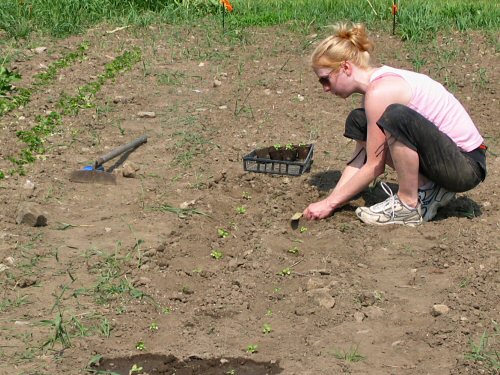
At work transplanting really tiny basil in the still-to-be-shaped-up herb patch, Andrea is doing her very first day of tiny farm gardening. It all worked out very well! After nearly a month of working with Conall, the all-new organic grower, almost every day, and having several other people out for a few part-time hours, it’s a different season for me compared to the previous four. Not less work (we’re planting way more than ever before), but the energy is different. Before, largely working alone, it was more of an against the odds thing as I faced the fairly massive task of each season’s start-up. I liked that solo mission adrenaline and challenge. Now, it’s more of a people puzzle, as this season’s small crew assembles. By the time it comes to more substantial harvests in three or four weeks, I’ll be totally reliant on teamwork to get it all done. No going back: it’s like, Tiny Farm II: People in the Field. :)
Wheel Hoe Day
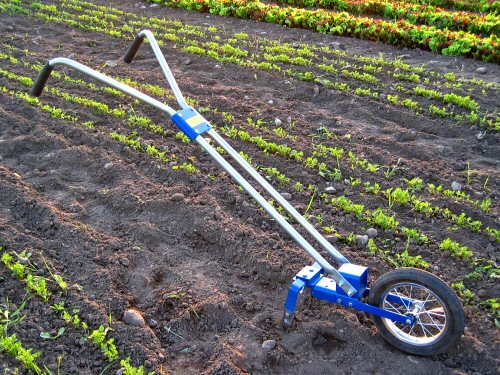
Finally, the new wheel hoe arrived today from the Valley Oak Tool Company in California! This simple and amazing garden tool is so little known in these parts, I had to order it from another country… I hadn’t used one before, but I had a very clear idea of how it should work, and it didn’t disappoint. You walk it along, pushing with minimal force, and the blade slices through the soil, beheading all weeds in its path. With ease. A slight arm adjustment translates into precise depth control, and the double-edged 8″ blade works on a back-pull as well. Even fist-sized rocks (a constant feature in this field) don’t phase it, they simply slip through the hoop. It’s at least 3-4 times faster than hand hoeing, and it matches the Horse walking rototiller for path clearing, minus the noise and gas. Amazing! (In the numerous shipping documents, I liked the note to Customs from the toolmaker, an organic veggie farmer himself: “Please let this package be delivered ASAP. There is a farmer awaiting his new tool.”)
Tomatoes to the field
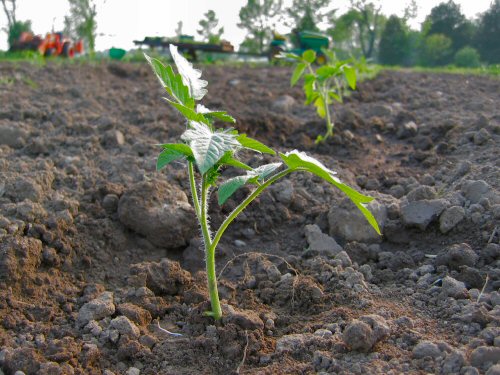
Go team… Set out another 400 tomatoes today: add a fistful of compost, bury to topmost leaves, water in. Along with the peppers and eggplant transplanted yesterday, most of the early seedlings are now in. There is still a lot to go, but it’s all coming along…!