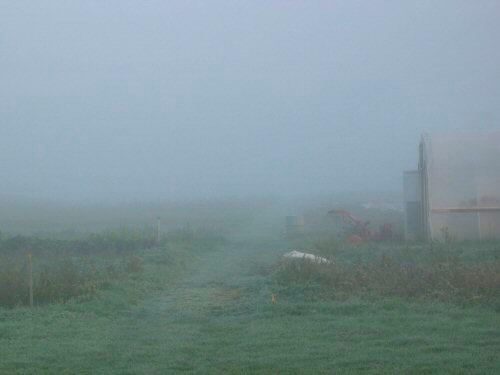
Heavy fog isn’t too common around here, but it happens. After thousands of hours of walking the two acres, strolling through this makes for quite an interesting change of scene.
Veggies
Onions and cabbage
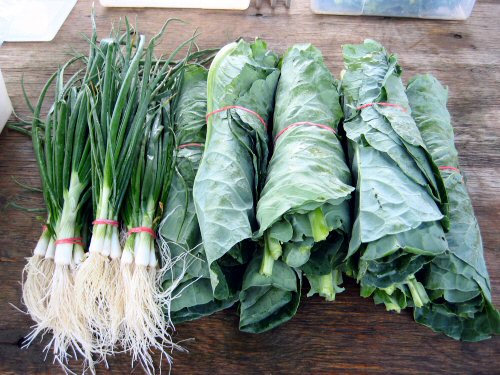
The days are getting short, the weather’s cooling down, and average first frost is only three days away. It’s still officially summer, but I’m in fall mode now. Green onions and the brassicas, like this open leaf cabbage, are hardy mainstays of the fall harvest.
Fuller share
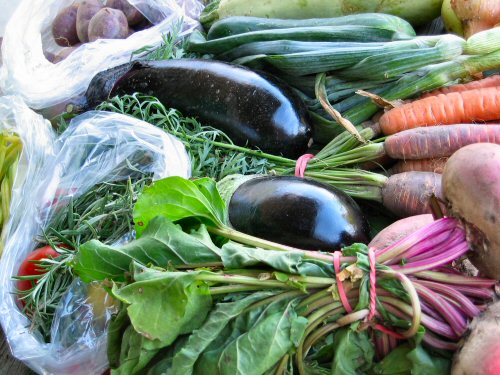
By mid-August, the CSA shares are nearing their peak. Here we have eggplant, carrots (including a new purple addition, Purple Haze), onions, beets, potatoes, yellow beans, summer squash, tomatoes, rosemary, plus salad mix out of sight. Still waiting on melons, winter squash, main season broccoli, fall cauliflower. And there’s more! :)
Fields of plenty
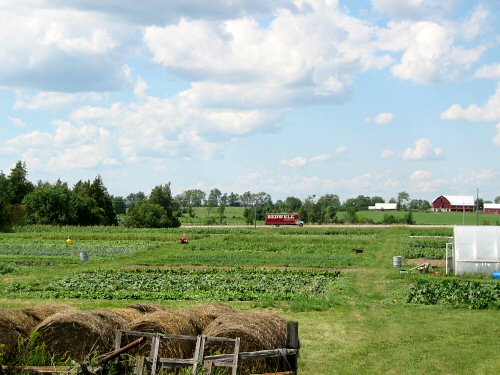
This is a great time of year, with everything growing, the sun high and strong, and still a good two months of prime harvest to come.
CSA share!
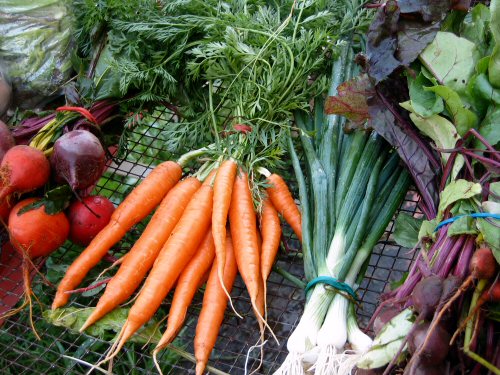
Here’s part of a weekly CSA share. There are about 25 members this year. A third pick up here, the rest on Saturday mornings at the farmers’ market 15 miles away. It’s all local! In the pic, this week’s washed: carrots, beets (red, golden and striped), mesclun (the bag’s in the top left corner), green onions, baby beets for cooking greens. These go in with cucumbers, string beans, baby potatoes, zucchini and other summer squash, garlic. Still waiting on early tomatoes, but the main season harvest is picking up! (I’m still thinking over the what-to-wash question. Washed veggies look nicer and are less messy when you get ’em home, but there are various arguments for not washing, like longer storage and even better nutrient retention. Not to mention, saving lots of post-harvest time. I do know it’s a lot more work)
First day of summer
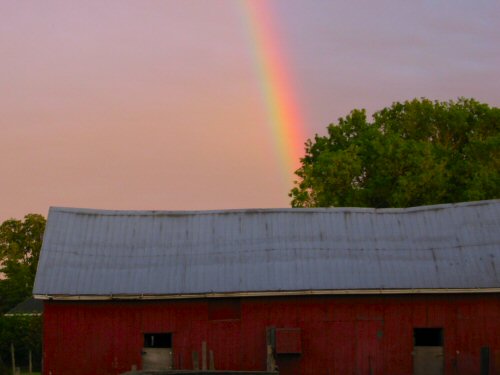
A horizon-to-horizon rainbow stuck around for a good half hour this evening of the first day of summer. Here it’s arcing over the goat barn (which, despite it’s appearance, is far from caving in!).