
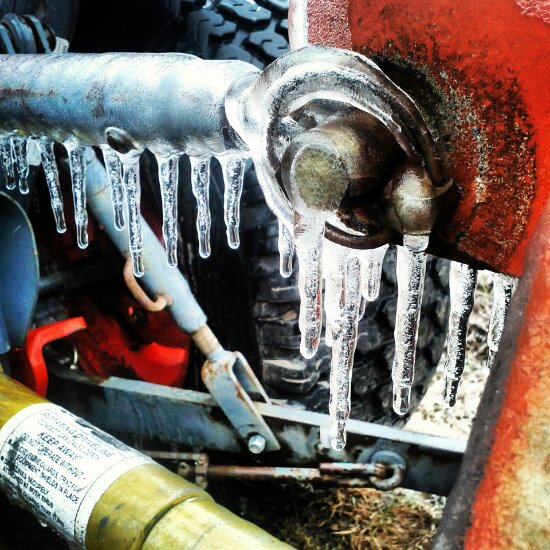
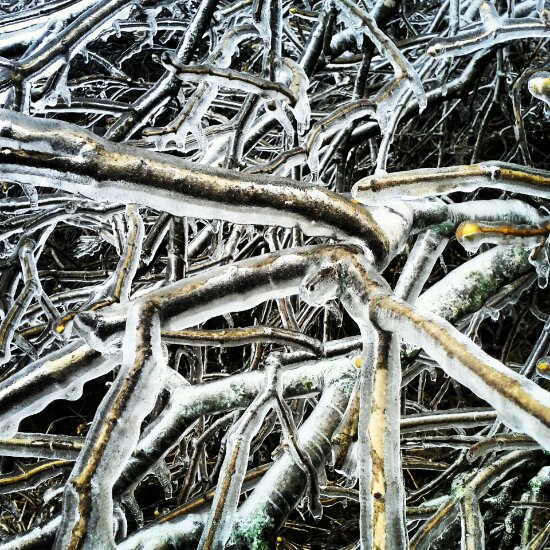
Ice storm. Some strange, quick mix of rain and freezing cold that puts a thick coating of ice on everything, and creates sturdy little icicles wherever water drips (like, above, from the 3-point hitch that’s attaching the rototiller to the tiny tractor). Quite amazing, and a little alarming as well when you pass under big trees drooping and sagging under the extra weight. Massive branches falling and whole trees toppling are taking out power lines all over, it’s already been out for 12 hours in places around here, and the radio’s saying it might not be restored for another 24 hours. Back to the Stone Age. The Ice Age. At least, the pre-Electric Era. No Internet at night? Light a candle, or use your long-lasting LED headlamp, and read a book!
Tools
New plug sheets
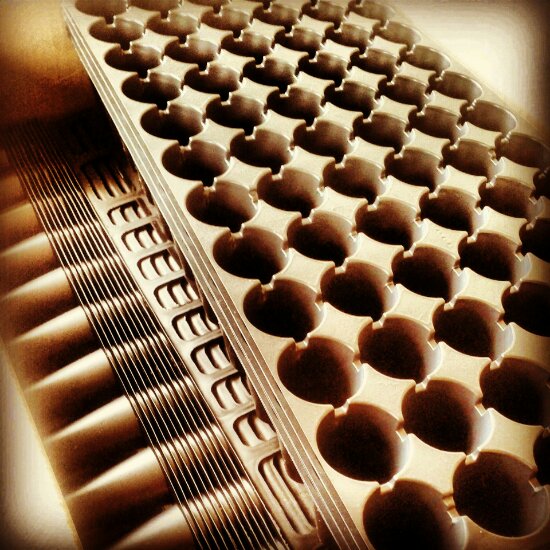
Picked up a small shipment of new plug sheets and webbed trays at the post office. I really stretch ’em out, have some going for years—they’re reusable, but not incredibly tough, especially when you take them into the field for transplanting. Handle with care and all that, and replace as needed! These are 72-cell sheets, my basic standby. Bigger is generally better here (my other standby is 38-cells), but there’s only so much room under the lights: if you keep the timing tight, don’t leave things in there too long, they’re fine for just about any small seed. Waste no space!
The refractometer has arrived!
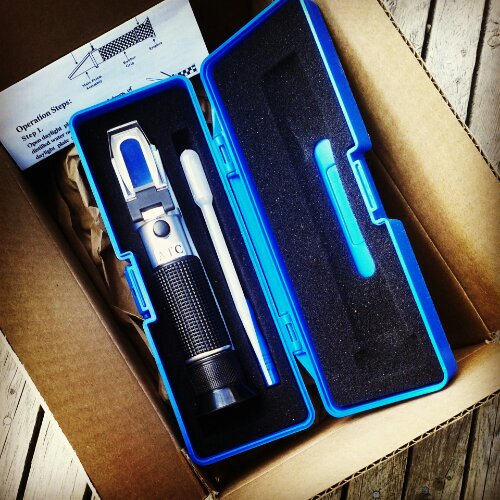
Yep, the refractometer has arrived by mail! It’s quite exciting. This one is calibrated for the Brix scale—it indicates the amount of sugar and other dissolved solids in water. Drip a couple of drops of juice from the veg of your choice onto the screen, point at light, and peer through eyepiece to find out how nutrient-dense it really is (it’s a tool to see if we can measure results from this season’s remineralization plans). As easy and meaningful as it sounds? Well, we’ll see!
This year’s catalog!
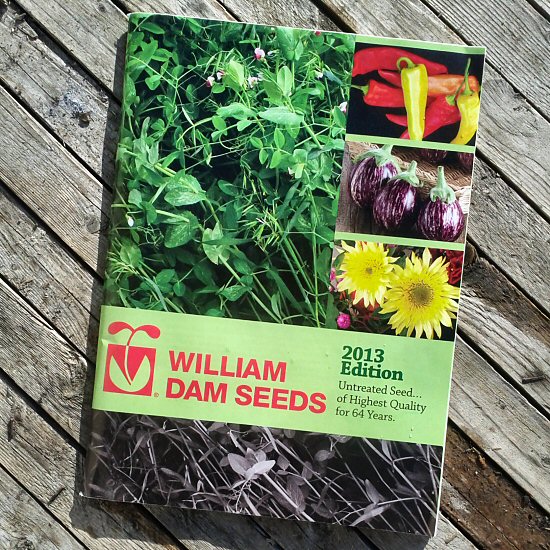
For the record, this year’s seed catalog! It arrived in late December, and I’ve been thumbing through, but it’s still not well-worn—I pretty much know what I’m ordering. It’s as exciting as always to get the new catalogs, but a bit more symbolic now, start of a new season and all that, than it used to be at the beginning, when I pored over it for hours. Like anything else, do it for a while and it becomes…easier. Also once again for recent years, almost all of my seed will come from just this one place, William Dam, a family owned company not too far from here, that carries only untreated seed. Selection does the trick, service is great, and I like talking to them on the phone. High Mowing and, of course, Johnny’s, both relatively close (Maine and Vermont, to my Ontario), have a lot more in general, and High Mowing is 100% organic seed, but at the moment, I’m fine with Dam! Everyone’s farming has its flow!
Winter greens: the long haul
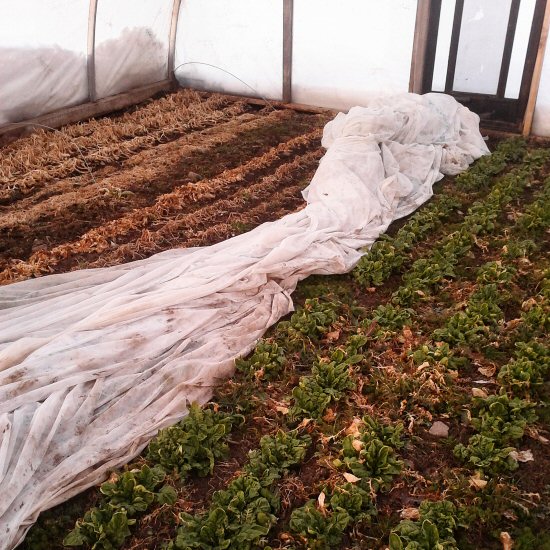
Checking in on the winter greens mini-experiment. These guys have been through six weeks of up and down weather, balmy days well above zero (reaching 60-70°F/15-20°C on a sunny day in the hoophouse) , and many extreme freezing nights. So, how did it all do? The Bloomsdale spinach, uncovered (above), is fine, although after all that freezing and thawing, the taste and texture changes (good to eat, but probably wouldn’t sell). It wasn’t the plan, but this spinach can be trimmed back to see how new growth does in spring. The other beds, all brassicas (tatsoi, mizuna, arugula, mustards), left half uncovered, are completely toasted. Meanwhile, under a single layer of medium-weight row cover, arugula (below) is good, perky and quite tasty. Not the most extensive and scientific testing plan, but combined with the experience of harvesting through December and in mid-January, it’s a solid starting point for next winter’s goal of full-on, unheated winter greens production!
The Food Dehydrator
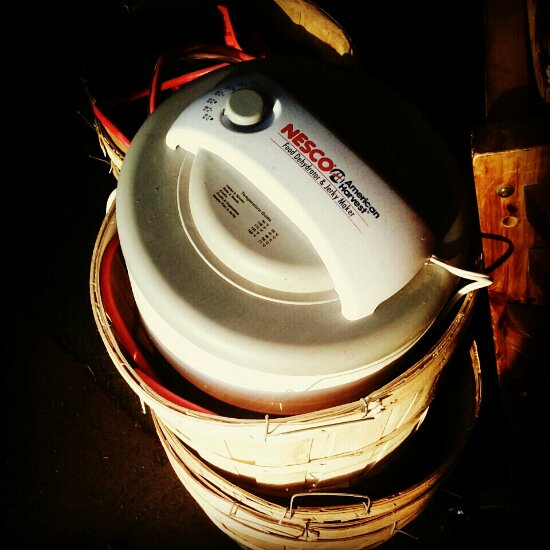
The Nesco/American Harvest Food Dehydrator & Jerky Maker: a lil contraption purchased last summer, waiting for winter experimenting (thinking about the extra garlic). There’s of course some research to do, like the difference between drying and freeze-drying, what gets lost on the way, and how to test if it’s dry enough to store safely for a while (fruit should bend, but a dried pea when hit with a rolling pin should…shatter!?), the usual…stuff. Then, lots of garlic slicing!
Brassica greens galore
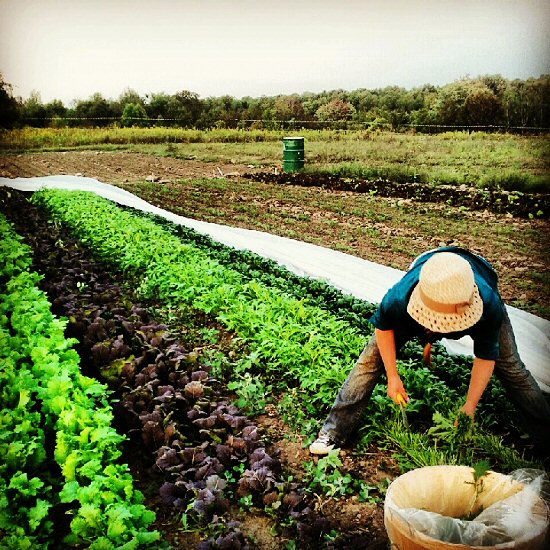
Brassica greens in perfect, flea beetle hole-free shape, thanks to good weather and…floating row cover. Rochelle is cutting mizuna—in the pic, there’s green and purple mustards, mizuna and tatsoi. Our extra focus on salad mixes this season continues to go over well, with a Mild Mix, Zesty Mix, and Mix of the Week, plus everything bagged individually. To fill the line-up, we have our own lettuce blend, the brassicas just mentioned plus arugula, all grown separately and as a mustards-mizuna-tatsoi mix (the tatsoi tends to be too small to easily cut in, so that’ll be out next round), spinach, and chard and beet greens (both grown tightly spaced). The greens harvest bin of choice this season is bushel baskets lined with a new clear bag each time (easy to toss into, hold a lot, the bags stay put even in wind and can be easily lifted out). Will be fun to expand the greens line-up and tweak the planting and harvest next year!