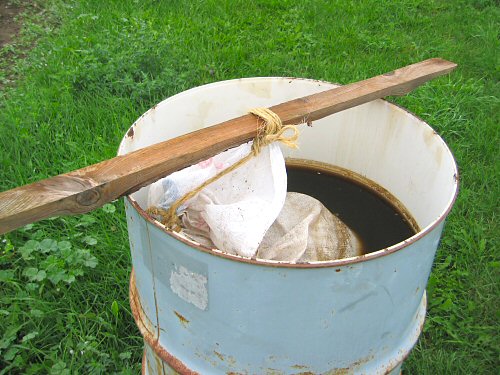
A spot of tea…

Steeping compost in water is all it takes to come up with a healthy batch of…compost tea. Here we’ve taken some composted cow manure and let it sit in a 55-gallon barrel of water for a few days. There are different methods, ingredients, and all kinds of other details about preparing this stuff, but I’m still in the broad strokes experimental stage: I make it up somewhat differently every time. This time, three barrels are going around the field, strategically placed next to mesclun beds and spinach. Hopefully the small amount of nitrogen, assorted micronutrients, and other possibly unidentified good things will give these late season plantings an extra growing boost! They’re used diluted maybe by half, applied with good ol’ watering cans, then soaked in hours later with a solid hose watering. Veggies don’t get more hand-tended than that! :)

(NOTE: There are different types of “compost teas,” different ways of making and using them, and lots of different opinions about all of this. If you’re thinking about making your own compost tea, a couple of good places to get some quick, general info are Wikipedia’s Compost tea article, and ATTRA’s Notes on Compost Teas.)
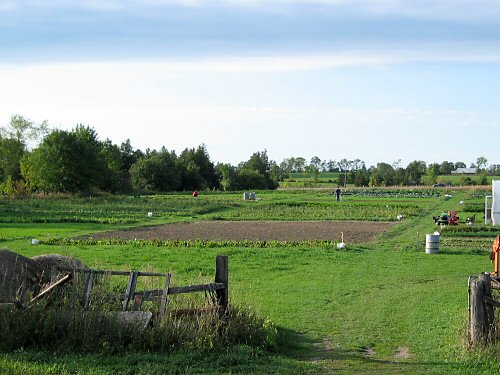
A September view…

A rather warm (28°C) and sunny Sunday, feels more like late spring than the early days of autumn. The field is looking oddly full, thanks to the sections of oats, and quite orderly. Specks in the distance, Heike from Germany (the red dot), our third WWOOFer of the season, weeds spinach, and to her right, Conall waters in another fall seeding of salad mix and spinach. A laid-back day on the farm…

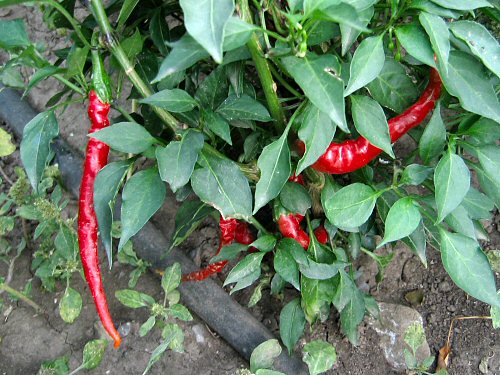
Hot peppers

As things begin to slow down in the field, with crops finishing for the season, half-forgotten gems brighten up the harvest days. Here, two beds of hot peppers, tucked away at the bottom of the field, have been doing uncommonly well. I’m not well versed in pepper heat, but I can tell that most of the selection is…rather hot. So hot that delicately biting into the flesh, without actually chewing a piece, is enough to provide a sensation that most people find quite intense, even slightly alarming. These beautiful red Cayenne Long Slim are no exception!

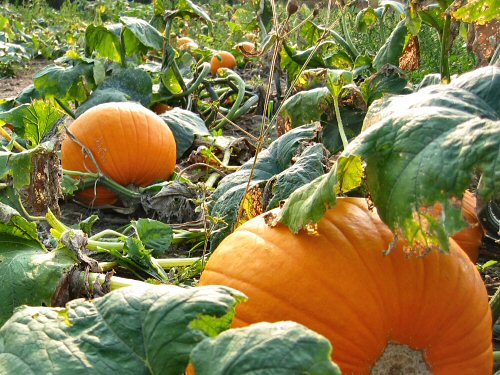
Pumpkins’ progress

The pumpkin patch, recently a soothing sea of green, is now a mess of dried out leaves and expired plants. Most varieties were all but obliterated by the last month’s heat and lack of water—no rain, no spare irrigation. Still, they’ve all done quite well. It’s always fun to have fat orange and pale green-white pumpkins assembled on the grass in the field in the fall. So far, I haven’t had much other use for them, most are too bulky and low-priced to haul to market (we load in a pick-up truck, a trailer is the next step), or fit into off-farm CSA shares. This year, maybe a one-day “organic pumpkin” mini-sale on the farm stand… And there are some small pie and seed pumpkins (Small Sugar, Snack Jack), more portable at 3-5 pounds (1.4-2.3kg). Here, a row of larger Neon, looking nice!

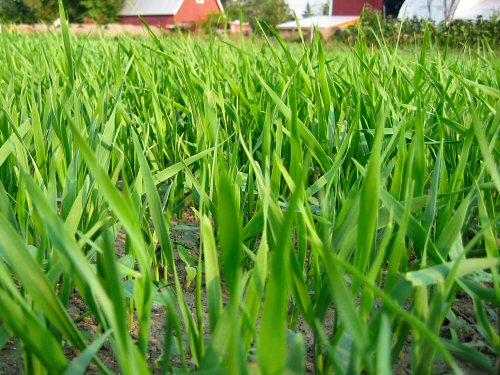
Oats vs pigweed!

The cover crop-smother crop-green manure oats is doing rather well! Strolling by the several sections checkerboarded through the field is one of my newfound small fall pleasures. It’s so vigorous and vibrant and…vigorous… In different sections, you can also see pigweed and round-leaf mallow in mad profusion, but low to the ground, towered over by the tall, slender stalks (you can spot some pigweed in the pic, but I gotta admit, I chose a shot that favors the pretty oats! :). Question is, will the oats actually SMOTHER its weed competition. I can hardly imagine the near unstoppable pigweed just giving up. And mallow is no lightweight in the pernicious weed department, either. So, WE SHALL SEE!

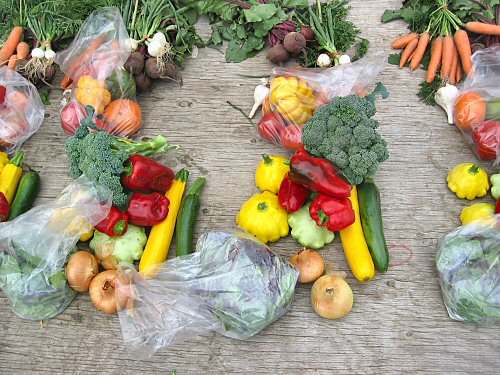
Four shares on the table

After the long holiday weekend, I did a quick new harvest for the handful of usually-on-Monday CSA shares. We have three CSA pick-up days, Saturday, Sunday and Monday, and harvest for the last two can be mostly combined on Sundays. With kinda cool and cloudy weather today, veggies could be left outside on the table for a few minutes—in full summer heat, they’d quickly start to get toasted. I’ve tried to reduce PLASTIC to a minimum (tiny farming has somehow made me averse to much packaging, especially with plastic). The tomatoes need to be kept together, they’d be crushed if let loose in the final shopping bag. And the greens, well, no other easy solution (I’m looking into reusable cotton salad bags that could be put in the fridge, another future project; I’ve moved to paper bags this year for potatoes). As for the shopping bags, I’m considering reusable tote bags, two per shareholder, that could be swapped empty-for-full each week, but the extra BAG MANAGEMENT I know would be fairly, let’s see…time-consuming. Details…

Cup of flowers

Zinnias, calendula and cosmos, randomly selected, snipped short and stuck in a coffee mug… Who can resist? There’s more time in September days to…contemplate, begin going over what worked out and what didn’t during the year. Like, flowers. I dunno why I’ve put them second to veggies. Maybe it was my annoying experience with gladiolas in Year 1, three or four hundred, all flowering at once, with no time to cut ’em all and nowhere for them to go (the farmers’ market is full of flowers!). And then, digging up and separating and storing the corms… It seemed like a total distraction from the veggies. No further flower action until the tiny, largely ignored cut flower trial this year, when I finally tried more variety and the obvious was revealed to me: cut flowers are a bona fide part of any self-respecting market garden (at least, of this one!). Harvesting even a ragged fistful of flowers is another simple, profound pleasure I shouldn’t be missing. Here’s to next year…!

1 131 132 133 134 135 168