
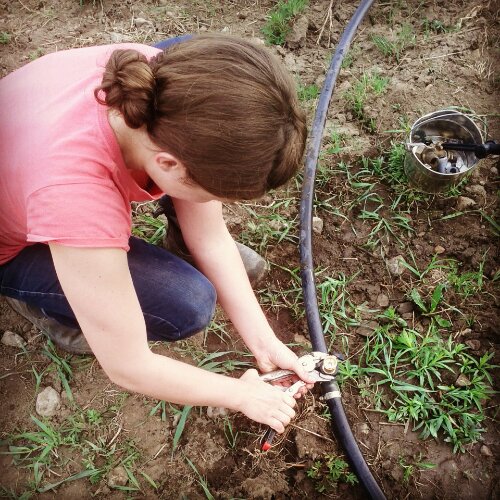
At work on water: Rochelle changes an shutoff valve—a tap!—to the 1″ header pipe that runs from the well through the field. Not exactly a big pipe by irrigation standards, OK for our low volume use. You could call it a hybrid setup, a mix of commercial and home garden gear, with a healthy amount of manual labor thrown in to make it all go (dragging around hoses to where they’re needed and the like, hand watering from 55-gal barrels when necessary). Full drip irrigation has been on the to-do list for years, all the gear has been here, but I’ve never quite got round to it, which sounds odd, I’m sure, but we’ve done well relying on rain, and working with minimal gear when the rains don’t come. Kinda…satisfying! :)
Rock, pebble, stone
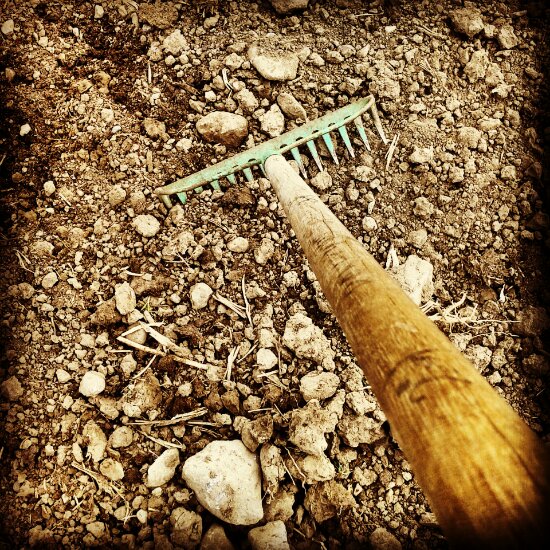
Imagine a world of soil without stones… In the three farming locations I’ve fully worked, they’ve been everywhere and in all sizes. You get used to them: collecting heavier, smoother specimens for weighting row cover, moving even bigger ones to avoid breaking tines on the rototillers, piling up the grapefruit and orange-sized rocks by the tractor bucket load, and raking the smallest out of the way of the seeders. I have experimented a bit with how much I can leave and still have the seeders not bounce around and lay down seed unevenly. Raking as the last step of bed preparation is still the way we go.
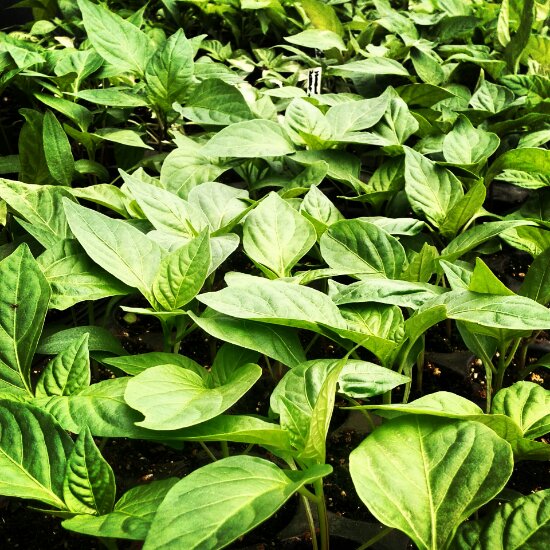
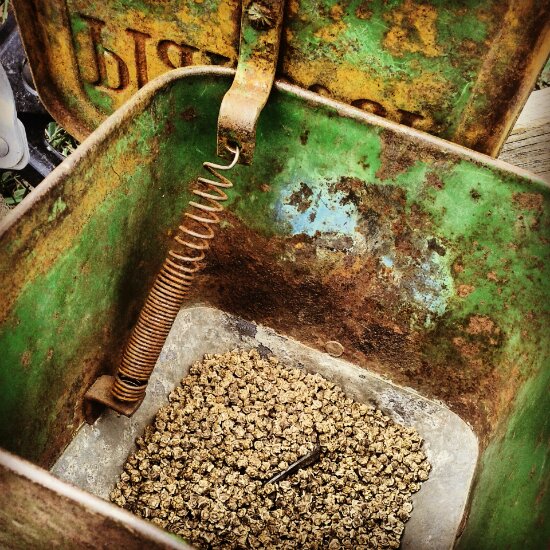
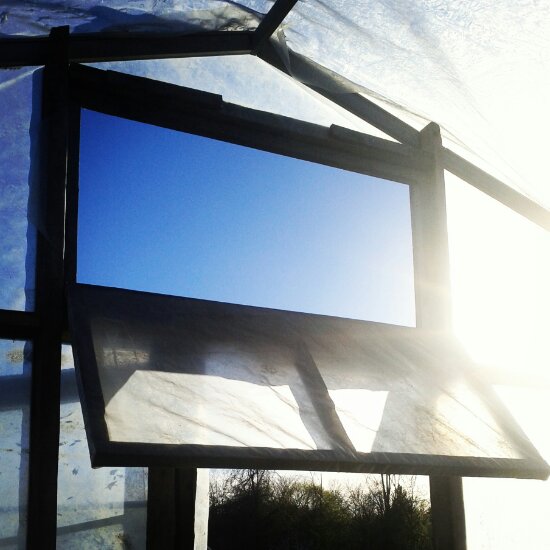
Toothpick timekeeping!
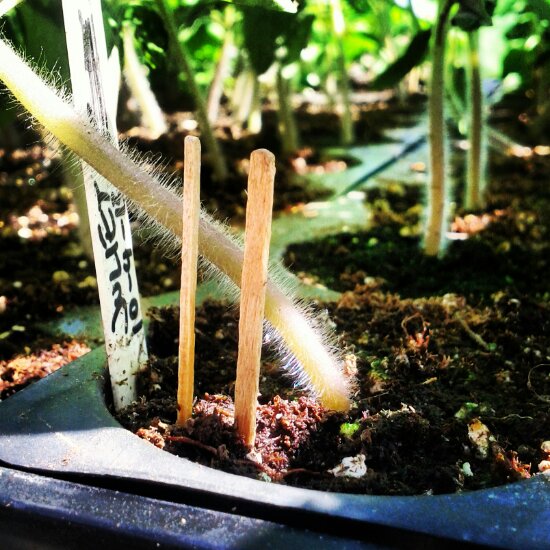
A toothpick tracking system. Before heading out to be transplanted in the field, so they don’t bet burned, seedlings growing under lights first have to be introduced to the sun. They go out in the day, get a toothpick, and come back in for the night. Each day of hardening off is marked by a toothpick—two or three days and they’ll be fine. Simple and sustainable—reuse your toothpicks and a single box could probably be made to last a lifetime.
Weeded greens
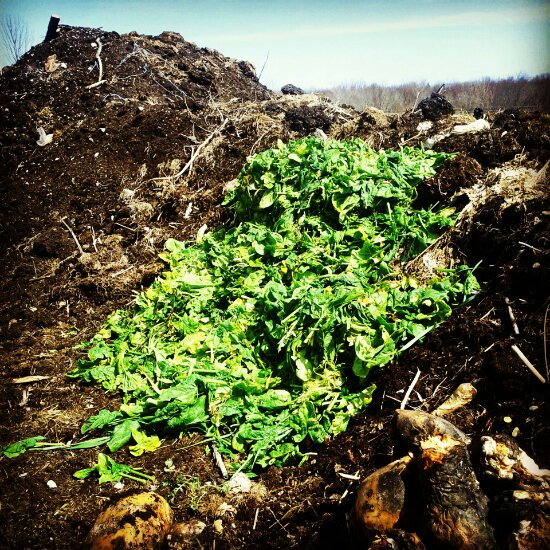
Greens from the unheated greenhouse, grown in the subzero cold, tossed on one of the majestic mountain ranges of composting cow manure. It’s actually weeds from around the overwintered spinach, plus a little overlooked rotting winter squash in there as well, if you look close, all waiting to be turned in.