
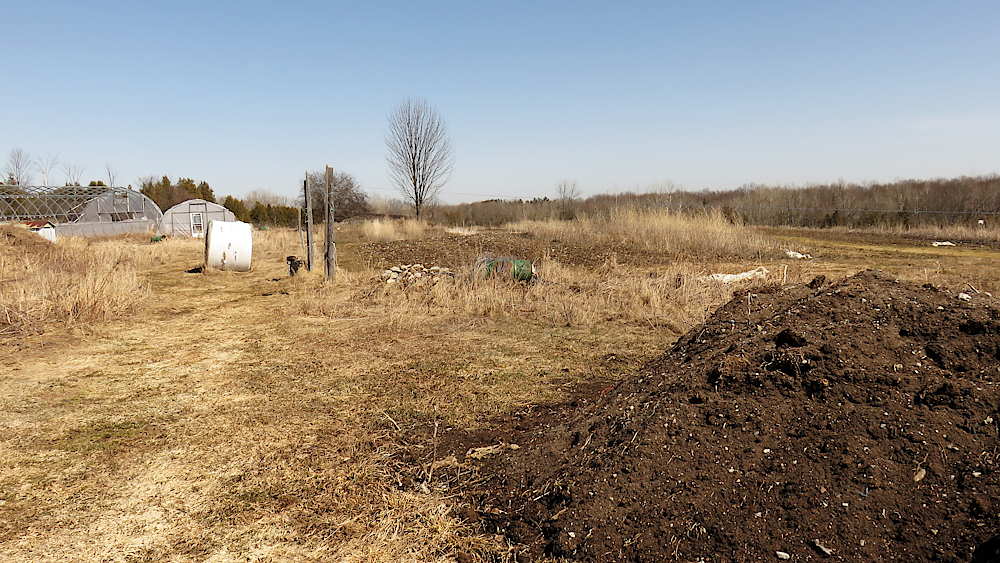
An unusual absence of snow in this early look at the field. The end of the compost pile poking into the photo is color-coordinated with the spring browns of all the dead vegetation. Center and right, a good amount of the market garden area is pretilled—clear and near set to go. In the mid distance, the little greenhouse is still standing, while the big guy is still bare, having had its plastic savagely ripped open by unusually high winds. That white object is a round bale of straw, sheathed in protective plastic, ready to use as mulch. It’s the broad canvas for another new growing season!
compost
Prepping and seeding…
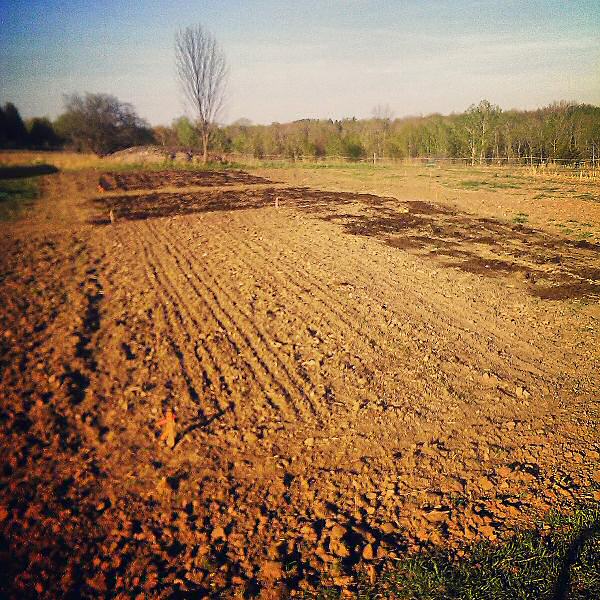
This is exactly what small-scale looks like. Prepping and seeding another 20 or so beds, a couple already seeded with salad greens, the rest with compost lightly scattered—maybe a little more spreading, then tilling, sectioning into 50′ or 100′ by 4 or 5′ beds, smoothing, and seeding with the Planet Jr. Sometimes this tiny farming feels to me like being in a little boat on a big, big ocean. Maybe not that dramatic, but I’m definitely adrift in a deep blue sea! Fun.
Sifting compost (every tool has its day)
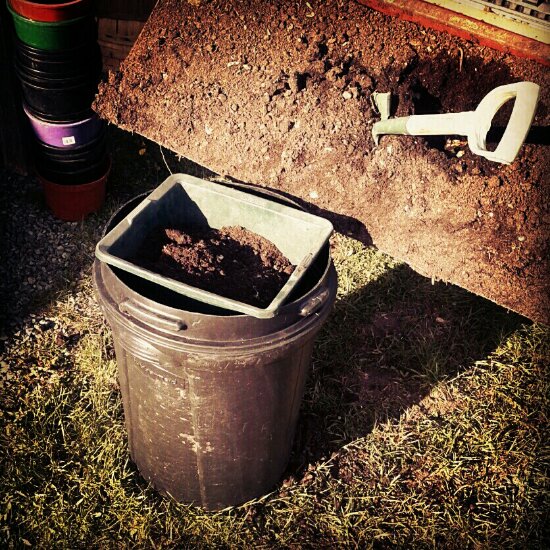
[8-May-2012] Every tool has its day! I bought this metal mesh-bottomed soil sifter in my first couple of years of tiny farming, it seemed like something that would come in handy, but for years after was used only as a handy storage tray. Today, it caught a break as the perfect tool for an experiment with compost in the seedling mix. Took only 20 minutes to fill 1/3 of the can with finely sifted composted cow manure. Beautiful! Some things take time. (Nope, I didn’t finish sifting that whole bucket load, a little went a long way.)
Weeded greens
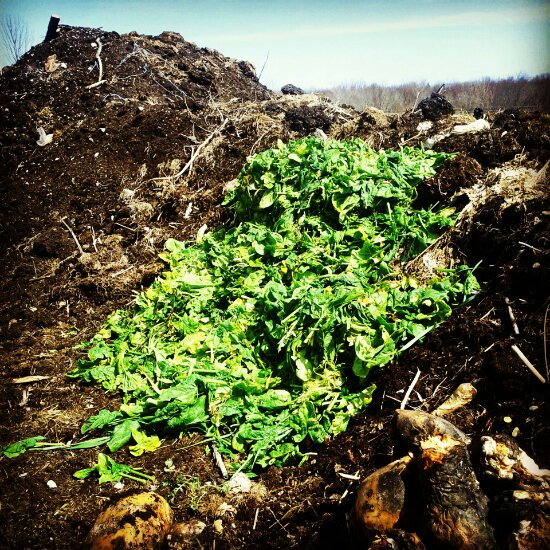
Greens from the unheated greenhouse, grown in the subzero cold, tossed on one of the majestic mountain ranges of composting cow manure. It’s actually weeds from around the overwintered spinach, plus a little overlooked rotting winter squash in there as well, if you look close, all waiting to be turned in.
Like a pile of gold!
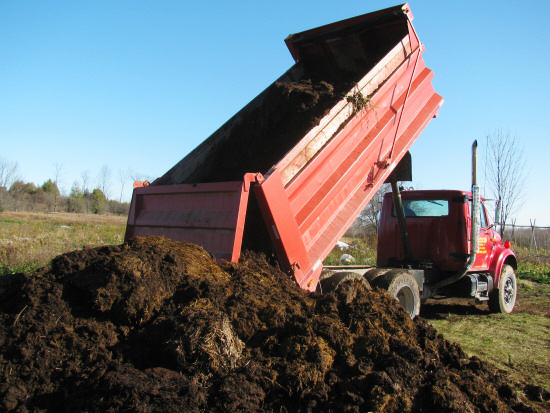
Really can’t think what delivery of basic farm supplies could make me happier than today’s six truckloads of well-aged cow manure. Since we don’t have an on-farm source, getting this from a farm less than a mile (1.6km) down the road, loaded to order and delivered by the farmer himself, is a pretty good Plan B. This has been stacked for average around a year, so the composting action is well underway. I’ll be rearranging it into large windrows with the compact Kubota, for further breakdown till spring, and spreading some now. Heart-warming! :)
Compost spreading: another way…
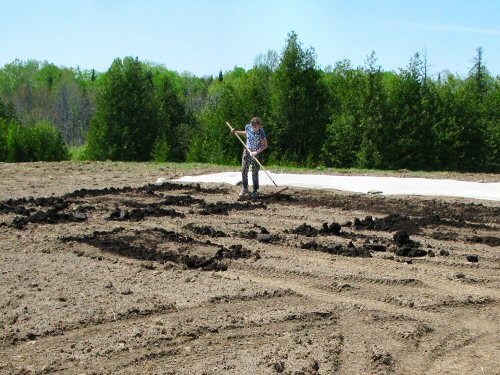
When there’s a whole small section to cover, spreading compost with the Kubota compact tractor bucket is a lot faster and more efficient than the painstaking bed-by-bed method. This has been my usual approach for spot spreading, usually for 50’x50′ squares. Covered in reverse: the roughly distributed compost is quickly raked out (looks like a lot of work, but only takes 5-10 minutes!), before being rototilled in.
The real trick is backing up while dumping, rotating the bucket up and down. As long as the compost is flowing and not too clumped, this works great, gets a lot of the job done.
After a little experimentation, we came up with a simple debagging method, Lynn demonstrates: slit the bag in the bucket, then quickly flip it, pull up, and give it a couple of shakes. This compost is quite heavy (35% moisture, the label says?! expensive certified organic water…), so it quite easily tumbles out… And there we go, tiny methods for the tiny farm!