Bed prep: Step 1

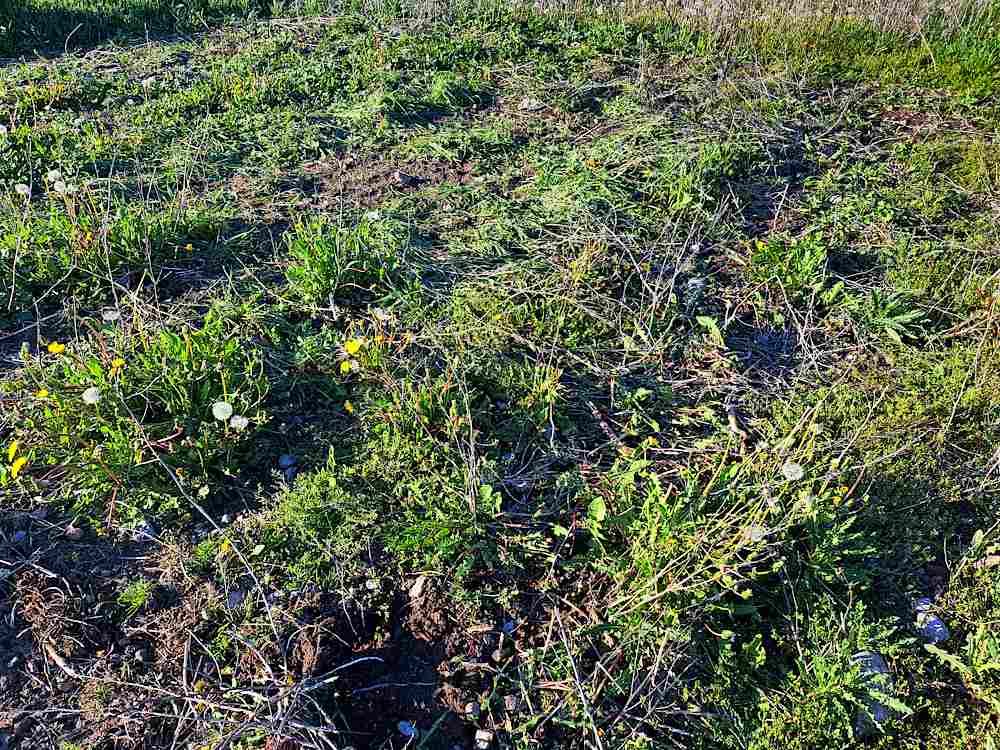
Overgrown garden bed after a first pass with the wheel hoe

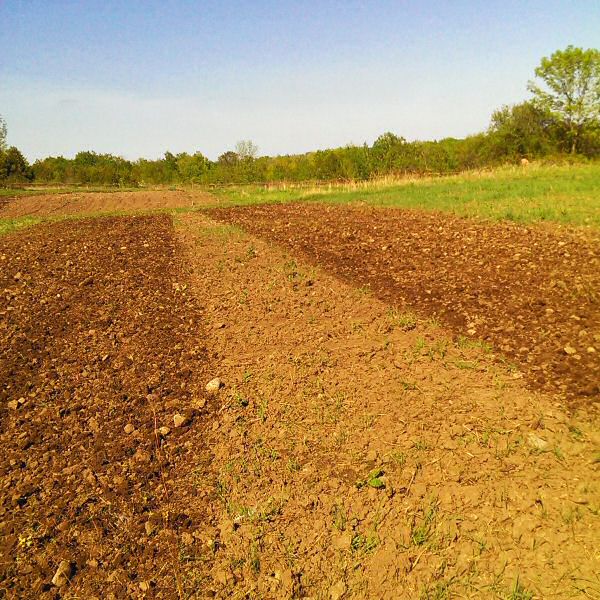
Here’s a chunk of this year’s tiny veg garden, looking particularly rough in the harshly slanted evening sunlight. As unlike seeing for yourself as this photo may be, it does accurately capture the wild and not ready look of it all. Lush dandelion, prickly thistle and grass already starting to soar, mixed about with the dry dead stems of last fall’s overgrown then winter-killed weeds—that’s step 1 of hand-prepping the bed, completed. It’s not at all like what the rototiller on the tractor would’ve done.

For this first pass, I used the up-for-anything Valley Oak wheel hoe. It’s probably not intended for hacking through this sort of cover, even so, it does the job amazingly well, moving forward and pulling back, using both sides of the blade to slice through tough spots. The green, intact-looking plants have actually been cut off just below the soil level—a day in the sun and they’ll all be fairly dried out, shrunken and browned. Next step, raking it clear, then, another pass with the wheel hoe. Tomorrow!
Wheel hoe underdog challenge!

Wheel hoeing the field

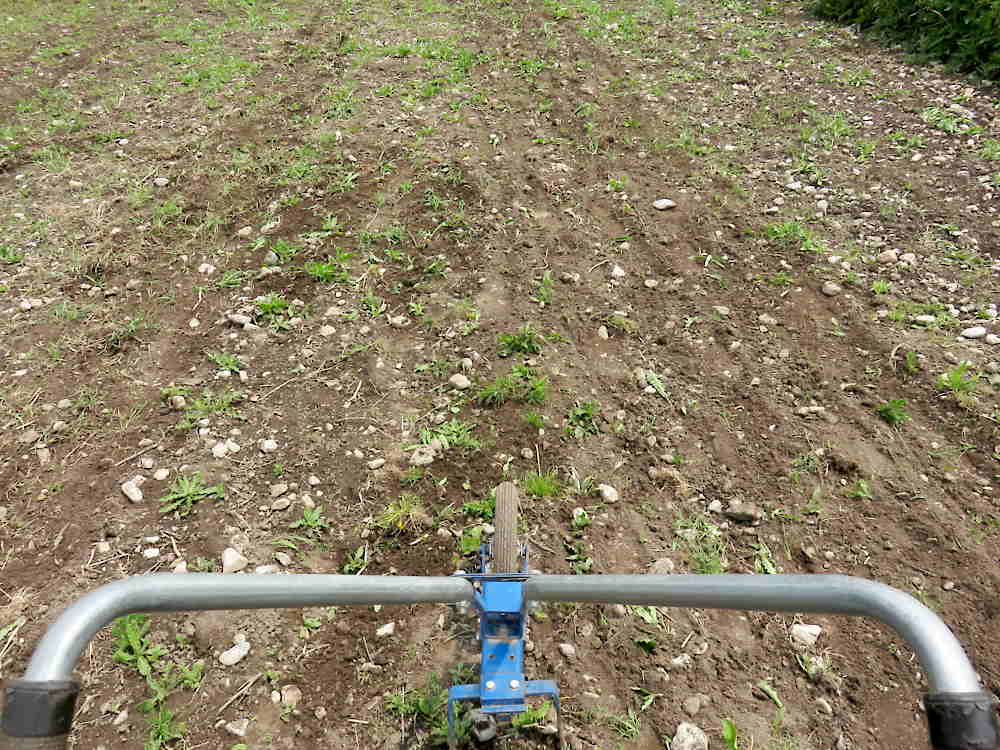
It doesn’t sound like a fair contest, the wheel hoe going up against the tiny tractor, but that’s the experiment underway this season. With all the rain recently, weeds are primed to surge. So far, it’s mostly thistle and clumps of grass itching to expand, with pigweed, lamb’s quarter and a couple of other regulars starting to emerge. This area, not yet planted out, has already been hoed, but that haze of green won’t stay down for long. A matter of days… With the 48″ rototiller on the tiny tractor turned by diesel horsepower rumbling like a tiny tank, it’s easy to put things off a bit. The tiller will churn up whatever’s in its way in no time. This fine wheel hoe has instead only an 8″ blade and a lone human…pushing. Every little bit of growth makes the going harder. The time to get in is early, when the blade can more or less glide smoothly and evenly, and you can move travel up and down with fair ease. There are other things to consider here—time, fuel, effect on the soil…more on all that as the experiment goes on—but timing is number one!

IN THE PHOTO: The wheel hoe is facing a strip that has just been walked. It’s hard to see the line between hoed and unhoed, especially compared to the cleanly erased path left by a rototiller. The weeds are sliced just beneath the soil—like cut flowers, they still look fine. Give ’em a day, especially a sunny, hot day, to dry out, and the difference becomes clear. Weeds, gone!

First look of the year!

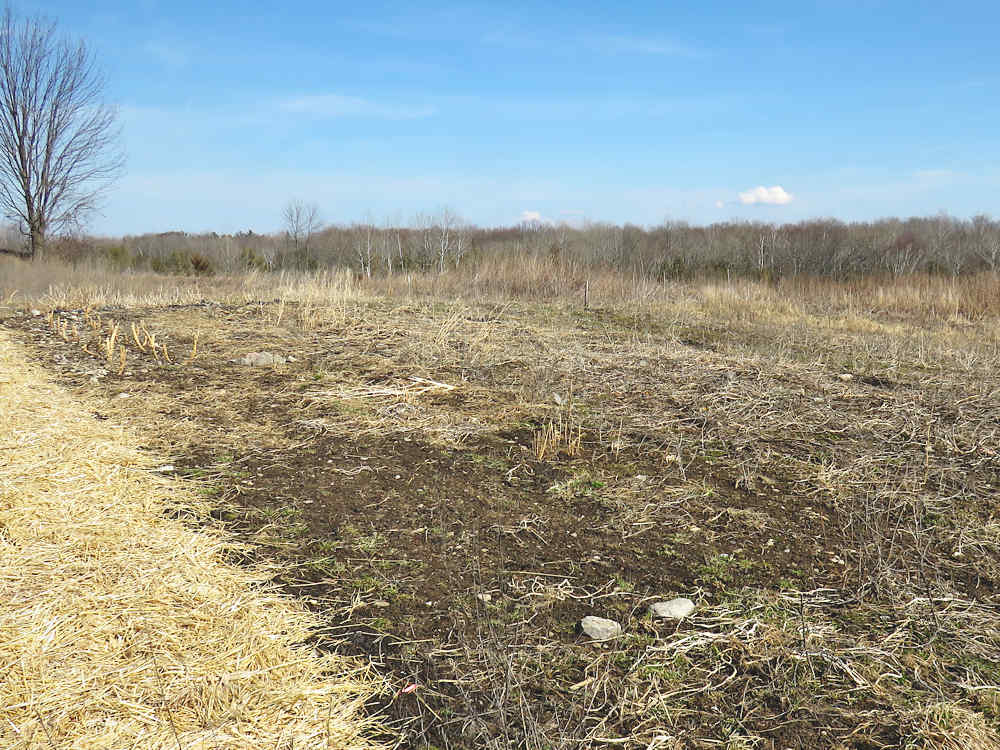
First view of the field for 2024

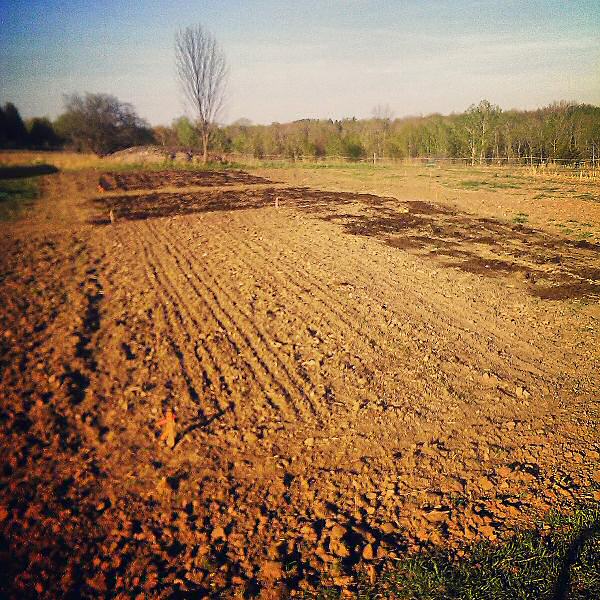
Today’s view of the field, my first since last fall! I’m about a mile (1.6 km) down the road, and I do sometimes pop by in the off-season. Usually, though, it’s out of sight, not out of mind for the whole winter. I’m still getting used to how much tinier the garden has been since I left the farmers’ market and the pandemic had its way. In any case, it’s looking fine. Most of it was cleared last fall. The straw-mulched garlic on the left seems cool, nothing poking up yet, I suppose not too early is good. And it’s really not wet, not the former usual dense, clinging, suck-you-down mud of the after winter melt-off (I’ve pulled my foot out of rubber boots trying to step forward in that stuff). Unless there’s a mini monsoon season coming up, I’ll be able to get out there pretty early, to set up the anti-deer-and-groundhog electric fence and prep beds. There’s still a broken rototiller to deal with on the tiny tractor, so that could slow things down. As always, we shall see!

Working around steel

Bed preparation and hoophouse steel

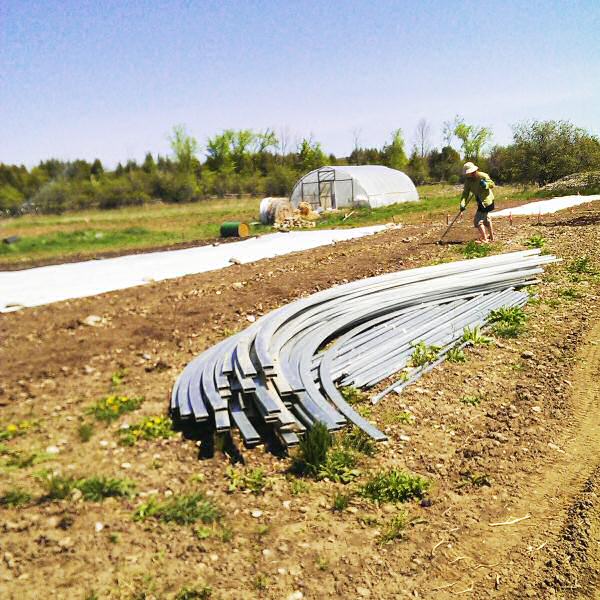
Exactly where it was delivered last fall, the steel for the new hoophouse is kinda in the way, so we’re working around it (it doesn’t look like much in the pic, but it will expand into 30’x108’x16’H of plastic-covered year-round field protection). Beds of brassica greens are already in and protected by row cover from flea beetle attack. Lisa preps beds for more. Spring direct seeding proceeds…

Prepping and seeding…

Prepping and seeding beds

This is exactly what small-scale looks like. Prepping and seeding another 20 or so beds, a couple already seeded with salad greens, the rest with compost lightly scattered—maybe a little more spreading, then tilling, sectioning into 50′ or 100′ by 4 or 5′ beds, smoothing, and seeding with the Planet Jr. Sometimes this tiny farming feels to me like being in a little boat on a big, big ocean. Maybe not that dramatic, but I’m definitely adrift in a deep blue sea! Fun.

Rock, pebble, stone

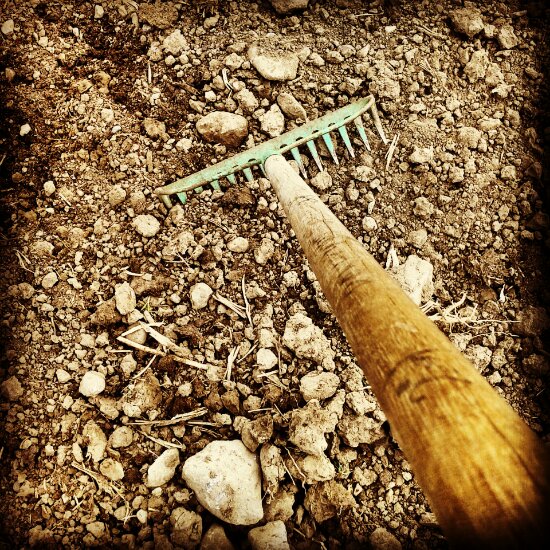
Imagine a world of soil without stones… In the three farming locations I’ve fully worked, they’ve been everywhere and in all sizes. You get used to them: collecting heavier, smoother specimens for weighting row cover, moving even bigger ones to avoid breaking tines on the rototillers, piling up the grapefruit and orange-sized rocks by the tractor bucket load, and raking the smallest out of the way of the seeders. I have experimented a bit with how much I can leave and still have the seeders not bounce around and lay down seed unevenly. Raking as the last step of bed preparation is still the way we go.