
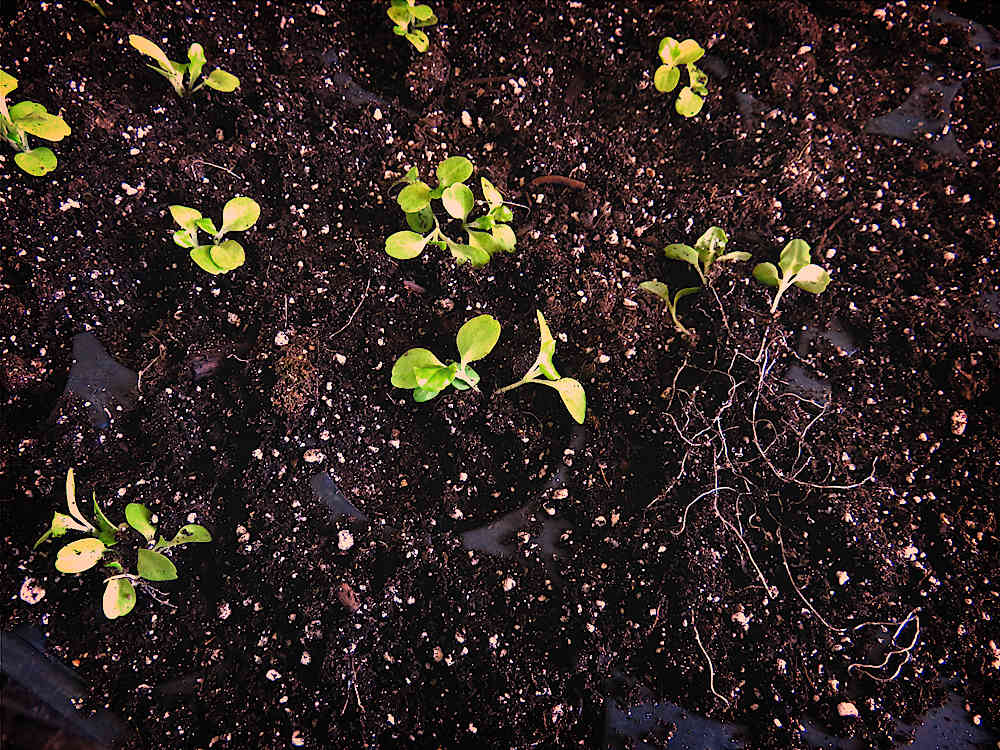
Bare-root transplanting lettuce—separating seedlings and replanting them with more space to spread their roots—isn’t something you’d do on a large scale. At Tiny Farm scale, it’s manageable and fun in a simple, relaxed way, like making flatbread, or prepping veggies for cooking. Very up close and personal with the plants. My usual approach is to seed them where they’ll stay until transplanting in the field, which saves time. With this round of lettuce, I was starting five varieties and wanted to see how they all germinated, so I seeded a bunch of each in a single plug sheet, and today I divided them as needed. Some are still two or three together, so as not to tear apart the roots too much, to be thinned later on. It all works out!
Spring
Orange-breasted, worm-eating buddy
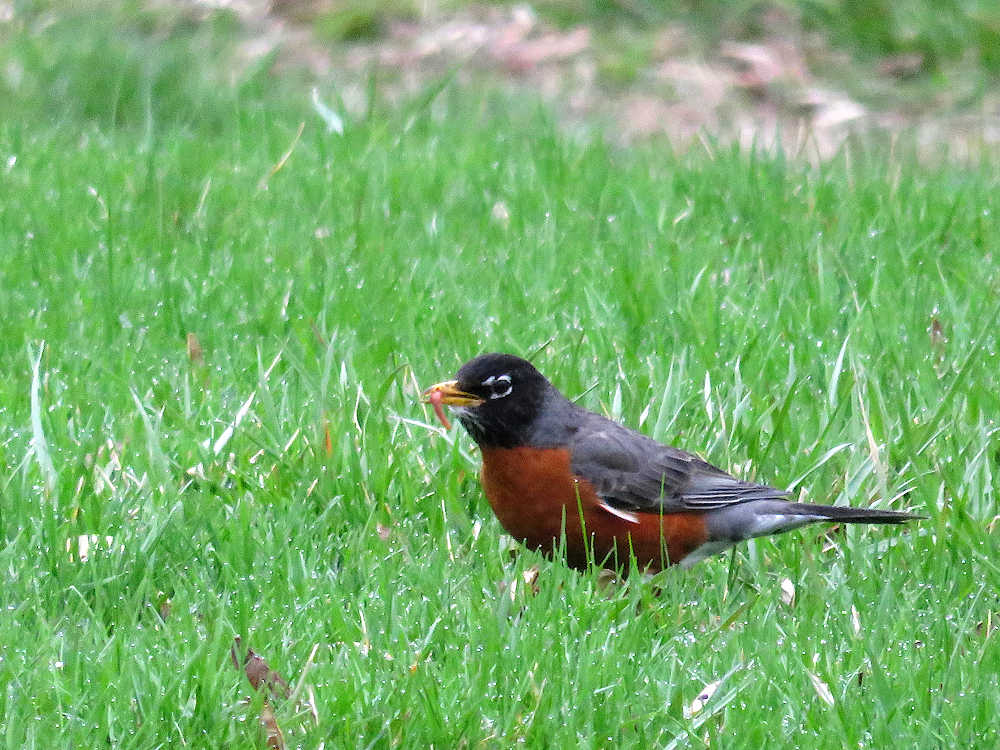
One of my annual garden companions. First met the American robin when I started veggie farming. I thought it was a sign. The bird was quite near me, darting a ways, then stopping, seeming to follow me, not looking worried when I turned towards it. Other than urban pigeons and scavenging seagulls, I wasn’t used to birds being so on grounded. It soon seemed clear that it was following me, probably resonating with my kindred earthy spirit, recognizing a fellow field worker, accepting me into the tribe. Turns out that spending a lot of time on the ground, running around looking for bugs and earthworms, especially in open, freshly tilled fields, is just what the American robin does. I was only a part of its landscape. Oh well.
These guys are here every year, keeping company in the field. Later in the season, I sometimes see the chicks zooming around, cuter than kittens. I read that American robins are known to gorge on berries that have fermented, get drunk, and topple over as they dart around. Hope they don’t drink and fly (but they apparently do)!
Buds on the trees
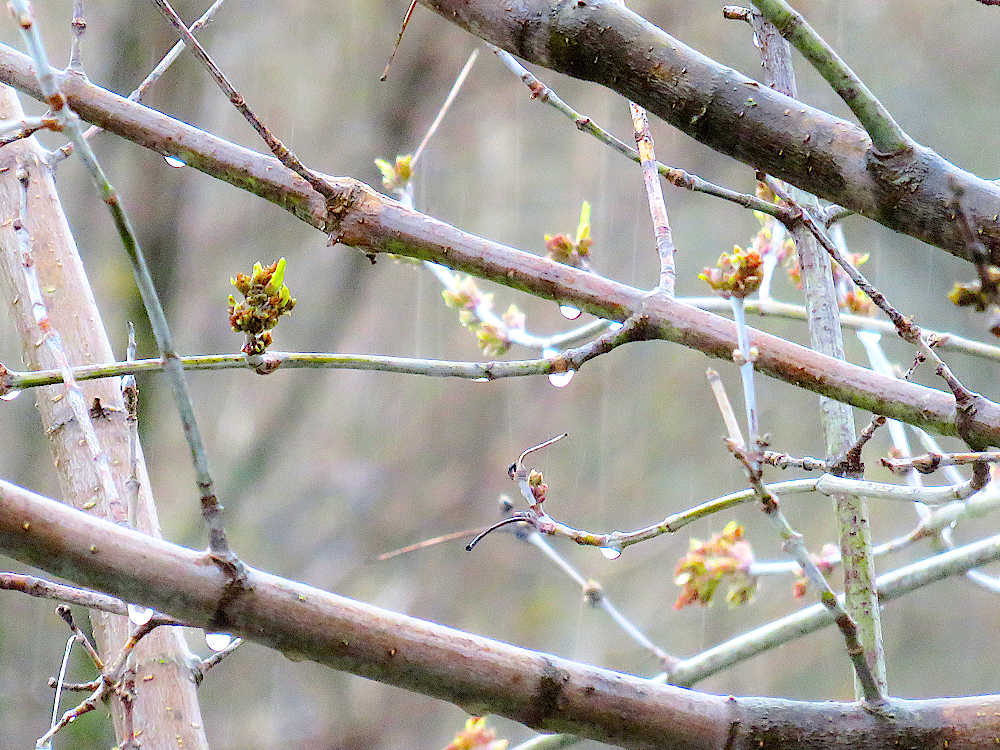
The birds and the bees and the buds on the trees… Gazing around the grey outdoors on this drizzly day. I know little about the ways of trees, so I’m not sure whether the buds are early, or late, or just when they’re supposed to be. What I do know is…there they are!
Critical garden gear!
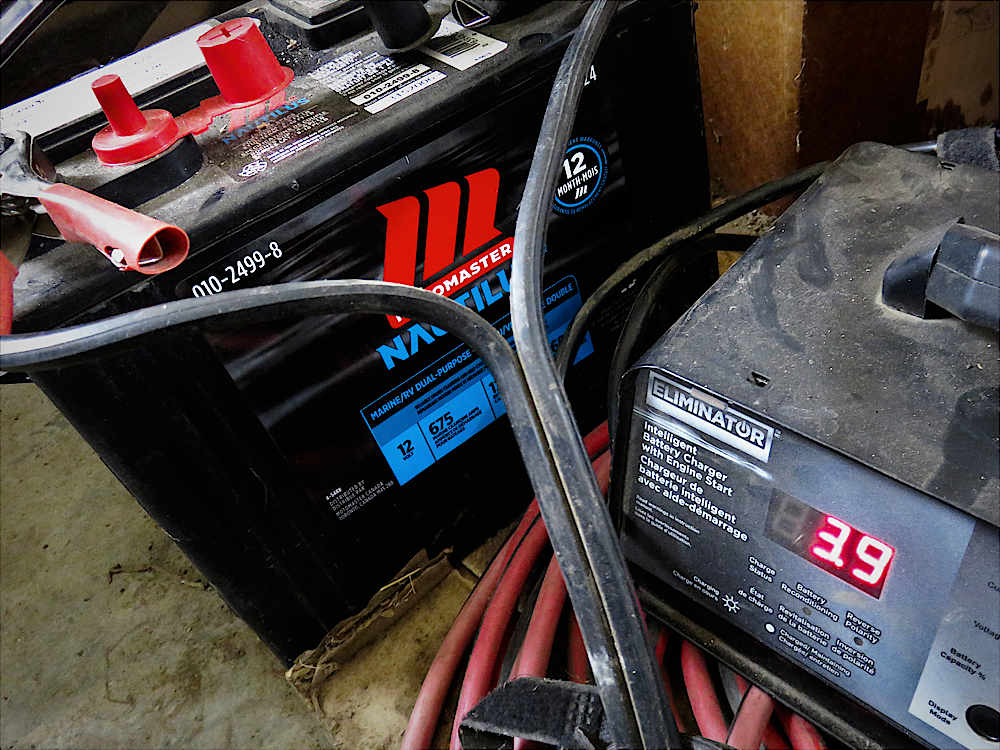
As important as any tool around here, the battery for the electric fence is absolutely critical: for several years now, it’s powered the first and last line of defense against…deer! As of last season, and the addition of a low-strung line only a few inches above the ground, it also gives a little jolt to the groundhogs that suddenly appeared in force. Without the e-fence, the market garden would eventually be munched into oblivion. Along with keeping the battery charged and checking that the fence line hasn’t gone down or gotten overrun by weeds, there’s also looking daily for animal tracks and signs of snacking. Doing the inspection rounds first thing every day is mix of low-level stress, anticipation of the worst, and general excitement, until it checks out as all-clear. Which, thankfully, is almost all of the time!
Lettuce under lights
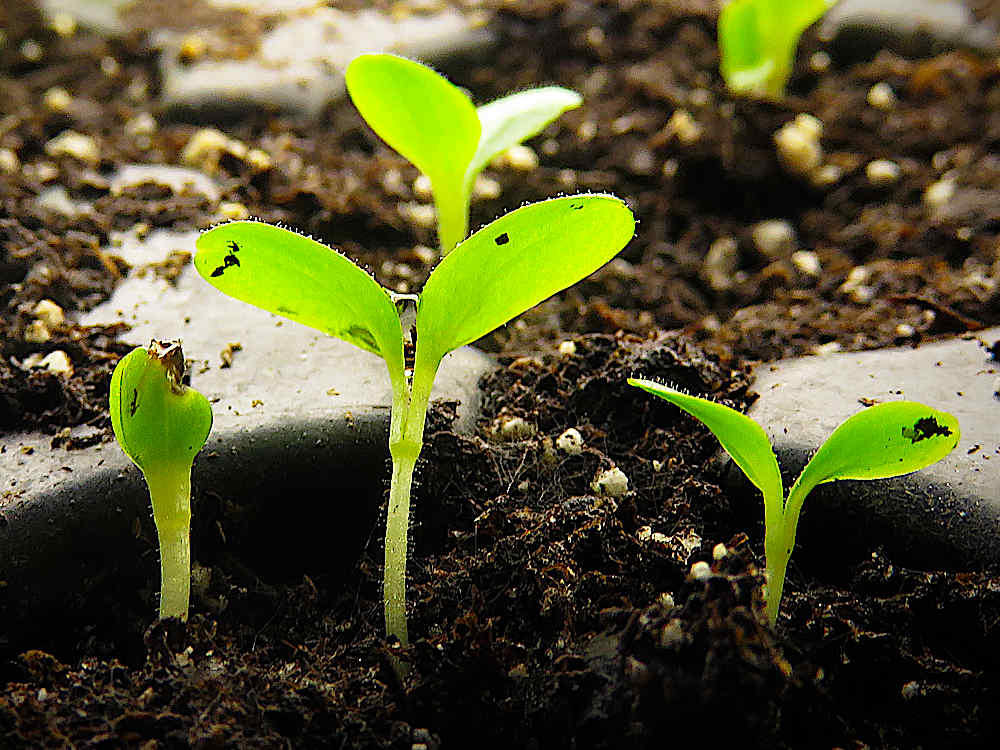
The first round of lettuce, five days from germination, under the lights. I could have started them earlier: two weeks, three, four? It all depends on the weather, when it seems right to transplant, and when you’re hoping for the first harvest. This year, hopefully young harvestable lettuce is ready by late June, so if I can plant them out in mid-May, great! Some years, I’ve started lettuce as early as February, for planting in April in an unheated hoophouse. This time around, it’s straight to the open field. We’ll see how it works out!
Tomatoes a month in
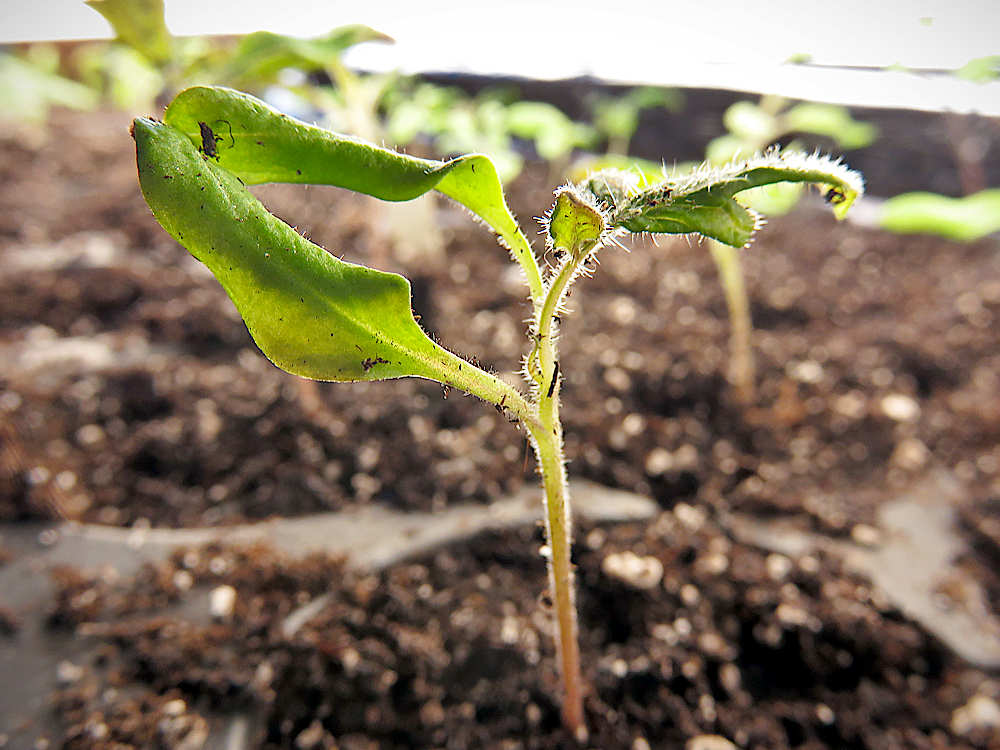
Tomato check-in, around a month after germination. On the left, the pair of plain, generic-looking seed leaves that come first—they’re still stuck together at the tip by a tiny bit of the seed shell. On the right, the true tomato leaves are taking over. See the tomato grow! :)
Pepper’s eye view
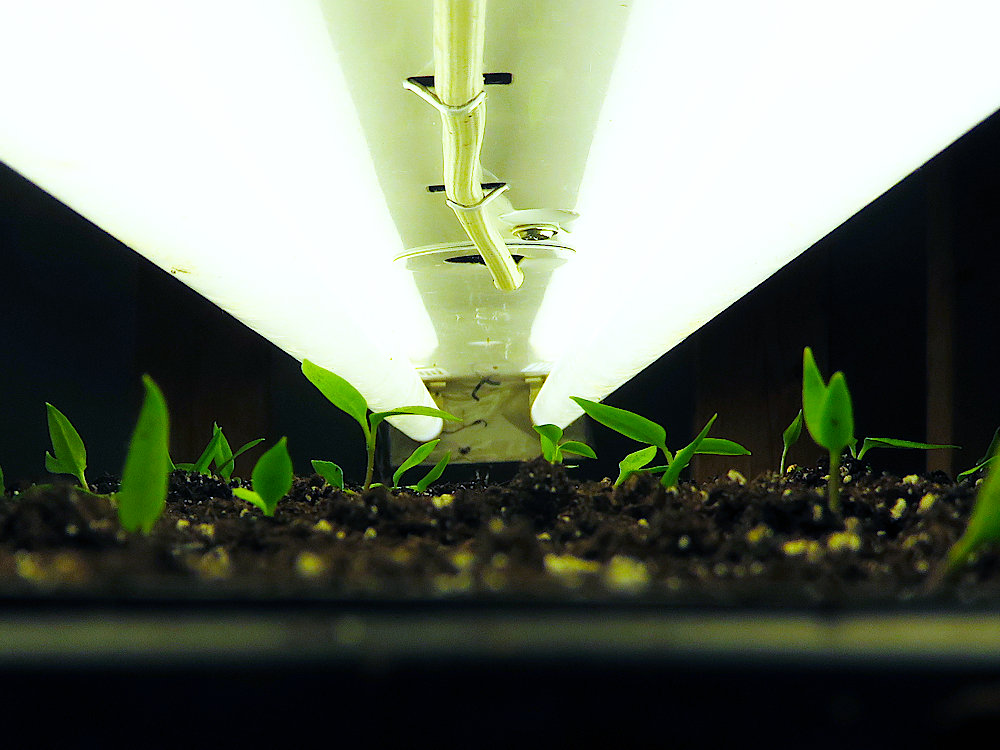
Here’s what the tiny sweet pepper plants would be seeing if they saw like we do, from under the fluorescent tubes in one of the light racks. It has a bit of an alien spacecraft hovering feel. The seedlings would be more pleased with the zillion times stronger real sun, but considering that it still drops down to freezing outside at night, they have to make do with weak substitute sun and indoor warmth as they get an early start on the growing season. These peppers are about a month old, still with only their seed leaves. Welcome to this season’s tiny farming transplant production!