
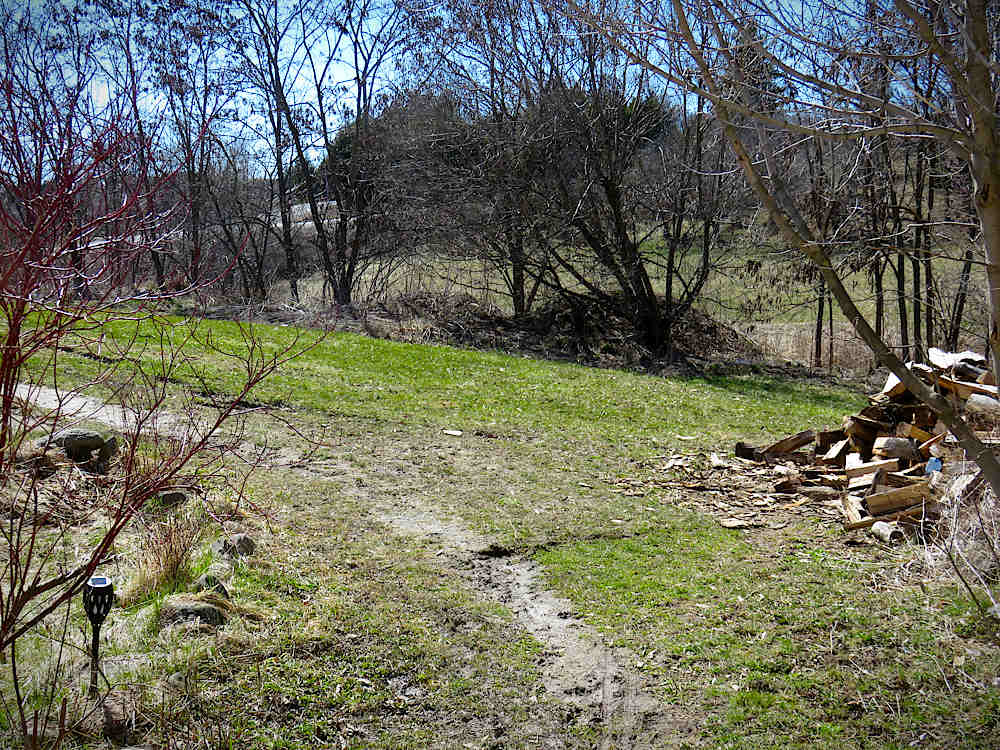
Yep, the grass is definitely getting greener! It’s the planetary order of things, formerly known as seasons… In the back of my mind, I have this cartoon thought-picture of massive gears slowly turning, an unstoppable, unyielding world machine. That’s what operates above the surface noise of our crazy day-to-day weather. It’s the Earth orbiting, the Sun’s angle changing to bring more or less light and heat, the totality of plants, insects, animals, fungi, bacteria, all of it intertwined, adjusting and adapting to the conditions as best as they can. One big moving picture that we’re part of but overall don’t in the least bit control. Some things are in our control, and others are not. Kind of soothing when you lean into it!
Spring
Rain snow storm
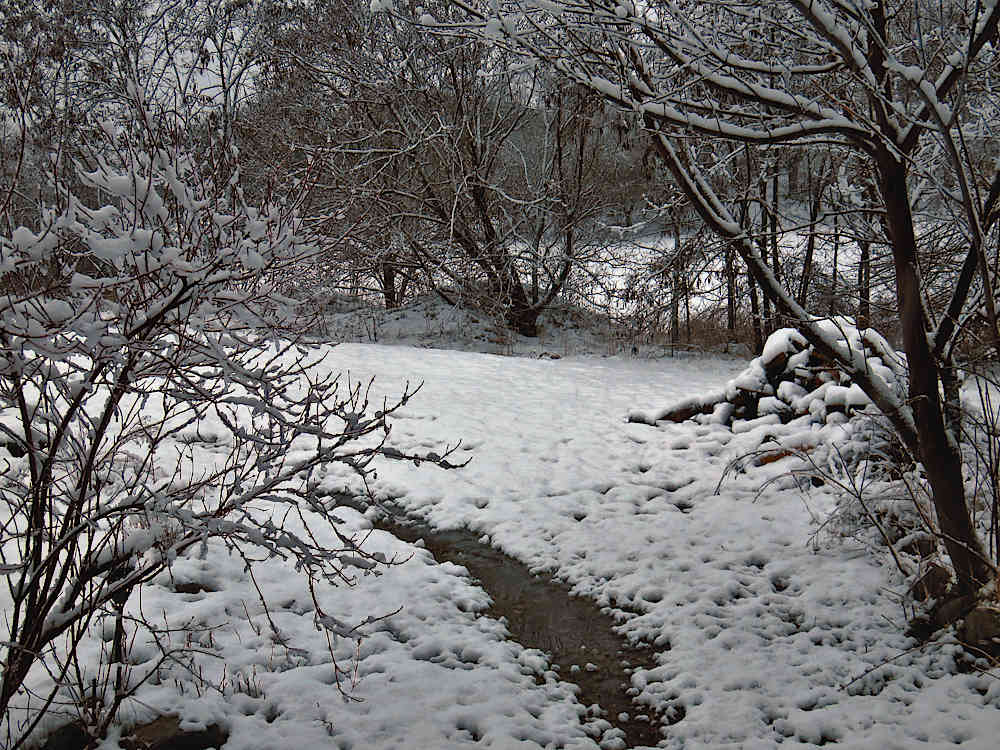
Yesterday’s special weather advisory about a bunch of rain turning into a bunch of snow left us with this 7 a.m. scene. Wet, mushy ground covered by heavy, wet snow. Neither rain nor snow were particularly intense, just…wet. It won’t last long.
Hauling water
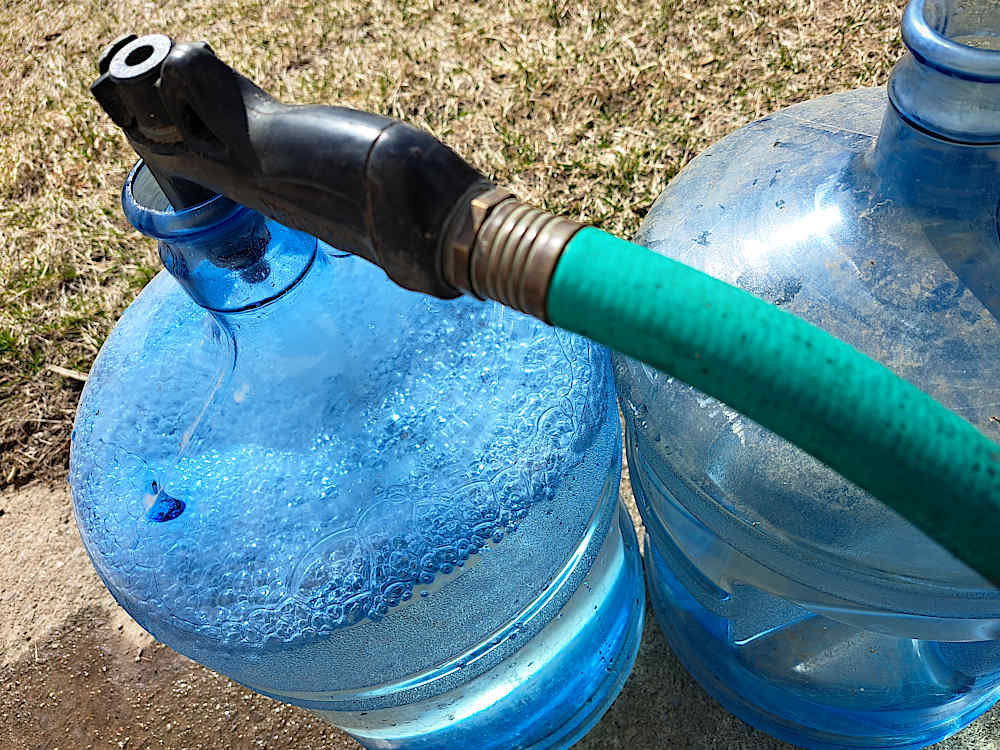
The seedling room is in a fully modern building with all the modern conveniences like electricity, heating, ample insulation and screened windows well-positioned for a bug-free cross-breeze and lots of natural light. The only thing missing is a handy supply of running water. Drilling for a new well located nearby ended in failure after a couple days of exploration produced only an expensive dry hole. So, until the gutter-fed rain barrels are turned over in warmer weather—overnight freezing of collected rainwater could crack them—I bring over water for the seedlings in 18 liter jugs filled from another well in a building not too far away. Simple systems and the rituals of spring!
Tomato two weeks in
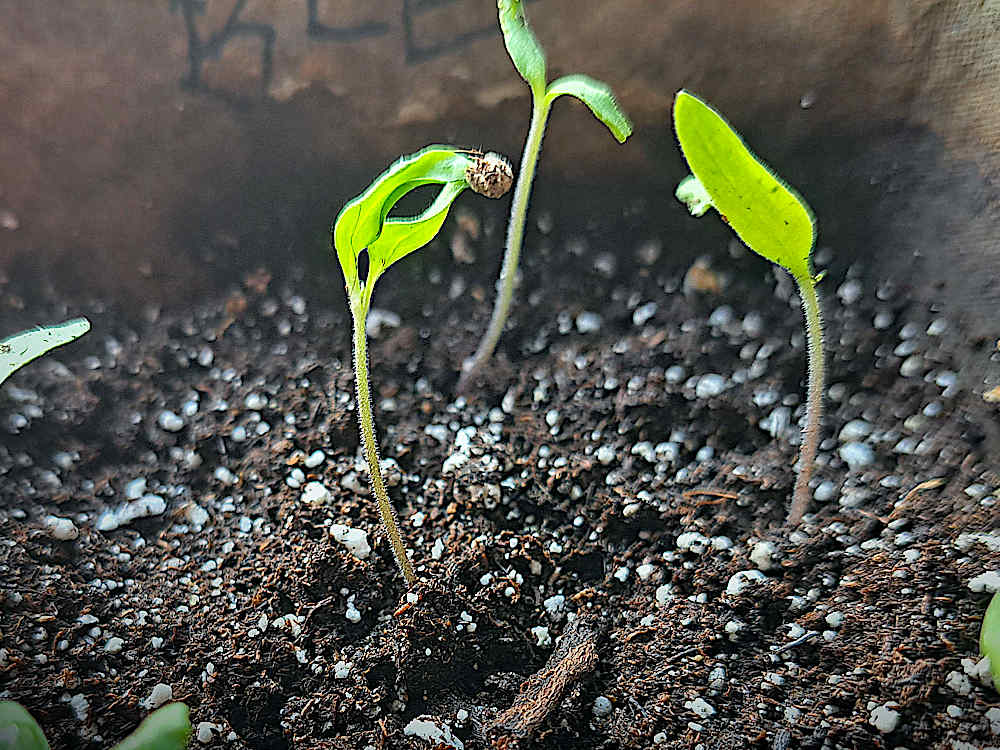
Around two weeks from germination, and the tomatoes are spreading their leaves and aiming for the sun. These Big Beef are growing together in a tray and will be separated into their own cells of soil, and maybe even small pots, all depending ono the weather and how long they stay indoors.
Toddler tomato
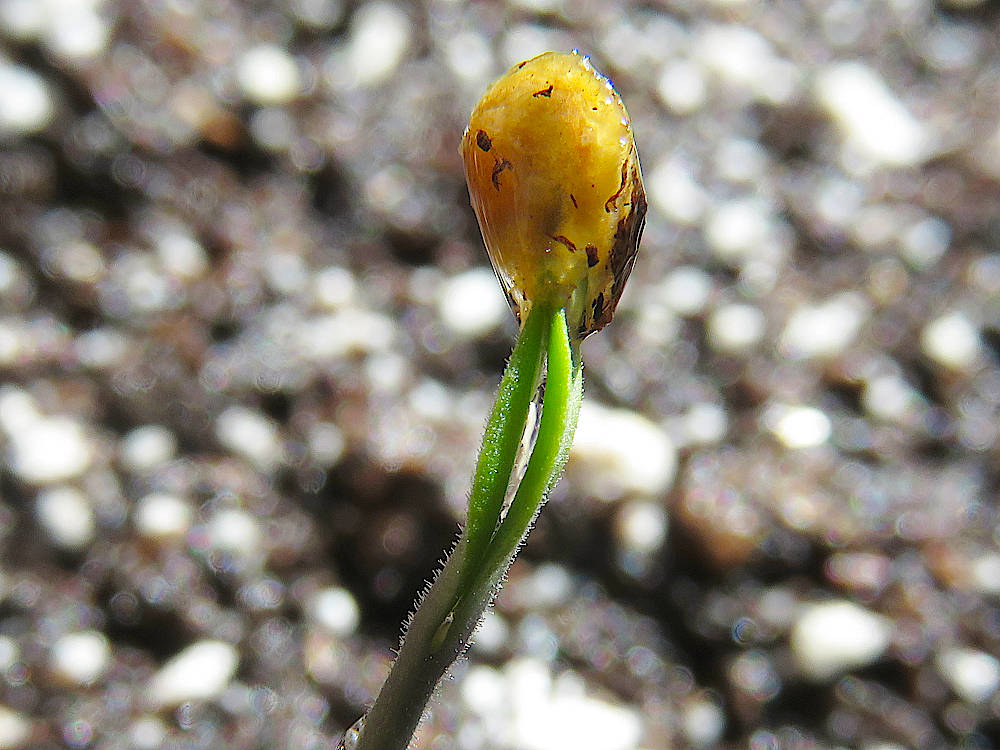
In the spirit of dog years and fast-growing plants, this tomato seedling at about 10 days from germination is a toddler, or maybe more an infant. Root, stem, then leaves push out of the seed and up to the light, and eventually toss the dried-out seed coat aside. We don’t need to be amateur biologists to eat a tomato, but remembering the growing journey seems to add to the enjoyment and satisfaction, just like a pinch of salt!
This winter in a couple hours
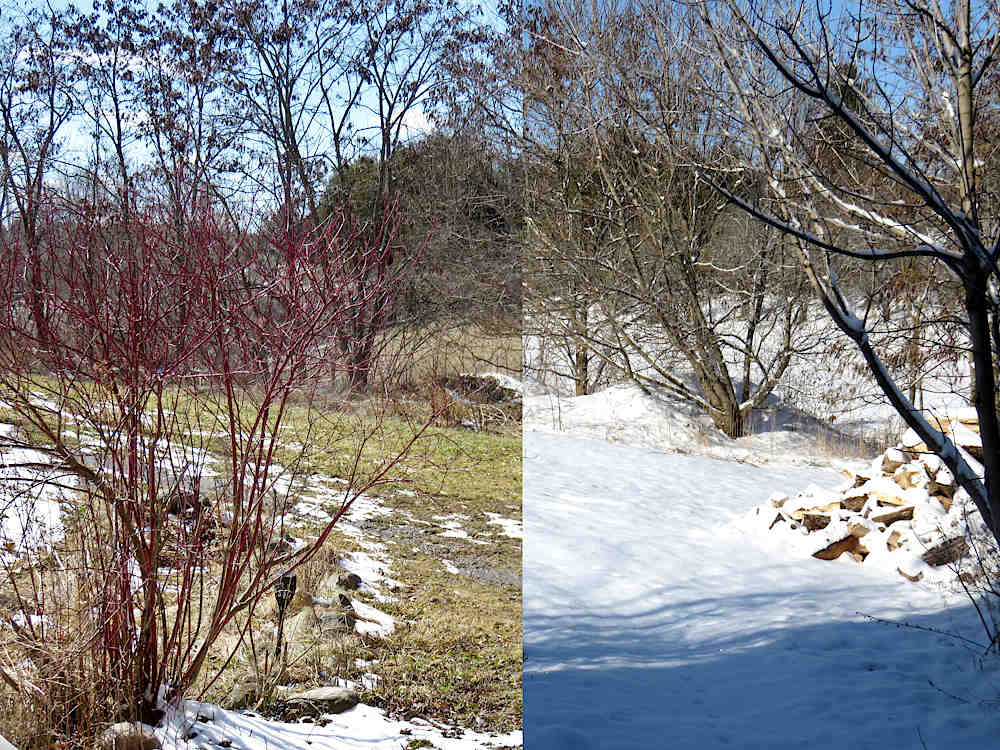
This is the difference that a few days, or even a couple of hours, can make with our everchanging weather. Not the greatest illustration, and in reverse order (the snow shows up better on the right side of the photo): on the right, 9:30 am, after overnight snow blanketed the bare ground; on the left, the 2 pm view and it’s practically gone. It looked pretty much the same around noon, it took only two or three hours to melt away. Weird and also the new normal. For better or for worse, I think we’ve kinda gotten used to it! I suppose hopping from one state to another is better than getting the real extremes—months long heatwaves, river-in-the-sky deluges of rain, forest fires so intense they create their own local weather, and the like—that are happening other places than here. Whenever the weather’s not wiping you out…be grateful! :)
Kale under cover
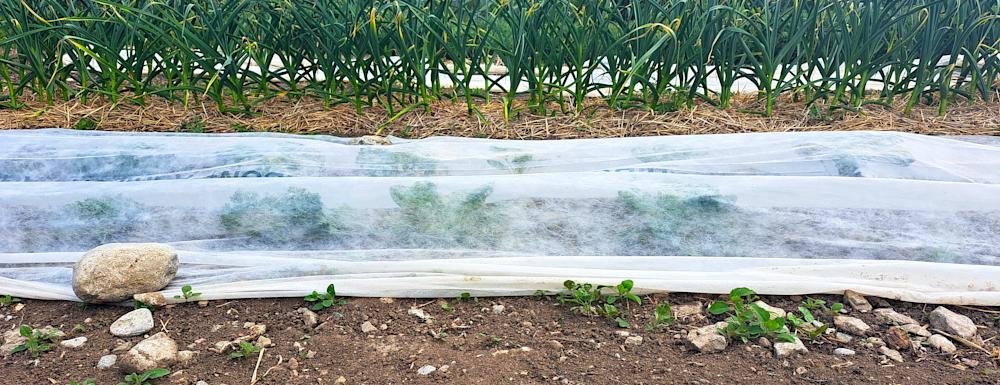
Kale and Brussels sprouts are tucked away under floating row cover (with straw-mulched garlic in the back). This is usually to protect them from flea beetles that can devour the seedlings. This year, unfortunately, it’s also a deterrent to the sudden invasion of groundhogs. Invasion isn’t the right word if we’re talking about numbers, as my best guess is that there are only two doing the damage. Their work, though, is so far somewhat alarming. They have a particular taste for lettuce; they’ve already gone under and through the cover to get a it. But in the last couple of weeks, it seems they’re out to at least sample just about everything. Since last year, and especially this spring, I’ve seen several groundhogs in the general area, which is new and a lot. Last season, there was a little veggie munching, but nothing out of hand. So, to a point, live and let live. This time around, seems like it could get more serious. As far as pests and disease, from year to year, if it’s not one thing, it’s another…