

Snow that had been lingering, lingering, lingering, finally went in the last day or so (though there’s still ice on the water), and it’s on to the Spring Browns. From the growing season perspective, that’s called Progress! :)
Spring
Rain barrel runneth over
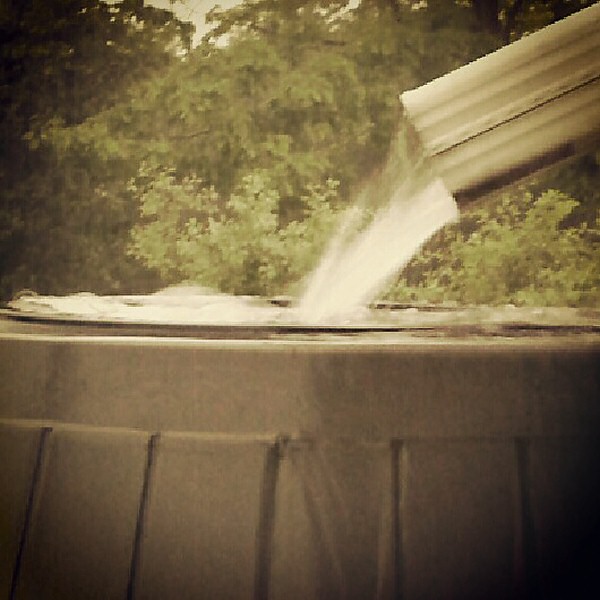
The Weather recently: three weeks of hot-no-rain, followed by a couple of days of intense rain, 2″ each, then, three days of sweltering heat wave, a couple more days of intense 2″ rain, now, three days of perfect balmy summer, with the forecast for the next few days calling for cool to cold and cloudy. The rain barrels filled up several times over (the pic is from the last bout of heavy rain, three days ago). Interesting!
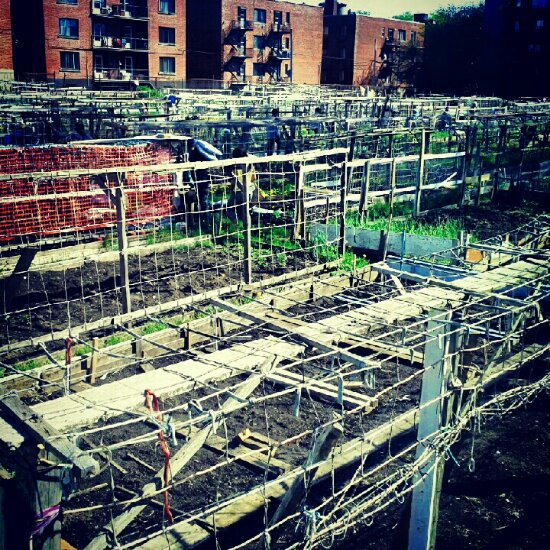
Rain watch begins
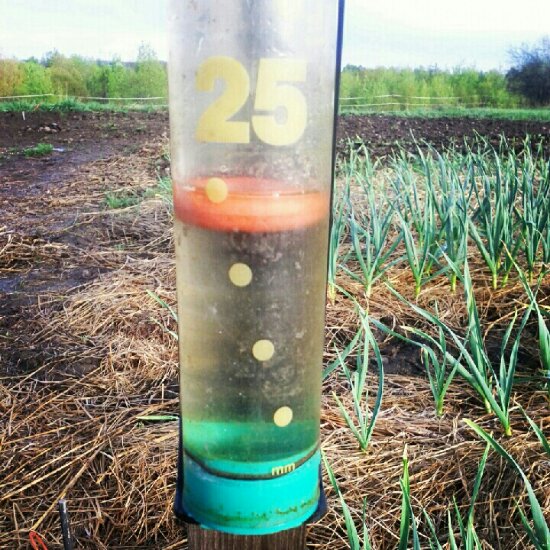
The season’s weekly rain watch begins. Weeks start on Monday. The big 25 on the rain gauge is the magic 25mm/1″ mark, the rule-of-thumb ideal for a week—an inch of slow and steady rain over a few hours, and of course all the rest, sunshine, that’s just…beautiful. A 1/2″ is an OK minimum for a bit. More than an inch a week ongoing for a while can be troublesome, depending on the crop and stage its—disease, small seed washed out, bigger seed rotting, whatnot, it is all possible :)—and it does occasionally happen. So far this week, 18mm here and 20mm total, so, doing fine!
Bucket loading
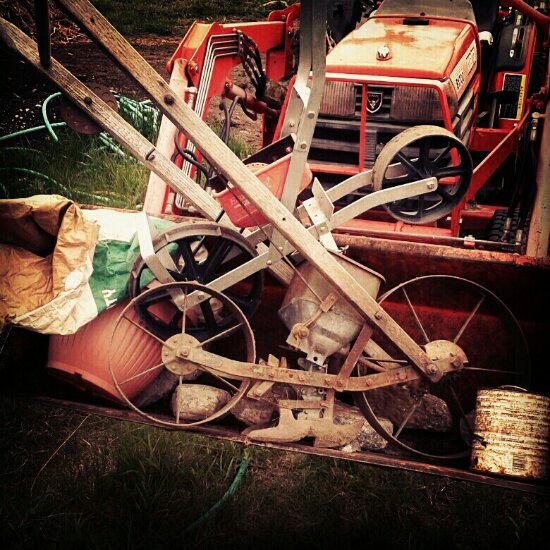
Especially in spring, with constant seeding and transplanting, moving gear around the field is a bigger deal than it may seem. Forget stuff, even little things like a hose fitting or a seed plate or some twine, and you’re heading back the equivalent of practically a city block to get it. A trailer of some sort is the ultimate for a 2-3 acre plot, but with decent packing skills, you can fit a lot into a tiny tractor bucket, too! This carefully balanced load includes everything needed for some direct seeding: the Planet Jr. and Earthway seeders (can’t forget the Earthway seed plates, they’re a perfect fit in that coffee can); seed, clipboard for notes, twine and stakes for row marking (all in that large flower pot); choice rocks for anchoring row cover (it’s never too early to protect brassicas from flea beetles!); and there’s the last of a 50lb bag of snap peas nestled in. It takes a practiced eye to fit everything you need so nothing falls out as you bump along—do it a few times and…easy peasy!
Eggplant!
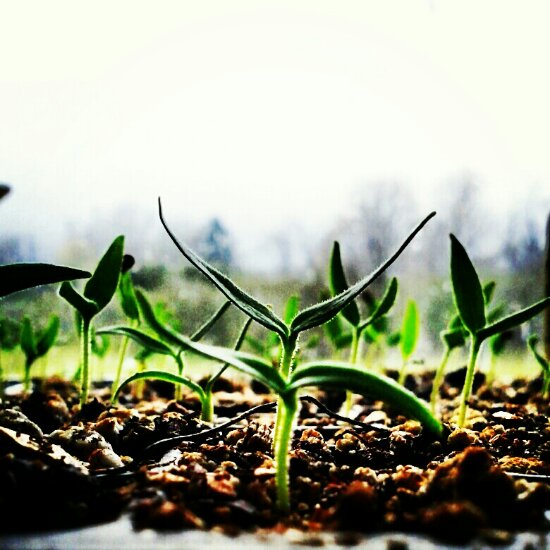
Eggplant pushing up, for the first time probably ever in my tiny farming career, in real sun, not those kinda ghastly (but effective enough) fluorescent lights. This is part of the current season’s unusual start-up, split between two farm locations (where I live and where I grow, about a mile apart, eight minutes by bike!), and smaller and way later than usual, and than the crazy weather allowed. These guys, along with peppers and tomatoes, are in 200- and 128-cell trays, seeded from bareroot germination into a smaller cell size than the usual 72, to make the most of window space. They’ll soon be off to the seedling room on the other farm, and 14-hour days of indoor lighting. Meanwhile, they seem to like it like this—raise your hands in the air! :)
Mixing greens
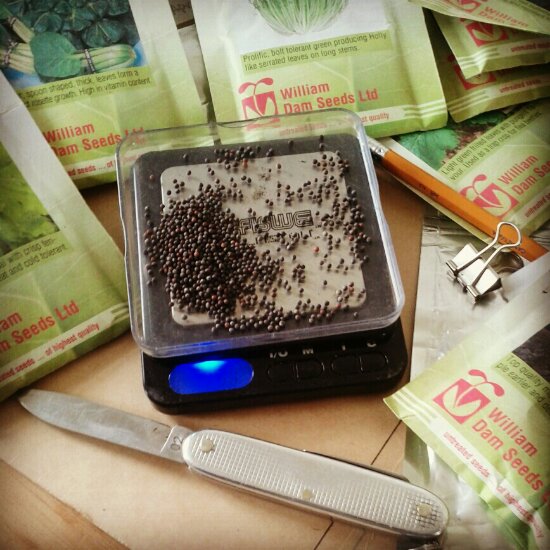
Measuring seed for lettuce and Asian greens mixes, using a digital gram scale from the local headshop. It works well, except I wish the auto-shutoff didn’t happen so quick. I was quite amazed by the selection of digital scales available, starting at, I think it was $20, and going up in $5 increments for a whole slew of models. Didn’t realize so many people were into making their own small-batch seasoning blends and custom salad mixes. Wow. Hahaha. The mixes are basically trial and error. For salad mix, it’s about color and texture at this point: frillier, greener, redder, crisper (baby Romaine is nice in there)—check the results, adjust the percentages for next round. For the Asian greens, it is more about taste, which so far has mostly come down to how much mustard to put in. Of course, how quickly they each grow is quite critically important, all varieties should grow at the same rate, in a fairly wide range of conditions. The lettuces are easier, and I started with some varieties recommended for baby leaf production for just that reason: fast-growing. The Asian greens, all brassicas at this point, are trickier. For example, tatsoi was included in our first runs, but it consistently grew lower than the rest, the leaves were a nice size, but when cutting, they tended to fall halfway below the blade. So, out goes the tatsoi, for now. It’s all about simple experimentation and adjusting things a bit as you go! (BTW, the knife is there just to slice open seed packs; for no real reason, that’s how I always do it…)