
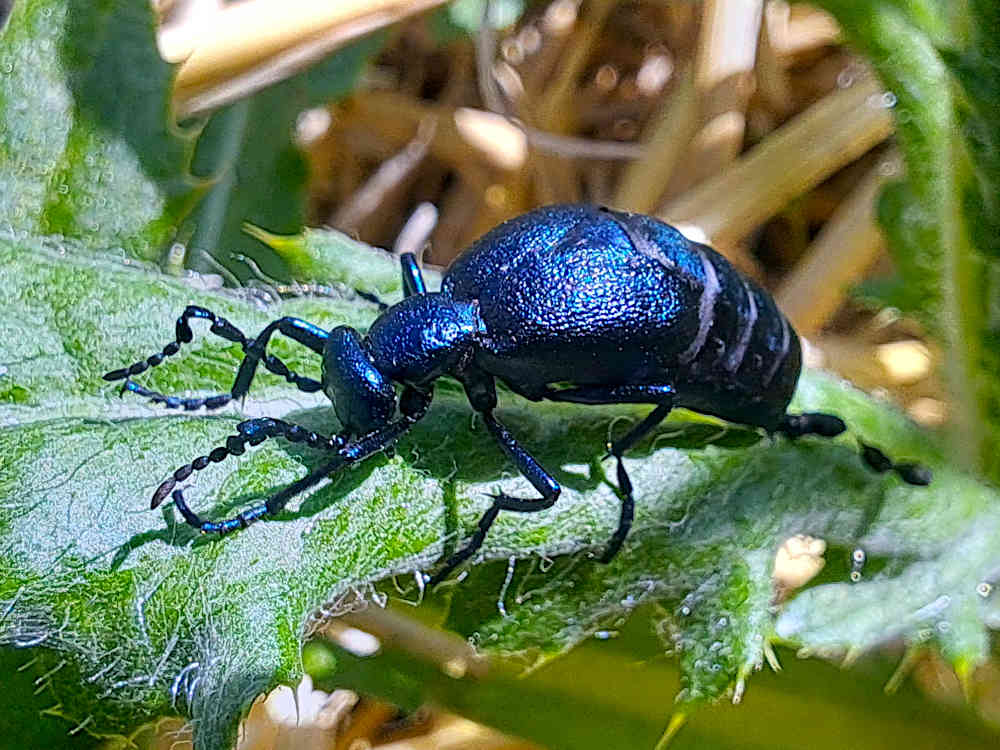
Meet the oil beetle! When I see new insects that I don’t immediately recognize, there’s an automatic, “Who goes there?!” challenge in my head. So many little critters can do so much veggie damage, one can’t help a “you’re either with me or against me” reaction to the unknown. In this case, I have to identify this fairly spectacular, sparkly beetle, sitting on a thistle that will soon be tilled under. (More to follow… Think powerful blistering agent, voracious beehive raider,… I doubt there’s a single insect species that doesn’t have it’s own odd and elaborate quirkiness )
Spring
Robin at the window
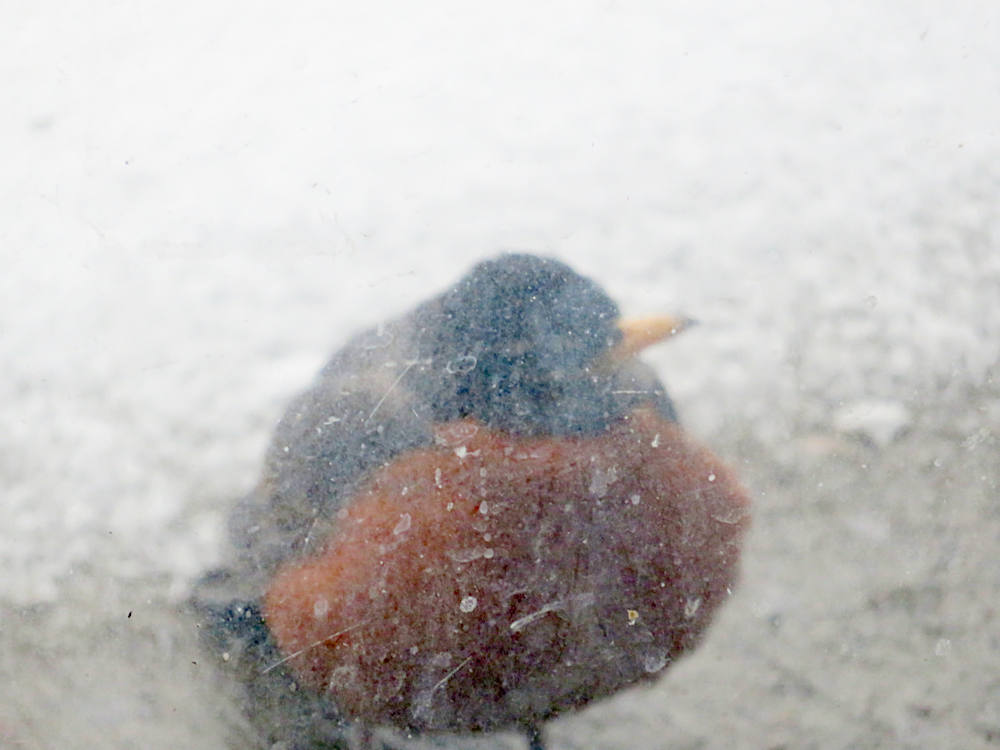
Looked down at the patio door and what did I see? A robin on the outside, standing right up to the glass between us, kind of looking back at me. Or maybe (more likely) seeing its reflection as another robin. It’s a bit of a surprise. Robins are usually summer company in the field, darting around, searching for bugs as I weed or harvest, not hopping around in near zero weather, in snow and freezing rain. It’s like being let into another part of their life. In any case, this guy or gal looks pleasantly plump and unperturbed. I’m glad to see they are quite all-weather and doing fine in the off-season.
Melons!
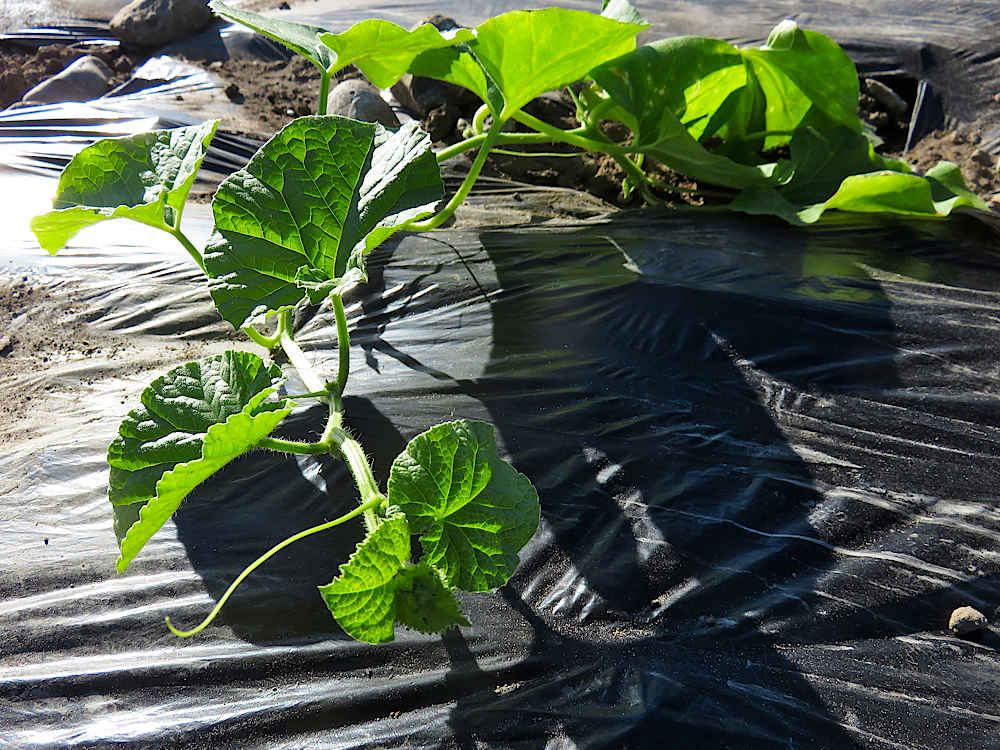
You will be cantaloupe! A ways to go and just getting started. You might not think it, but there’s nothing like slicing into a sun-warmed melon in the middle of the field on a scorching hot day. That’s the thought at the moment!
Zucchini…
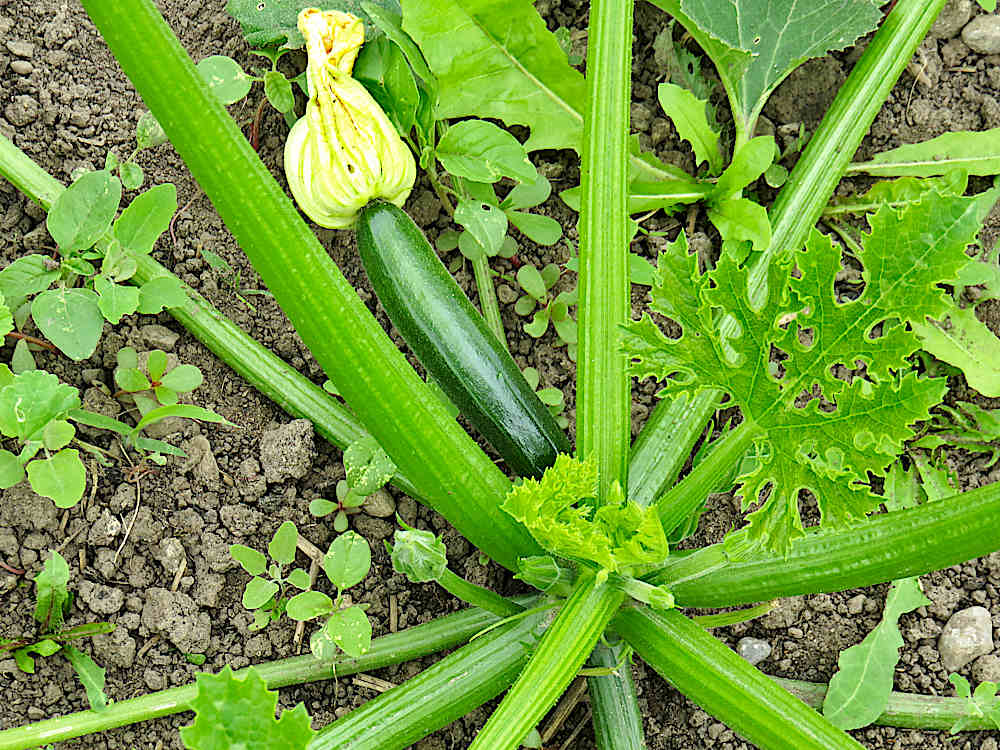
Always reliable, and still a pleasure, with a sense of wonder and a little relief, to see the first zucchini of the year appear. Weird? Maybe. You’d think after growing veggies season after season, at some point, one would get used to it all. For me, at least, that hasn’t been the case! For whatever reason: cool!
Wheel hoe vs weeds
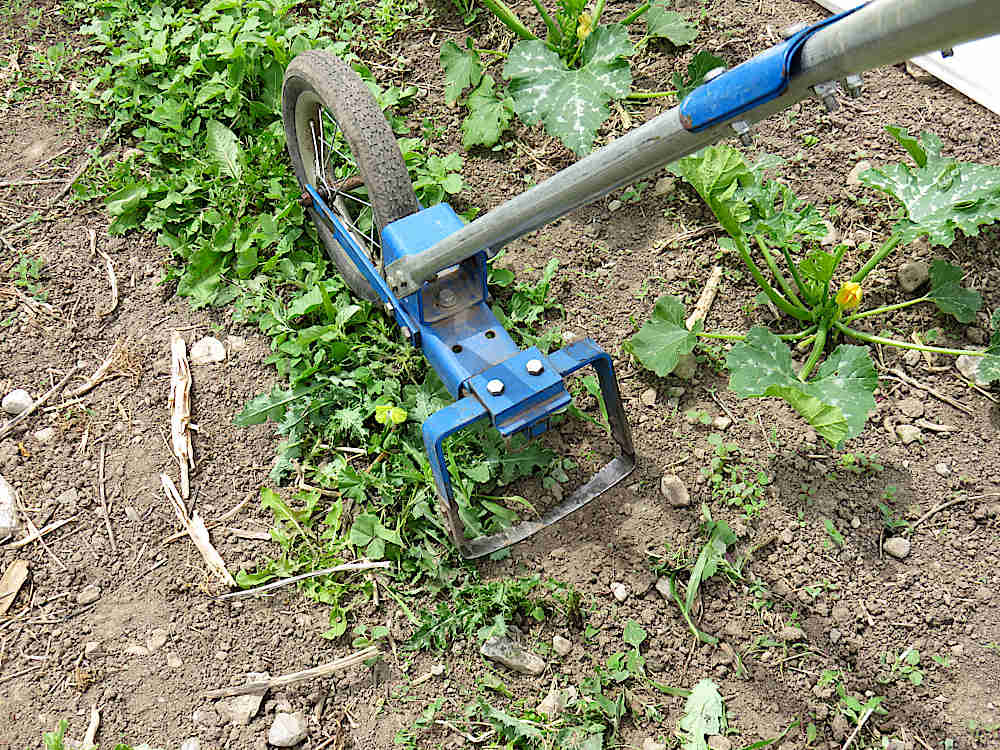
A tool in its element! Wheel hoes are great, and this particular one* is fantastic. Unchecked, you can see what weeds get up to given a week or two. This stretch of dirt was protected under the edge of the row cover that’s been protecting the zucchini to the right from cucumber beetles. Now there’s a dense mat of dandelion (weed or excellent salad green?: right now, weed), thistle, mallow, and lambs quarter. And there’s the steel blade that will run through them, gliding just under the soil, slicing them down. Brutal sounding, and all part of the garden balance. (The zucchini have powdery mildew, those white splotches on the leaves, which usually happens when there’s not that much sun. It can get really bad and ruin things, but usually, zucchini will outgrow it. It’s about sunny days…the weather. Another “we shall see…”)
*I got this wheel hoe well over a decade ago from Valley Oak Tool Company, one of the few companies that are a pleasure to recommend, purely out of appreciation for quality product that does its job!
Potato spotting
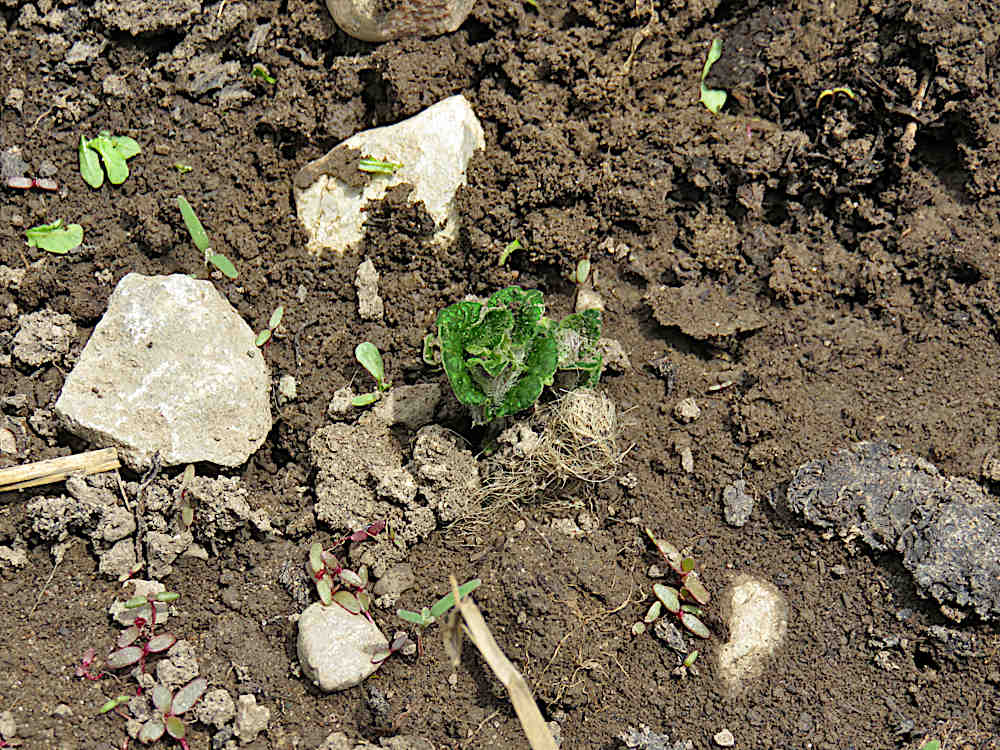
When you spend a lot of time scanning the ground for the very first sign of germination, you get pretty good at spotting new seedlings as they emerge. This new potato plant is easy, it’s quite large, with a rosette of crinkly, distinctively dark green leaves. Carrots and green onions are a whole lot tinier. Beets, spinach, and brassicas can at first look pretty much like the weeds that pop up around them, they blend in. Still, no matter the crop, after a while, you develop a seedling recognition system that automatically zeroes in on even a single new arrival, just like that. It’s always a pleasure to see that seeds are still getting along with the weather and doing their thing!
Squash to the field
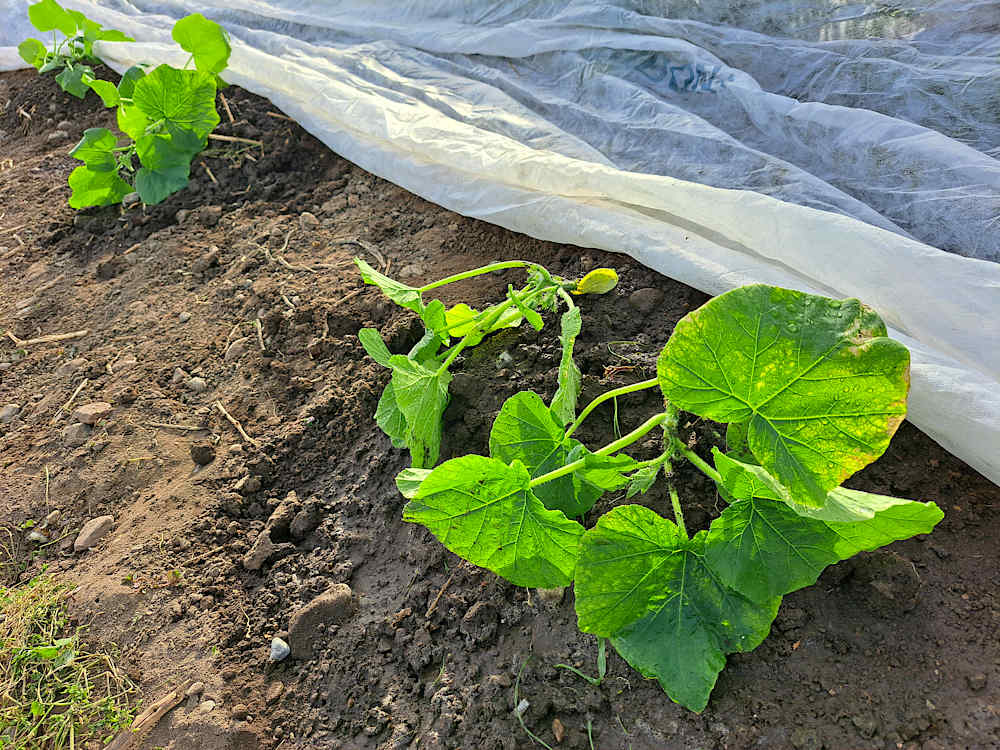
Transplanted butternut squash seem to be doing fine in the great outdoors. The row cover will protect them from the fairly cucumber beetles, until they’re big enough not to be bothered. The beetles eat the plants and can also pass on bacterial wilt (I’ve experienced hungry cucumber beetles, but luckily so far, no wilt). This rock cover is medium weight, thick enough that it’s easy to handle without tearing and can be reused, and thin enough that it lets 85% of the sunlight through. A small tradeoff for no chemicals!