
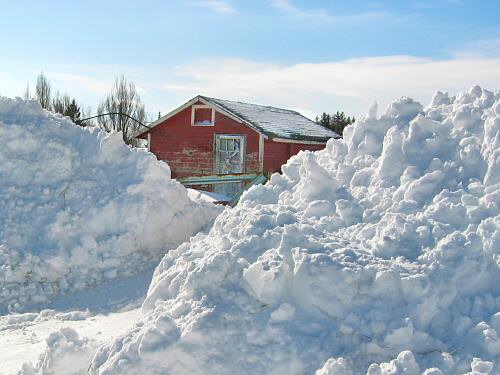
This February, tiny farming for me is mostly about, inside, watching seedlings in a growing number of plug sheets under lights, and outside, watching the weather. In this zone, Feb is a little early for thinking about garden conditions. Well, “normally”, it would be. Now, given the increasingly erratic winter, I’m trying to figure out a new early season production strategy. Conceivably, end of March could be shockingly warm and the ground dry enough to work, and instead of just seeding early peas, I could try some super early field transplants. But then, what if winter happened to come back, not for a day or two of April snow, as sometimes happens, but for a week or two, with freezing temperatures. Early plantings could get killed off, and then I’d need a second set of seedlings! This is how I’m kinda starting to think, about trying to plant around the weather, take advantage of unpredictably good conditions, while expecting some weird bad turns as well. What do last and first average frost dates really mean, given the last five years? Is a 30-year local rainfall average still in any way a useful guideline? Am I…exaggerating? Two days ago, it was 40°F (5°C) and raining right through the night. I was sure the forecast for an even warmer Wednesday would come through to finish off another, fourth big melt-off. Instead, yesterday morning it did a sudden 180, froze up and dumped a ton of snow. Today, there are 7-8′ snowbanks all around the barnyard (from snow plowing). The once and future chickenhouse practically disappeared… ;) Will spring and summer be different from that?!
transplant
Peppers…
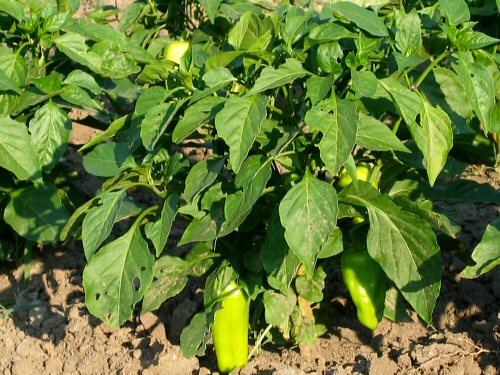
It’s all joy with the peppers (and eggplant). Here, Gypsy sweet peppers put on size and begin to peek out. In the past, these two crops barely made it in, if at all. I planted the varieties, but for eggplant, only the very early Dusky produced satisfying yields toward the end of summer, and peppers made it in decent quantity last year because of the freakishly extended warm weather that went into October. The reason is no mystery: doing the transplanting mostly alone, I’d get to peppers and eggplant last (they’re not prime farmers’ market sellers); this year, they got a good week or more head start. So we have the fruit of extra labor (and pretty good pepper-growing weather)—straightforward and…satisfying!
Risk crop
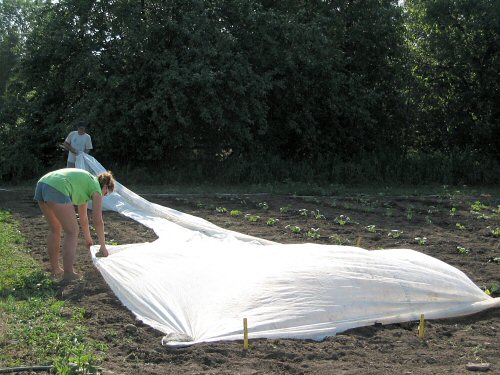
Protecting a final planting of the season, Jo and Conall lay row cover over a selection of summer squash. Also transplanted today from the squash family, more cucumber, an extra early muskmelon, and a couple of early maturity winter squash because there’s space. All of these are pretty much risk crops, with 50-65 day maturity up against our average first frost of around Sep. 20. They could have gone in a week or two earlier, but I’m gambling on another warm fall, with only a mild frost or two to get in the way (against which, row cover once again!), and MAYBE a harvest through October. Of course, the weather can be relied on less than ever, BUT, warm autumns seem to be a good bet. If this pays off, I’ll have some interesting veggies after the standard, safe season for ’em is over. Nothing ventured… You take your chances!
Working in the rain
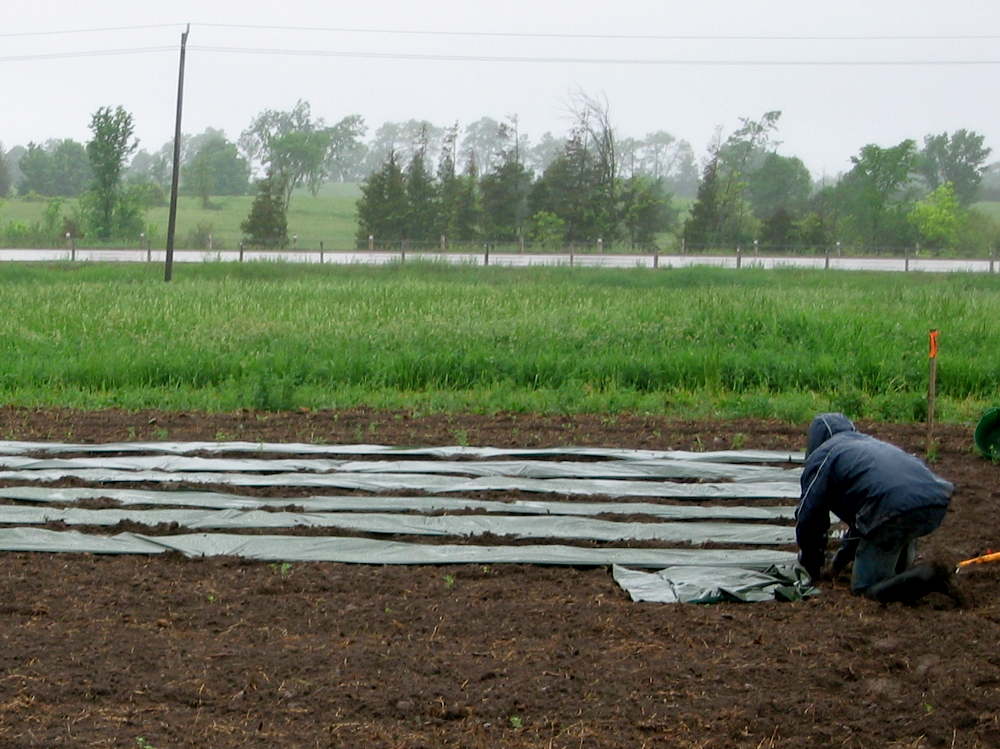
The rain is good (15mm over the last day), the chill (there’s a frost warning for tonight and tomorrow) and sticky clay-loam mud are not so good. But the calendar is flipping and there’s really no time to take shelter. Conall puts in plastic mulch for melons, anchoring it every few feet by scooping out soil, pushing down the plastic, and replacing the soil. We’ll cut X’s to transplant into, and water by hand around each plant as necessary. Labor-intensive, but it’s the most reasonable way to decent melons I’ve found so far, and it worked out well two years ago. After experimenting with straw mulch for tomatoes and melons last year, I’m back to using plastic for melons, and that’s it. Straw is great, but the extra work of spreading and then the fall clean-up seemed like stretching it for everything else that has to be done this year.
More people in the field…
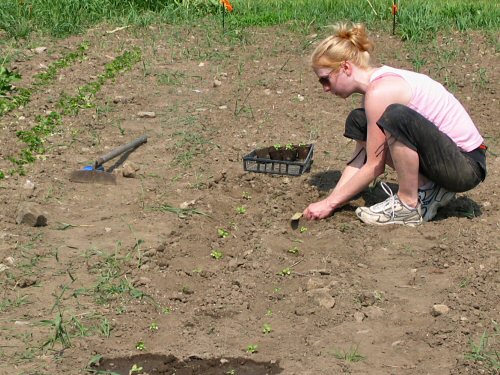
At work transplanting really tiny basil in the still-to-be-shaped-up herb patch, Andrea is doing her very first day of tiny farm gardening. It all worked out very well! After nearly a month of working with Conall, the all-new organic grower, almost every day, and having several other people out for a few part-time hours, it’s a different season for me compared to the previous four. Not less work (we’re planting way more than ever before), but the energy is different. Before, largely working alone, it was more of an against the odds thing as I faced the fairly massive task of each season’s start-up. I liked that solo mission adrenaline and challenge. Now, it’s more of a people puzzle, as this season’s small crew assembles. By the time it comes to more substantial harvests in three or four weeks, I’ll be totally reliant on teamwork to get it all done. No going back: it’s like, Tiny Farm II: People in the Field. :)
Tomatoes to the field
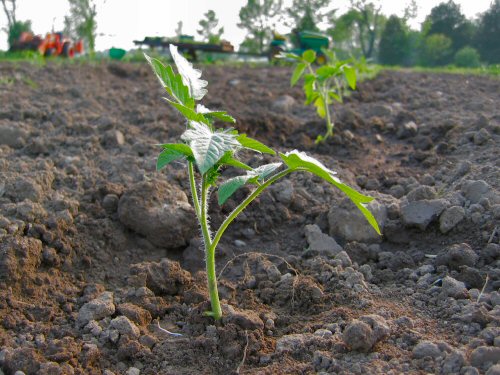
Go team… Set out another 400 tomatoes today: add a fistful of compost, bury to topmost leaves, water in. Along with the peppers and eggplant transplanted yesterday, most of the early seedlings are now in. There is still a lot to go, but it’s all coming along…!
Cucurbits germinate!
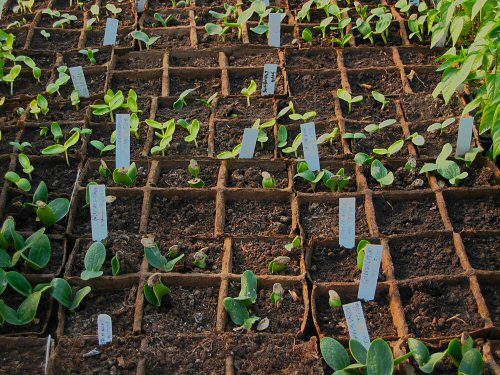
The heat-loving squash-melon-cucumber family are the last of the seedlings to be started. They’re coming up now and headed for the field as soon as they’ve fully emerged, no waiting for true leaves. Depending on the crop, each pot has 2, 3 or 4 seedlings to be transplanted together, with extra space between pots. This replaces single planting and spacing, which saves transplanting time and makes early cultivation easier.