
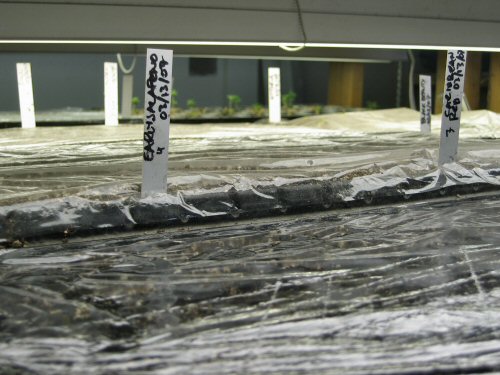
Plastic cling wrap is everywhere. I tried it out last year as a replacement for clear tray covers and it seems to work fine. The method so far: fill the plug sheets with seedling mix, place tray in water so mix is soaked from the bottom up, drop in 2-3 seeds per cell, cover lightly with more mix, soak surface with spray, apply plastic wrap (it sticks nicely to the wet edges of the plug sheet), fill out label marker with variety/date and plunge through plastic (those labels are all that stand between you and variety chaos!), then it’s off to the racks. Now, the trays don’t have to be watered for a week, the mix retains more heat, and you can check moisture by looking at the condensation on the plastic. At first, I wondered about adequate air circulation and whether the fairly closed conditions would encourage algae, but the seedlings emerge on time with no unusual algae problems. As soon as the first couple of seedlings appear, it’s off with the plastic. I re-use the plastic as well, over the 4-5 weeks of seed starting, and the bit of waste in the end, well, I think it’s moderation in everything that counts. (In the top right of the pic, the Vittoria eggplant is tenting its cover, having pushed up vigorously in just six or seven hours overnight. It’s a feisty one!)
Month: March 2007
Fresh lettuce
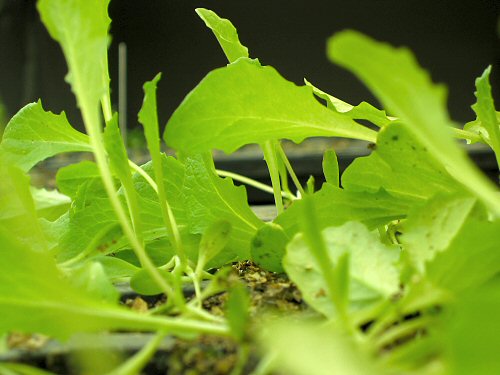
The early lettuce is starting to expand, stretching and sprawling around the trays (it’s off to the greenhouse for transplanting in about a week). Even in the pic, Simpson Elite looks good enough to eat! I started the season’s tasting with a couple of tiny leaves. They literally melt in your mouth!
Vigorous Vittoria
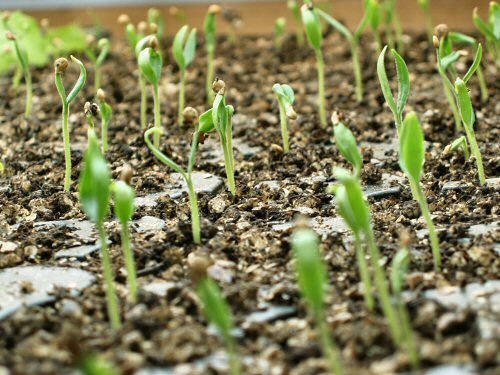
The tray of Vittoria eggplant germinated quickly and thoroughly, with rows of seedlings all straight up and down in just a few days. This year (my fifth) is the first time I’ve deliberately gone through the seed inventory to use up anything that’s getting old, and the difference in germination rate and especially seed vigor between older and newer seed is clear. I noticed this from year two, but now, with several crops, varieties and ages all going at once, it drives the point home. There’s no more effective way to learn than seeing for yourself! I’ll be that much more attentive to seed storage and buying quantities from here on in. Waiting several extra days for a batch to fully germinate wastes lots of time and rack space, although it all evens up when regular growth (photosynthesis!) kicks in. (This is the first day of spring!)
Second day of spring
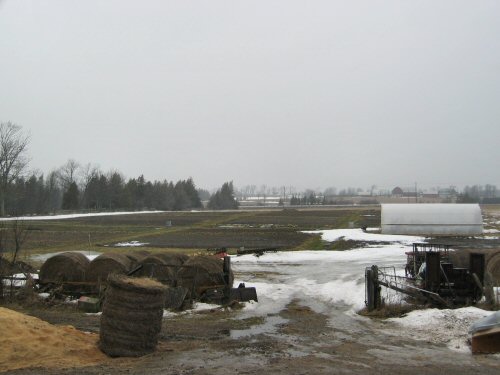
It’s pretty close to all-clear in the field, with the temperature well above zero and a steady rain on this second day of spring. I can feel the next stage of weather-watching coming on. At the end of winter, it’s all about snow being gone. No sooner than that happens, the watching turns to the day and night highs and lows, amount of sun, amount of rain and the trend for the next couple of weeks. Beneath all that is wondering what type of season it’ll be overall. With freaky weather now the norm, we could have a cool, damp, sun-less summer like three years ago (no two consecutive days of sunshine all season!), a spring time drought like two years ago (no rain from April into July, with heatwaves to boot), or just extreme ups and downs for two-three weeks at a time like last year. What weather will the season bring? (One month ago…)
After winter kale
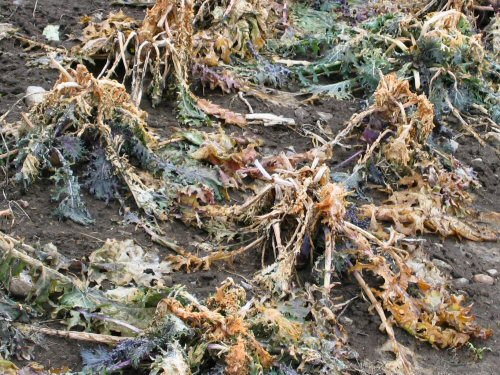
Here’s what Red Russian kale looks like after being left for the latest possible harvest, then frozen solid and buried in snow for a couple of months!
Hoses and rocks
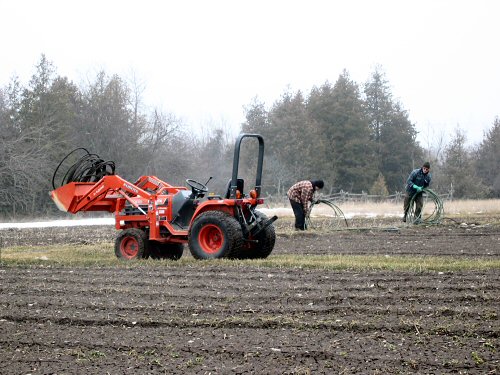
The first day of fieldwork! Organizing hoses, picking up rocks. The ground is still quite wet, so we stayed on the paths, especially with the tiny tractor. (The Brothers are back volunteering, which is great!)
Heading for the sun
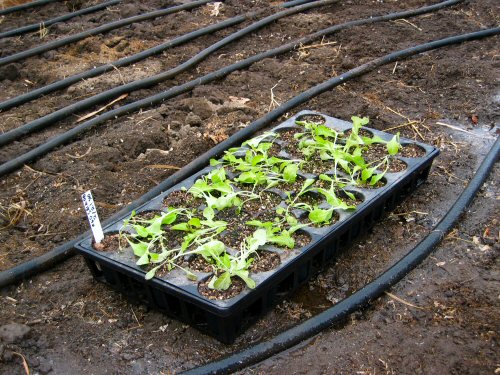
A first tray of early lettuce, set out in the unheated greenhouse yesterday afternoon, survived the around-zero night no problem. Lettuce is quite forgiving, and I’m forgoing the usual hardening off, going straight from the grow racks to the greenhouse ground. Although the sun feels great (it just came out now), hopefully it will only appear in breaks over the next couple of days, or the lettuce will be toast. The soaker hoses running up and down were on yesterday for a few hours to get ready for transplanting (without watering, inside the greenhouse, the ground obviously gets very dry).