
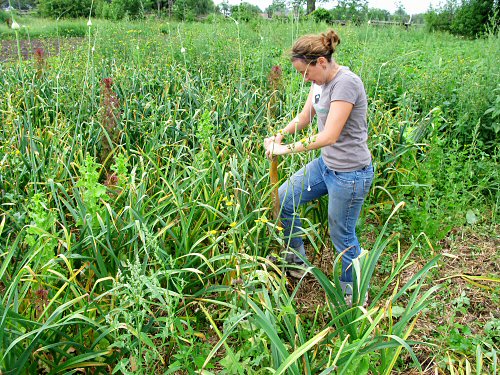
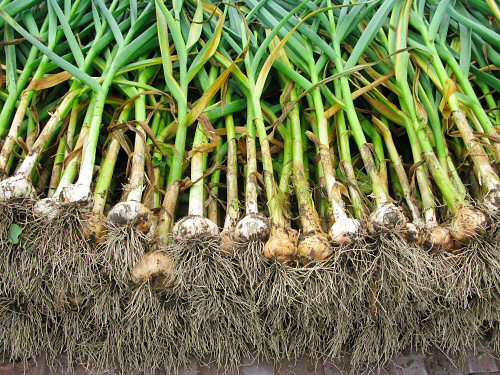
Considering that our clayey soil has hardly had a chance to dry out with all the rain, this year’s garlic is looking good. With Lynn digging away, the first third of the garlic patch is up and stacked to dry in the barn. I’d been worried about rotting (and Con at the market had already reported losing a lot of his to rot), and checking every couple of days for the last two weeks. Maybe 20% of the bulbs are soaked and come up pinkish-brown—dunno how they’ll look when they dry out, but the cloves are fine, so it’s lots of home use and seed garlic at the worst…
Year: 2008
Massive new potatoes
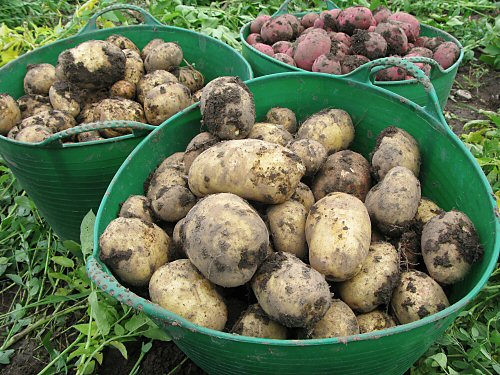
Our first potatoes of the year are HUGE, some of the biggest potatoes I’ve grown by far. I guess they really liked the rain. First dug: Yukon Gold and Chieftain. As usual, the harvest method is as manual as it gets: crawling along the rows, pulling up the plants, and scrabbling around by hand. More fun in the mud…
Rinsing…
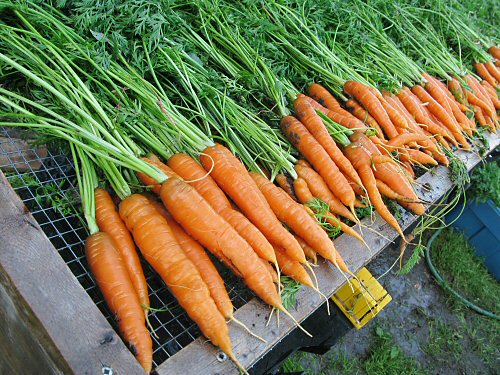
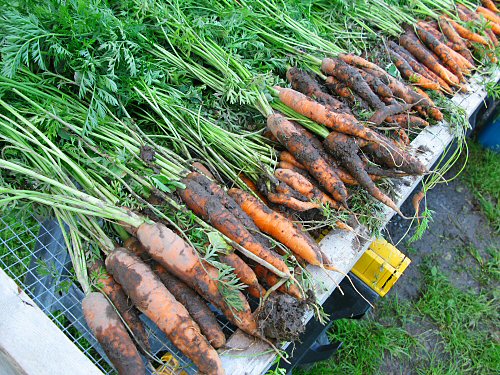
On-going debates about the merits of rinsing are…academic right now as the near daily rains continue, and the soil remains between moist and mucky. Even on a rare hot and sunny day like today, crops are coming up caked in mud. Carrots are messy…
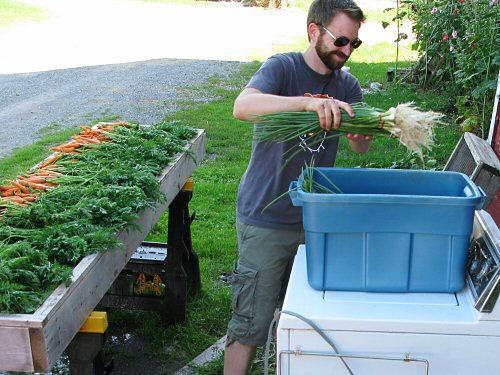
…and so are green onions (being rinsed by Mike) with tangled roots that hold clumps of mud so well…
Three minutes of mayhem

What at first seemed like a mild three-minute hail storm this afternoon did an impressive amount of crop damage right across the market garden. One of those sudden, short storms that’ve been popping up more or less several times a day built up, rain started to come down quite heavily, this time with a sharp wind, and after a couple of minutes, HAIL joined the action. I went out to check on the trays of seedlings sitting outside the Milkhouse: you could hardly feel the ice pellets on bare arms and the seedlings didn’t seem bothered by the brief pounding. The pellets were pea-sized, in two configurations: smooth, and jagged (the sample in the pic is from a few minutes after the storm ended, with the sharper edges on the rougher pieces already melted off). The hail soon stopped, a few minutes later the rain ended and…sunshine. Great! Not particularly concerned, I went out to inspect (we’ve had small hail a couple of times with absolutely no plant effect that I could notice). Well, SURPRISE!
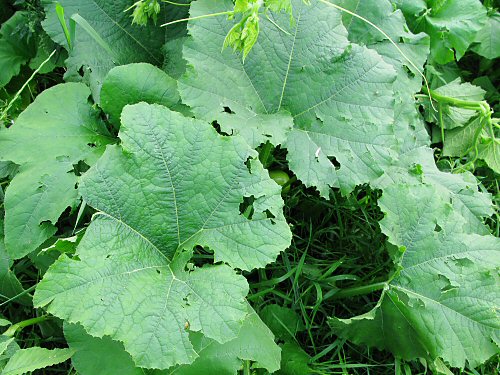
Crops with fairly large leaves, the squash here and more mature beets, had leaf edges sliced and holes punched right through.
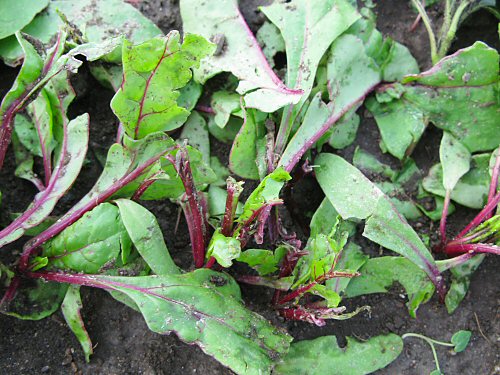
Snapped stems was the most surprising effect. Here, beets were pummeled…
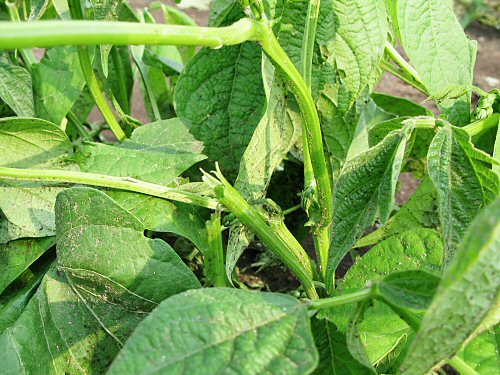
…beans were also quite heavily hit, with severed tops of plants lying in the paths…
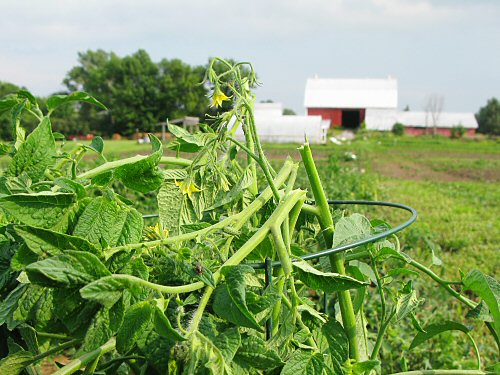
…and tomatoes took a good hit as well. I didn’t closely examine the developing fruit, like tomatoes, peppers and eggplant. It looks like there’s some bruising, but I’ll wait a couple of days when any damage will be easier to spot. Overall, not the end of the world, but a definite setback…not welcome.
CSA share check-in
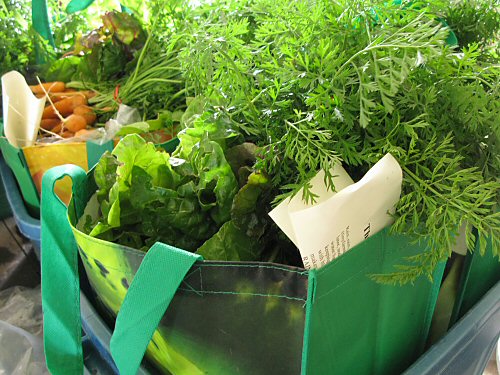
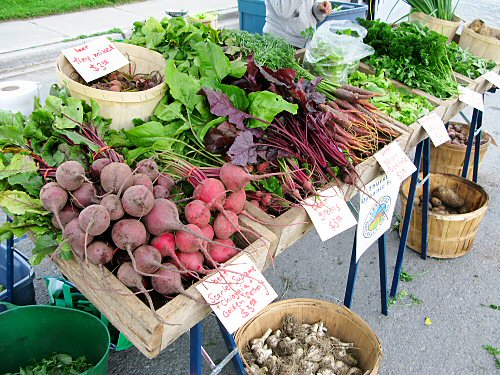
Monday morning means a quick small harvest for about half a dozen CSA shares. What’s in each share is my main harvest concern each week. The goal is to maintain the basics, like lettuce, carrots, onions, and also have some exciting new stuff each time. In a year like this one, with slow growth, this can be tough. But we’re doing OK so far. Today’s veggie menu, taken directly from the CSA newsletter: “In your share this week: basil (sweet); bean (Jade); beet (Scarlet Supreme); carrot (Touchon); garlic (Music); green onion (Ramrod); mesclun (all-lettuce); parsley (curly & flat-leaf); potato (Yukon Gold); Swiss chard (Bright Lights).” This season, shares are packed in really nice reusable shopping bags from one of the supermarket chains. They’re big and roomy, decorated with an assortment of veggie and fruit photo blow-ups, cost a buck, and can be replaced free of charge when they wear out. Much cooler than the hundreds of plastic grocery store shopping bags with the farmers’ market logo on ’em that I used to go through, and we also pass on the bags at cost at the market.
People in the field update
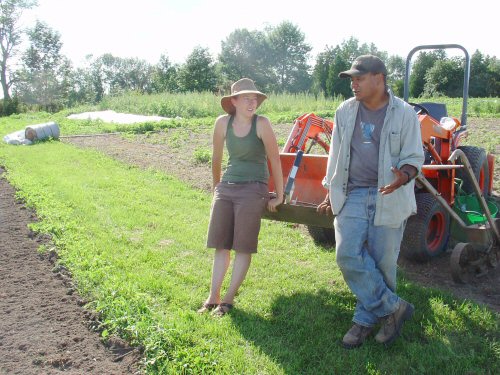
This has been an interesting summer for learning about tiny farming, people, and the ups and downs of growing largely without machines. I’ve had an ongoing debate with Bob over the years about the garden layout, using relatively short, 50′ beds, and hand cultivation, rather than planting long rows and doing most of the between-row weeding by tractor. The tractor approach lets one person, one machine, and some cans of diesel do most of the routine work alone. The hand-grown approach requires lots of labor, and you either settle in and do it yourself with many 10-12 hour days right through the weekfor a good part of the season (as I used to do), or…have help. I’ve found it’s definitely more fun to work with others, BUT, once there’s a bit of a regular crew, there’s the new matter of keeping the group dynamics smooth and making sure everyone’s HAPPY. Long days of often repetitious work, finishing one job only to launch directly into another, and working around the vagaries of the weather—this year is an exceptional case in point—aren’t what most people are used to. And when some of the people live on the farm, for a few days a week like Lynn (chatting with me in the pic), or 24/7 in the case of WWOOFers, things can get even more complicated, like, when is quitting time! At least in the start-up years, tiny farming can be pretty much an all-consuming focus during the growing season, and that’s not something most people really want or can handle, either—you’ve gotta love it! So finding the balance between going all out, and, well, providing a fun taste-of-tiny-farming experience for others, can be a bit of a puzzle. At least, that’s what I’ve found so far. All just another part of the ever-changing TFE…! (Guest photo by Maria)