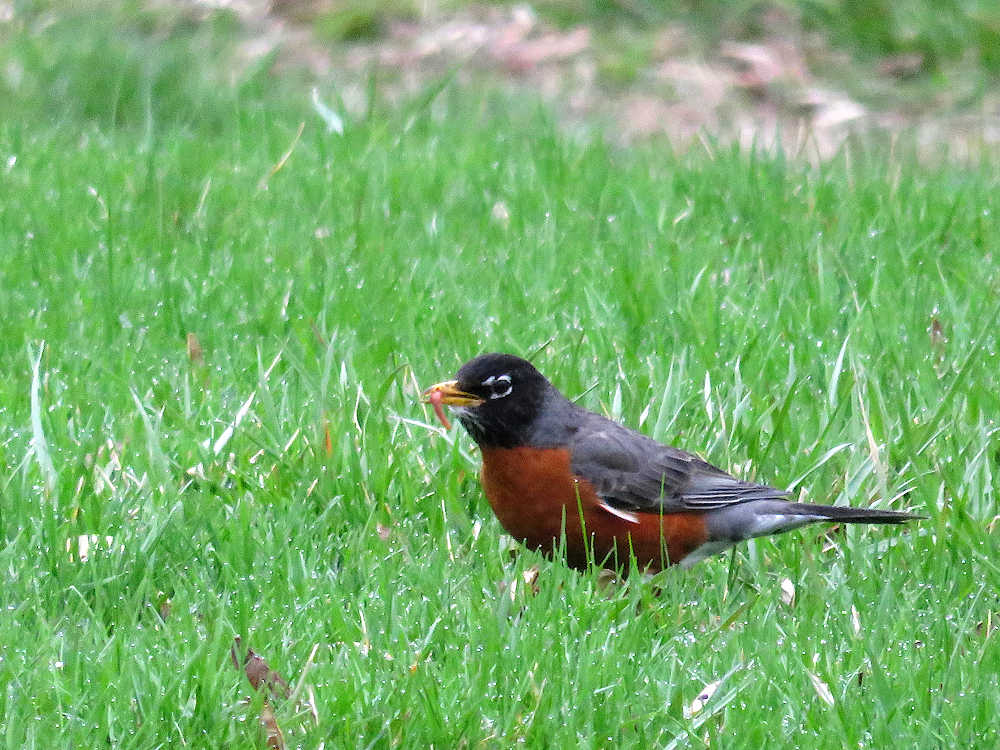
Orange-breasted, worm-eating buddy

American robin

One of my annual garden companions. First met the American robin when I started veggie farming. I thought it was a sign. The bird was quite near me, darting a ways, then stopping, seeming to follow me, not looking worried when I turned towards it. Other than urban pigeons and scavenging seagulls, I wasn’t used to birds being so on grounded. It soon seemed clear that it was following me, probably resonating with my kindred earthy spirit, recognizing a fellow field worker, accepting me into the tribe. Turns out that spending a lot of time on the ground, running around looking for bugs and earthworms, especially in open, freshly tilled fields, is just what the American robin does. I was only a part of its landscape. Oh well.

These guys are here every year, keeping company in the field. Later in the season, I sometimes see the chicks zooming around, cuter than kittens. I read that American robins are known to gorge on berries that have fermented, get drunk, and topple over as they dart around. Hope they don’t drink and fly (but they apparently do)!
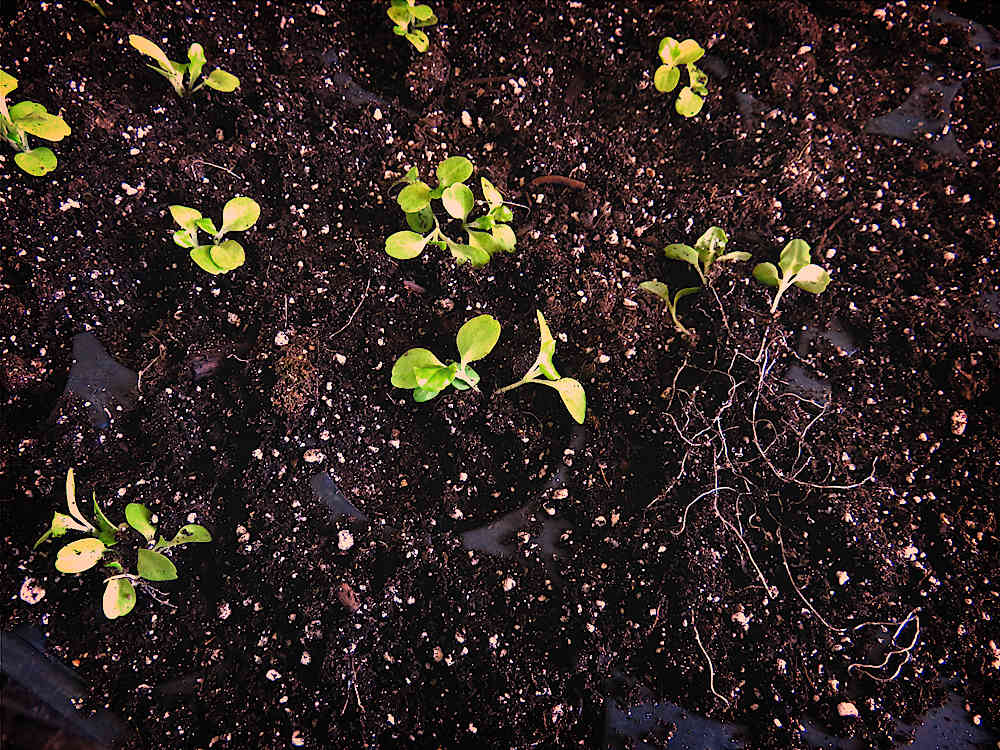
Bare root lettuce transplant

Bare root lettuce transplant

Bare-root transplanting lettuce—separating seedlings and replanting them with more space to spread their roots—isn’t something you’d do on a large scale. At Tiny Farm scale, it’s manageable and fun in a simple, relaxed way, like making flatbread, or prepping veggies for cooking. Very up close and personal with the plants. My usual approach is to seed them where they’ll stay until transplanting in the field, which saves time. With this round of lettuce, I was starting five varieties and wanted to see how they all germinated, so I seeded a bunch of each in a single plug sheet, and today I divided them as needed. Some are still two or three together, so as not to tear apart the roots too much, to be thinned later on. It all works out!

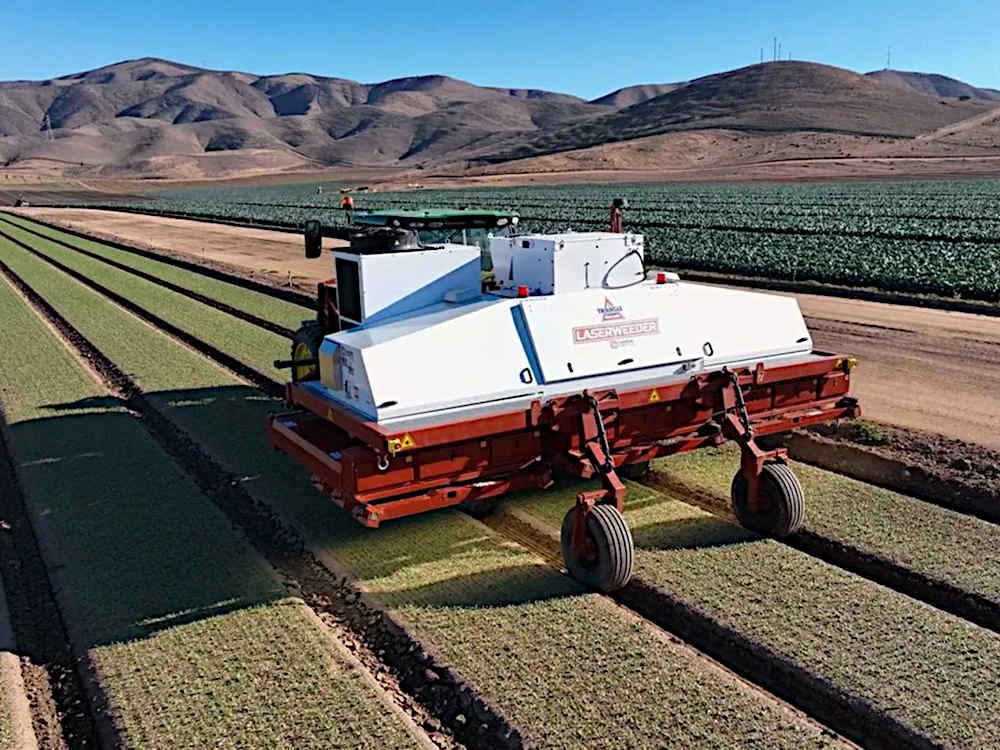
The future of weeding!

LaserWeeder

This 40-second LaserWeeder video I think speaks for itself. What more could I say? Wow, technology! The madness continues? Imagine the efficiency! What are we thinking? AI, of course. Hendrix (for some generations, shades of a jungle war on weeds)!

Here’s what’s under the hood: “AI-powered precision weed control. Featuring high-resolution cameras and cutting-edge computing, LaserWeeder can instantly differentiate between weeds and crops, targeting and eliminating weeds with precision lasers. This chemical-free solution operates 24/7, boosting crop yields, lowering farming expenses, and supporting sustainable agriculture.”

It can identify 4.7 million images an hour—sounds…frantic, processing all those images, ID-ing the weeds, passing coordinates on to the lasers, or whatever exactly the AI has it doing. LED lighting four times brighter than the sun. Sub-millimeter laser accuracy. Targets 5,000 weeds a minute.

Smart miniature laser cannons, deployed to the farming field. What will they think of next?!

No doubt the LaserWeeder will come to mind now and then when I’m crawling around hand-pulling weeds. Either that or the song.

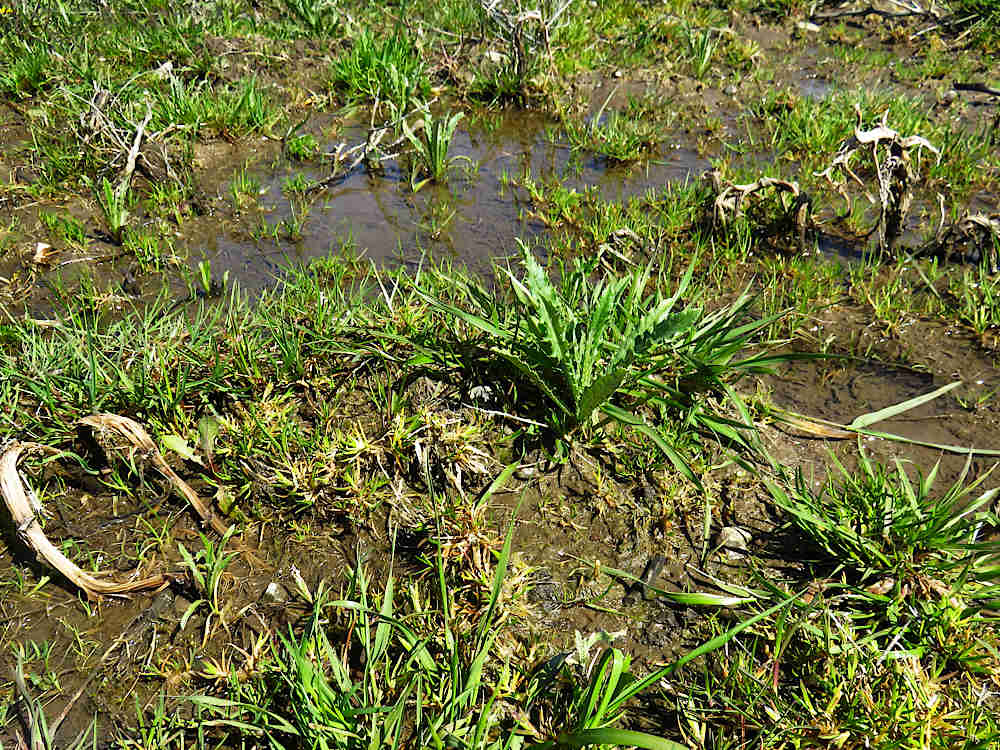
Grass, thistle, puddles, mud

Wet field

This is a piece of ground you’d usually step around and not give a second thought to…unless you wanted to grow things in it right away! A good part of the field is dried out enough to work, but there are low spots where the ground is still saturated with water, all dense, squishy mud and all-day puddles. The weeds don’t mind, this is home! Thistle pops up. Clumps of grass aren’t a problem, when you don’t let them take hold. Unless there’s a lot of rain, a few more days and it’ll be good…

Chipmunk at work

Chipmunk at work

Ahh, my favorite rodent. Another member of the around-the-field cast of characters. Charismatic, curious, always busy, quite friendly—what more could you ask from a wild woodland creature. Oh yeah, no threat to the market garden, at least, not in my experience so far, which is the biggest point in my book! Chipmunks are in the ground squirrel branch of the squirrel clan, and I’ve met the tireless, relentless backyard garden-raiding urban squirrel, so no doubt the ‘munks have it in them to mini-ravage crops. But they seem to stay away from the open field, hanging out near buildings, so all good on this garden’s veggie threat list!

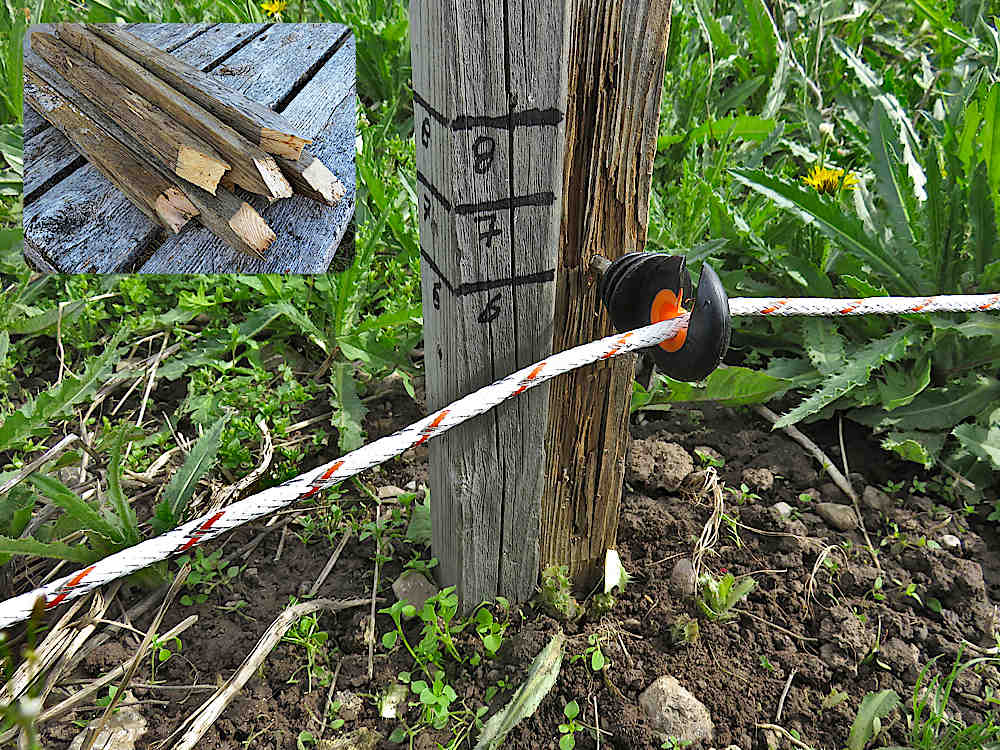
Groundhogs be zapped!

Electric fence for groundhogs

Big Agriculture has its genetic engineering and laserbeam weeding; on the tiny farm, sharpened wooden stakes and startling but harmless electric shocks are about as high tech as it gets. Today I laid out the groundhog electric fence line—poly rope with metal strands twisted in, strung at six inches (there’s another line at 28″ for the deer).

After last year’s first-time groundhog attack, this approach seemed to work. Still, that was later in the season, when the voracious little critters were already starting to get heavy and slow as they bulked up for hibernation. Maybe they were too lazy to put much energy into dealing with short, sharp shocks. This time around, they’re well-motivated, slimmed down, and hungry for the all-you-can-eat veggie buffet only a short waddle away. So…we’ll see! Weeds that touch the low line can draw off electricity—a new extra weeding job to add to the list…