
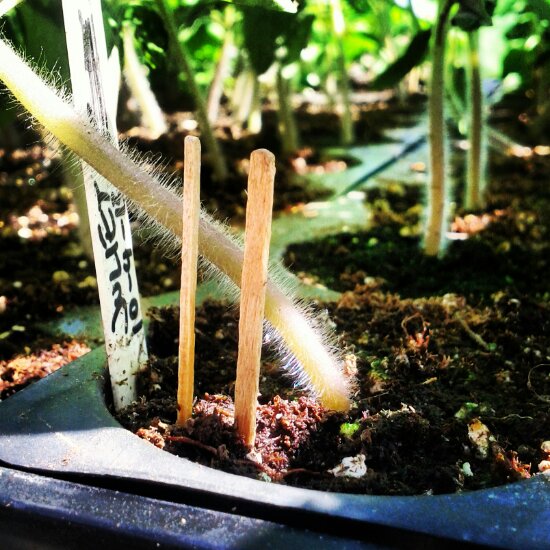
A toothpick tracking system. Before heading out to be transplanted in the field, so they don’t bet burned, seedlings growing under lights first have to be introduced to the sun. They go out in the day, get a toothpick, and come back in for the night. Each day of hardening off is marked by a toothpick—two or three days and they’ll be fine. Simple and sustainable—reuse your toothpicks and a single box could probably be made to last a lifetime.
Seed & Seedlings
New plug sheets
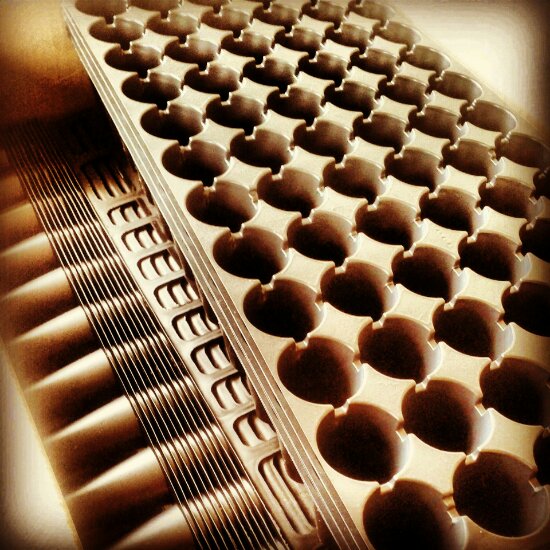
Picked up a small shipment of new plug sheets and webbed trays at the post office. I really stretch ’em out, have some going for years—they’re reusable, but not incredibly tough, especially when you take them into the field for transplanting. Handle with care and all that, and replace as needed! These are 72-cell sheets, my basic standby. Bigger is generally better here (my other standby is 38-cells), but there’s only so much room under the lights: if you keep the timing tight, don’t leave things in there too long, they’re fine for just about any small seed. Waste no space!
When the well runs dry
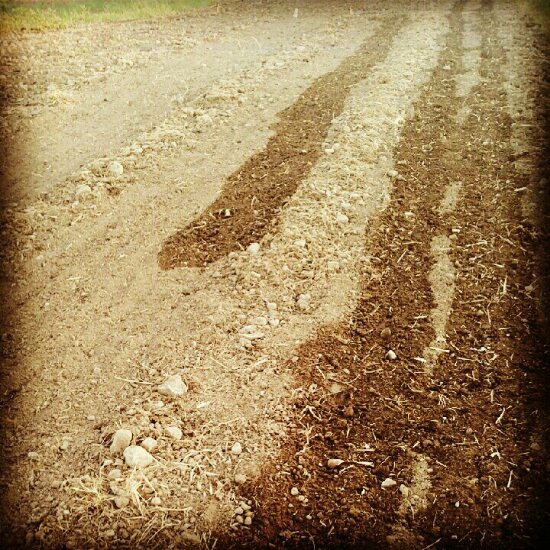
End of the line: what it looks like when your well bottoms out and the water stops flowing. Just like a power failure… We’ve been watching the level in the dug well we’re using, and the refresh rate is pretty dismal. Today, while watering in newly seeded beds, the water finally stopped. After last fall’s failed well drilling, figuring out short and longer term water solution is big here now. The water will come back eventually in this well, but the water table drops as the winter reserves go, and at this point, the well won’t refill high enough or quickly enough to be useful even for seedlings. Water barrels filled from the house well and distributed by watering can is a possible labor-intensive emergency measure. And of course, there is always…rain.
Seed store
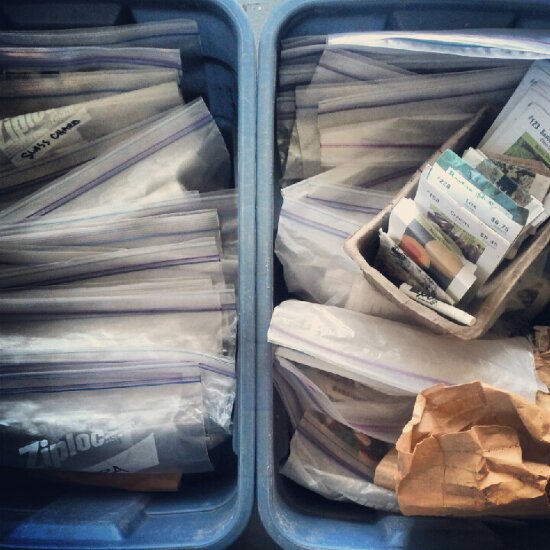
My current seed bank is around 60 Ziploc freezer bags. In alphabetical order. I haven’t been as careful lately with storage conditions as at times in the past, these plastic bins with lids (there is third one with bigger bags of larger seed, like beans and peas) are kept out of sunlight and away from heat. I could do a lot more, but I’m not going for long term storage, and most of the time there seems to be no critical difference in germination time and rate for seed 1-2 years old, which is the longest I keep anything in any sort of quantity. Fresh seed may pop up a little quicker, but with the many other variables based mainly on the weather, it all seems to even out by the time harvest day rolls around!
Pea vs drought
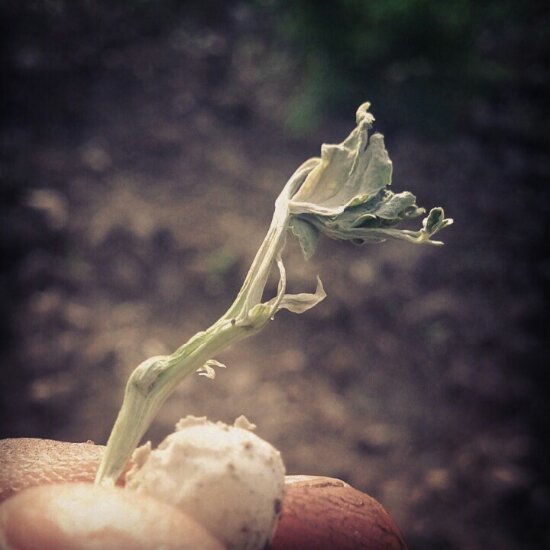
Pea vs drought: Sad and scary when plants die from lack of water. Seems way worse to me than being ravaged by pests. Kinda makes you realize how vulnerable we are. This isn’t a full-on drought, just an extended dry spell with no rain for a couple of weeks and counting. Most crops are doing fine, and only a few shallowly buried peas are getting toasted, so really, it’s all good!
Bare-root transplant
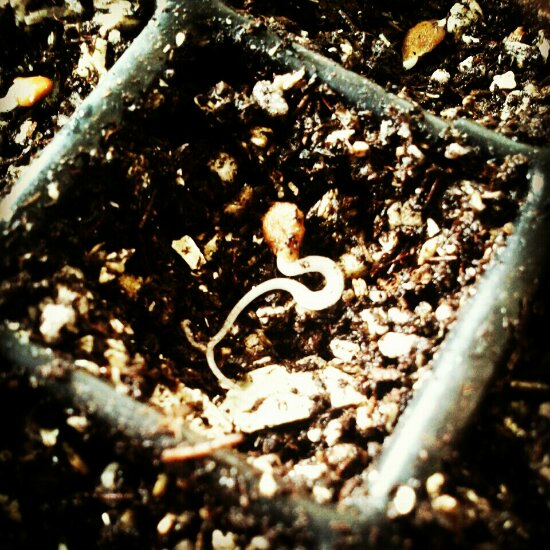
It’s out of the moist paper germination environment, and into the wilder world of the cellpak. This is a baby golden cherry tomato—can’t you tell?!—going into standard sterile seedling mix of equal parts perlite, vermiculite and peat. As long as the root hasn’t gotten too long, I just plunk ’em down, cover and water in, letting the roots find their own way down (a few years back, I probably would have made tiny holes and painstakingly inserted each one, but really, they seem to do that work a lot more efficiently). On a side note, I think I heard that perlite or vermiculite (maybe both) have made it into some people’s not-so-environmentally correct category, along with peat. So complicated—I will look into that. :)
Eggplant!
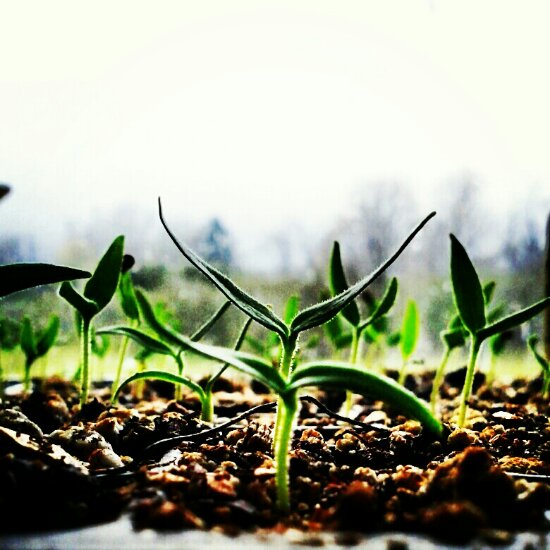
Eggplant pushing up, for the first time probably ever in my tiny farming career, in real sun, not those kinda ghastly (but effective enough) fluorescent lights. This is part of the current season’s unusual start-up, split between two farm locations (where I live and where I grow, about a mile apart, eight minutes by bike!), and smaller and way later than usual, and than the crazy weather allowed. These guys, along with peppers and tomatoes, are in 200- and 128-cell trays, seeded from bareroot germination into a smaller cell size than the usual 72, to make the most of window space. They’ll soon be off to the seedling room on the other farm, and 14-hour days of indoor lighting. Meanwhile, they seem to like it like this—raise your hands in the air! :)