
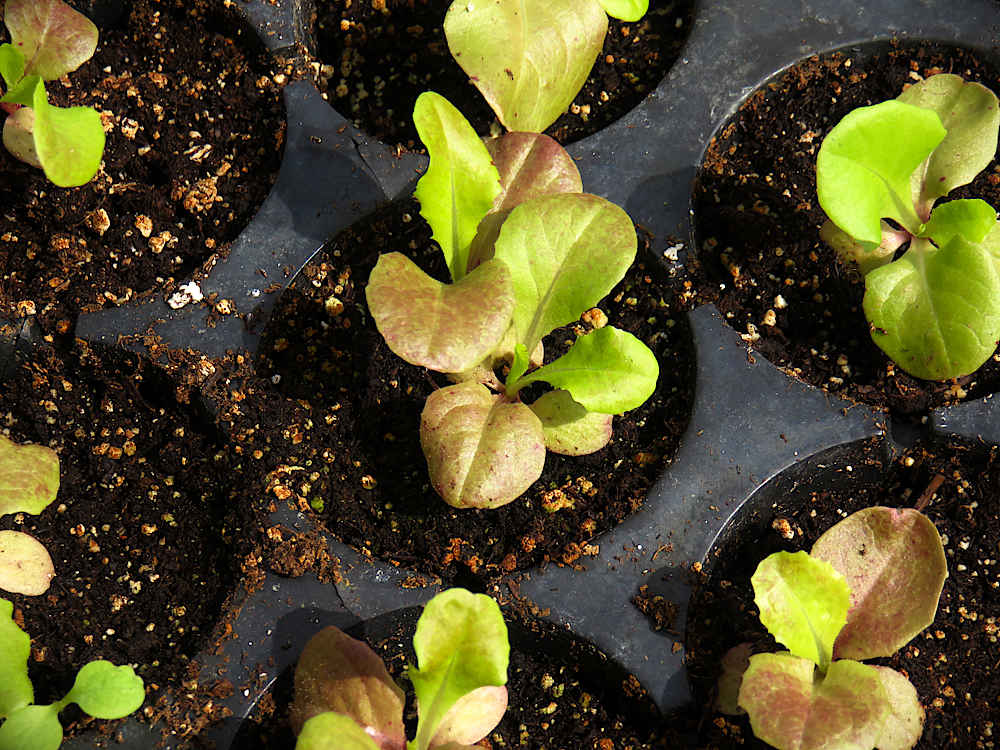
“Pop” isn’t the most elegant, poetic word, but that’s what I thought the first time I noticed how plants can suddenly shoot up overnight. It’s feels like magic, especially when you’ve been obsessively focused practically hour by hour on their progress, as I was in my first year of farming. Crops are growing slow and steady, then you turn around for a minute and they’re suddenly transformed: bigger, more vibrant colors, next level! As if they POPPED into a new form, like in a cartoon. Plants can pop right through their growth, from when they’re tiny seedlings (some, like corn and pole beans, grow so fast in the field that you can imagine staring at them for a while and being able to actually see them grow). It might not seem like much to look at, but to the watchful eye, these lettuces just popped. Nice!
Seed & Seedlings
A day in the sun
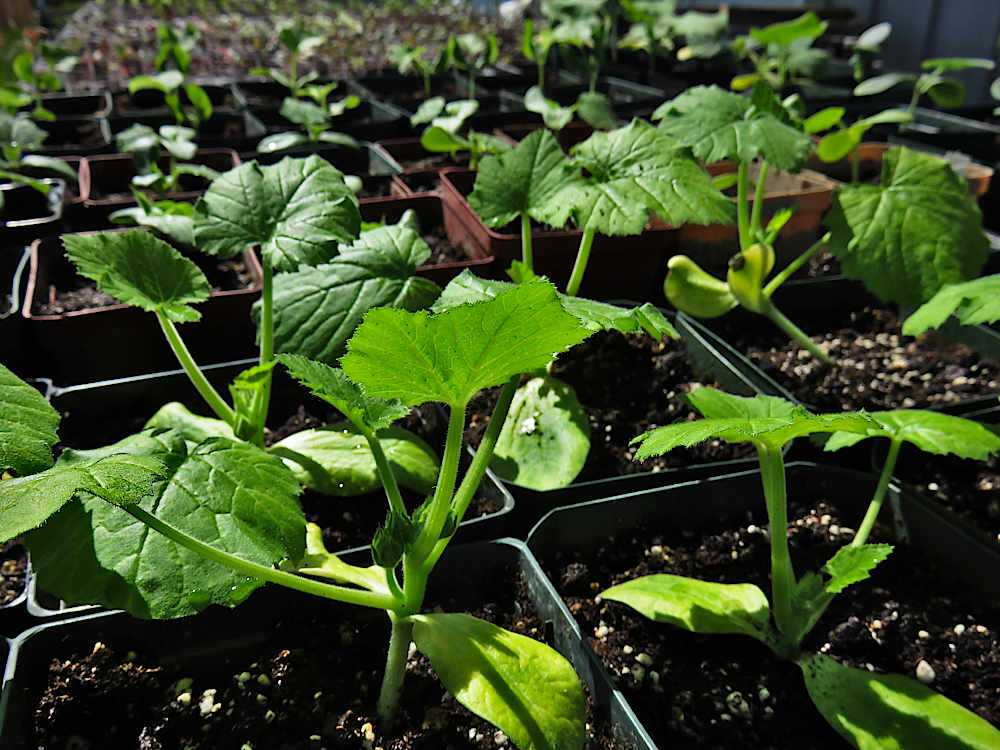
I’ve been hardening off trays of seedlings over the last few days, a few at a time, taking them out from the under the lights. Today, they were all outdoors, some for their first taste of the sun. It’s a manual routine, walking back and forth from the light racks with one or two trays at time, then bringing them back in in the early evening. I like it: a clear, simple, straightforward task, and the most important thing to do when you’re doing it. This is also exactly the type of routine that’s perfect for automation, or at least, optimization.
To grow a fair bit more than this year, I would put seedlings out in an unheated greenhouse where they’d stay until transplanting. That brings more convenience and efficiency, and also a few extra concerns. Voles tend to burrow in and munch on greens, so checking the perimeter becomes a thing to do. Daytime temperature in the greenhouse shoots up to 40°C+ (104°F+) on a sunny day, so ventilation is a must. When you open the doors in the day, you have to close them at night against cold and critters, and open them again early the next day. If the forecast is for freezing overnight, row cover placed in the evening and removed in the morning can handle a few degrees below (in a more extreme cold situation, a portable heater fired up in the middle of the night might be necessary).
Then there’s the new super-high winds that started happening around here within the last five years or so, there’s extra concern about the whole greenhouse staying up—mostly not in your control, but you still think about it with every weather warning!
Nothing wrong with scaling up and improving efficiency, while every step to bigger has its complications!
Bare root lettuce transplant
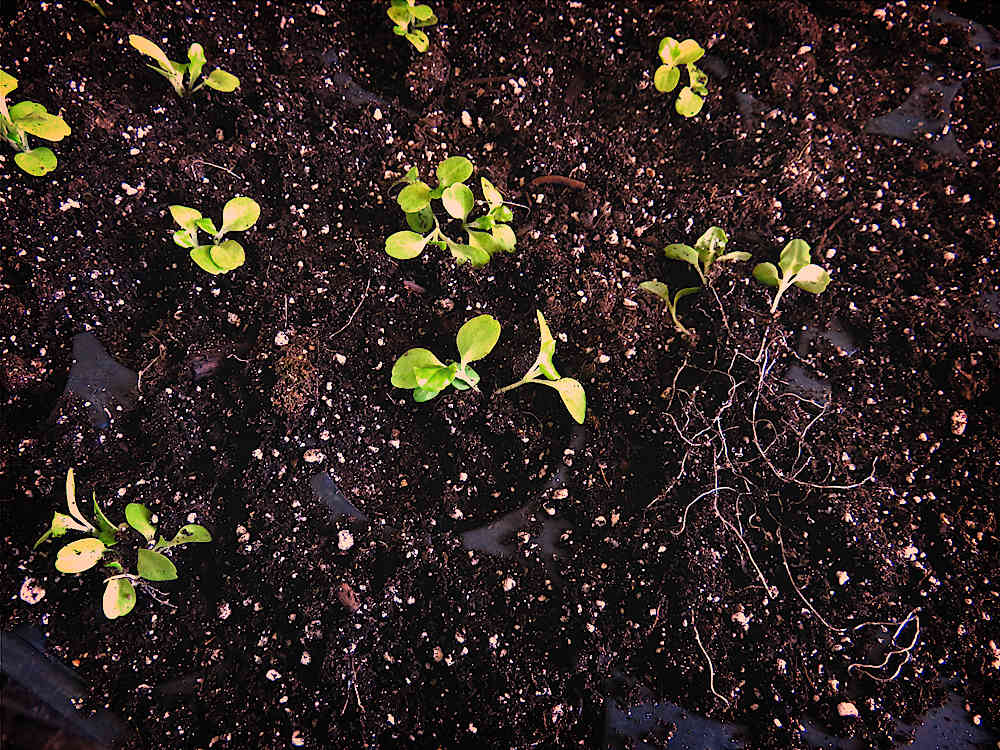
Bare-root transplanting lettuce—separating seedlings and replanting them with more space to spread their roots—isn’t something you’d do on a large scale. At Tiny Farm scale, it’s manageable and fun in a simple, relaxed way, like making flatbread, or prepping veggies for cooking. Very up close and personal with the plants. My usual approach is to seed them where they’ll stay until transplanting in the field, which saves time. With this round of lettuce, I was starting five varieties and wanted to see how they all germinated, so I seeded a bunch of each in a single plug sheet, and today I divided them as needed. Some are still two or three together, so as not to tear apart the roots too much, to be thinned later on. It all works out!
Lettuce under lights
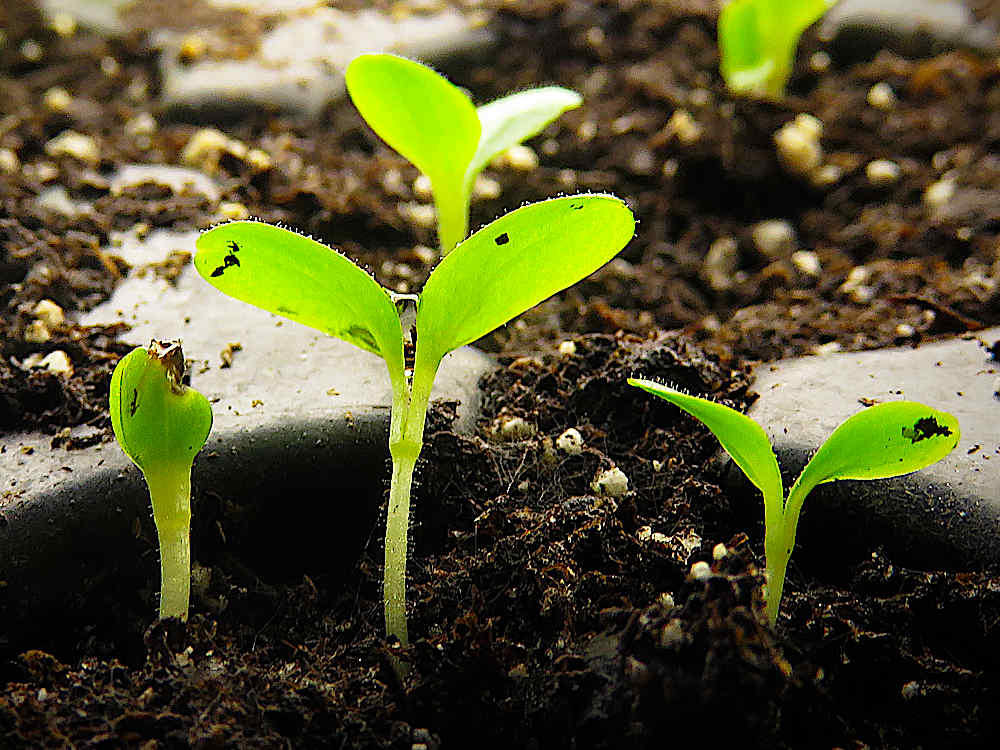
The first round of lettuce, five days from germination, under the lights. I could have started them earlier: two weeks, three, four? It all depends on the weather, when it seems right to transplant, and when you’re hoping for the first harvest. This year, hopefully young harvestable lettuce is ready by late June, so if I can plant them out in mid-May, great! Some years, I’ve started lettuce as early as February, for planting in April in an unheated hoophouse. This time around, it’s straight to the open field. We’ll see how it works out!
Tomatoes a month in
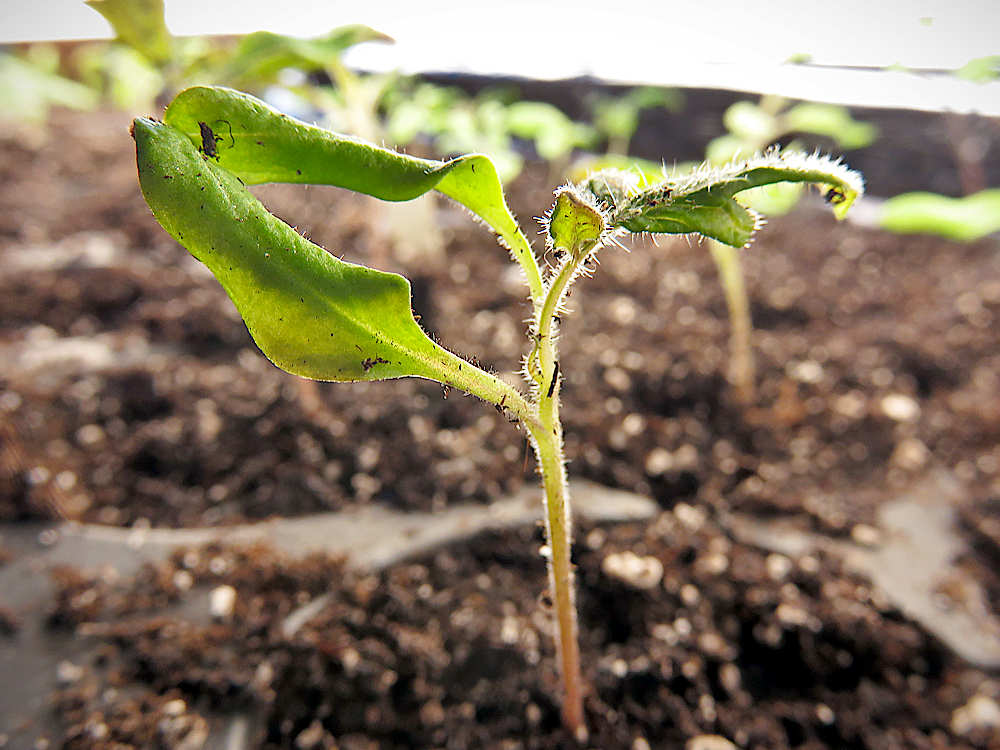
Tomato check-in, around a month after germination. On the left, the pair of plain, generic-looking seed leaves that come first—they’re still stuck together at the tip by a tiny bit of the seed shell. On the right, the true tomato leaves are taking over. See the tomato grow! :)
Pepper’s eye view
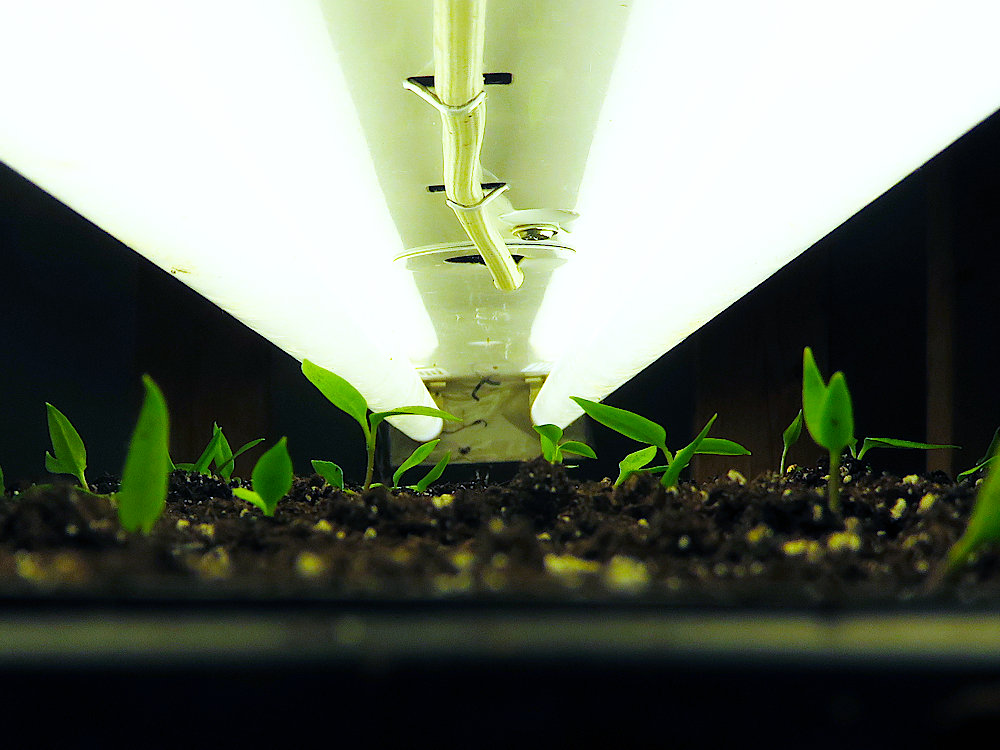
Here’s what the tiny sweet pepper plants would be seeing if they saw like we do, from under the fluorescent tubes in one of the light racks. It has a bit of an alien spacecraft hovering feel. The seedlings would be more pleased with the zillion times stronger real sun, but considering that it still drops down to freezing outside at night, they have to make do with weak substitute sun and indoor warmth as they get an early start on the growing season. These peppers are about a month old, still with only their seed leaves. Welcome to this season’s tiny farming transplant production!
Hauling water
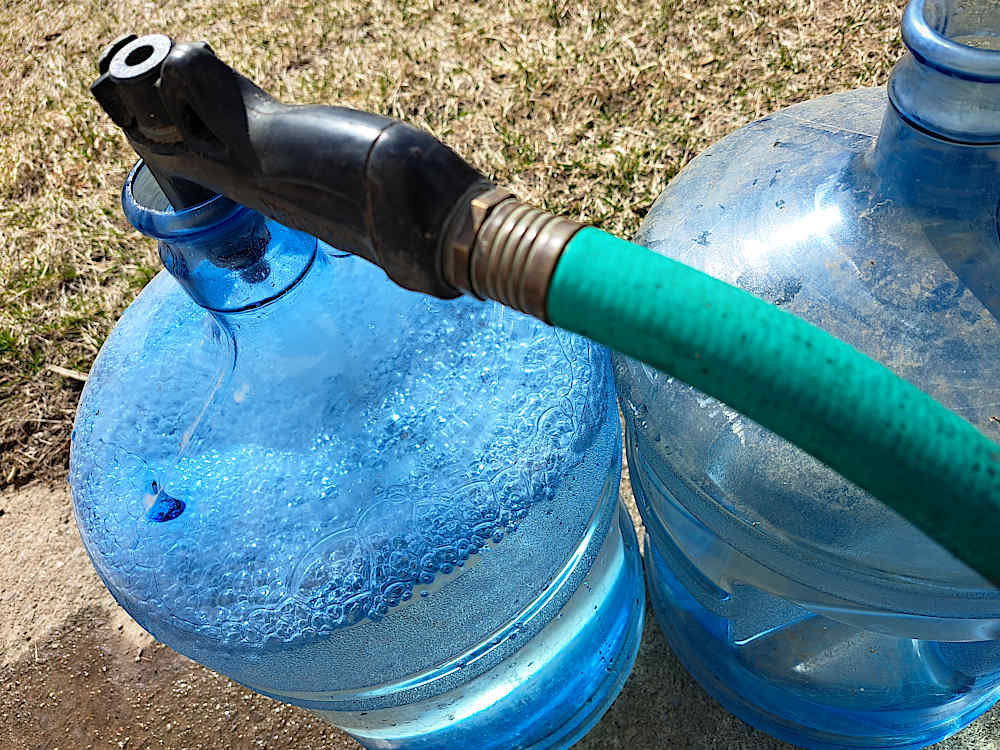
The seedling room is in a fully modern building with all the modern conveniences like electricity, heating, ample insulation and screened windows well-positioned for a bug-free cross-breeze and lots of natural light. The only thing missing is a handy supply of running water. Drilling for a new well located nearby ended in failure after a couple days of exploration produced only an expensive dry hole. So, until the gutter-fed rain barrels are turned over in warmer weather—overnight freezing of collected rainwater could crack them—I bring over water for the seedlings in 18 liter jugs filled from another well in a building not too far away. Simple systems and the rituals of spring!