
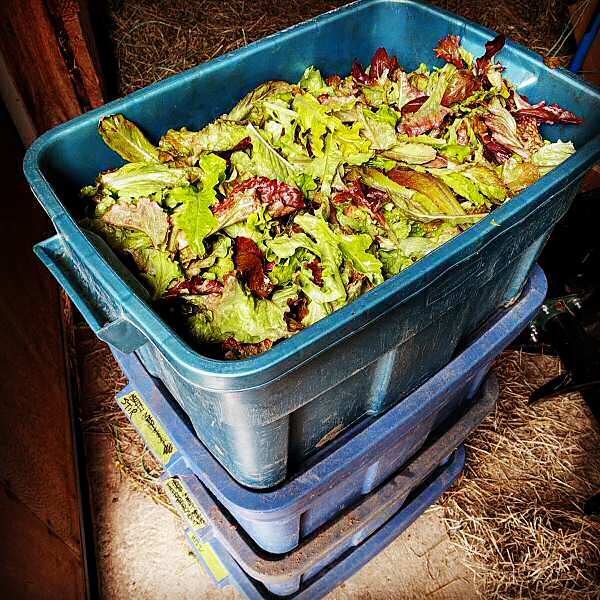
Friday harvest and the main green going right now is LETTUCE, appearing as small leaf salad mix. We’re waiting to do new greenhouse seeding – it’s still way wet in there – but a bunch of lettuce transplants are already in, some bok choi, too. So the season’s ramping up and the weekly look around to see what the weather has delivered for market…begins!
Veggies
Trimming parsley
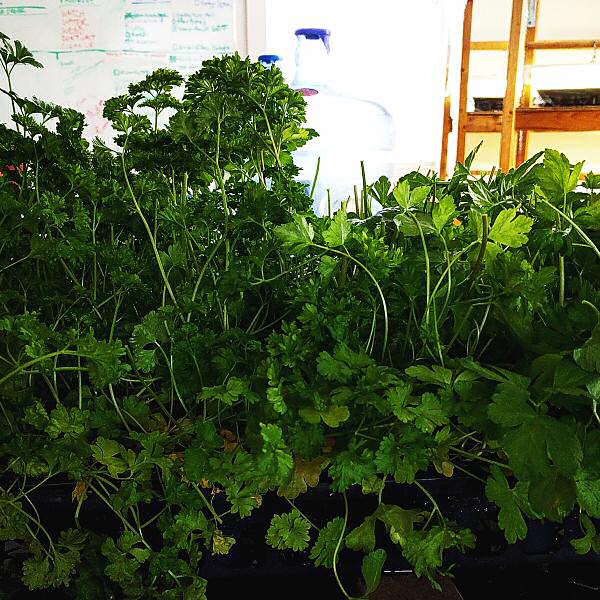
Parsley, curly and flat-leaf, overflows its 72-cell plug sheet. Time to trim it back (again), so they still fit under the lights. To be unfussy and safe, a quick shear of only 2-3″ off the top literally takes a few seconds and does the trick. Snip-snip-snip-snip-snip! This is what you have to do when you start seedlings extra early, and then wait on the weather!
Transplanting: tiny sections
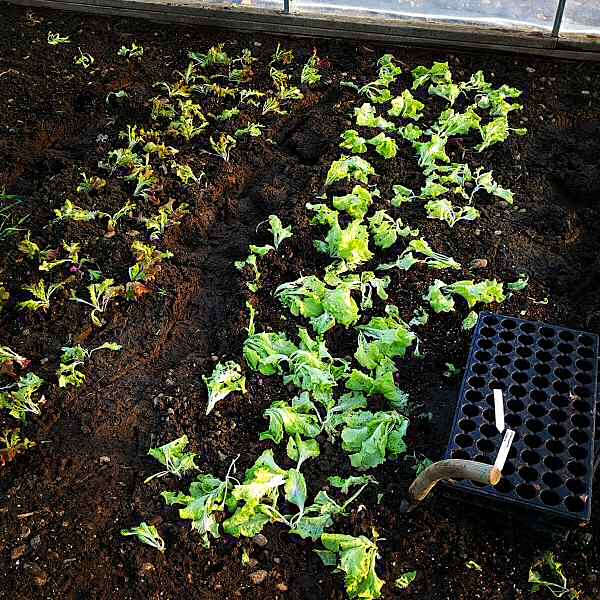
Transplanting lettuce into the unheated greenhouse, filling it out in small sections to work around wetter areas. The seedlings, waiting for drier conditions, stayed a couple of weeks longer in trays than ideal—now they’re a little floppy and stretched, but I’m confident they’ll figure it out. This first spring, seeing how the ground dries in the new hoophouse is part of the learning curve. Tiny farming!
Seedlings in the sun
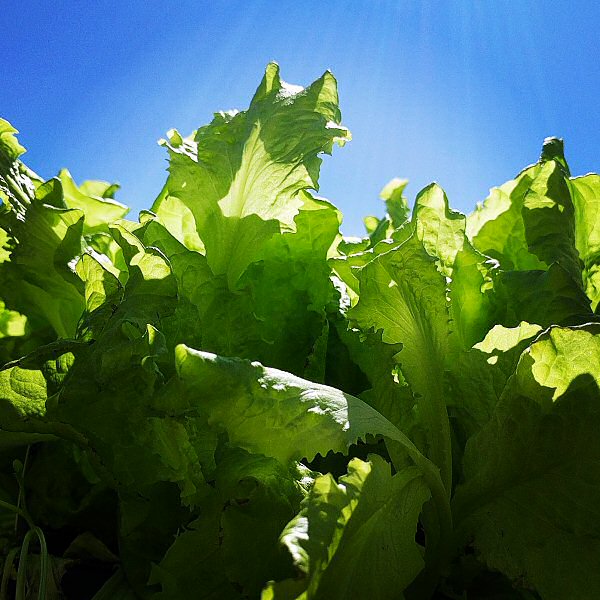
Lettuce seedlings get their first taste of full-on springtime sunshine. Next stop, into the ground in the greenhouse. I wouldn’t call this hardening off, some of these are being transplanted later today—tomorrow’s cloudy forecast should give them all the post-transplant adjustment break they need, then bring on the sun! (Starring in this pic, always reliable Black Seeded Simpson.)
First winter harvest
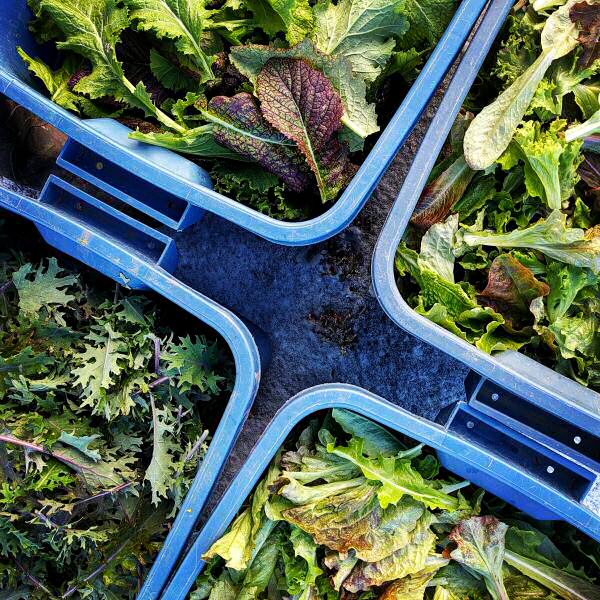
Yesterday’s harvest that went to today’s farmers’ market, my earliest market start by almost two months! From the unheated greenhouse: kale, green and red mustard, and lettuce mix times two. Harvest conditions: -2°C outside, a perfect-working-weather 10°C inside. At the end, the sun came out and it started to get sweatingly hot under a T-shirt, shirt and fleece. But, already done! No rinsing, just covered and into a cool room for a 6 a.m. pick-up this morning. It felt a little odd, starting the year’s Saturday markets so early, and indoors—this fall, if all goes as intended, weekly market will cease to end for winter and become instead a fully year-round thing…
Winter salad
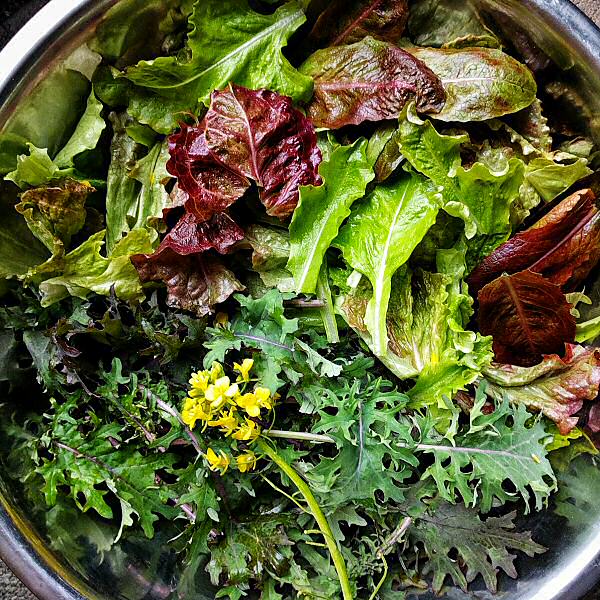
This bowl of lettuces and kale is the first cut of spring, taken from the unheated greenhouse while snow flurries whip around outside. With the help of 6 mils of plastic and some row cover, the salad easily survived three months of winter, with temperatures that went down to -30°C (-22°F). The texture and color are good, the taste, deliciously bold. Fantastic! The flowers are bok choi that managed to bolt in the alternating warmth and cold—on sunny days, the hoophouse temperature could easily reach 10-15°C (50-59°F), even when it was sub-zero outside. Interesting!
Post-winter greens
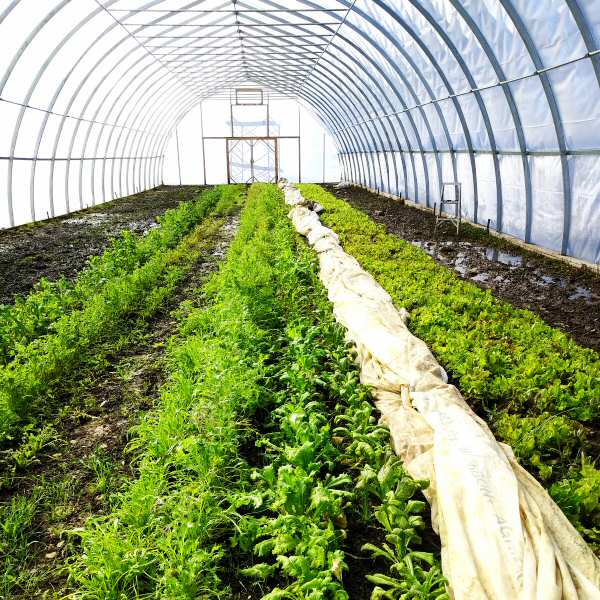
The covers are off and it’s all shades of green! That’s about three months, left to their own devices, living through freezing nights, often around -20°C (-4°F), and a low of -32°C (-25.6°F), under a couple of layers of medium-weight row cover, which means, little light (with the plastic added in, somewhere around 50% of already weak winter sun). Inside, at ground level outside the row cover, the lowest it got on the coldest night was an amazingly not-so-chilly-at-all -13°C (8.6°F). As a simple survival test…excellent!