
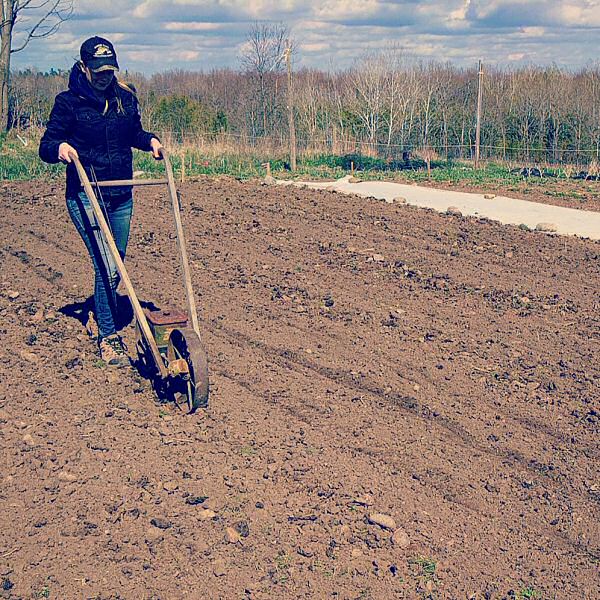
The Planet Jr. rides again. Clara learns the way of the antique seeder, having just laid down three rows of Kestrel beets. This old seeder continues to serve well!
Veggies
In the greenhouse: bok choi vs flea beetle
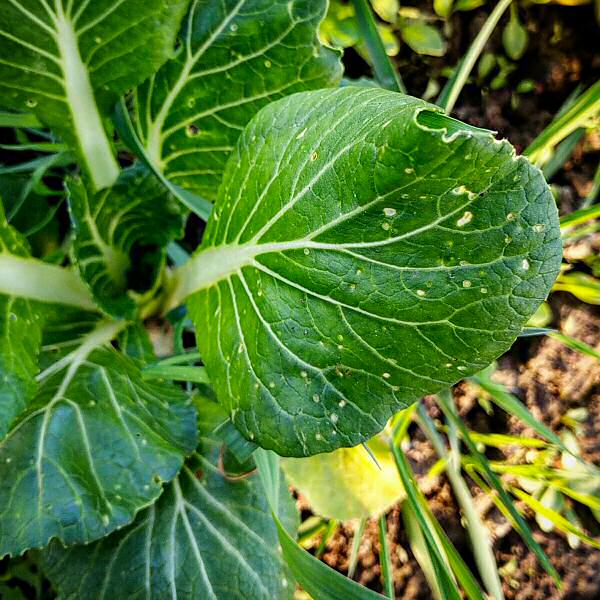
Everyone loves the greenhouse! The warmth, the wind break…crops, weeds, all plants love it in here. Now it seems flea beetles have acquired the taste as well. For whatever reason, the FBs usually stayed out of the (much smaller) little greenhouse, but here in the new big house—munch, munch, munch—bok choi is under attack. Hoped for a free pass on FBs in here as well, instead, it’s row cover. Learning as we go…
Greenhouse lettuce, growing
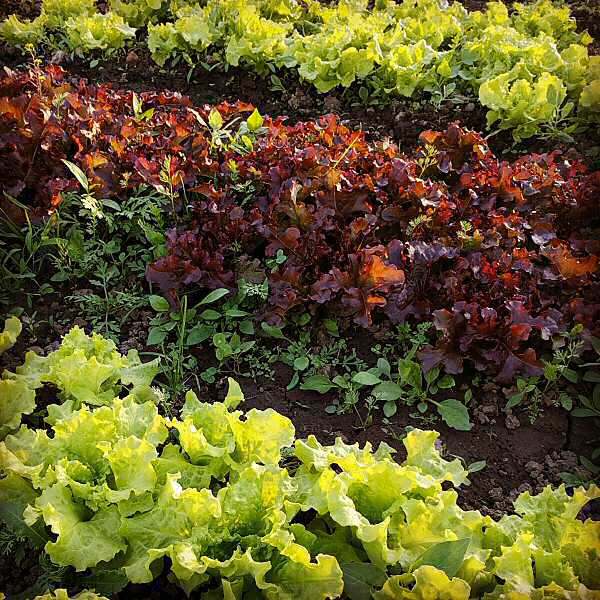
After a couple of early spring weeks in the greenhouse, transplanted lettuces and totally uninvited weeds are all doing exceptionally well! The sun climbs and the growing picks up speed…
The light on the lettuce
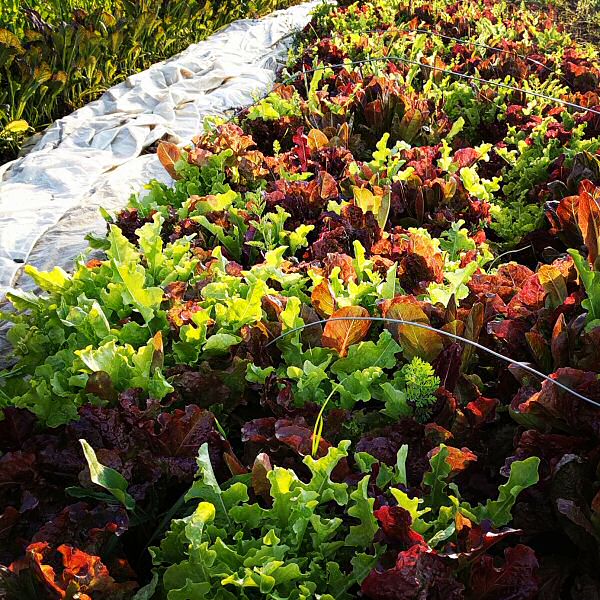
The low-riding late afternoon sun shines through lettuce leaves, creating quite the vivid show of color. (This is also great light for revealing carpets of the tiniest emerging weeds that are otherwise easy to overlook or conveniently ignore—seeing so clearly what’s to come really motivates you to get weeding early.)
Making salad mix
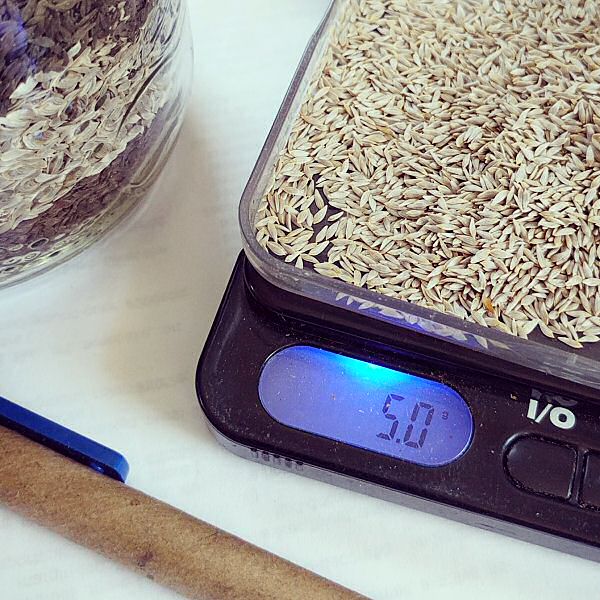
Adding a pinch (5g) of fairly pricey Rushmore (a beautifully deep-red oakleaf) to a batch of salad mix. This is the basic all-lettuce summer blend: seven varieties, selected mainly for color (greens to reds), texture (flat to frilly), and to some degree, seed cost (the price range of lettuce varieties is quite extreme). This inexpensive digital gram scale makes it easy to add relatively small quantities of certain varieties, and keep each batch consistent. Weigh out, shake up in bottle, ready to go. Here: 100g – that’s a lot of little lettuce!
Edible extras
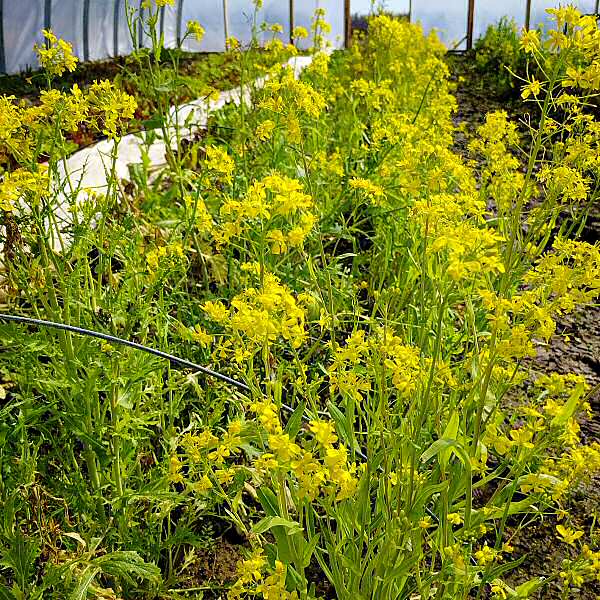
Leftovers, really, as bok choi and mizuna make their way toward producing seed by putting out bursts of cheerful little flowers. Normally, these plants would be tilled under way before this stage, making way for a new seeding, but since the ground is still too wet to work where they are, we’ve left them in for a bit, to harvest and toss into salad mix at the market. The stems can get woody at this point, the farther down you go, snipping off the tops or only the petals will do the trick. Mildly flavorful, mainly for the color!
Transplanting…never twice the same!
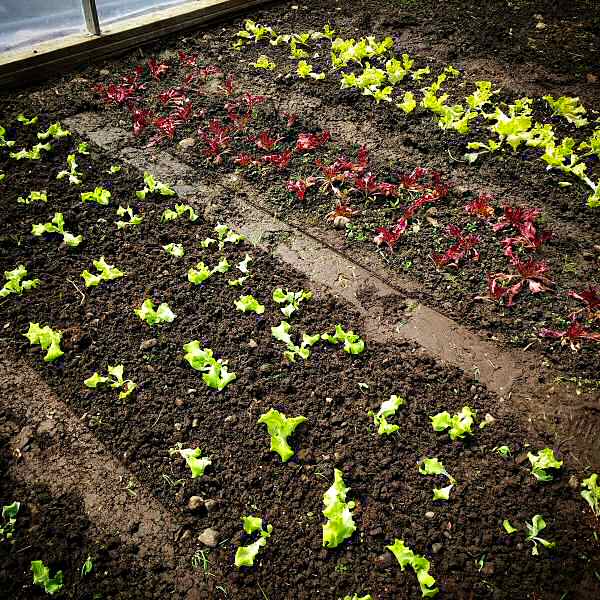
Today’s transplants: Still steadily plugging in seedlings in the greenhouse, waiting for more ground to dry out. This round, lettuces (above) and bok choi (elsewhere). All this transplanting is pretty straightforward—taking the photo, I might wonder, “What’s the difference between these seedlings stuck in the ground, and any others…why bother posting the same thing over and over?” Well, I don’t literally ask myself that, but I can see how some folks may think that. There’s no good answer, it really is in the eye of the beholder.
On a tiny farm, where weather runs everything, you never know how little decisions will turn out, and how critically they may affect things. Decisions like, let’s put up this greenhouse in this wet-in-spring field that’s also slow to dry, and see what happens (because the alternatives are too expensive), and fix or work around any problems we may run into. In that greenhouse, THIS lettuce planting, in mucky ground, in all-new conditions that may also in a few days get infernally hot and downright lettuce-unfriendly if we don’t finish the end-wall windows for ventilation before the temperature shoots up, is entirely different from every other lettuce transplanting. New story, ending unknown, let’s see how it turns out! It’s always something different… :)