
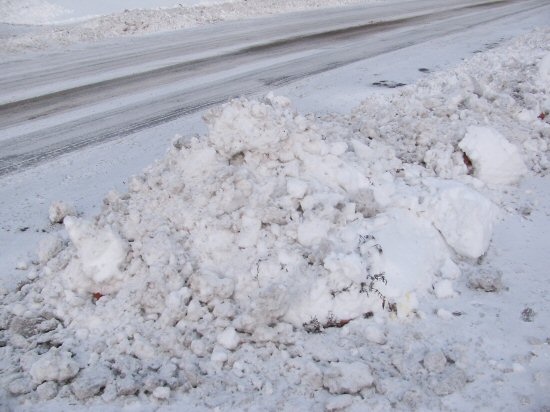
A familiar season-marking sight for anyone in snow territory, this is the start of what may turn out to be a growing, winter-long snow bank. The mini-blizzards of the last couple of days laid down at least 7-10 cm (3-4″). Road clearing mixes up dirty snow in hard-packed windrows, and driveway clearing creates mini-mountain piles. Will it stay or will it go? The indoor part of tiny farming veggies in a cold climate begins…
Veggies
Front yard farming!
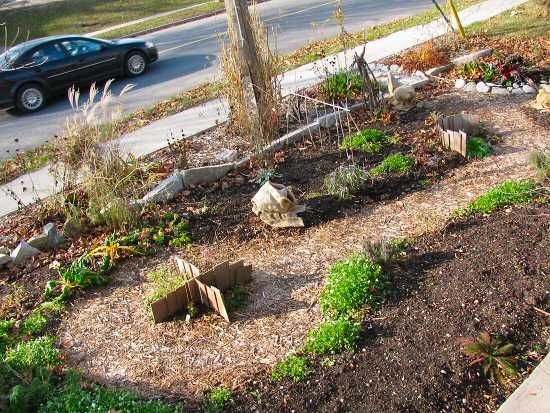
Often heard about, never before seen first-hand, this is front-yard tiny farming in action—late fall edition. I’m at the home of Andrew and Sue and Margo, in a town of 70,000, leaning on the front porch rail on a residential street lined with single homes on small lots. Typical front lawns all along. Except here, where the grass is gone, replaced by an eclectic collection of veggies and herbs. Beets, carrots, tomatoes, corn and several other crops are already gone for the season. Still up and struggling along in the cold, there’s colorful Swiss chard in a couple of spots, parsley and sage, and a few other things that need a closer look to ID. Andrew also mentioned native edibles, like ostrich fern (fiddleheads), wild ginger and wild leek. And more. The keyhole path set-up comes from permaculture methods: minimum path for maximum access to the growing area. It’s a front-yard revolution! After a season or two of sidewalk-side veggie abundance for all to see, I wonder if this alternate land use will start to spread up and down the street! Urban agriculture. Pretty cool!
Last of the chokes
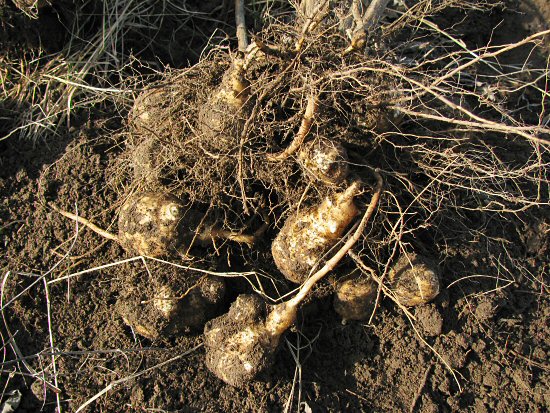
Digging up the very last of the Jerusalem artichoke, this is pretty much the final harvest of the year, besides a little kale and maybe a last few tiny cauliflower and cabbage. The few remaining feet of the original 50′ (15m) double row yielded about half a bushel. Not bad. Plenty for spring planting, and some to experiment with in the winter kitchen (I still haven’t fully figured out the eating part of chokes, I’ve steamed and roasted, the texture is nice, the taste mild, but the JA’s true culinary delights have yet to be revealed to me).
Anyhow, despite many freezing nights, the ground is still perfectly soft, and the harvest is all just pulling chokes, with the digging fork around only to turn the nearby soil in search of tubers that strayed from the conveniently compact root ball. Quick and easy, and the season in this field is suddenly…done!
In the cold garden
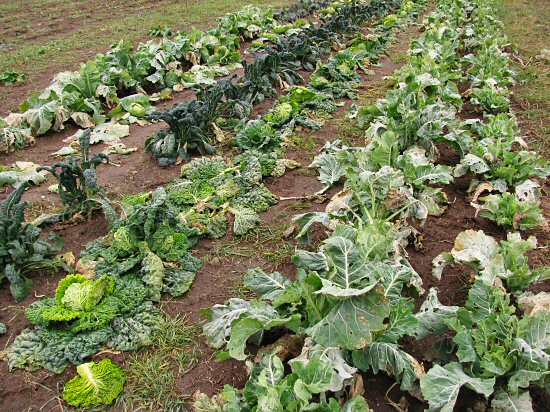
The star by far of the last planting of brassicas, that mostly didn’t size up in time for market or CSA, is without at doubt this unusual Nero Di Toscana strap kale. This Italian heirloom, apparently from Tuscany, is hardly better looking than the cold-beaten rest of the motley-looking crew: tiny cauliflower, mini savoy cabbage, some collards and this kale. But it’s growing back—been picked twice since October—and it’s amazingly, distinctively tasty. In the post-freeze veggie garden, looks aren’t everything! I’ve had the seed for a while, but grew it for the first time this season. It’ll definitely be back.
Tiny fall cauliflower tastes good
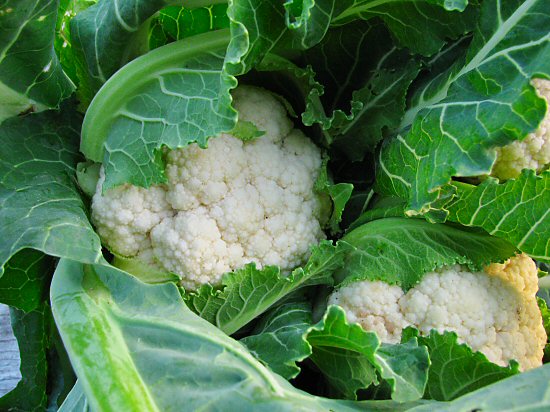
Harvested a few tiny (tennis ball to softball-sized, like, orange to grapefruit…little ones!) cauliflower from the last-planted section of brassicas that also has kale and broccoli. It’s still producing in home-consumption quantities, but with the exception of some strap kale, they entirely missed sizing up in time for CSA or the farmers’ market at the end of October. This is the normal. I usually take a chance on a final, extra-late planting—sometimes they make it, sometimes they don’t. Now, growth is so slow, the field is really just convenient live storage.
Not ideal storage, though. These plants are hardy, but the cold—many sub-zero nights—does take its toll on the parts you want to eat. Kale fares the best, broccoli is quickly savaged, and exposed heads of cauliflower get cold-burned to an unappetizing, mushy in spots, brown. BUT, with self-blanching varieties (this one is Minuteman), the leaves curl close to cover the heads, protecting them from sun discoloration (so our white cauliflower can be…snowy white), and this works fine against cold as well.
Then there’s the eating. The summer’s abundance of fresh-picked veggies has been over for a while, and every little taste of what remains becomes more of a treat as winter approaches, supplies dwindle, memories fade. The wheel keeps on turning…! :)
Spinach finale
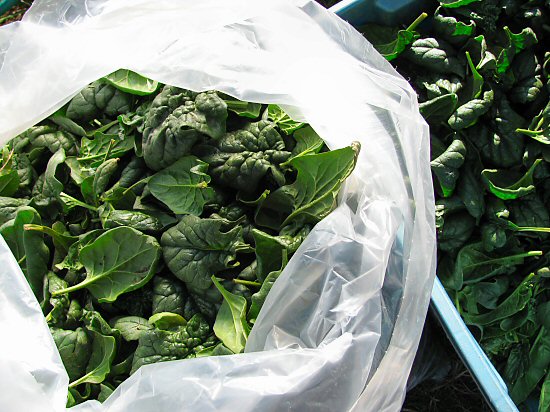
So this is it for the season’s spinach, a last 18lbs (8kg) of Spargo, unfazed by many subzero nights and all sorts of up-and-down weather antics. Spinach is one of the great ones for cold-climate tiny farming, easy-going once it gets started, tough under freezing conditions, and always in demand… The deer that’ve been lurking and circling the field all year have started to come in for an exploratory nibble here and there, working their way in from the edges. At this point, it’s slim pickings! They discovered one edge of this final, late-planted, slowly-growing spinach patch a couple of days ago, so we (Lynn, Steve, and I) grabbed the rest this morning. Between us and them (mostly us!), the spinach is done!
First snow, 2009
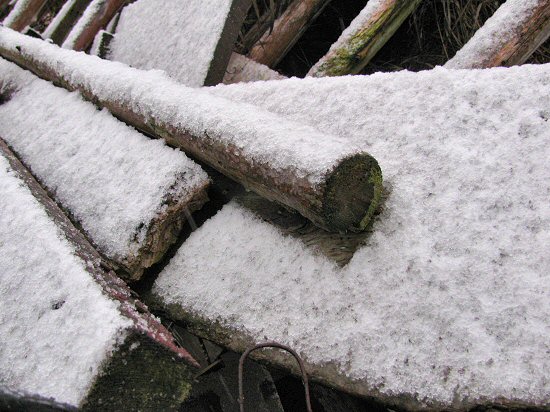
Here it is, in the dim, chilly, gray 7:30 am light: the first snow to stick this fall. Familiar—we really do have such a short growing season, time flies—and of course not welcome, because there’s still fieldwork to do. And I’ll take warmth and greenery any day. But this first round will be gone by mid-morning, and if the 15-day forecast holds anywhere near mildly accurate, we won’t be in for snow that stays for at least another couple of weeks. The last two years in this region, winter came kinda early, freezing weather and long-term snow arrived by the end of November. But the couple of seasons before that, far as I remember, we were actually WATCHING for winter well into January. So, who knows?!